


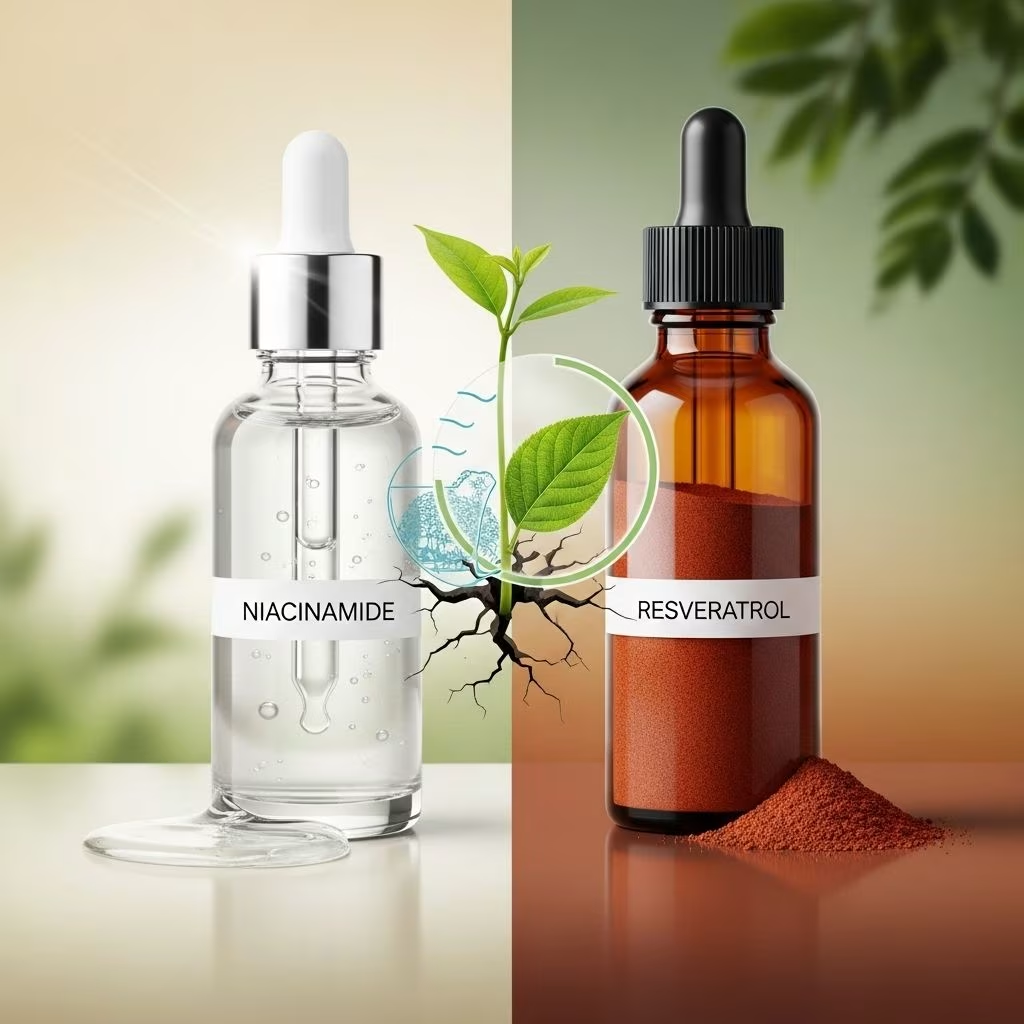
Niacinamide vs. Resveratrol: The Environmental Repair Duel
Modern skin faces daily assaults from pollution, UV radiation, and the reactive oxidative environment. Researchers and formulators continually seek potent ingredients to shield and renew the skin. Niacinamide, a versatile form of vitamin B3, and resveratrol, a celebrated polyphenol antioxidant, have risen to prominence as leading agents for environmental skin repair. This article delves deeply into their mechanisms, benefits, comparative applications, and the scientific evidence supporting their roles in skincare.
Introduction to Environmental Skin Stress
Skin is constantly exposed to external stressors, including UV rays, airborne pollutants, and oxidative chemicals. These factors accelerate aging, contribute to uneven pigmentation, and damage cellular DNA. Antioxidants and repair agents are essential in defending and repairing the skin’s barrier and cellular health. Niacinamide and resveratrol have distinct but complementary roles in this context.
Ingredient Overview
- Niacinamide (Vitamin B3)
- Water-soluble vitamin, known for multi-functional skin benefits.
- Regulates oil, tightens pores, reduces pigmentation, calms inflammation, and boosts DNA repair.
- Widely used in serums, creams, and masks.
- Resveratrol
- Polyphenolic antioxidant sourced from grapes, berries, and peanuts.
- Renowned for anti-aging, anti-inflammatory, and environmental protection properties.
- Primarily found in serums and advanced antioxidant products.
Mechanisms of Action
Both ingredients have evolved scientific evidence behind their efficacy. Their distinct mechanisms contribute to their strengths in skin repair and protection:
- Niacinamide Mechanisms
- Boosts skin barrier by promoting ceramide synthesis and lipid production.
- Regulates melanin formation, improving uneven tone and lightening pigmentation.
- Enhances DNA repair processes and restores cellular energy to damaged skin.
- Reduces inflammation and acne via inhibition of inflammatory cytokines.
- Defends against polluting agents by reducing sensitivity and strengthening the stratum corneum.
- Resveratrol Mechanisms
- Powerful antioxidant ability to neutralize free radicals and reduce oxidative stress.
- Stimulates collagen production for firmer, more elastic skin.
- Mitigates UV and pollution damage by enhancing native cellular repair systems.
- Suppresses inflammatory pathways and calms skin responses to external irritants.
- Supports skin cell longevity and may help minimize premature aging.
Benefits Comparison Table
| Benefit | Niacinamide | Resveratrol |
|---|---|---|
| Environmental Protection | Defends against pollution, UV; enhances barrier function | Antioxidant protection from UV, pollution; reduces oxidative stress |
| DNA Repair | Supports repair of UV-induced DNA damage | Enhances DNA repair, reduces mutation risk |
| Anti-Inflammatory | Calms skin, reduces redness, helps sensitive skin | Reduces inflammation from irritants and UV |
| Pigmentation Correction | Improves uneven skin tone, lightens dark spots | Moderate pigment normalization; best in tandem with niacinamide |
| Anti-Aging | Improves elasticity, reduces wrinkles through hydration and repair | Stimulates collagen and elastin, slows signs of aging |
| Skin Barrier Support | Directly strengthens skin barrier, supports hydration | Indirect support by lowering oxidative injury, inflammation |
Environmental Repair Capabilities
Niacinamide is acclaimed for its ability to reinforce the skin’s natural barrier, reducing the penetration of harmful environmental agents and promoting resilience to daily stressors. Its anti-inflammatory profile soothes irritation from pollution and UV exposure, while its capacity to correct pigmentation makes it ideal for city dwellers experiencing uneven tone or discoloration.
Resveratrol delivers antioxidant defense by scavenging free radicals generated from UV light and pollution exposure, thus directly addressing the root of oxidative damage. Its ability to stimulate DNA repair and collagen production further fortifies the skin’s structural integrity in the face of environmental insult.
- UV Protection:
- Both reduce damage from UV radiation but resveratrol excels at neutralizing free radicals before they harm cells.
- Pollution Defense:
- Niacinamide blocks pollutant pathways, resveratrol repairs oxidative injury post-exposure.
- Skin Barrier Strength:
- Niacinamide enhances ceramide synthesis directly, resveratrol mitigates irritation and maintains cellular health.
Clinical Evidence & Research
Rigorous studies have validated the efficacy of both ingredients:
- Niacinamide
- Clinical trials show reduced hyperpigmentation, improved barrier function, and lower inflammation in populations exposed to urban pollution and UV.
- Peer-reviewed research confirms benefits for acne-prone, sensitive, and aging skin.
- Novel formulations improve uptake and efficacy, especially skin-barrier-mimetic moisturizers.
- Resveratrol
- Studies demonstrate decreased oxidative stress, enhanced DNA repair, and reduced wrinkle formation with regular use.
- Laboratory models show inhibition of inflammatory mediators and protection against UV-induced cellular damage.
- Challenges remain with its low solubility and stability in topical formulas, often requiring synergistic blends.
Synergy and Formulation Insights
Recent innovations highlight the power of combining niacinamide and resveratrol. According to research, their synergistic effects allow lower concentrations of each while achieving potent skin lightening and repair, reducing irritation and cost. These blends can:
- Address pigmentation and melanin regulation for a brighter, more even skin tone.
- Deliver layered defense against environmental aggressors and DNA damage.
- Offer anti-inflammatory benefits superior to either ingredient alone.
The recommended ratio for optimal cosmetic efficacy is resveratrol/niacinamide weight ratios between 0.001 and 0.1.
Many modern serums blend these with hyaluronic acid, bakuchiol, or vitamin E, further boosting protective and reparative outcomes.
Safety and Tolerability
- Niacinamide
- Extremely well tolerated, suitable for sensitive and acne-prone skin.
- Rarely irritates, does not sensitize or photosensitize the skin.
- Optimal concentrations range from 2% to 10%, higher concentrations deliver enhanced effect with minimal risk.
- Resveratrol
- Generally safe at recommended concentrations, but low solubility limits high dosing.
- Blending with niacinamide or stabilizing ingredients minimizes risk of irritation and maximizes bioavailability.
Choosing the Right Ingredient for Your Routine
When selecting environmental repair agents:
- Choose niacinamide for multifaceted repair, visible improvement in tone and inflammation, and high tolerability.
- Opt for resveratrol for advanced antioxidant protection, DNA repair, and collagen stimulation, especially when environmental damage is prominent.
- Combine both to maximize defense, minimize irritation, and deliver synergistic benefits for balanced skin of all types.
| Skin Concern | Best Choice |
|---|---|
| Sensitivity & Redness | Niacinamide |
| Photoaging Wrinkles | Resveratrol (use with niacinamide for additive effect) |
| Uneven Tone, Pigmentation | Niacinamide and Resveratrol combination |
| Urban Pollution Exposure | Niacinamide (routine barrier support), Resveratrol (periodic detox boost) |
Frequently Asked Questions (FAQs)
Q: Can niacinamide and resveratrol be used together?
A: Yes. Scientific studies show their combined use yields enhanced protective and skin-brightening effects while reducing irritation.
Q: Which is better for pigment and dark spots?
A: Niacinamide is more directly effective for hyperpigmentation, though resveratrol adds moderate support and boosts efficacy when paired.
Q: Is resveratrol suitable for sensitive skin?
A: In low concentrations and stabilized formulas, resveratrol is generally well tolerated; blending with niacinamide further lowers risk of sensitivity.
Q: What concentration should I look for?
- Niacinamide: 2%–10% in leave-on products for daily use
- Resveratrol: 0.1%–1%, ideally in combination serums for optimal performance
Q: Are there any side effects?
A: Both ingredients have low side effect profiles. Occasional irritation may occur with higher concentrations or compromised skin barriers; always patch test before use.
Q: Are these environmentally friendly skincare choices?
A: Yes. Both are derived from sustainable sources, and modern formulations minimize resource usage and environmental impact.
Final Thoughts
The duel between niacinamide and resveratrol is not a battle for supremacy, but a partnership in environmental skin repair. Leveraging their mechanisms together yields the most comprehensive defense against pollution, UV damage, and premature aging, setting the benchmark for advanced skincare protection.
References
- https://patents.google.com/patent/EP2522331A1/en
- https://relativskin.com/en-us/blogs/news/nourish-serum-harnessing-the-power-of-this-antioxidant-trifecta-bakuchiol-niacinamide-and-resveratrol
- https://www.clinikally.com/blogs/news/resveratrol-for-skin-benefits
- https://www.nature.com/articles/s41598-019-46678-8
- https://skinsort.com/compare/la-roche-posay-10-pure-niacinamide-serum-vs-skinceuticals-resveratrol-b-e
- https://pmc.ncbi.nlm.nih.gov/articles/PMC11047333/
- https://drdavinlim.com/a-z-skin-care/resveratrol/
- https://www.paulaschoice.com/expert-advice/skincare-advice/anti-aging-wrinkles/five-super-anti-aging-antioxidants-your-skin-needs.html


