


Introduction
Steroid foams have gained prominence in dermatology, particularly for treating inflammatory skin conditions affecting the scalp and other hairy regions. Traditional creams and ointments often prove difficult to apply in areas with dense hair, leading to uneven drug delivery and patient dissatisfaction. Steroid foams, with their unique consistency and ease of application, offer a practical solution, improving patient adherence and clinical outcomes. This article outlines comprehensive protocols for the use of steroid foams on the scalp and hairy areas, covering indications, application techniques, safety, alternatives, and frequently asked questions.
What Are Steroid Foams?
Topical corticosteroid foam, or steroid foam, is a vehicle specially formulated to allow the active corticosteroid (such as clobetasol, betamethasone, or fluocinolone) to be applied directly onto the skin and scalp. Unlike ointments, creams, or lotions, foam formulations are dispensed from pressurized containers, forming a light, non-greasy layer that penetrates easily into the skin and spreads uniformly, even in hair-bearing regions.
Why Use Steroid Foams in Hairy Areas and Scalp?
The anatomy of hairy skin presents several challenges for topical therapies. Hairs act as a mechanical barrier, often preventing adequate medication from reaching the skin surface. Ointments and creams may leave a greasy residue, which is undesirable for scalp use, and solutions can be messy or sticky. Steroid foams, on the other hand, are:
- Easily spread: They distribute evenly over the scalp and hairy areas, reaching the skin beneath the hair.
- Non-greasy: They leave minimal residue, making them comfortable for daily use and socially acceptable.
- Well-tolerated: Generally, patients find them less irritating than gels or solutions, which may sting or burn inflamed skin.
- Costlier but effective: While more expensive than other formulations, foams are preferred for large or difficult-to-treat areas with dense hair.
Foams are therefore the vehicle of choice for conditions like scalp psoriasis, scalp eczema, and seborrheic dermatitis, where hair density can otherwise limit effective treatment delivery.
Commonly Treated Conditions
Steroid foams are primarily indicated for inflammatory, non-infectious dermatoses of the scalp and hairy skin. Common conditions include:
- Psoriasis: Chronic autoimmune condition causing thick, scaly plaques on the scalp and occasionally other hairy areas.
- Eczema (atopic dermatitis): Itchy, red, and inflamed skin on the scalp or groin.
- Seborrheic dermatitis: Chronic, superficial inflammatory condition affecting the scalp and oily body regions (face, chest); characterized by flaking, scaling, and itching.
- Lichen planopilaris: Scarring hair loss disorder occasionally treated with topical steroids.
Application Protocol
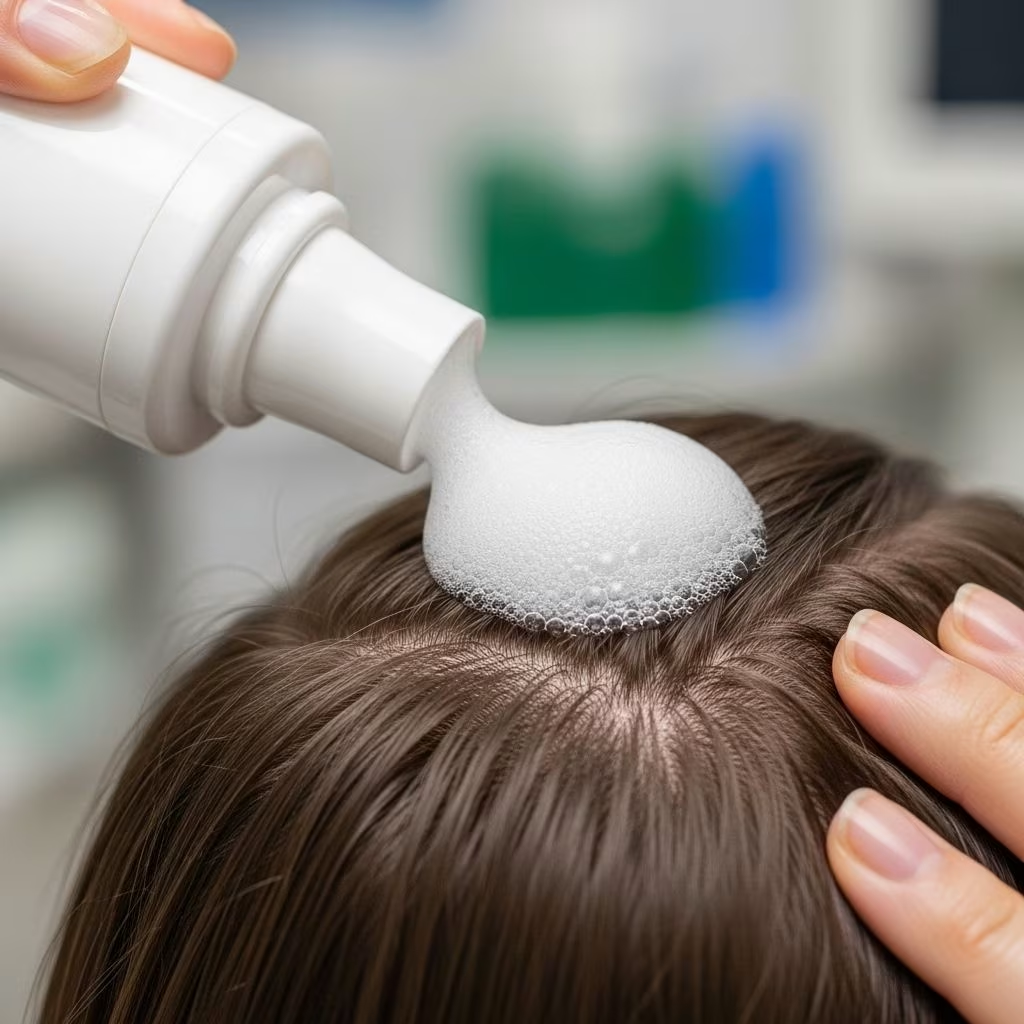
Correct application ensures optimal therapeutic effect and minimizes potential side effects. Below is a step-by-step protocol for applying steroid foam to the scalp and hairy areas:
- Wash the area: Start with clean, dry skin. Washing removes scales and oils, enhancing drug absorption, but the area should be patted dry before application.
- Prepare the foam: Invert the canister and activate according to package directions. Allow it to warm in your hands for a few seconds to enhance spreading.
- Dispense the foam: Squeeze a small amount (about a walnut-sized dollop for a large area; adjust for smaller areas) directly onto your fingertips or onto the scalp.
- Spread evenly: Gently massage the foam into the affected area until it is fully absorbed. Part the hair to ensure the foam contacts the skin directly, not just the hair.
- Wash hands: Always wash hands after application to avoid unintentional transfer to other body areas, especially the face, eyes, or sensitive skin.
- Frequency: Generally, steroid foams are applied twice daily (morning and evening) until symptoms improve, then tapering may begin as directed by a clinician.
- Occlusion: Do not apply occlusive dressings (e.g., plastic wrap) to hairy or facial areas, as this increases steroid absorption and risk of side effects.
Dosing and Duration Guidelines
Appropriate dosing prevents under- or overuse, both of which can compromise efficacy or increase side effects. General recommendations include:
- Apply sparingly: A thin film is sufficient; excessive application does not enhance efficacy but increases systemic absorption and potential side effects.
- Frequency: Most super-high-potency steroids (e.g., clobetasol) should be limited to once or twice daily for up to two to four weeks, depending on the condition and patient response.
- Treatment duration: Many dermatoses respond within 3–4 weeks of continuous use. If symptoms persist, consult a clinician before continuing.
- Tapering: After symptoms improve, reduce application frequency (e.g., once daily, then every other day) or switch to a less potent steroid to minimize risk of rebound and side effects.
- Follow-up: Regular clinical follow-up is essential for monitoring efficacy, compliance, and adverse effects, especially with long-term use.
Safety and Monitoring
Steroid foams are potent medications and require careful monitoring. Key safety considerations include:
- Avoid sensitive areas: Do not use on the face, groin, axillae, or other intertriginous (skin fold) areas due to increased absorption and risk of thinning, striae, and adrenal suppression.
- Systemic absorption: Prolonged or excessive use, especially on large body surface areas, can lead to systemic effects (e.g., adrenal suppression, cushingoid features).
- Side effect surveillance: Patients should be alerted to watch for signs of skin atrophy, irritation, infection, or contact dermatitis, which may require discontinuation and medical review.
- Special populations: Use with caution in children, pregnant women, and the elderly, adjusting potency and duration as needed.
- Prevent relapse: For chronic conditions like scalp psoriasis or seborrheic dermatitis, maintenance therapy may include intermittent rather than continuous steroid use, sometimes alternating with nonsteroidal agents (e.g., calcineurin inhibitors, antifungals).
Potential Side Effects
All topical corticosteroids, including foams, carry a risk of local and systemic side effects. Commonly reported issues include:
- Local irritation: Burning, itching, or stinging at the application site.
- Skin atrophy: Thinning, fragile skin, easy bruising, or tearing.
- Telangiectasia: Visible dilatation of small blood vessels.
- Folliculitis: Inflammation of hair follicles, sometimes triggered by occlusion or irritation.
- Infection risk: Prolonged use may predispose to bacterial, fungal, or viral infections of the treated area.
- Hypertrichosis/hypopigmentation: Increased hair growth or loss of skin pigmentation in treated areas.
- Systemic effects: With large surface area or prolonged use, adrenal suppression, hypertension, hyperglycemia, and other systemic corticosteroid side effects can rarely occur.
Alternative Topical Corticosteroid Formulations
Steroid foams are one of several available vehicles for delivering corticosteroids to the scalp and hairy areas. Each has specific advantages and limitations:
| Formulation | Advantages | Disadvantages | Typical Use |
|---|---|---|---|
| Foam | Easy to apply, non-greasy, well-accepted by patients | More expensive | Hair-bearing areas, scalp, large lesions |
| Solution/Oil | Spreads easily, no greasy residue, good for dense hair | May sting, flammable, leaves oily film | Beard, eyebrows, hair margin |
| Shampoo | Easy to use, good for extensive scalp involvement | May need to remain on scalp for 15 minutes before rinsing, may dry hair | Scalp, only where hair is present |
| Gel | Dries quickly, non-greasy, good for itching | May cause stinging, especially on inflamed skin | Hairy areas, scalp |
| Cream/Lotion | Less greasy than ointments, preferred for mild disease | Harder to apply in dense hair, may not reach skin | Mild scalp disease, thin hair |
| Ointment | Most occlusive, highest potency per application | Greasy, difficult to apply in hair, may cause maceration and folliculitis | Non-hairy areas, thick plaques |
The choice of vehicle should be individualized based on disease severity, lesion location, patient preference, and cost.
Patient Education and Counseling
Proper patient education is vital for safe and effective use of steroid foams. Key counseling points include:
- Correct application: Demonstrate the technique during office visits, emphasizing thorough yet gentle application to affected areas only.
- Wash hands: Stress the importance of washing hands immediately after application to prevent accidental exposure elsewhere.
- Avoid overuse: Instruct patients to use only as directed and not to increase frequency without medical advice.
- Recognize side effects: Teach patients to monitor for signs of skin thinning, redness, itching, or infection, and to report these promptly.
- Compliance and follow-up: Encourage regular follow-up visits for monitoring and dosage adjustment.
- Alternate therapies: For chronic conditions, discuss the possibility of rotating or combining with nonsteroidal agents (e.g., calcineurin inhibitors, antifungals) to minimize steroid exposure.
Frequently Asked Questions (FAQs)
Q: How should I apply steroid foam to my scalp with thick hair?
A: Part your hair to expose the scalp, dispense foam onto fingertips, and massage directly onto the affected skin. Avoid simply applying to the hair; ensure the foam reaches the skin beneath.
Q: How often should I use steroid foam on my scalp?
A: Most clinicians prescribe once or twice daily for up to two to four weeks, followed by tapering as symptoms improve. Do not use continuously without medical supervision.
Q: Are steroid foams safe for long-term use?
A: Prolonged use can lead to skin atrophy, telangiectasia, and increased risk of infection. Long-term maintenance should involve intermittent application or combination with other medications, under dermatologist guidance.
Q: Can steroid foams be used on other body parts?
A: Foams are suitable for hairy areas but should be avoided on the face, groin, underarms, and any unaffected skin. Overuse or application to thin skin increases risk of side effects.
Q: What are the alternatives to steroid foams for scalp psoriasis?
A: Options include topical solutions, shampoos, calcineurin inhibitors (not first-line due to cost and safety concerns), and systemic therapies for severe cases.
Q: What should I do if I experience irritation or burning after application?
A: Discontinue use and consult your healthcare provider. Irritation may indicate allergy, sensitivity, or infection.
Q: Can I use shampoos and steroid foam together?
A: Yes, for example, an antifungal or tar shampoo can be used on alternate days, but avoid overlapping applications without consulting your provider.
Conclusion
Steroid foams represent an advanced, patient-friendly option for managing inflammatory skin conditions of the scalp and hairy areas. Their non-greasy, easy-to-apply nature addresses the practical challenges of dense hair, improving both adherence and clinical outcomes. However, their potency and potential for side effects necessitate careful patient selection, proper application techniques, and close monitoring. By following evidence-based protocols and emphasizing patient education, clinicians can maximize efficacy while minimizing risks, ensuring optimal management of challenging dermatoses.
References and Further Reading
- American Family Physician: Choosing Topical Corticosteroids (2009)
- MedCentral: Clobetasol—uses, dosing, warnings (updated)
- American Family Physician: Topical Corticosteroids: Choice and Application (2021)
- PMC: Use of Topical Corticosteroids in the Treatment of Noninfectious Inflammatory Scalp Dermatoses (2024)
- Mayo Clinic: Seborrheic Dermatitis—Diagnosis and Treatment
- HMP Global: Using a Foam Vehicle for Dermatologic Applications
References
- https://www.aafp.org/pubs/afp/issues/2009/0115/p135.html
- https://www.medcentral.com/drugs/monograph/4403-386008/clobetasol-topical
- https://www.aafp.org/pubs/afp/issues/2021/0315/p337.html
- https://pmc.ncbi.nlm.nih.gov/articles/PMC10959751/
- https://www.mayoclinic.org/diseases-conditions/seborrheic-dermatitis/diagnosis-treatment/drc-20352714
- https://betterscalpcompany.com/en-us/blogs/news/steroid-stewardship-scalp-application-protocol
- https://www.hmpgloballearningnetwork.com/site/thederm/article/625
- https://www.nhs.uk/medicines/clobetasol/how-and-when-to-use-clobetasol/
- https://utahafp.org/wp-content/uploads/2016/02/Optimal-Use-of-Topical-and-Intralesion-Corticosteroids.-Hull.pdf


