


Introduction
Psoriasis is a chronic, immune-mediated skin disease affecting millions globally, characterized by erythematous, scaly plaques and, often, intense pruritus (itch). While the visible inflammation is the hallmark, itch remains one of the most distressing symptoms, significantly impacting quality of life. Despite decades of research, the precise mechanisms driving itch in psoriasis remain incompletely understood, and the efficacy of antihistamines—a mainstay in many itch conditions—remains controversial. This article provides a comprehensive, evidence-based synthesis of the role of histamine, the pathophysiology of pruritus in psoriasis, and the real-world value of antihistamine therapy.
Understanding Psoriasis and Itch
Psoriasis is a complex, chronic inflammatory disorder driven by dysregulated interactions between immune cells (especially T cells and antigen-presenting cells) and keratinocytes. This leads to epidermal hyperplasia, incomplete cornification, and infiltration of immune cells into the skin. Itch, or pruritus, is reported by a majority of patients with psoriasis, yet its intensity does not always correlate with the severity of visible skin disease. This discordance hints at complex, multifactorial mechanisms underlying psoriatic itch, including neurogenic, immunogenic, and possibly histaminergic pathways.
Histamine: Basic Biology and Receptors
Histamine is a biogenic amine synthesized and stored in mast cells, basophils, and certain neurons. It exerts its effects through four G-protein-coupled receptors: H1R, H2R, H3R, and H4R. These receptors are differentially expressed in various tissues and cell types, including immune cells and sensory neurons:
- H1R: Mainly mediates acute allergic responses, vascular permeability, and itch.
- H2R: Primarily regulates gastric acid secretion and has immunomodulatory roles, but its involvement in itch is minor.
- H3R: Mainly expressed in the central nervous system, modulating neurotransmitter release.
- H4R: Expressed on immune cells (e.g., mast cells, dendritic cells) and sensory neurons, implicated in both inflammation and itch.
Histamine in Psoriasis Pathogenesis
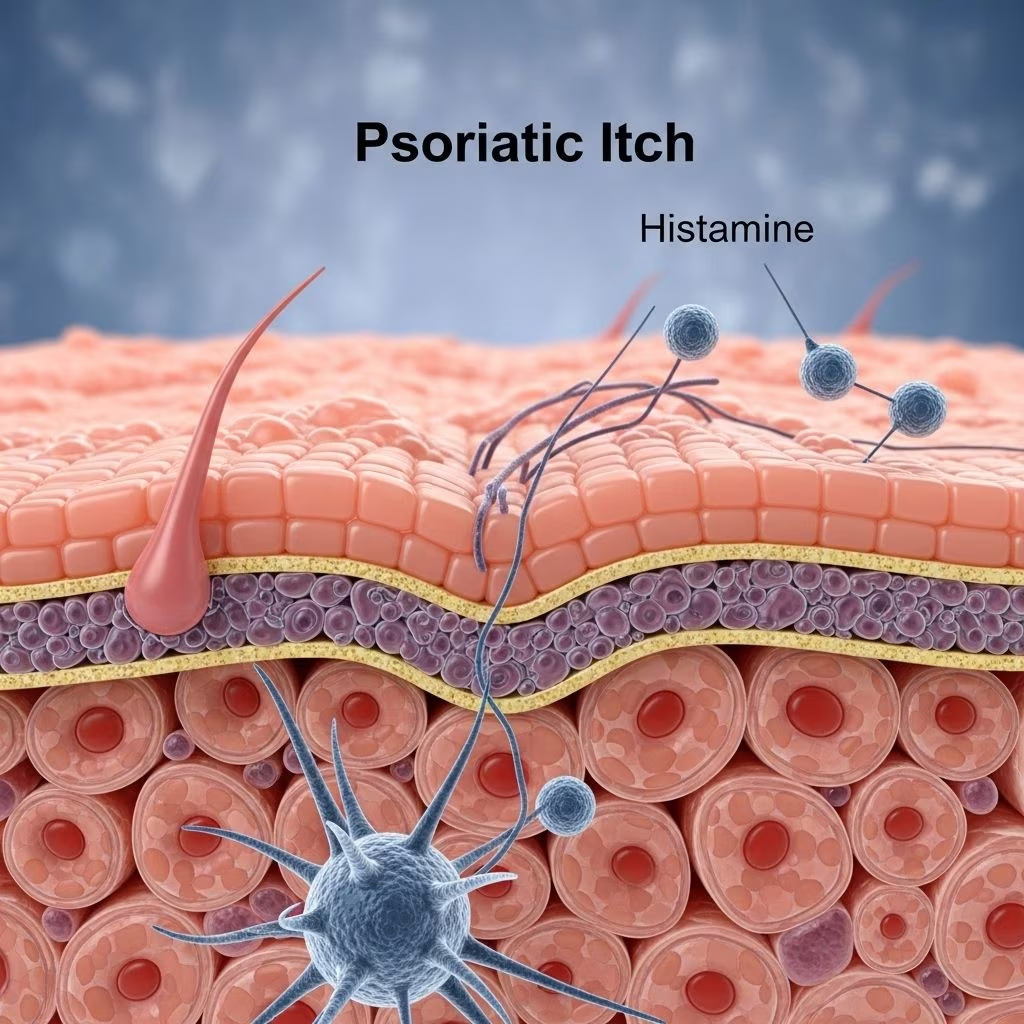
While psoriasis is classically a T-cell-mediated disease, histamine may contribute to its pathogenesis at multiple levels. Histamine can stimulate keratinocyte proliferation and is found at elevated levels in some psoriatic lesions. Plasmacytoid dendritic cells (pDCs), which are abundant in psoriatic skin, highly express H4R. Activation of H4R can regulate cytokine production and migration of pDCs, which are potent producers of pro-inflammatory cytokines absent in healthy skin. Thus, histamine, via H4R, may play a role in both the inflammatory and proliferative components of psoriasis.
Evidence for Histamine in Psoriatic Itch
The role of histamine in psoriatic itch is less clear. Some studies have reported increased histamine levels in psoriatic skin, while others found no significant difference compared to healthy skin. In animal models, such as the imiquimod (IMQ)-induced psoriasis-like model, histamine levels peak early and then return to baseline, but scratching behavior (a proxy for itch) can be modulated by both H2R and H4R ligands.
Intriguingly, human studies—particularly of scalp psoriasis—have shown that itch severity does not correlate with histamine expression or histamine-positive cell counts. Instead, markers of neurogenic and immunogenic inflammation, such as increased expression of PAR2, substance P, TRPV3, TRPM8, and IL-23, are more closely associated with itch intensity. This suggests that, while histamine may contribute to some aspects of psoriasis, it is not the primary driver of itch in this disease.
Mechanisms of Itch in Psoriasis: Beyond Histamine
Psoriatic itch appears to be mediated by a complex interplay of neural and immune factors. Key findings include:
- Neurogenic Factors: Increased expression of neuropeptides (e.g., substance P) and sensory neuron receptors (e.g., TRPV3, TRPM8) in itchy psoriatic skin, which are known amplifiers of itch sensation.
- Immune Mediators: IL-17 and IL-22, cytokines central to psoriasis pathogenesis, may also sensitize sensory neurons and enhance itch. Monoclonal antibodies targeting IL-17 have been shown to reduce itch severity in psoriasis. IL-22, elevated in psoriasis, may activate itch-specific neural pathways.
- Non-Histaminergic Pathways: The lack of correlation between histamine and itch severity in human psoriasis, especially in the scalp, supports the idea that most psoriatic itch is non-histaminergic.
Antihistamine Efficacy in Psoriasis: Clinical and Preclinical Data
Given the evidence, the effectiveness of antihistamines in alleviating psoriatic itch is variable and often limited. Here’s a synthesis of current data:
Preclinical Models
In animal models, H4R antagonists can reduce scratching behavior, especially when combined with H2R agonists, though the H4R antagonist alone had a less pronounced effect. However, these findings are not directly translatable to human psoriasis, where non-histaminergic itch predominates.
Clinical Observations
Most clinical experience and research indicate that traditional antihistamines (H1R blockers, e.g., diphenhydramine) have little to no effect on psoriatic itch, consistent with the finding that psoriatic itch is not primarily histamine-mediated. Some patients may report mild relief, possibly due to sedation or placebo effects.
Future Directions
Emerging research is exploring the potential of H4R antagonists, given their role in both inflammation and itch in preclinical models. However, human trials are needed to confirm efficacy, especially given the complex, non-histaminergic nature of most psoriatic itch.
Emerging Targets for Psoriatic Itch
Given the limitations of antihistamines, new therapeutic strategies are being investigated:
- IL-17/IL-23 Inhibitors: Biologic agents targeting these cytokines not only improve skin disease but also reduce itch, supporting a role for these pathways in pruritus.
- Neurokinin-1 Receptor Antagonists: Substance P, acting via NK1R, is a potential target for refractory itch.
- TRP Channel Modulators: Targeting TRPV3 or TRPM8 may offer relief for neurogenic itch components.
- PAR2 Antagonists: Protease-activated receptor 2 is upregulated in itchy psoriatic skin and is a novel target for itch modulation.
Frequently Asked Questions (FAQs)
Q: Do antihistamines help with itch in psoriasis?
A: Most evidence suggests that traditional antihistamines (e.g., diphenhydramine) are largely ineffective for psoriatic itch, as the underlying pathways are not primarily histaminergic. Some relief may be due to sedation rather than a direct anti-itch effect.
Q: What causes itch in psoriasis?
A: Itch in psoriasis is driven by a complex mix of neurogenic, immune, and inflammatory factors, including increased expression of neuropeptides (e.g., substance P), TRP channels, and cytokines such as IL-17 and IL-22. Histamine does not appear to be the main mediator in most cases.
Q: Are there any new treatments for psoriatic itch?
A: Emerging therapies include biologics targeting IL-17/IL-23, neurokinin-1 receptor antagonists, and drugs modulating TRP channels or PAR2, all of which are under investigation for refractory psoriatic itch.
Q: Why doesn’t my itching improve with antihistamines?
A: Psoriatic itch is largely non-histaminergic, so antihistamines are not expected to be effective. The itch arises from different neural and immune pathways that are not blocked by antihistamines.
Q: Are there differences in itch mechanisms between scalp and body psoriasis?
A: Some studies suggest that scalp psoriasis may involve higher expression of certain itch mediators (e.g., IL-22), but the overall non-histaminergic nature of itch is consistent across sites.
Summary and Future Directions
Psoriatic itch is a complex, distressing symptom that is not fully explained by histamine or classical allergic pathways. While histamine may contribute to some aspects of psoriatic inflammation, particularly via H4R on immune cells, the predominant itch mechanisms involve neurogenic and immunogenic factors such as substance P, TRP channels, IL-17, and IL-22. Consequently, traditional antihistamines are generally ineffective, and new therapeutic strategies targeting these alternative pathways are needed. Continued research into the neuroimmune interface of psoriatic itch is critical for developing more effective, targeted therapies.
References
- https://www.medicaljournals.se/acta/content/html/10.2340/00015555-3674
- https://news.med.miami.edu/scratching-for-an-explanation-for-psoriatic-itchy-scalp/
- https://pmc.ncbi.nlm.nih.gov/articles/PMC7664892/
- https://www.ncbi.nlm.nih.gov/books/NBK200934/
- https://www.psoriasis.org/psoriasis-and-the-mad-itch-transcript/


