


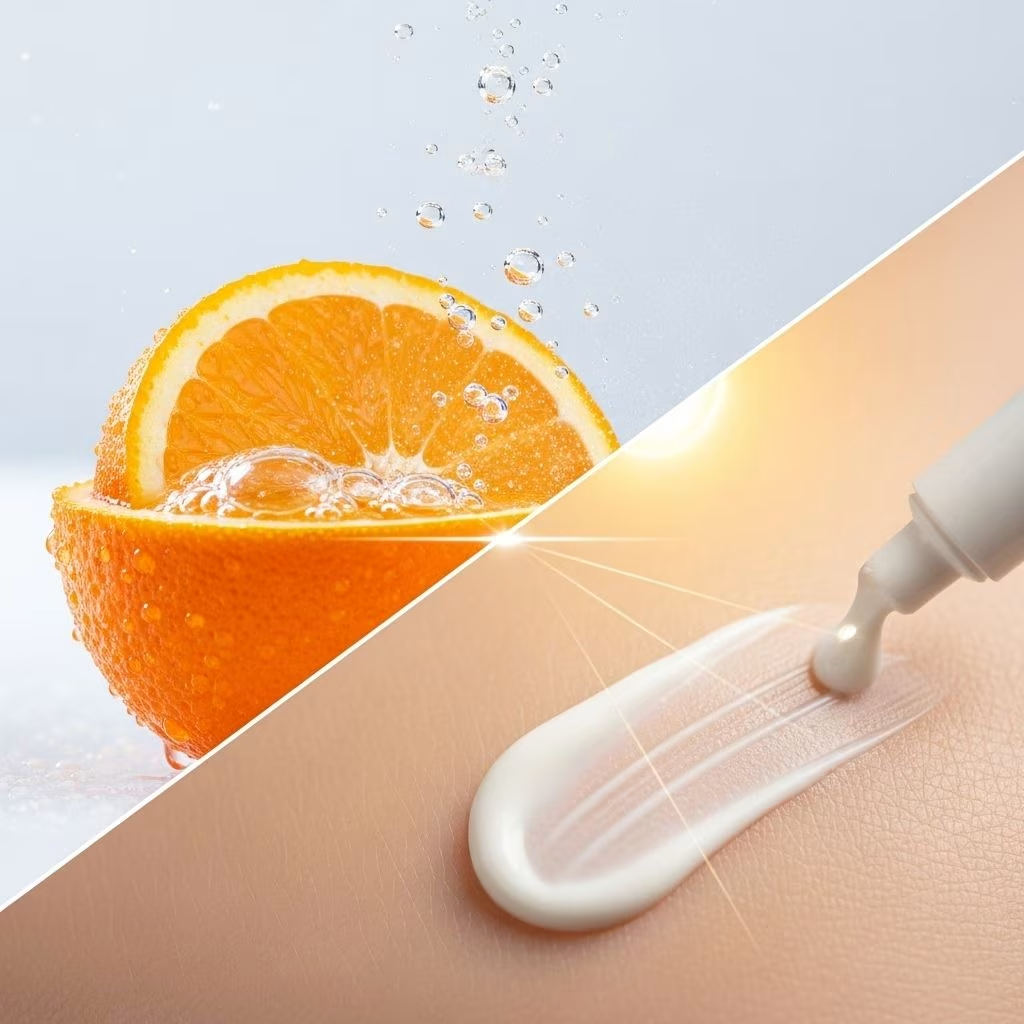
Vitamin C & Sunscreen: Maximize UV Protection and Enhance Skin Health
Research consistently verifies that combining vitamin C with sunscreen yields one of the most powerful strategies for protecting skin against harmful UV rays, environmental stressors, and premature aging. By layering the antioxidant prowess of vitamin C underneath the physical or chemical shield of sunscreen, individuals achieve multi-layered defense that far surpasses the use of either product alone.
Introduction
UV radiation represents one of the most significant environmental stressors affecting skin health. While regular sunscreen use is the gold standard for UV protection, growing evidence highlights how vitamin C, a potent antioxidant, works synergistically with sunscreen to deliver comprehensive defense against both visible and invisible photodamage. This article explores the science, practical routines, benefits, and best practices of using vitamin C in tandem with sunscreen for optimal skin protection.
Role of Vitamin C in Skin Protection
Vitamin C (ascorbic acid) is essential for skin health due to its multifaceted properties:
- Antioxidant activity: Neutralizes free radicals generated by UV exposure before they can damage cells.
- Stimulation of collagen synthesis: Encourages production and stabilization of collagen fibers, supporting skin elasticity and repair.
- Reduction of pigmentation: Inhibits melanin overproduction, leading to a brighter, more even skin tone and gradual reduction of dark spots.
- Repair and regeneration: Enhances skin barrier recovery and reduces inflammation after sun exposure.
Applied topically, vitamin C is at its most potent in serum form, easily absorbed, and clinically demonstrated to protect skin from environmental damage.
How Sunscreen Protects Your Skin
Sunscreen forms a physical or chemical shield on the skin surface, reducing the penetration of UV rays. Its main functions include:
- Blocking or absorbing UVB radiation: Prevents sunburn, DNA damage, and reduces risk of skin cancer.
- Preserving collagen and elastin: Reduces breakdown of these proteins, helping maintain skin’s firmness and youthfulness.
- Preventing hyperpigmentation: Stops formation and worsening of sun-induced dark spots and age spots.
Sunscreens come in two main types:
- Chemical sunscreen: Absorbs UV radiation via organic compounds.
- Physical (mineral) sunscreen: Reflects and scatters UV rays using ingredients such as zinc oxide or titanium dioxide.
Both forms provide broad-spectrum protection but may differ in texture, feel, and suitability for sensitive skin.
Synergistic Benefits: Vitamin C & Sunscreen
Using vitamin C and sunscreen together leads to additive and synergistic photoprotection:
- Dual barrier against UV damage: Sunscreen blocks rays; vitamin C neutralizes free radicals that escape sunblock’s barrier.
- Enhanced SPF effectiveness: Studies show vitamin C boosts the absorption and efficacy of sunscreen, resulting in a higher defense against UV exposure.
- Minimized photoaging: The combination helps prevent wrinkles, fine lines, loss of elasticity, and dark spots more efficiently than sunscreen alone.
- Faster post-exposure skin recovery: Vitamin C eases inflammation and supports healing after incidental sunburn.
The synergy is demonstrated in human and animal studies, including a seminal publication in Acta Dermato-Venereologica and clinical research showing additive protection against UVB sunburn cell formation and oxidative stress.
Science of Enhanced Photoprotection
| Protection Mechanism | Sunscreen Alone | Vitamin C Alone | Combined Effect |
|---|---|---|---|
| Blocks UV rays | ✔️ | ✖️ | ✔️ |
| Neutralizes free radicals | ✖️ | ✔️ | ✔️ |
| Boosts collagen synthesis | ✖️ | ✔️ | ✔️ |
| Reduces hyperpigmentation | ✔️ (partial) | ✔️ | ✔️ (enhanced) |
| Reduces inflammation | ✖️ | ✔️ | ✔️ |
This table illustrates that maximum skin protection and anti-aging benefits are only achieved when vitamin C and sunscreen are used together, not as alternatives to one another.
Collagen Synthesis and Hyperpigmentation Control
Collagen is the structural protein responsible for skin firmness, elasticity, and youthful appearance. UV exposure rapidly breaks down collagen, accelerating aging signs. Topical vitamin C helps:
- Stimulate new collagen production and restore skin texture.
- Reduce wrinkles, plump skin, and improve overall appearance.
Hyperpigmentation—manifested as sunspots, melasma, or uneven skin tone—is another consequence of chronic UV exposure. By inhibiting tyrosinase (the enzyme responsible for melanin synthesis), vitamin C:
- Prevents development of new dark spots.
- Gradually lightens existing hyperpigmentation.
Sunscreen prevents further pigment formation, while vitamin C corrects and brightens the skin. Their combination offers comprehensive pigmentation control.
Guide: How to Layer Vitamin C and Sunscreen Effectively
To maximize UV protection, follow these dermatologist-recommended steps:
- Cleanse your skin to remove impurities and prepare for treatment.
- Apply a vitamin C serum (15-20% concentration of L-ascorbic acid or a stabilized form) while skin is slightly damp. Gently press into face and neck.
- If needed, layer a moisturizer (preferably containing vitamin C for added benefit).
- Wait 2-5 minutes or until product is fully absorbed.
- Apply a broad-spectrum SPF 30 or higher sunscreen liberally to all exposed areas. Use approximately a nickel-sized amount for face and neck. Physical sunscreens (zinc oxide/titanium dioxide) are especially compatible with vitamin C.
- For best results, wait 15 minutes before sun exposure to allow the sunscreen to bind and form a complete protective layer.
- Reapply sunscreen every 2 hours, especially after sweating or swimming, as vitamin C does not provide physical protection.
Tip: Vitamin C is safe for daily use, even in summer. It does not increase photosensitivity and is highly recommended year-round for enhanced protection.
Common Myths & Mistakes
- Myth: Vitamin C can replace sunscreen.
Fact: Vitamin C boosts but does not substitute the need for SPF. Only sunscreen can block or absorb UV rays. - Myth: Vitamin C causes photosensitivity.
Fact: Vitamin C does not make the skin more sensitive to sunlight; it protects against sun damage. - Mistake: Applying vitamin C after sunscreen.
Solution: Vitamin C should be applied first to penetrate the skin and act at a cellular level, followed by sunscreen as the external shield. - Myth: High SPF negates need for antioxidants.
Fact: Even high SPF allows some rays and free radicals to penetrate; antioxidants like vitamin C neutralize resulting damage.
Choosing the Right Products: Forms, Concentrations, and Combinations
For maximum efficacy, select products based on the following criteria:
- Vitamin C serum: Look for 15-20% L-ascorbic acid or stabilized derivatives (ascorbyl glucoside, magnesium ascorbyl phosphate). Ensure packaging is airtight and opaque to prevent oxidation.
- Sunscreen: Prefer broad-spectrum SPF 30 or higher. Mineral sunscreens suit sensitive skin; chemical screens may feel lighter but require proper layering.
- Combination products: Some modern formulations integrate vitamin C with sunscreen, offering convenient protection and application, but layering allows independent adjustment of concentration and compatibility.
Patch test new products, especially if prone to sensitivity or using higher vitamin C strengths.
Frequently Asked Questions
Q: Can I use vitamin C serum in the morning before my sunscreen?
A: Yes, using vitamin C serum in the morning provides daily free radical defense and complements sunscreen’s UV protection. Apply vitamin C first, then sunscreen.
Q: Will vitamin C cause sun sensitivity or irritation?
A: No, vitamin C is not a photosensitizer and does not increase the risk of sunburn. If irritation occurs, try a lower concentration or a derivative.
Q: Is high-dose vitamin C better for UV protection?
A: 10-20% L-ascorbic acid is generally effective for most people. Stronger concentrations don’t always translate to better results and may irritate sensitive skin.
Q: Can I use vitamin C and sunscreen on sensitive skin?
A: Yes, but choose formulas without fragrances, alcohol, or harsh additives. Consider magnesium ascorbyl phosphate (gentle vitamin C derivative) and mineral SPF for compatibility.
Q: What other antioxidants work with vitamin C for enhanced protection?
A: Vitamin E and ferulic acid are often paired with vitamin C to stabilize and amplify its protective effects. Look for serums containing these for a well-rounded defense.
Summary & Key Takeaways
- Pairing vitamin C with sunscreen yields superior skin protection, prevents premature aging, and promotes radiant, healthy skin.
- Vitamin C neutralizes free radicals, boosts collagen synthesis, and corrects pigmentation, while sunscreen provides a necessary barrier against UV rays.
- For optimal results, layer vitamin C serum beneath broad-spectrum sunscreen, and use daily for maximum benefit.
- Neither product can replace the other. Their synergy is the gold standard in modern skin defense and anti-aging routines.
By adopting this proven combination, individuals unlock the most advanced and comprehensive protection for their skin, maintaining youthful, resilient, and luminous skin for years to come.
References
- https://hydropeptide.com/blogs/sun-protection/what-is-vitamin-c-how-does-it-boost-sun-protection
- https://www.drdennisgross.com/how-vitamin-c-protects-you-from-uv-damage.html
- https://www.miloon.eu/en/vitamin-c-and-sunscreen-a-panacea-for-the-skin-even-in-summer/
- https://www.dermalogica.com/blogs/living-skin/vitamin-c-spf
- https://www.wanderbeauty.com/blogs/the-essentials-edit/why-vitamin-c-and-spf-should-be-paired
- https://pubmed.ncbi.nlm.nih.gov/8869680/
- https://www.lotusbotanicals.com/blogs/news/radiate-confidence-how-vitamin-c-sunscreen-enhances-your-natural-glow
- https://www.health.harvard.edu/blog/why-is-topical-vitamin-c-important-for-skin-health-202111102635


