


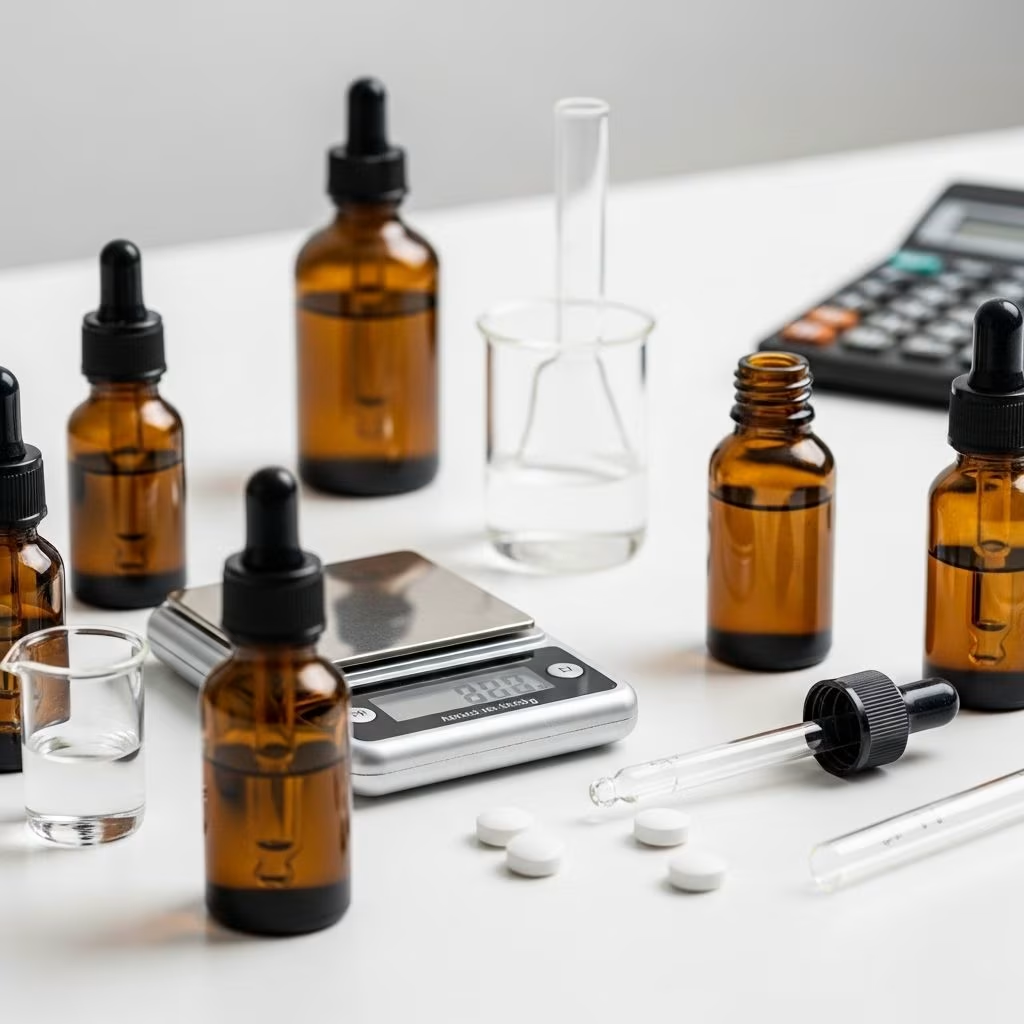
Understanding how to calculate skincare active load is fundamental to creating safe, effective, and balanced skincare formulations. Whether you’re a professional formulator or an enthusiast creating products at home, knowing how to determine the total concentration of active ingredients in your formulation ensures both efficacy and safety. This comprehensive guide will walk you through the mathematics, principles, and practical applications of calculating skincare active load.
Understanding Active Load in Skincare Formulation
Active load refers to the total concentration of functional ingredients in a skincare formulation that provide specific therapeutic or cosmetic benefits. Unlike inactive ingredients such as water, preservatives, or emulsifiers that serve as vehicles or stabilizers, active ingredients directly address skin concerns like aging, hyperpigmentation, acne, or dehydration. Calculating the cumulative active load is critical because using too many actives or exceeding recommended concentrations can lead to skin irritation, barrier disruption, and compromised product stability.
The concept of active load becomes particularly important when formulating products that contain multiple active ingredients. Each active contributes to the overall stress placed on the skin’s barrier function. For instance, combining vitamin C, retinol, and alpha hydroxy acids in high concentrations might create an active load that exceeds what most skin types can tolerate, even if each individual ingredient falls within safe usage ranges.
The Foundation: Basic Percentage Calculations
Before diving into complex formulations, you must master the fundamental formula for calculating ingredient percentages. The core equation that governs all skincare formulation mathematics is straightforward yet powerful. The percentage of any ingredient in your formulation equals the weight of that ingredient divided by the total formulation weight, multiplied by 100.
The formula appears as: Ingredient Percentage = (Ingredient Weight / Total Formulation Weight) × 100
Consider a practical example: if you’re creating a 50-gram moisturizer and want to include 10 grams of a particular carrier oil, the calculation would be (10g / 50g) × 100 = 20%. This means your oil comprises 20% of the total formulation. This same mathematical principle applies whether you’re calculating the percentage of water, emulsifiers, preservatives, or active ingredients.
When working with active ingredients specifically, you apply this identical formula. If you’re formulating a 50-gram serum and wish to include 2 grams of an active ingredient like niacinamide, the calculation becomes (2g / 50g) × 100 = 4%. This tells you that your serum contains 4% niacinamide, which falls within the typically recommended range of 2-10% for this particular active.
Calculating Total Active Load
The total active load calculation requires you to sum the percentages of all active ingredients in your formulation. This cumulative figure represents the total concentration of functional ingredients your skin will encounter when using the product. The process involves several systematic steps that ensure accuracy and safety.
First, identify all active ingredients in your formulation. These typically include acids (glycolic, lactic, salicylic), antioxidants (vitamin C, vitamin E, ferulic acid), anti-aging compounds (retinoids, peptides), brightening agents (kojic acid, arbutin), and hydrating actives (hyaluronic acid, niacinamide). Next, determine the recommended usage range for each active ingredient based on scientific literature, supplier recommendations, or regulatory guidelines.
Calculate the percentage of each active ingredient using the basic percentage formula. Then, sum all the individual active percentages to determine your total active load. Finally, compare your total active load against recommended maximums for the product type and intended use. A well-balanced facial serum might have a total active load between 10-25%, while a gentle daily moisturizer might maintain an active load of 5-15%.
Standard Active Load Ranges by Product Type
Different skincare products require different active load considerations based on their intended use, application frequency, and contact time with skin. Understanding these ranges helps you formulate products that are both effective and safe for consumer use.
Facial cleansers typically maintain lower active loads because they’re rinsed off quickly. Face cleansers usually contain around 8-10% total active matter, composed primarily of mild surfactants rather than treatment actives. The brief contact time means higher concentrations would be wasteful and potentially irritating.
Leave-on serums and treatment products can accommodate higher active loads, typically ranging from 15-30% total active ingredients. These concentrated formulations are designed to deliver significant amounts of functional ingredients directly to the skin. However, the specific actives chosen and their interactions must be carefully considered to avoid irritation.
Daily moisturizers generally maintain moderate active loads between 5-15%. These products balance hydration and barrier support with therapeutic benefits, making them suitable for daily use without overwhelming the skin. Night creams may push slightly higher, ranging from 10-20%, since skin repair processes are most active during sleep and users aren’t exposed to environmental stressors.
Targeted treatments like spot treatments or intensive anti-aging products might concentrate a single active at higher percentages (up to 20% for certain ingredients) while keeping overall active load moderate by limiting the number of different actives included.
Working With Surfactant Active Matter
Surfactants present a unique calculation challenge because they’re sold at various concentrations of active surfactant matter (ASM). The percentage listed on a surfactant supplier’s specification sheet indicates the concentration of actual cleansing molecules, with the remainder being water or other diluting agents. This means you must account for this dilution when calculating total active matter in cleansing formulations.
For example, if you use Sodium Laureth Sulfate at 28% active matter and include it at 20% in your formulation, the actual active surfactant matter contributed is (20 × 0.28) = 5.6%. If you then add Cocamidopropyl Betaine at 30% active matter, included at 10% in your formula, it contributes (10 × 0.30) = 3% active matter. Your total ASM would be 5.6% + 3% = 8.6%.
Shampoos typically contain 10-15% total active surfactant matter, with lower concentrations (around 10%) suitable for dry or chemically-treated hair, and higher concentrations (up to 15%) appropriate for oily hair types. Body washes and shower gels generally require 15-20% total active matter to effectively cleanse larger body surface areas. Face cleansers need only 8-10% active matter since facial skin is more delicate and the cleansing requirements are less demanding than those for body or hair.
Calculating Active Ingredient Interactions and Compatibility
Beyond simple arithmetic, calculating active load must account for ingredient interactions and compatibility. Some actives work synergistically, allowing you to use lower concentrations of each while achieving better results. Others compete for penetration pathways or create pH conflicts that reduce overall efficacy.
Synergistic combinations can reduce required active load while maintaining effectiveness. Vitamin C (L-ascorbic acid) and vitamin E (tocopherol) work together to enhance antioxidant protection, allowing you to use 10-15% vitamin C instead of 20% when properly combined. Niacinamide and peptides complement each other’s anti-aging effects without competing for the same mechanisms of action, making them ideal partners in age-prevention formulations.
Conflicting actives require careful load management to prevent irritation. Combining multiple exfoliating acids (glycolic, lactic, and salicylic) in high concentrations creates an excessive active load that can compromise the skin barrier. If formulating with multiple acids, keep the total acid concentration below 10% for daily-use products. Retinoids and vitamin C both require low pH environments for stability and efficacy but can be highly irritating when combined, suggesting these powerhouse actives should be used in separate products or formulations designed specifically to accommodate both.
Practical Formulation Examples With Active Load Calculations
Translating theory into practice helps solidify understanding of active load calculations. Consider a brightening serum designed to address hyperpigmentation. Water comprises 70% of the formula, providing the base. Glycerin at 5% serves as a humectant. You include 10% vitamin C (L-ascorbic acid), 4% niacinamide, 2% alpha arbutin, and 1% licorice root extract. The remaining 8% consists of preservatives, pH adjusters, and emulsifiers.
Calculating the active load: vitamin C (10%) + niacinamide (4%) + alpha arbutin (2%) + licorice root extract (1%) = 17% total active load. This falls within the appropriate range for a treatment serum, though users should introduce it gradually since it contains multiple potent actives.
For a gentle anti-aging moisturizer suitable for daily use, you might formulate with 60% water, 15% emollient oils, 5% glycerin, 3% niacinamide, 2% peptide complex, 1% antioxidant blend (vitamin E and ferulic acid), and 0.5% retinol. Preservatives, emulsifiers, and texture modifiers comprise the remaining percentage.
The active load calculation: niacinamide (3%) + peptide complex (2%) + antioxidant blend (1%) + retinol (0.5%) = 6.5% total active load. This moderate active load makes the product suitable for daily use while still providing meaningful anti-aging benefits. The relatively low retinol concentration (0.5%) is appropriate for a product intended for regular use and reduces the risk of irritation.
Scaling Formulations While Maintaining Active Load
Once you’ve perfected a formulation at a small batch size, you’ll need to scale up or down while maintaining the same active load percentages. The mathematics remains consistent regardless of batch size, but careful attention to measurement precision becomes increasingly important.
When scaling up, multiply the desired batch size by each ingredient percentage expressed as a decimal. If your original 50-gram formulation contained 5% of an active ingredient (2.5 grams), and you want to create a 500-gram batch, the calculation is (5% ÷ 100) × 500g = 25 grams. Each ingredient scales proportionally, maintaining the same percentages and therefore the same active load.
Scaling down follows the same principle. To create a 10-gram test batch from your 50-gram formula, you’d calculate (5% ÷ 100) × 10g = 0.5 grams of that 5% ingredient. However, at very small scales, measurement precision becomes challenging. Digital scales accurate to at least 0.01 grams are essential for small-batch formulation work, particularly when measuring potent actives where even small variations can significantly impact safety and efficacy.
Safety Considerations and Maximum Active Loads
While maximizing active ingredient concentrations might seem desirable for enhanced efficacy, there are important safety boundaries that must be respected. Regulatory bodies like the European Union’s Scientific Committee on Consumer Safety (SCCS) and the Personal Care Products Council provide guidance on maximum safe usage levels for various active ingredients.
Individual active ingredient maximums vary widely based on the compound’s potency and safety profile. Retinol in over-the-counter products typically maxes out at 1% concentration, though prescription retinoids can go higher under medical supervision. Alpha hydroxy acids (glycolic, lactic) are generally considered safe up to 10% in leave-on products with appropriate pH buffering. Vitamin C (L-ascorbic acid) shows efficacy between 10-20%, with higher concentrations increasing irritation risk without proportional benefit increases. Niacinamide demonstrates excellent tolerability up to 10%, though benefits plateau around 5% for most applications.
Even when individual actives fall within safe ranges, cumulative active load matters. A formulation containing 1% retinol, 10% glycolic acid, 15% vitamin C, and 5% niacinamide would have a 31% active load—technically within individual ingredient limits but likely too aggressive for most skin types. Responsible formulation balances efficacy with tolerability, considering that consumers often use multiple products in their routines, compounding active exposure.
Tools and Resources for Active Load Calculation
Modern formulators have access to various tools that simplify active load calculations and reduce mathematical errors. Spreadsheet programs like Microsoft Excel or Google Sheets can be customized to automatically calculate ingredient percentages and total active loads as you adjust formulation inputs. Create columns for ingredient names, weights, percentages, and whether each ingredient is considered an active. The spreadsheet can sum all active percentages automatically, updating in real-time as you modify the formulation.
Online calculators specifically designed for cosmetic formulation provide user-friendly interfaces for percentage calculations. Some advanced calculators account for surfactant active matter automatically, simplifying cleansing product formulation. Many ingredient suppliers provide calculators on their websites to help formulators work with their specific products.
Formulation software designed for professional cosmetic chemists offers comprehensive databases of ingredients, pre-programmed safety limits, stability predictors, and cost calculators alongside active load computation. While these professional tools require investment, they significantly streamline the formulation development process for serious formulators or businesses.
Common Mistakes in Active Load Calculation
Even experienced formulators sometimes make calculation errors that compromise product safety or efficacy. Being aware of common pitfalls helps you avoid these issues in your own formulation work.
One frequent mistake is forgetting to account for the dilution of pre-dissolved ingredients. If you purchase a 50% solution of an active ingredient and add it at 10% to your formula, you’re actually only including 5% of the active ingredient (10% × 0.50 = 5%). Always check supplier specifications for actual active concentration.
Another common error involves confusing weight percentages with volume percentages. Skincare formulation calculations must always be based on weight, as ingredients have different densities. Ten milliliters of one ingredient does not necessarily equal 10 grams. Using a scale rather than measuring cups or spoons prevents this mistake.
Overlooking pH requirements when calculating active load can render potent actives ineffective. L-ascorbic acid requires a pH below 3.5 for stability and penetration, while many other actives need neutral pH ranges. A formulation with impressive active load on paper might deliver poor results if pH isn’t properly managed for each ingredient’s requirements.
Failing to account for active degradation over time is another oversight. Some actives, particularly antioxidants like vitamin C, degrade rapidly when exposed to light, air, or water. Your initial active load calculation might be perfect, but if half the active ingredient has degraded after three months, the product’s efficacy drops significantly. Proper preservative systems, airless packaging, and stability testing address this concern.
Advanced Considerations: pH and Active Load
The relationship between pH and active load adds another layer of complexity to formulation calculations. Many active ingredients require specific pH ranges for optimal stability and efficacy, and adjusting pH can affect the available concentration of certain actives.
Alpha hydroxy acids (AHAs) demonstrate this principle clearly. At higher pH levels, AHAs exist in their ionized salt form, which penetrates skin poorly. At lower pH levels (typically 3.0-4.0), they exist in their acid form, which penetrates effectively but can be more irritating. A formulation containing 8% glycolic acid at pH 4.5 delivers less exfoliating power than the same concentration at pH 3.5, even though the calculated active load remains 8% in both cases.
When formulating products with pH-dependent actives, consider calculating “effective active load” rather than just total active load. This accounts for the percentage of each active that exists in its bioavailable form at the formulation’s final pH. While more complex, this approach provides a more accurate picture of what the skin actually experiences.
Testing and Validating Your Active Load Calculations
Theoretical calculations provide a starting point, but real-world testing validates whether your active load is appropriate. Several assessment methods help ensure your formulation performs as intended while remaining safe for use.
Stability testing evaluates whether your active ingredients remain potent over time. Test samples stored at various temperatures over 3-6 months should maintain at least 90% of their initial active concentration. If testing reveals significant degradation, you might need to reformulate with additional stabilizers or adjust the active load downward to account for expected losses.
Patch testing on human subjects provides safety data. Apply the product to a small area of skin (typically the inner forearm) for 48-72 hours, checking for signs of irritation like redness, itching, or swelling. If your calculated active load produces frequent adverse reactions, consider reducing concentrations or removing problematic ingredient combinations.
pH testing confirms that your formulation’s pH supports active ingredient efficacy. Use a calibrated pH meter rather than pH strips for accuracy. If the pH drifts outside the optimal range for your actives, add appropriate buffers or adjust the formulation to maintain stability.
Consumer use testing gathers real-world feedback on efficacy and tolerability. Beta testers using your product over several weeks can report on results, texture, absorption, and any irritation. This qualitative data helps you understand whether your calculated active load translates to positive user experience.
Frequently Asked Questions
What is the ideal total active load for a facial serum?
Facial serums typically perform well with total active loads between 15-30%, depending on the specific actives used and the target skin concern. Treatment serums addressing specific issues like hyperpigmentation or advanced aging may push toward the higher end, while daily-use serums should remain more moderate at 15-20% to ensure tolerability. The key is balancing efficacy with skin compatibility.
Can I combine retinol and vitamin C in the same formulation?
While technically possible, combining retinol and vitamin C in a single formulation is challenging because they have different pH requirements and can increase irritation risk when used together. Vitamin C (L-ascorbic acid) requires pH below 3.5, while retinol functions best at neutral pH around 5.5-6.0. Most formulators recommend using these powerful actives in separate products applied at different times of day.
How do I calculate active load when using botanical extracts?
Botanical extracts present calculation challenges because their active compound concentrations vary based on extraction method and plant source. Check the supplier’s certificate of analysis for standardization information—for example, “green tea extract standardized to 50% polyphenols.” If using 2% of this extract in your formula, the actual active polyphenol content would be 1% (2% × 0.50 = 1%). Include this calculated percentage in your total active load.
What happens if my total active load exceeds recommended levels?
Exceeding recommended active loads increases the risk of skin irritation, barrier disruption, inflammation, and sensitization. Symptoms might include redness, stinging, peeling, dryness, or breakouts. Even if individual ingredients fall within safe ranges, cumulative active load can overwhelm skin’s tolerance. If you’ve formulated a product with excessive active load, reduce concentrations proportionally or remove some actives to bring the total within appropriate ranges.
How often should I recalculate active load for an existing formulation?
Recalculate active load whenever you reformulate with different ingredient suppliers, as active concentrations can vary between manufacturers. Also recalculate after stability testing if degradation occurs, adjusting initial concentrations upward to account for expected losses over shelf life. Finally, recalculate if you receive customer feedback suggesting the product is too strong or too weak, using the data to fine-tune your active load for optimal results.
Do preservatives and emulsifiers count toward active load?
No, preservatives and emulsifiers are considered functional ingredients rather than actives because they don’t directly address skin concerns. They serve necessary structural and safety functions in the formulation but aren’t included in active load calculations. Active load specifically refers to ingredients that provide therapeutic or cosmetic benefits like anti-aging, brightening, or hydrating effects.
How do I balance active load with product texture and feel?
High active loads can sometimes create texture challenges, as many actives are sticky, oily, or alter product viscosity. Balance efficacy with aesthetics by using texture modifiers like silicones for improved slip, or emollients that enhance spreadability. Consider that consumers are more likely to use a product consistently if it feels pleasant on skin, so don’t sacrifice texture entirely for maximum active load. Sometimes a moderate active load in an elegant formula delivers better real-world results than a highly concentrated product that users avoid.
References
- https://herfruitfulglow.com/blogs/the-formulators-corner/calculating-ingredient-percentages-in-skin-care-formulation
- https://makingskincare.com/surfactant-calculator/
- https://www.sequential.bio/post/how-to-calculate-ingredient-ratios-when-formulating-skincare
- https://www.youtube.com/watch?v=GkSNP_Erw8w
- https://www.skincarecompass.com/blog/skincare-concentration-calculator-guide
- https://exponentbeauty.com/blogs/dose/active-ingredients
- https://chemistconfessions.com/blogs/combine-skincare-actives-like-a-pro
- https://westashevilleaesthetics.com/medical-grade-skincare/decoding-active-ingredients-concentration-levels-that-deliver-results/
- https://www.wellandgood.com/beauty/skin-care-ingredients-check
- https://www.botanicalformulations.com/blog/how-to-convert-into-percentages-in-cosmetic-formulation


