


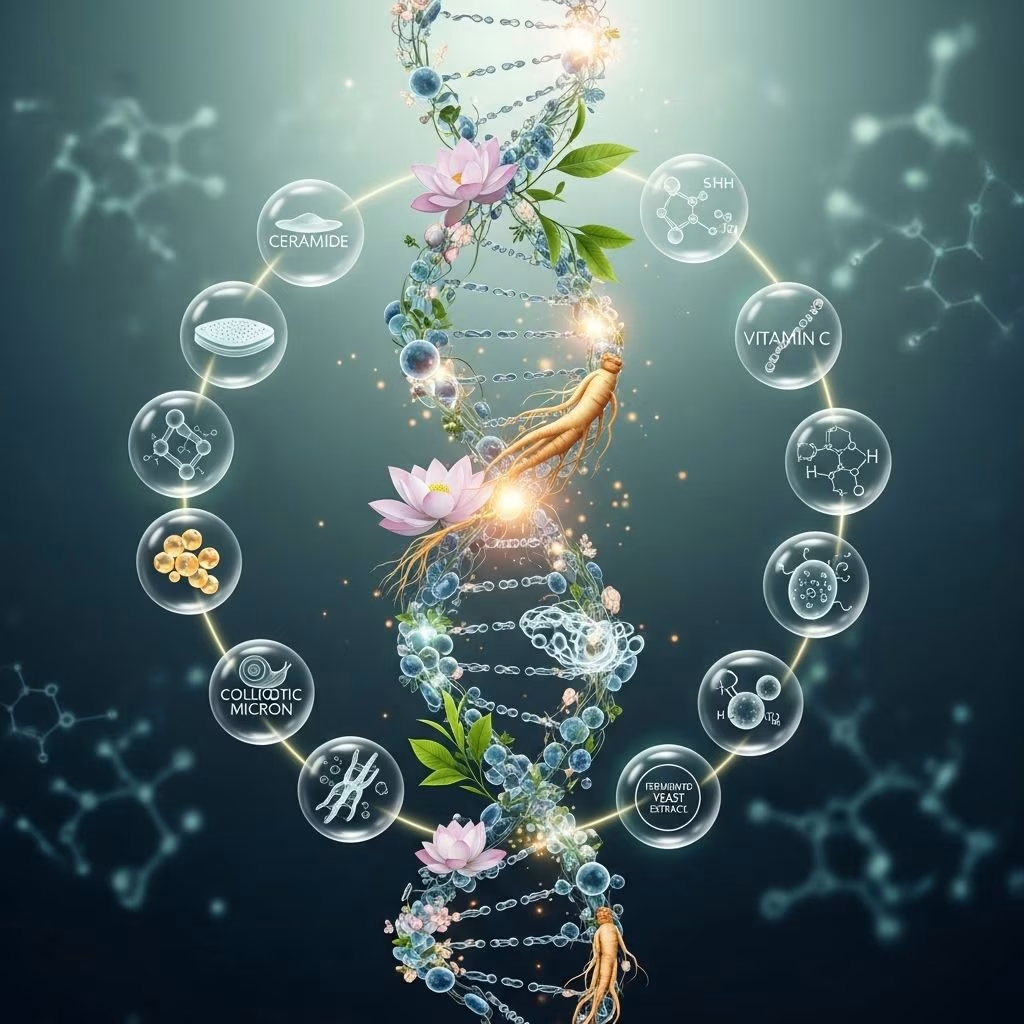
Science of K-Beauty: Ingredients, Innovation, and the Future of Skincare Formulation
Korean beauty, universally known as K-Beauty, has reshaped the global cosmetics industry with its emphasis on scientifically validated ingredients, multi-step routines, and innovative product formulations. This article provides a comprehensive exploration into the science underpinning K-Beauty, focusing on its bioactive ingredients, breakthroughs in innovation, regulatory considerations, and the future of skincare arising from Korea’s cosmetic landscape.
Table of Content
- Introduction to K-Beauty
- Core Principles and Philosophy
- Bioactive Ingredients in Korean Cosmeceuticals
- Scientific Validation and Dermatologic Benefits
- Innovation in Formulation and Product Design
- Regulatory Landscape: Safety and FDA Scrutiny
- Future Directions and Global Impact
- Frequently Asked Questions (FAQs)
Introduction to K-Beauty
The explosion of K-Beauty on the global stage has been fueled by its unique approach to skin health that intertwines traditional wisdom with cutting-edge scientific research. The Korean skincare regimen, commonly known as the “multi-step routine”, highlights the importance of consistent care and layering products that address various skin concerns. It ranges from double cleansing and essence application to serums, ampoules, and sheet masks—all designed to optimize skin barrier function, hydration, and radiance.
South Korean skincare products are now considered among the most innovative and effective in the world, with cosmeceuticals (cosmetics with pharmacologically active ingredients) being widely adopted for their therapeutic potential.
Core Principles and Philosophy of Korean Skincare
- Holistic Approach: Korean skincare emphasizes prevention, nourishment, and gentle care over harsh treatments. The aim is to maintain the skin’s integrity and barrier function, rather than pursue aggressive correction after damage occurs.
- Ingredient Synergy: Formulas are constructed with ingredients working in harmony—blending botanicals, ferment extracts, and bioactives for cumulative benefits.
- Multi-Step Routine: The routine usually involves 7–12 steps, allowing for targeted treatment at every phase of skin health.
- Customization: Products are designed with a variety of skin types and concerns in mind, from dryness and sensitivity to acne and pigmentation.
Bioactive Ingredients in Korean Cosmeceuticals
K-Beauty’s reputation for innovation rests heavily on its use of bioactive ingredients, many of which have roots in traditional medicine and now boast scientific validation for dermatologic use. Below, we examine some of the most influential and unconventional ingredients driving the science behind K-Beauty’s skin solutions.
Table: Key K-Beauty Ingredients and Their Properties
| Ingredient | Source | Published Effects | Notable Products |
|---|---|---|---|
| Snail mucin | Animal (snail secretion) | Hydration, healing, collagen synthesis | Serums, creams |
| Centella asiatica (“Tiger Grass”) | Botanical | Anti-inflammatory, wound-healing, barrier repair | Soothing creams, ampoules |
| Ginseng | Botanical | Antioxidant, anti-aging, skin brightening | Essences, masks |
| Mugwort (Artemisia) | Botanical | Anti-inflammatory, antimicrobial, antioxidant | Toners, essences |
| Bee venom | Animal | Anti-bacterial, anti-inflammatory, stimulates cell turnover | Serums |
| Green tea | Botanical | Antioxidant, photoprotection, calming | Creams, mists |
| Niacinamide | Vitamin B3 derivative | Brightening, anti-aging, barrier repair | Toners, serums |
| Licorice root | Botanical | Anti-inflammatory, brightening, antioxidant | Correctors, serums |
| Fermented botanicals | Biotechnology | Enhanced absorption and efficacy, probiotic effects | Essences, ampoules |
| Salmon DNA (PDRN) | Biotechnology | Tissue regeneration, wound healing | Regenerative ampoules |
Animal-Derived Agents
- Snail mucin contains glycoproteins, hyaluronic acid, and zinc, promoting skin repair, hydration, and collagen synthesis.
- Bee venom offers antibacterial benefits and is thought to speed up cell regeneration; synthetic versions are now available for ethical and allergy concerns.
- Salmon DNA (PDRN) has shown promise for tissue regeneration and wound healing, now featured in high-end ampoules for rapid recovery.
Botanical Powerhouses
- Centella asiatica (Tiger Grass) is scientifically recognized for accelerating wound healing and calming inflammation. Its bioactives support barrier function and reduce sensitivity.
- Ginseng, used in traditional Asian medicine, is appreciated for antioxidant and anti-aging effects, with studies showing its ability to boost circulation and brighten skin tone.
- Mugwort (Artemisia) features anti-inflammatory, antimicrobial, and antioxidant properties. Fermentation boosts the bioavailability of its actives, making it ideal for hydrating, calming, and barrier-strengthening routines.
- Green tea, thanks to its catechins, protects against UV-induced damage and soothes irritation, with established clinical support for its cosmetic use.
- Licorice root and soy have robust anti-inflammatory, brightening, and antioxidant effects. Licorice is particularly effective for hyperpigmentation and calming redness.
Biotechnological and Fermented Ingredients
- Fermented botanicals—a hallmark of Korean innovation. Fermentation increases potency and skin absorption, delivering probiotics and bioactives for barrier support.
- Synthetic peptides and enzymes—used for advanced anti-aging and reparative effects.
Scientific Validation and Dermatologic Benefits
Many K-Beauty ingredients have moved from traditional lore to being validated by modern dermatologic research. Peer-reviewed studies confirm the efficacy of snail mucin, Centella asiatica, green tea, niacinamide, and licorice in skin rejuvenation, wound healing, and photoprotection. These benefits have been confirmed through laboratory, animal, and clinical investigations, supporting the role of bioactives in skin barrier strengthening, anti-inflammatory action, and cell renewal.
- Photoprotection: Green tea, niacinamide, and fermented botanicals have been shown to mitigate UV-induced damage to skin cells.
- Wound Healing: Centella asiatica and snail mucin contribute to faster skin recovery and scar reduction.
- Anti-Aging: Ginseng, niacinamide, and licorice root target fine lines, hyperpigmentation, and skin plumping via antioxidant mechanisms.
Nevertheless, while the growing body of research is promising, more large-scale, placebo-controlled trials are needed to fully elucidate mechanisms and guarantee efficacy.
Innovation in Formulation and Product Design
K-Beauty’s innovations are not simply ingredient-based. The industry has revolutionized product formulation and user experience:
- Fermentation technology: Deepens potency and absorption of plant extracts, supporting barrier function and ‘microbiome’ balance.
- Layering technique: Promotes optimal delivery of actives to skin through lightweight, buildable products.
- Sheet masks and ampoules: Enable intensive treatments and instant benefits, leveraging occlusive application and concentrated doses.
- Textural innovation: Gel-to-water creams, hydrating essences, and ultralight emulsions improve compliance and comfort for all skin types.
- Custom solutions: Address specific skin conditions, from acne to hyperpigmentation, using combinations of validated bioactives.
Global Success Through Cost-Effectiveness and Accessibility
K-Beauty excels in making advanced skincare accessible. Brands harness locally sourced ingredients and advanced R&D techniques while maintaining affordability and attractive packaging—helping their products win over global markets.
Regulatory Landscape: Safety, FDA Scrutiny, and Consumer Confidence
With the international popularity of K-Beauty, regulatory scrutiny has increased, particularly over safety and ingredient transparency:
- Korean cosmetic law: All products must label ingredients to help consumers (and dermatologists) monitor for potential allergens and sensitizers.
- FDA scrutiny: The U.S. Food and Drug Administration (FDA) evaluates imported K-Beauty ingredients for safety, toxicity, and proper labeling. Concerns revolve around lesser-known agents or claims not backed by sufficient U.S.-based evidence.
- Ingredient safety: Popular ingredients like snail mucin, Centella asiatica, and ginseng have sometimes faced questions regarding allergenic potential and safe concentration levels.
- Consumer advocacy: Education on patch testing and awareness of ingredient profiles help users avoid adverse reactions, especially those with sensitivities (e.g., mugwort for ragweed-allergic individuals).
Future Directions and Global Impact
Continued innovation and globalization remain the cornerstones of K-Beauty’s trajectory. The future promises:
- Advanced bioengineering: More personalized, efficacious formulations drawing from biotechnology and synthetic analogues.
- Focus on the skin microbiome: Prebiotic and probiotic ingredients supporting healthy flora for barrier resilience.
- Sustainable sourcing: Increased transparency, ethical harvesting, and vegan alternatives to animal-derived ingredients.
- Data-driven development: Ongoing research into efficacy, safety, and long-term outcomes will refine future K-Beauty products.
- Influence on global standards: Korean innovation is encouraging other regions to elevate rigor, transparency, and creativity in skincare.
Frequently Asked Questions (FAQs)
Q: What distinguishes K-Beauty from Western skincare?
A: K-Beauty prioritizes gentle, multi-step routines and leverages unique bioactive ingredients, many rooted in traditional medicine and validated by modern science, whereas Western skincare often focuses on fewer steps and more aggressive active concentrations.
Q: Are K-Beauty ingredients safe for sensitive skin?
A: Most common K-Beauty ingredients, like Centella asiatica and mugwort, are formulated for soothing and barrier restoration. However, patch testing is advised, particularly for those with known sensitivities or allergies.
Q: Why does the FDA scrutinize certain K-Beauty ingredients?
A: FDA scrutiny arises when novel ingredients—such as snail mucin or ginseng—enter the U.S. market, especially if robust safety or efficacy data are limited. The aim is to ensure consumer safety and honest labeling for all imported products.
Q: What are the most effective anti-aging agents in K-Beauty?
A: Niacinamide, green tea, licorice root, and soy are among the K-Beauty ingredients with strong clinical backing for anti-aging and skin-brightening effects.
Q: Are animal-derived ingredients ethical and vegan-friendly?
A: The market increasingly offers synthetic or plant-based alternatives to traditional animal extracts, allowing vegan users to benefit from similar bioactive profiles.
Further Reading
- Bioactive ingredients in Korean cosmeceuticals: Trends and research evidence
- K-Beauty’s Popular Ingredients Face Scrutiny from the FDA
- The Science Behind Korea’s Most Unconventional Skincare Ingredients
For dermatologists, skincare enthusiasts, and consumers alike, understanding the science of K-Beauty empowers better choices and reveals the global significance of Korea’s cosmetic innovation.
References
- https://pubmed.ncbi.nlm.nih.gov/32100931/
- https://www.provisionfda.com/post/why-k-beauty-s-popular-ingredients-face-scrutiny-from-the-fda
- https://drdavidjack.com/blogs/under-the-microscope/the-science-behind-korea-s-most-unconventional-skincare-ingredients-9
- https://jddonline.com/articles/evidence-for-anti-aging-south-korean-cosmeceuticals-S1545961617P0358X/
- https://skinperfectmedical.com/skin-care-blog/the-science-behind-korean-skincare-what-makes-it-so-effective/
- https://www.databridgemarketresearch.com/whitepaper/innovative-solutions-in-korean-beauty-products-a-comprehensive
- https://www.revivalabs.com/how-k-beauty-has-transformed-skincare-formulations/
- https://pmc.ncbi.nlm.nih.gov/articles/PMC5383743/


