


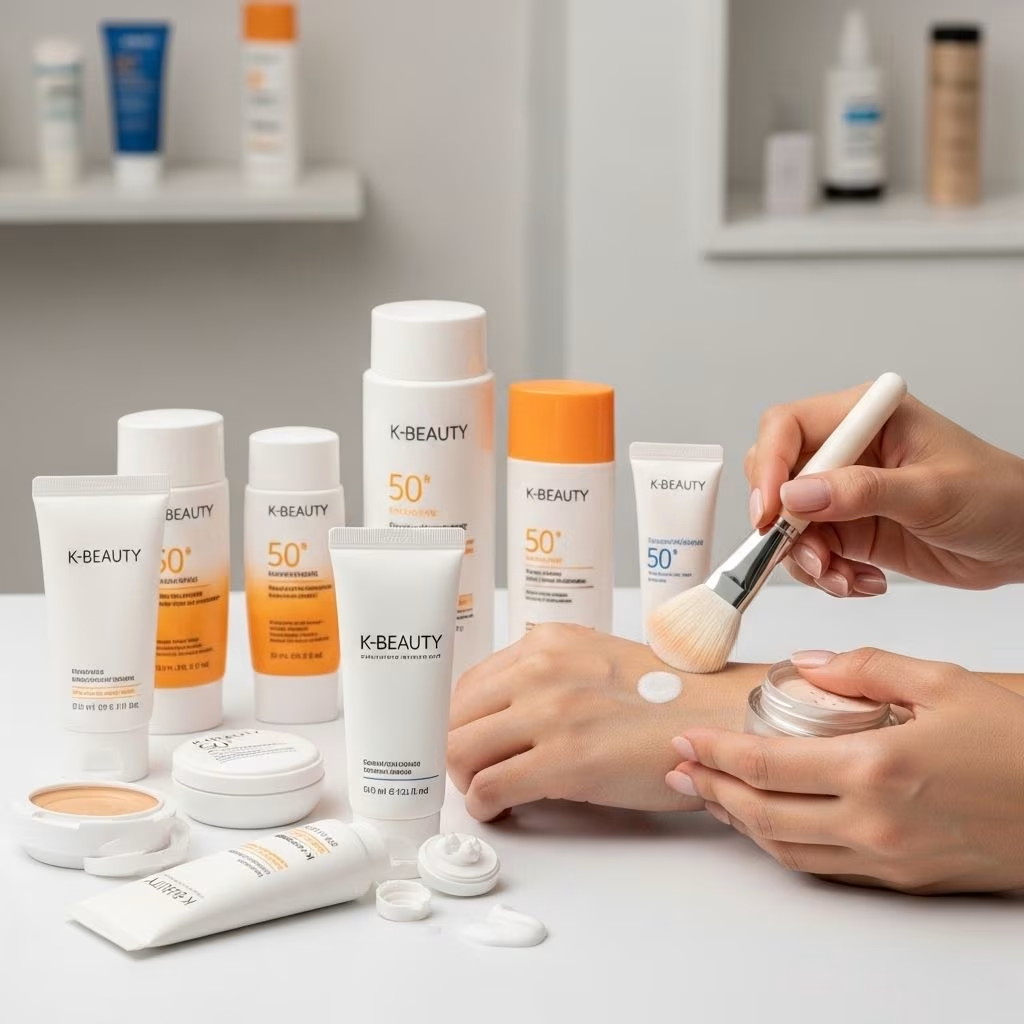
K-Beauty sunscreens are celebrated for their innovative ingredients, light textures, and wearable formulas. Yet, even the most advanced SPF can be challenged by pilling and white cast—two major skincare frustrations. This comprehensive guide explores why these issues happen, which skin types are most affected, and proven solutions to help you enjoy sunscreen that’s invisible, effective, and silky-smooth.
Understanding Sunscreen Pilling
Sunscreen pilling refers to the formation of small, visible flakes or balls when sunscreen (or other product layers) fail to properly absorb and instead clump up on the skin. In K-beauty, known for multi-step routines, pilling can interrupt flawless complexions and compromise protection.
- Pilling feels like rubbings or shavings coming off your face when you touch the skin after sunscreen application.
- The issue is both cosmetic—flaky residue—and functional: flaking sunscreen often means you’re not as protected from ultraviolet (UV) rays as you believe.
- Pilling is distinct from white cast (a milky, pale look), but both can occur together with certain sunscreens.
What Causes Sunscreen Pilling?
Many factors—often a combination—contribute to sunscreen pilling, especially with K-beauty routines known for layering multiple skincare products:
- Layering too many products: Excessive serums, moisturizers, or primers can keep sunscreen from adhering properly.
- Incompatible textures: Mixing water-based and oil-based products, or using products with high silicone content, can lead to conflicts at the surface.
- Not allowing layers to absorb: Rushing through your skincare steps means new products sit atop semi-wet skin, increasing the risk of rolling and flaking.
- Excess product: Overapplication of thick or concentrated sunscreens may never fully absorb, raising odds of residue forming on the skin.
- Skin texture: Rough, flaky, or oily skin impairs absorption, while clogged pores prevent products from sitting smoothly.
- Specific sunscreen formulas: Mineral (physical) sunscreens containing zinc oxide or titanium dioxide are more prone to clumping and white cast.
- Environmental factors: Hard water or mineral residue after cleansing can limit product absorption.
Effective Strategies to Prevent Sunscreen Pilling
Using these prevention tips can drastically reduce or eliminate pilling, keeping both your sun protection and skin finish flawless:
- Start with clean, dry skin: Always cleanse thoroughly to remove oils, dirt, and dead skin that compromise absorption.
- Streamline your routine: Use only essential steps before sunscreen. Fewer layers mean fewer chances for ingredients to clash.
- Layer in the right order: In K-beauty, typical order is toner → essence → serum → moisturizer → sunscreen. Apply sunscreen as the final step in skincare.
- Let each product absorb: Wait 30–60 seconds between layers to allow for absorption before the next step.
- Apply correct amounts: Use enough sunscreen for protection (about 1/4 teaspoon for the face) but avoid excess layers that can’t be absorbed.
- Pat, don’t rub: Instead of brisk rubbing, gently press sunscreen into skin to avoid disturbing previous layers.
Quick Reference: Why Sunscreens Pill
| Cause | Solution |
|---|---|
| Too many product layers | Simplify routine; use fewer, compatible products |
| Ingredient incompatibility | Match product bases (water-with-water, silicone-with-silicone) |
| Poor skin prep (rough/dry/oily skin) | Regular exfoliation; hydrate skin before application |
| Not letting layers absorb | Wait between steps for full absorption |
| Hard water residue | Rinse face with filtered water or use toner after cleansing |
| Applying too much product | Use only the recommended amount of each product |
The White Cast Dilemma in K-Beauty Sunscreens
White cast describes the pale, ashy, or bluish tint left by certain sunscreens—especially mineral formulas—on deeper skin tones. It’s a result of physical UV blockers not blending seamlessly with the skin’s natural pigment and can be particularly pronounced in high-SPF, highly protective sunscreens.
While K-beauty sunscreens are often praised for minimal white cast, some formulas—particularly those intended for sensitive skin or those using non-nano mineral filters—may still leave a visible film after application.
- Mineral sunscreens (zinc oxide, titanium dioxide) scatter UV light but can create a visible residue, especially on darker skin tones.
- Chemical sunscreens (such as those common in Korean and Japanese brands) are more likely to remain clear, but may occasionally leave a sheen or residue in certain lighting or when over-applied.
How to Reduce and Fix White Cast
- Choose newer K-beauty formulas: Many modern Korean sunscreens use advanced technology and finely milled particles to dramatically reduce white cast. Look for terms like “no white cast”, “invisible finish”, or “hydrating gel” on the packaging.
- Apply thin, even layers: Rather than slathering on a thick coat, build in layers and ensure each is well blended before adding more.
- Allow products to sink in: Like with pilling, giving each layer time to absorb can help minimize visible residue.
- Warm sunscreen in your hands: Spreading sunscreen between your fingers before applying can help emulsify and distribute pigment and protectant particles.
- Opt for tinted mineral sunscreen: Tinted variants can help offset white cast, blending better with diverse skin tones while maintaining protection.
Tips for Deeper and Olive Skin Tones
Many Asian sunscreens are now formulated with diverse undertones in mind. Explore tinted options or gel-based chemical formulas for invisible daily protection. A sheer foundation or cushion compact placed lightly over sunscreen can also help tone down residual whiteness without compromising UVA/UVB coverage.
Choosing the Right K-Beauty Sunscreen
- Skin type matters: Gel or water-based SPFs suit oily or acne-prone skin; creamier textures benefit dry or mature skin.
- For sensitive skin: Choose fragrance-free, alcohol-free, or mineral-based options to minimize irritation, but be extra aware of possible pilling or white cast.
- Look for hybrid formulas: K-beauty innovators often blend chemical and physical filters for well-tolerated, invisible sun protection.
Recommended K-Beauty Sunscreen Features
- “Invisible” or clear finish claims
- Lightweight gel or serum-like textures
- Minimal silicone, talc, or mica (reduces pilling risk)
- Quick absorption
- Non-nano mineral filters (if physical protection is preferred)
Application Technique Matters
- Dot-step method: Place small dots on cheeks, forehead, nose, and chin, then gently blend.
- Pat, don’t rub: Use gentle patting motions to press product into the skin, especially with mineral or hybrid sunscreens.
- Apply before makeup: Allow sunscreen to fully absorb before moving on to foundation or BB cream to reduce pilling and ensure even application.
Best Practice Routine for Flawless SPF
- Cleansing: Remove all traces of residue, oil, and makeup from your skin.
- Tone: Apply a light, non-sticky toner to prep and balance the skin.
- Treat: If using serums or ampoules, opt for one lightweight, hydrating formula to avoid congestion.
- Moisturize: Use a fast-absorbing moisturizer and wait 1–2 minutes before applying sunscreen.
- Sunscreen: Dot and gently pat sunscreen over all exposed areas. Wait 5–10 minutes before starting makeup.
- Makeup (optional): Apply with minimal friction using a sponge or puff.
Key Ingredient Considerations
- Silicones (Dimethicone, Cyclopentasiloxane): Provide slip and blurring, but can cause pilling if overused or layered with incompatible products. Avoid layering multiple silicone-heavy steps.
- Talc, Mica, Iron Oxide: Used for mattifying or tint, but may flake when layered. Consider alternative reduce if pilling persists.
- Hyaluronic Acid, Glycerin: Humectants that hydrate and prep skin, improving sunscreen adherence and reducing flakes.
- Zinc Oxide and Titanium Dioxide: Key for mineral sunscreens; look for “micronized” or “nano” for lowest white cast (though this may affect reef safety).
Frequently Asked Questions (FAQs)
Q: Why does my K-beauty sunscreen pill even after following all the steps?
A: Some products simply won’t layer together—especially if their main ingredients (water-based vs. silicone-based, etc.) are incompatible. Try simplifying the routine and swapping in a different serum, moisturizer, or sunscreen.
Q: Are Korean sunscreens better at avoiding white cast?
A: Many K-beauty brands prioritize invisible, comfortable finishes for all skin tones, but results can vary. Always spot test, and check for newer formulas labeled “no white cast” or “clear finish.” If possible, seek out tinted mineral sunscreens on deeper complexions for best blendability.
Q: Do I have to use a makeup primer after sunscreen?
A: Not necessarily. Many modern K-beauty sunscreens double as grippy, smoothing makeup bases. If you prefer primer, match textures (gel-on-gel, or silicone-on-silicone) and avoid over-layering.
Q: Can exfoliation help with pilling?
A: Yes, regular gentle exfoliation removes dead skin, preventing physical barriers that inhibit absorption. Over-exfoliating, on the other hand, may irritate or sensitize the skin, so balance is key.
Q: What should I do if my sunscreen leaves a strong white cast no matter what?
A: Try a chemical or hybrid sunscreen, opt for tinted variants, or apply a sheer foundation/cushion on top. Upgrading to newer-generation Korean/SPF formulas is often the most effective solution.
Summary Tips for Flawless K-Beauty Sunscreen Application
- Cleanse and prep skin for optimal product absorption
- Simplify your routine to limit product conflicts
- Match formulas/textures to your skin type and climate
- Wait between layers and use the recommended amount
- Test for compatibility before committing to full-face application
With these science-backed insights and easy fixes, you can finally say goodbye to sunscreen pilling and white cast—unlocking the true beauty of K-beauty sun protection for every skin type and complexion.
References
- https://supergoop.com/blogs/sun-101/sunscreen-pilling
- https://www.drrachelho.com/blog/prevent-sunscreen-pilling/
- https://seoulceuticals.com/blogs/news/how-to-stop-skincare-from-pilling-the-foolproof-fixes
- https://twindly.com/blog/2024/05/sunscreen-pilling-do-this/
- https://purelystriking.com/blogs/glow-up-skin-secrets-skincare-blog/how-to-stop-sunscreen-pilling


