


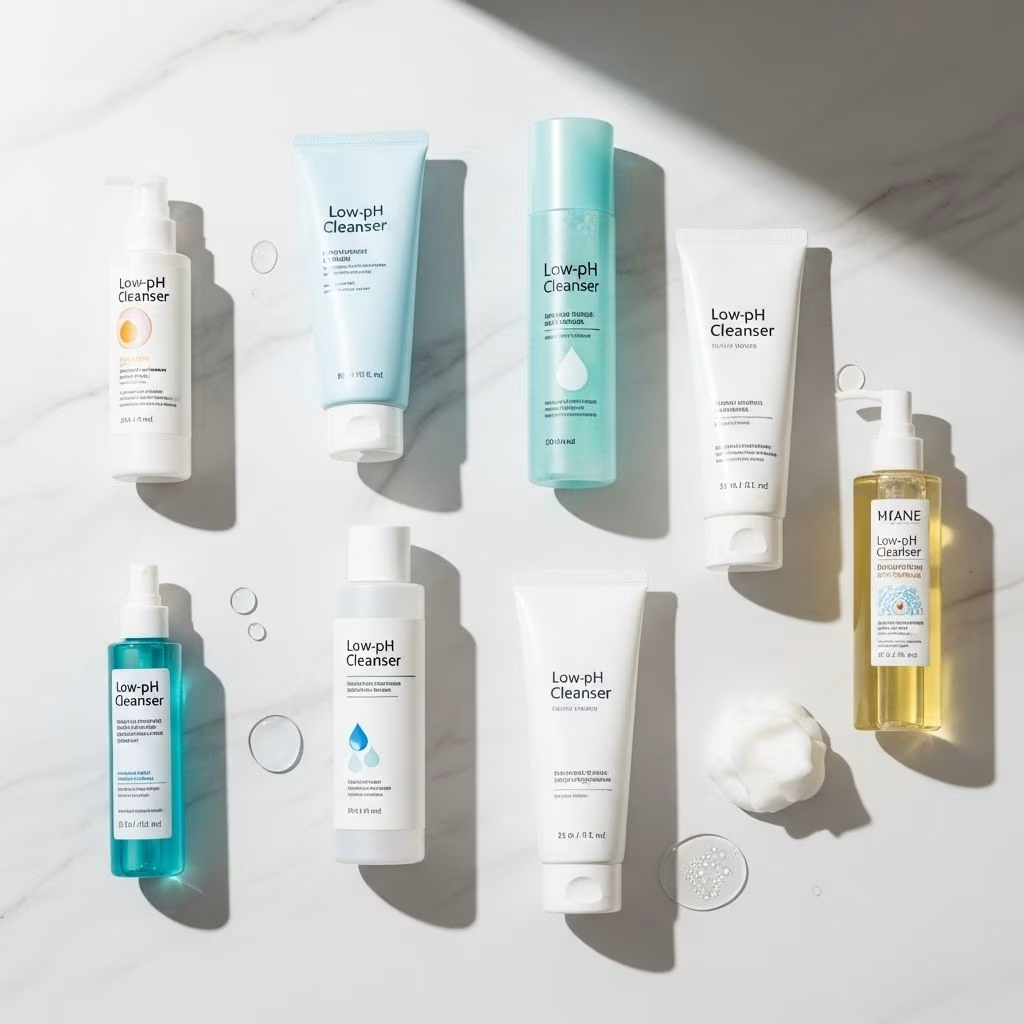
When it comes to effective and gentle skincare, the pH level of your cleanser plays a significant role in maintaining the health and resilience of your skin barrier. As Korean beauty continues to set trends in the global skincare landscape, an increasing spotlight is placed on low-pH cleansers designed to support the skin’s natural acidity.
This article explores the science behind cleanser pH, compares popular Korean low-pH cleansers, and equips you with the knowledge to choose the best option for your skin type.
Understanding pH and the Skin Barrier
The skin’s natural pH typically hovers around 4.5 to 5.5, making it slightly acidic. This acidity forms what is known as the acid mantle, a thin protective film that defends against harmful bacteria, environmental stressors, and moisture loss. This acid mantle is crucial for:
- Protecting against infection and irritation
- Regulating hydration by minimizing transepidermal water loss
- Supporting optimal function of skin enzymes involved in barrier repair and cell turnover
Disruptions to the skin’s pH—especially from cleansers or soaps that are too alkaline (pH 7 and above)—can weaken this defense, leading to dryness, sensitivity, breakouts, and a compromised barrier.
Why Low-pH Cleansers Matter
A low-pH cleanser is typically defined as one with a pH matching or slightly above the skin’s natural range, ideally landing between 4.5 and 6. This ensures that the skin’s acid mantle:
- Remains undisturbed during cleansing
- Recovers quickly after washing
- Minimizes post-cleansing dryness and irritation
High-pH cleansers (such as many traditional foaming soaps) can strip natural oils, lead to a taut sensation, and compromise the skin’s protective barrier. In contrast, using a low-pH cleanser supports:
- Healthy microbiome
- Fewer breakouts and flare-ups for acne-prone skin
- Better retention of moisture for dry or sensitive complexions
Criteria for Choosing Korean Low-pH Cleansers
With a rapidly expanding K-beauty market, dozens of cleansers claim to be “gentle” or “pH balanced.” However, it is essential to:
- Look for an explicit pH value. Brands often state “pH balanced,” but only an actual number (e.g., pH 5.5) offers clarity for appropriate pH alignment.
- Check for detergent type. Sulfate-free surfactants like cocamidopropyl betaine and sodium lauroyl methyl isethionate are gentler alternatives to SLS/SLES.
- Assess for beneficial plant extracts or skin-soothing agents like tea tree, allantoin, or panthenol.
- Identify skin type suitability. Even within low-pH cleansers, some formulas may be more hydrating, while others fit oilier or combination skins.
Comparison Table: Popular Korean Low-pH Cleansers
| Cleanser Name | Approximate pH | Main Actives/Ingredients | Sulfate-Free? | Skin Type |
|---|---|---|---|---|
| COSRX Low pH Good Morning Gel Cleanser | 5.0–6.0 | Tea tree oil, betaine salicylate, plant extracts | Yes | Oily, combination, sensitive |
| Klairs Rich Moist Foaming Cleanser | 5.6–7.6 | Amino acids, hyaluronic acid, various extracts | Yes | Dry, sensitive |
| d’Alba Piedmont Peptide No-Sebum Mild Gel Cleanser | 5.5 | White truffle, peptides, panthenol | Yes | Oily, acne-prone, sensitive |
| Sulwhasoo Snowise EX Cleansing Foam | ~6.0 | Ginseng extract, honey, niacinamide | Yes | All skin types, especially mature |
| Sulwhasoo Gentle Cleansing Foam EX | 6.5–7.5 | Traditional herbal extracts, mild detergents | Yes | Normal, combo, mature |
| SanDaWha Camellia Secret Zone Soothing Wash | Low (exact pH not stated, below 6) | Camellia extract, floral oils | Yes | Sensitive, feminine care, multi-use |
| Hada Labo Gokujyun Hyaluronic Acid Foaming Cleanser (pump) | 5.5 | Hyaluronic acid, scalp-friendly detergents | Yes | Dry, sensitive |
| Neogen Fresh Foam Green Tea | 8.0 | Green tea, fermented extracts | Yes | Normal, combo (pH higher than ideal) |
Detailed Reviews of Top Korean Low-pH Cleansers
COSRX Low pH Good Morning Gel Cleanser
COSRX’s signature cleanser remains a cult favorite. With a tested pH between 5 and 6, it aligns well with the skin’s natural acidity. It features tea tree oil—providing mild antibacterial effects—and betaine salicylate for gentle exfoliation. The gel texture foams lightly and rinses clean without leaving the skin stripped. Suitable for oily, combination, or sensitive skin. The formula is sulfate-free, avoiding harsh detergents, which is another boon for the barrier.
Klairs Rich Moist Foaming Cleanser
This foaming cleanser offers a pH range of 5.6–7.6, slightly higher than optimal but still generally skin-friendly for most users. It employs amino acids as cleansing agents and is enhanced with hyaluronic acid for hydration. The airy mousse is gentle on sensitive, dry, or dehydrated skin.
d’Alba Piedmont Peptide No-Sebum Mild Gel Cleanser
Boasting a reliable pH of 5.5, this gel cleanser harnesses the benefits of white truffle, peptides, and panthenol to soothe and reinforce the skin barrier. It is particularly recommended for oily, acne-prone, and sensitive skin. Peptides help support long-term skin health, while the sulfate-free gel base minimizes risks of dryness.
Sulwhasoo Snowise EX Cleansing Foam
With a pH close to 6, this premium foam uses ginseng, honey, and niacinamide to provide both cleansing and anti-aging benefits. Despite its gentle formula, the higher price makes it best for those seeking a luxury experience or mature skin with a focus on brightening and resilience.
Hada Labo Gokujyun Hyaluronic Acid Foaming Cleanser (Pump Version)
While not strictly Korean (Hada Labo is a Japanese brand), this product is commonly recommended within the K-beauty sphere and offers a pH of 5.5 in the pump version. It delivers soft, dense foam and features hyaluronic acid for moisture. Notably, the tube version of this product is high-pH and should be avoided if you prioritize barrier protection.
Sulwhasoo Gentle Cleansing Foam EX
This option features a pH between 6.5 and 7.5, making it milder than most conventional foaming cleansers but slightly more alkaline than the ideal range. Still, the herbal extracts and gentle surfactants minimize irritation for normal to mature skin.
Neogen Fresh Foam Green Tea
Although marketed as suitable for all skin types, it tests at pH 8—higher than the natural acid mantle’s range. Most users with sensitive or dry skin may experience a tight or dry feeling; thus, this cleanser is not typically classified as a true low-pH option.
How to Choose the Right Cleanser for Your Skin
While pH is a critical parameter, other considerations help tailor your choice:
- Skin Type: Oily and acne-prone skin tends to benefit from gel-based, low-pH cleansers with mild exfoliants or soothing botanicals. Dry or sensitive skin favors hydrating, creamy low-pH formulas with humectants like glycerin or hyaluronic acid.
- Ingredient Preferences: Seek out beneficial extracts (e.g., tea tree for calming, chamomile for soothing), avoid potential irritants, and check for fragrance if sensitive.
- Real-World Testing: If your face feels tight or dry after cleansing, it may be a sign your cleanser’s pH is too high. Most well-formulated low-pH Korean cleansers leave skin comfortable, not squeaky.
- Packaging pH Claims: Push for brands that provide specific pH values, as claims of “pH-balanced” can be misleading.
Frequently Asked Questions (FAQs)
Q: What is a “low-pH” cleanser?
A: A low-pH cleanser has a pH typically between 4.5 and 6, closely mirroring the skin’s natural acid mantle and maintaining skin barrier health.
Q: Why are low-pH cleansers better for the skin?
A: Low-pH cleansers preserve the protective acid mantle, help retain hydration, and minimize irritation or breakouts caused by alkaline cleansers.
Q: What happens if you use a high-pH cleanser?
A: High-pH cleansers can strip natural oils, disrupt the microbiome, cause dryness, and leave the skin feeling tight and uncomfortable.
Q: How can I tell if my cleanser is low-pH?
A: Look for the pH value listed on the packaging; if not available, skin that feels balanced and not tight after washing suggests a low-pH formula. For certainty, pH test strips are available.
Q: Are all Korean cleansers low-pH?
A: No. Many Korean cleansers still have a neutral or alkaline pH, so verify the value rather than rely on claims like “gentle” or “mild.”
Q: Does following a high-pH cleanser with an acidic toner restore the skin barrier?
A: While acidic toners can help with pH recovery, they do not reverse barrier damage completely or instantly. Prevention by using a low-pH cleanser is optimal.
Summary: The Takeaway
Korean low-pH cleansers are designed to work in harmony with your skin’s natural balance. Among the top options, COSRX Low pH Good Morning Gel Cleanser and d’Alba Piedmont Peptide No-Sebum Mild Gel Cleanser stand out for their gentle efficacy and optimal pH values. Remember always to prioritize transparency in pH, gentle surfactants, and ingredient profiles that suit your specific skin concerns. For best results, pair your cleanser with complementary products that support skin barrier function, and enjoy glowing, resilient skin every day.
References
- http://www.snowwhiteandtheasianpear.com/2014/09/skincare-discovery-why-ph-of-your.html
- https://fiftyshadesofsnail.com/2017/08/27/best-face-wash-roundup/
- https://glamtouch.co.uk/blogs/edits/the-best-low-ph-cleansers-for-every-skin-types
- https://wishtrend.com/blogs/glam/top-5-best-korean-cleanser-of-2021-recommeded-by-skincare-expert
- https://www.youtube.com/watch?v=_RFJO_kLnSc
- https://www.clinikally.com/blogs/news/how-low-ph-cleansers-maintain-healthy-skin


