


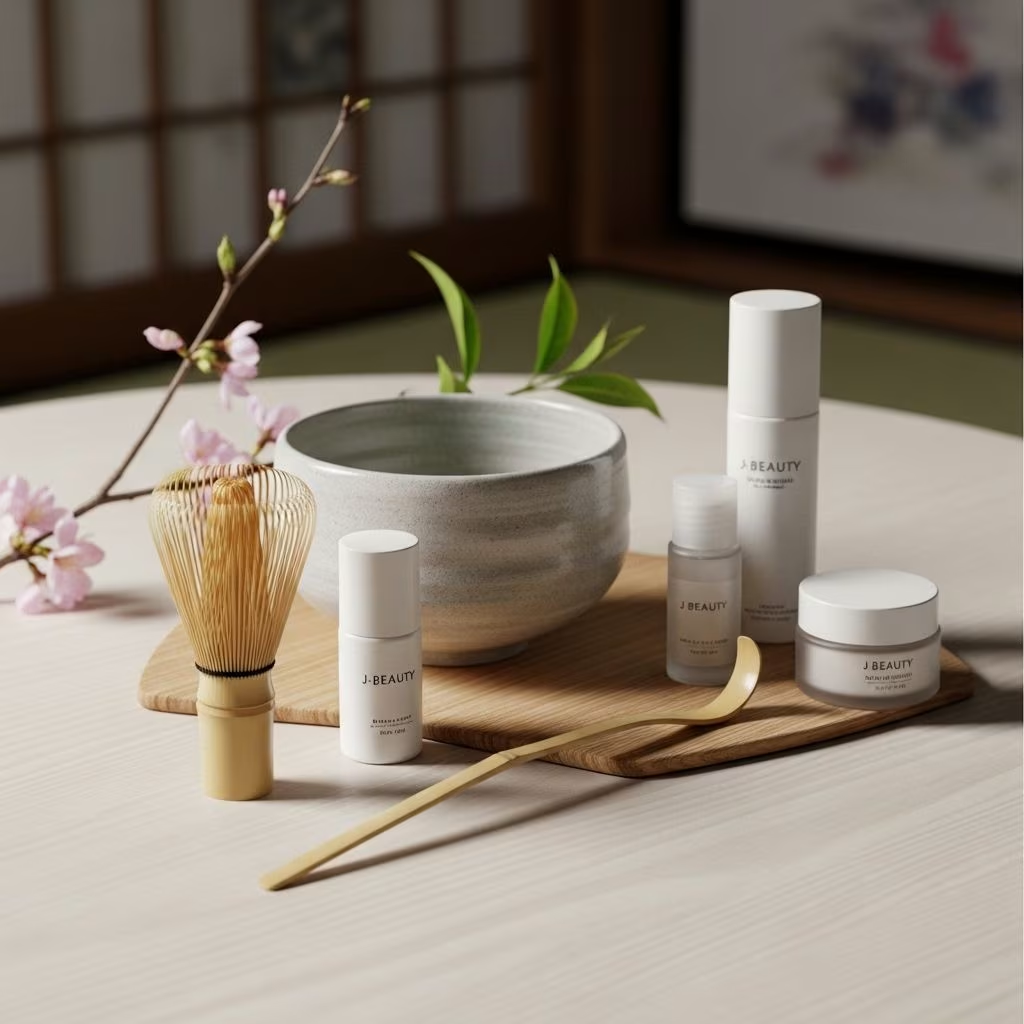
Japanese beauty, known globally as J-Beauty, is celebrated for its efficacy, serenity, and timeless elegance. At the core of its minimalist routines lies the profound influence of Sado (also known as chado or the Japanese tea ceremony), a practice cherished for centuries not only as an art form but as a philosophy of mindful living, simplicity, and imperfect beauty. This article explores the history and cultural underpinnings of Sado, its philosophical alignment with the Japanese concept of wabi-sabi, and how these principles shape—and elevate—modern J-Beauty minimalist skincare routines.
Introduction: The Sado–J-Beauty Connection
The connection between J-Beauty minimalist routines and Sado transcends mere tradition. Sado, the Japanese tea ceremony, cultivates awareness, calm, and a reverence for simplicity. These values have been consciously woven into modern Japanese skin care, promoting a routine that is as much about mindful self-care as it is about visible results. J-Beauty routines influenced by Sado highlight:
- Reduced, purposeful steps
- Natural, plant-based ingredients
- An embrace of imperfection and authenticity
Understanding Sado: The Japanese Tea Ceremony
Sado (or chado) is a centuries-old Japanese cultural ritual centered on the preparation and sharing of matcha (powdered green tea). It is meticulously choreographed but also humble and deeply philosophical, rooted in Zen Buddhism. The goals of Sado are not only hospitality and the enjoyment of tea, but also the pursuit of mindfulness, tranquility, and appreciation for transient beauty.
- Principles of Sado: Harmony (wa), respect (kei), purity (sei), and tranquility (jaku).
- Decor—such as ceramics, utensils, and the tea room itself—demonstrates wabi-sabi: the aesthetic of finding beauty in imperfection and simplicity.
- The tea room is free of clutter. Every item has meaning and purpose—echoing the minimalism later adopted by J-Beauty routines.
Wabi-Sabi and Simplicity: Philosophical Foundations
Wabi-sabi is the core aesthetic philosophy guiding Sado. It esteems the raw, unadorned, and timeworn over the ornate or artificial. Lily Sado Skincare, for example, embraces wabi-sabi by honoring natural skin aging rather than pursuing unattainable perfection. Key implications for beauty include:
- Appreciation for imperfection: Wrinkles, scars, and natural variations are embraced as part of one’s unique beauty.
- Favoring natural over synthetic: Use of traditional, unrefined ingredients rather than chemical-laden products.
- Simplicity in process and presentation: Minimalism in skincare parallels the tea ceremony’s focus on essentials.
Table: Wabi-Sabi vs. Conventional Beauty Expectations
| Wabi-Sabi/J-Beauty Minimalism | Conventional Western Beauty |
|---|---|
| Embrace imperfections & natural aging | Pursue flawlessness & youth |
| Personally meaningful ritual | Trendy, mass-produced routines |
| Plant-based, gentle ingredients | Synthetic, sometimes harsh actives |
| Minimal steps, mindful process | Layered, complex regimens |
Key Elements of Sado Inspiring J-Beauty Skincare
- Intentionality: Every action and product in Sado has intention. J-Beauty routines similarly value deliberate product selection, tailored to skin’s real needs.
- Purity: Clean, gentle, and pure ingredients mirror the ritual cleanliness (sei) in tea ceremonies.
- Flow and mindfulness: The rhythmic flow of Sado is reimagined as a skincare routine that encourages slowing down and appreciating sensation and results.
- Less is more: Both the tea ceremony and J-Beauty routines highlight quality over quantity—fewer steps, higher efficacy.
The Minimalist J-Beauty Routine: Inspired by Tradition
J-Beauty minimalist routines typically feature two to five meticulously chosen steps, grounded in the philosophy of Sado and wabi-sabi. Each step is purposeful—unnecessary layers and additives are eschewed in favor of effectiveness and skin harmony.
Example of a Minimalist J-Beauty Routine
- 1. Gentle Cleanse – Emphasizes removing impurities without stripping natural oils. Formulas may use rice, green tea, or fermented ingredients inspired by tea traditions.
- 2. Aqueous Lotion or Essence – Immediately replenishes moisture and preps skin. Splashed or patted on rather than rubbed, echoing the gentle motions of Sado.
- 3. Simple Moisturizer – Often featuring lightweight, nourishing superfoods like matcha, rice bran, or soothing botanicals.
- 4. Sun Protection (Daytime) – A lightweight, non-occlusive sunscreen, emphasizing prevention without heaviness.
Optional steps may include an exfoliating rice scrub (no rough abrasives), a hydrating mask, or a targeted botanical serum used sparingly. The key is restraint and respect for skin’s natural cycles.
Plant-Based and Natural Ingredients: The Sado Legacy
A defining element of both the tea ceremony and Japanese skincare is reverence for botanicals. Sado centers on the preparation of green tea—matcha—believed to be rich in antioxidants and beneficial for internal and external health. Such unprocessed, plant-based ingredients form the backbone of modern minimalist J-Beauty routines. According to Lily Sado Skincare, ingredients such as green tea, licorice root, rice, and gotu kola deliver visible improvement because of their potent nutrients and gentle compatibility with skin.
- Green Tea (Matcha): Powerful antioxidant, soothes inflammation, helps balance skin.
- Rice Extract: Hydrates and brightens for a soft radiance.
- Licorice Root: Diminishes appearance of dark spots and calms sensitive skin.
- Gotu Kola: Boosts collagen synthesis and improves elasticity.
- Japanese Knotweed: Known for its rejuvenating, protective qualities.
From Tea Ceremony to Superfoods: Iconic Ingredients
The tea ceremony’s ingredients inspire a range of superfoods used in skincare, with green tea (Camellia sinensis) at the forefront. Today, Japanese beauty products often highlight:
- Matcha — Calms, detoxifies, and revitalizes
- Fermented rice (sake or kojic acid) — Brightens, gently exfoliates
- Botanical oils like camellia or tsubaki oil — Nourish and protect the skin barrier
- Seaweed extracts — Mineral-rich, support hydration and resilience
This focus echoes the tea ceremony itself, which celebrates healthful, time-honored botanicals thoughtfully prepared and savored. Sado-inspired J-Beauty shuns trendy, synthetic additives in favor of proven, gentle, and effective ingredients.
Mindfulness and Authentic Beauty
One of the most transformative aspects of Sado is its ritualized mindfulness—a sense of being present, aware, and grateful. J-Beauty minimalist routines expand this spirit into daily skincare, framing each step as an opportunity for grounding and appreciation, not anxiety over imperfection.
- Each step is performed purposefully, without rush.
- Touch is gentle and attentive, echoing the care shown in the tea ceremony.
- Inner calm is prioritized; the routine is self-care, not self-critique.
- Imperfections are not flaws but marks of individuality and experience, as emphasized in wabi-sabi.
J-Beauty vs. Western Beauty: The Minimalist Approach
Modern J-Beauty, as inspired by Sado, notably diverges from many Western beauty traditions:
| J-Beauty (Sado-Inspired) | Western Beauty |
|---|---|
| Embraces imperfections | Aims for perfection |
| Focus: Simplicity, longevity, mindfulness | Focus: Quick results, trends, complex regimens |
| Natural botanicals and minimal steps | Layered products, lab-created actives |
| Efficacy through less, not more | Multiple targeted products for each concern |
Sustainability and Clean Beauty: Echoes of Sado
Sado’s respect for natural materials and the impermanence of all things has found new resonance in the sustainability movement within beauty. Modern, high-quality brands inspired by Sado (such as Lily Sado Skincare) are moving away from excess packaging, synthetic fillers, and animal-derived ingredients.
- Favoring reusable, recyclable, and biodegradable packaging
- Prioritizing vegan, cruelty-free, and organic formulations
- Sourcing ingredients ethically and transparently
This approach not only reduces environmental impact but further amplifies the message of doing more with less—an enduring cornerstone of Sado and J-Beauty minimalism.
Practical Guide to Incorporating Sado Principles into Your Routine
- Select essentials only: Be intentional about each product. Ask: Does your skin truly need this?
- Prioritize quality ingredients: Look for green tea, rice, and botanically driven formulas with minimal additives.
- Adopt a routine ritual: Approach skincare mindfully. Set aside time, use gentle motions, and savor the process.
- Embrace imperfection: Celebrate your skin’s journey—marks, scars, and changes are part of your uniqueness.
- Support sustainability: Choose brands with values aligning with those of Sado—natural, sustainable, and transparent.
Frequently Asked Questions (FAQs)
Q: How is Sado different from just drinking tea?
A: Sado is a codified ritual emphasizing mindfulness, intention, and aesthetic appreciation—turning tea preparation into a spiritual and cultural practice that inspires calm, awareness, and simplicity.
Q: Why is minimalism central to J-Beauty routines?
A: Minimalism, drawn from Sado and wabi-sabi, ensures that each skincare step is purposeful, reduces the risk of irritation from excessive products, and cultivates a mindful, enjoyable daily ritual.
Q: Are Sado-inspired ingredients more effective than synthetic ones?
A: Botanical ingredients like green tea and rice have centuries of proven benefits and are well-suited for long-term skin health, while avoiding the adverse effects sometimes associated with harsh synthetics.
Q: Can anyone adopt Sado-inspired J-Beauty routines?
A: Yes. These routines are suitable for all ages and skin types, focusing on gentle care, natural ingredients, and personal authenticity rather than unattainable ideals.
Q: How do I know if a brand is authentically inspired by Sado?
A: Look for transparency in ingredient sourcing, minimalist philosophies, sustainable practices, and genuine respect for natural aging (rather than just marketing ‘clean’ beauty).


