


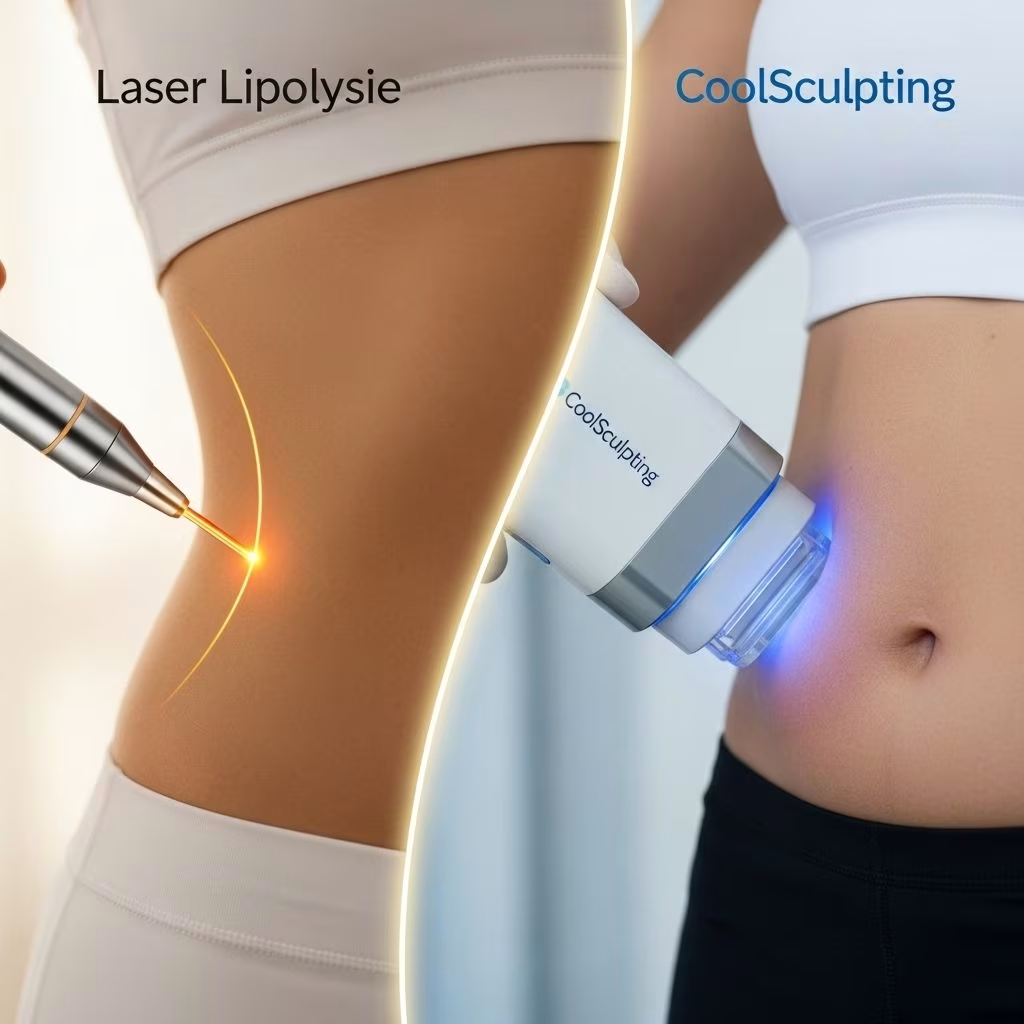
Body contouring procedures have revolutionized cosmetic medicine, enabling individuals to reduce stubborn fat deposits that resist diet and exercise. Among the leading non-surgical and minimally invasive options are Laser Lipolysis and CoolSculpting. Both technologies offer safe, effective fat reduction but use distinctly different approaches. This comprehensive guide examines how these treatments work, key differences, benefits and risks, cost considerations, and answers common questions to help you make an informed decision about achieving your desired silhouette.
Understanding Body Contouring
Body contouring comprises cosmetic procedures designed to reshape and improve the appearance of your body by targeting localized fat deposits that are resistant to traditional weight loss methods. Two of the most sought-after techniques are Laser Lipolysis (often called Laser Lipo or SmartLipo) and CoolSculpting (cryolipolysis).
- Laser Lipolysis: Uses thermal (laser) energy to disrupt and liquefy fat cells for suction removal
- CoolSculpting: Uses controlled cooling to freeze and destroy fat cells, which the body gradually eliminates
Both procedures are intended for body sculpting, not as substitutes for significant weight loss, and are most effective on isolated areas of stubborn fat.
Laser Lipolysis: Overview
How It Works
Laser lipolysis, commonly branded as SmartLipo, is a minimally invasive procedure. The technology employs a medical laser fiber inserted under the skin via a tiny incision. The high-intensity laser energy (usually a wavelength between 924-1064 nm) targets fat cells, heating and liquefying them. Melted fat is then removed by gentle suction, and any residual can be naturally processed by the body.
Procedure Steps
- Area to be treated is sterilized and marked
- Local anesthesia is administered
- Small incision is made
- Laser fiber is threaded beneath the skin
- Laser energy melts the fat
- Liquefied fat is removed using a small cannula (suction device)
- Incision is closed, usually with dissolvable sutures
Common Treatment Areas
- Abdomen
- Flanks (love handles)
- Thighs
- Neck and chin
- Upper arms
Benefits
- May achieve 50-70% fat reduction in a targeted area after one session
- Tightens skin due to heat-induced collagen remodeling
- Noticeable results within 1 week (full results in 4-6 months)
- Permanent removal of targeted fat cells
Potential Drawbacks
- Minor surgical procedure requiring small incisions
- Some downtime (2-4 days); avoid strenuous activity for up to 3 weeks
- Pain, bruising, swelling, numbness, or mild burning may occur
- Risk of skin irregularities, burns, infection, or discoloration (rare if performed by a qualified provider)
CoolSculpting: Overview
How It Works
CoolSculpting, or cryolipolysis, is a completely non-invasive treatment approved by regulatory agencies such as the FDA for fat reduction. The procedure uses applicators with vacuum suction to draw fatty tissue between cooling paddles, exposing it to precisely controlled cold temperatures. Fat cells are more sensitive to cold than skin or muscle cells and undergo cell death (apoptosis); your body naturally processes and removes them over several weeks.
Procedure Steps
- Target area is marked and a gel pad is applied
- Applicator is secured to area, drawing fat bulge into device
- Area is cooled for 30-60 minutes per application
- No anesthesia or incisions involved
- Fat cells begin dying immediately but are removed gradually by the lymphatic system
Common Treatment Areas
- Abdomen
- Flanks
- Thighs
- Upper arms
- Back and bra bulge
- Submental area (chin)
Benefits
- No surgical incisions, needles, or anesthesia required
- Zero to minimal downtime: resume activities immediately
- Results in 20-25% fat reduction per session, visible after 3-4 weeks, and improves over 2-4 months
- Permanently destroys treated fat cells
Potential Drawbacks
- Mild to moderate discomfort during treatment (brief cold and tugging sensation)
- Pain, bruising, or skin numbness at application site, usually resolving within a week
- May require 2 or more sessions in some areas to achieve dramatic results
- Rare side effects include paradoxical adipose hyperplasia (growth of fat at treated area)
Laser Lipolysis vs. CoolSculpting: Direct Comparison
| Aspect | Laser Lipolysis | CoolSculpting |
|---|---|---|
| Procedure Type | Minimally invasive (incision + local anesthesia) | Non-invasive (no incision, no anesthesia) |
| Technology | Laser thermal energy melts fat | Cryolipolysis freezes fat cells |
| Session Duration | About 1 hour per area; usually one session needed | 30-60 minutes per area; may need 2-3 sessions |
| Results Timeline | Noticeable in 1 week, full in 4-6 months | Noticeable in 3 weeks, full in 2-4 months |
| Fat Reduction | Up to 50-70% in treated area per session | 20-25% fat reduction per session |
| Downtime | 2-4 days, avoid strenuous activity for 3 weeks | None; resume normal activities immediately |
| Risks | Swelling, bruising, numbness, pain, minor burns | Numbness, bruising, paradoxical hyperplasia (rare) |
| Cost | $2,500-$5,500 per area | $2,000-$4,000 per area (may need multiple sessions) |
Effectiveness and Results
Both laser lipolysis and CoolSculpting yield permanent fat cell reduction in treated areas, provided you maintain a stable weight:
- Laser Lipolysis: Delivers greater volume fat removal (up to 70% per session), often preferred for those seeking dramatic body change in fewer sessions. It also tightens skin, addressing mild laxity issues as a bonus.
- CoolSculpting: Offers moderate, natural-looking improvements. Fat reduction is more gradual—ideal for people who want minimal disruption to their routines and can wait for results.
Neither treatment is meant to address obesity or result in large-scale weight loss. Candidates are typically at or near their ideal weight, with targeted problematic fat deposits.
Side Effects and Recovery
- Laser Lipolysis:
- Common: Swelling, bruising, mild pain, numbness at incision site
- Rare: Burns, infection, scarring, changes in skin sensation
- Short downtime: 2-4 days; avoid excessive activity for 2-3 weeks
- CoolSculpting:
- Common: Redness, swelling, bruising, temporary numbness/sensitivity
- Rare: Paradoxical adipose hyperplasia (painless increase of fat at treatment area); resolves with further intervention
- Resume daily activities immediately post-treatment
Cost Considerations
Prices for both treatments vary widely by geographic location, practitioner expertise, number of areas treated, and individual goals:
- Laser Lipolysis: $2,500–$5,500 per treatment area. One session is usually sufficient, leading to higher up-front cost but possibly lower total cost if minimal retreatment is needed.
- CoolSculpting: $2,000–$4,000 per area. Since multiple sessions may be required for larger or resistant areas, total costs can accumulate over time.
Insurance does not cover these cosmetic procedures; inquire about package deals, consultation fees, and all-inclusive pricing before proceeding.
Who Is a Good Candidate?
- Near or within 30% of ideal body weight
- Has localized, diet- and exercise-resistant fat deposits
- Wants improvement in body shape, not major weight loss
- Has realistic expectations about outcomes and understands limitations
- Is in good overall health, with no active infections or untreated chronic medical conditions
Contraindications
- Laser Lipolysis: Obesity, pregnancy, coagulation disorders, pacemaker or defibrillator, active infections, severe chronic illnesses, recent surgeries, or medications that make skin light-sensitive.
- CoolSculpting: Pregnancy, severe cold sensitivity, hernias in treatment area, circulatory disorders, neuropathic disorders, blood clotting problems, skin infections, Raynaud’s disease, and others.
Advantages and Limitations
| Laser Lipolysis | CoolSculpting | |
|---|---|---|
| Advantages |
|
|
| Limitations |
|
|
Frequently Asked Questions (FAQ)
Is laser lipolysis more effective than CoolSculpting?
Laser lipolysis usually removes more fat per session and provides some immediate contour changes, whereas CoolSculpting yields gradual, natural-looking changes over time.
How long do the results of each procedure last?
Both destroy targeted fat cells permanently. However, future weight gain can expand remaining fat cells, so long-lasting results depend on maintaining a stable weight.
Is either procedure painful?
- Laser Lipolysis: Minimal pain during procedure from local anesthesia; mild pain or discomfort post-procedure for 2-4 days.
- CoolSculpting: Short-lived discomfort during initial cooling (5-10 minutes), then numbness; mild that resolves quickly.
How soon can I return to work or exercise?
- Laser Lipolysis: Return to work in 2-4 days; avoid strenuous activities for several weeks.
- CoolSculpting: Resume routine activities immediately after treatment.
Are there risks of uneven skin or lumps?
- Laser Lipolysis: Rarely, skin irregularities or hard lumps may occur if fat is unevenly removed.
- CoolSculpting: Very rare risk of paradoxical adipose hyperplasia, which may require further treatment.
Is anesthesia needed?
- Laser Lipolysis: Local anesthesia is required due to the invasive nature.
- CoolSculpting: No anesthesia needed; procedure is performed externally.
Choosing the Right Procedure
The best choice depends on your goals, comfort with minor surgery, desired recovery time, and budget. Consider the following factors:
- Desired volume of fat reduction: Laser lipo offers more in one session, but with downtime.
- Preference for non-invasiveness: CoolSculpting is entirely non-surgical with little-to-no risk of scarring.
- Ability to tolerate minor surgical procedures: Laser lipo requires incisions and short downtime.
- Willingness to undergo multiple sessions: CoolSculpting may require repeat treatments for best results.
- Concern about skin laxity: Laser lipo can tighten mild skin laxity; CoolSculpting does not address this.
Always consult with a board-certified provider to assess your candidacy and personalize the treatment plan to your health status and aesthetic goals.
Summary and Key Takeaways
- Laser Lipolysis offers robust fat reduction, some skin tightening, and quick initial results, at the expense of minor invasiveness and downtime.
- CoolSculpting provides non-surgical fat reduction with no downtime and very low risk, but changes occur gradually and may require multiple sessions for significant contouring.
- Both treatments are not for weight loss, but for shaping and sculpting specific body regions, ideal for healthy adults close to their goal weight.
- Safety and results improve when procedures are performed by skilled medical professionals following thorough assessment.
Before undergoing any procedure, discuss your full medical history and expectations with a qualified provider to ensure the best outcome and appropriate choice for your needs.
References
- https://www.spamedica.com/blog/laser-lipo-vs-coolsculpting/
- https://www.healthline.com/health/laser-lipo-vs-coolsculpting
- https://drjenebyplasticsurgery.com/laser-lipo-vs-coolsculpting/
- https://phoenixliposuction.com/blog/coolsculpting-vs-laser-lipo-the-ultimate-guide/
- https://www.medicalnewstoday.com/articles/laser-lipo-vs-coolsculpting
- https://www.purskinclinic.com/coolsculpting-vs-laser-lipo-which-body-contouring-procedure-is-right-for-you/
- https://www.stadiamedspa.com/laser-fat-removal-vs-coolsculpting/
- https://www.icls.ca/blog/laser-lipo-vs-coolsculpting/
- https://www.lipoandaesthetics.com/blog/smartlipo-vs-coolsculpting/


