


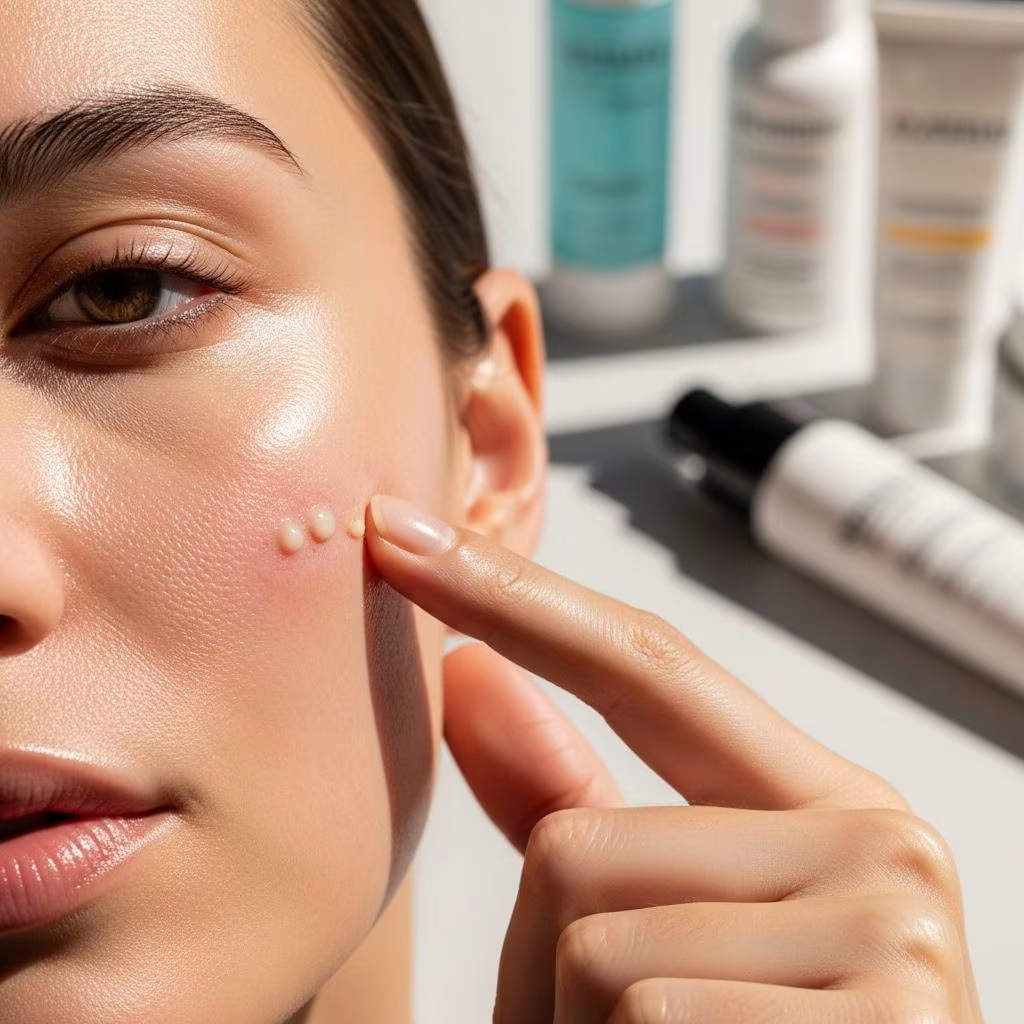
Stop Skincare Pilling & Flaking: Comprehensive Guide to Prevent and Treat
Skincare pilling and flaking are two of the most common obstacles on the journey to healthy, glowing skin. Whether you’re experiencing gritty balls of product that roll off during application, or visible skin flakes that make makeup sit unevenly, understanding the root causes and adopting effective solutions is essential. This guide brings together leading research, expert insights, and practical advice to help you stop skincare pilling and flaking for good.
What is Skincare Pilling & Flaking?
Pilling refers to the formation of small beads or rolls on the skin’s surface when applying skincare or makeup products. This typically happens when a product isn’t properly absorbed, leaving visible residue that interferes with both skincare efficacy and the aesthetics of your makeup look.
Flaking involves the appearance of dry, peeling skin patches. Unlike pilling, which is a product issue, flaking is a signal that the skin’s barrier is compromised, often due to environmental factors, over-exfoliation, or the use of harsh skincare actives.
The Impact on Your Skin
- Reduced product efficacy: Ingredients do not reach deeper layers, negating benefits.
- Uneven makeup application: Flakes and pills disrupt smoothness.
- Visible residue: Leads to a patchy, unfinished look.
- Irritation risk: Compromised barrier can lead to redness and discomfort.
Understanding the Causes
Several factors contribute to pilling and flaking. Knowing what triggers these issues will help you take targeted action:
- Product incompatibility: Ingredients like silicones, heavy oils, or specific polymers can repel each other, causing products to clump on the skin’s surface.
- Incorrect application order: Layering heavy creams or oils before lighter serums prevents optimal absorption.
- Over-application: Using too much product slows absorption and increases residue risk.
- Insufficient absorption time: Applying products too quickly does not allow layers to settle, increasing surface residue.
- Dead skin cell buildup: Flaky skin and pilling both worsen when the skin isn’t regularly exfoliated.
- Barrier compromise: Overuse of actives or harsh cleansers can lead to flaking and reduce absorption capacity.
Common Product Culprits
The following groups of ingredients are well-established pilling instigators:
- Silicones (e.g., dimethicone, cyclopentasiloxane): Often present in primers and moisturizers, silicones can create a slippery film, especially when layered with oils or more silicones.
- Heavy oils: While beneficial for dry skin, they can prevent lighter products from absorbing.
- Polymer-rich formulas: Some sunscreens and SPF products contain polymers that film over the skin, increasing pilling risk.
- Powder-based or mattifying products: Including some mineral foundations or powder SPF, which may clump when layered atop moisturizing textures.
| Ingredient Type | Effect | Typical Products |
|---|---|---|
| Silicones | Forms impenetrable layer; induces pilling | Primers, foundations, moisturizers |
| Heavy Oils | Repels water-based products; causes rolling | Facial oils, rich creams |
| Polymers | Film formation; increased surface pilling | Sunscreens, serums |
Correct Layering Techniques
Proper layering is critical for avoiding both pilling and flaking. Skincare should be applied from the thinnest to thickest consistency:
- Step 1: Cleanse – Start with a clean canvas to remove buildup.
- Step 2: Hydrate – Apply watery essences or toners.
- Step 3: Treat – Use serums and actives.
- Step 4: Moisturize – Seal with creams or oils.
- Step 5: SPF – Always finish with sun protection in the morning routine.
Allow at least 30-60 seconds between each product to maximize absorption. For actives or heavier creams, extending wait times to 5-10 minutes can further reduce pilling.
Optimizing Your Routine
It’s tempting to layer many products, but a streamlined routine guarantees better results. Simplification ensures every product delivers its intended benefits without clashing with others:
- Avoid layering too many products: More isn’t always better—overloading leads to poor absorption and pilling.
- Dab, don’t rub: Patting products gently helps them penetrate without disturbing existing layers.
- Patch test new additions: Introducing new products one at a time allows you to monitor compatibility and reaction.
- Match product bases: Use either water-based or oil-based products in sequence, not together, to prevent repelling.
Key Ingredient Insights
- Check for silicones: Look for ingredients ending in -cone, -siloxane, or -methicone on the label.
- Assess product base: Choose products with compatible bases for layering, e.g., water-based followed by water-based.
- Consider actives carefully: Retinoids, AHAs, and BHAs can sometimes cause flaking when used too frequently. Alternate or reduce use if flaking occurs.
How to Prevent Pilling & Flaking
Implement the following steps to dramatically cut down occurrence of both issues:
- Wait between layers: Allow each product to absorb for at least a minute.
- Exfoliate regularly: Chemical exfoliants (such as glycolic acid and lactic acid) help remove dead skin cells, boosting absorption and reducing flakiness.
- Use less product: A pea-sized amount often suffices; excess leads to more residue and increased pilling.
- Monitor skin barrier health: If flaking persists, reduce actives and switch to reparative moisturizers containing ceramides or panthenol.
- Adjust pressure: Dab product gently or smooth in one direction; vigorous rubbing can disturb earlier layers.
- Review for incompatibility: Use products from the same brand or designed regimen when unsure about compatibility.
Treating Flaky Skin
Flaky skin can be both an aesthetic issue and a sign of underlying damage to the skin’s protective barrier. Address it with these measures:
- Hydrate deeply: Choose moisturizers with ceramides, hyaluronic acid, and fatty acids to restore lost hydration and support barrier repair.
- Reduce actives: Temporarily stop strong exfoliants like AHAs, BHAs, or retinoids to give your skin time to recover.
- Limit harsh cleansers: Opt for gentle, non-foaming cleansers that don’t strip natural oils.
- Apply a healing balm: Occlusive balms like petrolatum or squalane lock in moisture and accelerate healing.
- Protect from external irritants: Avoid extremes in temperature and humidity, and wear SPF daily.
Expert Tips for Lasting Results
- Streamline your AM and PM routines: Morning routines can consist of cleanse, treat, hydrate, and SPF; evenings of cleanse, treat, and moisturize.
- Check compatibility before mixing: Not all actives or brands mix well—consult brand guidelines or a dermatologist if in doubt.
- Apply makeup only after skincare is fully set: Wait at least 5-10 minutes before makeup application to minimize rolling and patchiness.
- Prime wisely: Use water-based primers if makeup pilling is a repeated issue.
- Maintain regular weekly exfoliation: This keeps skin smooth and reduces buildup that causes flaking.
Frequently Asked Questions (FAQs)
Q: What’s the fastest fix for skincare pilling?
A: The quickest remedy is to gently dab off visible pilling, allow longer absorption time with each layered product, and use less product in subsequent applications.
Q: Does exfoliating help with both flaking and pilling?
A: Yes. Routine exfoliation removes dead cells that can mix with skincare and form pills. It also reduces dry, flaky spots, improving overall absorption.
Q: Which ingredients should I avoid to prevent pilling?
A: Be wary of heavy silicones and oils, especially in primers and foundations. Stick to water-based formulas for easier layering.
Q: Is pilling more common with certain skin types?
A: Dry and smooth skin is more prone to pilling, especially when layered with polymer-heavy and silicone-rich products. Hydrated, exfoliated skin reduces risk significantly.
Q: How long should I wait between skincare layers?
A: At minimum, 30-60 seconds is effective. However, for best results, 5-10 minutes between moisturizer/SPF and makeup is suggested.
Quick Reference Table: Fixes & Best Practices
| Problem | Action | Key Tips |
|---|---|---|
| Pilling | Reduce layering, wait longer, use compatible products | Check ingredient bases, avoid excess product |
| Flaking | Hydrate, cut actives, barrier repair | Ceramides, hyaluronic acid, occlusive balms |
| Makeup Pilling | Exfoliate, use water-based primer | Wait 10 min after moisturizer/SPF |
Final Thoughts
Skincare pilling and flaking need not be ongoing battles. Through simplified routines, mindful application, ingredient awareness, and regular exfoliation, smooth and radiant skin can be yours. Always prioritize barrier health, quality hydration, and patience in your daily routine for long-lasting change.
References
- https://www.theinkeylist.com/blogs/news/how-to-prevent-piling-when-applying-your-skincare-routine
- https://www.barefaced.com/blogs/blog/pilling-101
- https://sublimelife.in/blogs/sublime-stories/what-skin-peeling-and-pilling-heres-what-you-need-to-know
- https://emmalewisham.com/en-us/blogs/the-skin-conversation/preventing-skincare-and-makeup-from-pilling?currency=USD
- https://theordinary.com/en-us/product-pilling-guide.html
- https://protocol-lab.com/blogs/skincare-routine/skincare-pilling
- https://pmc.ncbi.nlm.nih.gov/articles/PMC11294729/
- https://www.lorealparisusa.com/beauty-magazine/makeup/face-makeup/how-to-stop-makeup-pilling


