


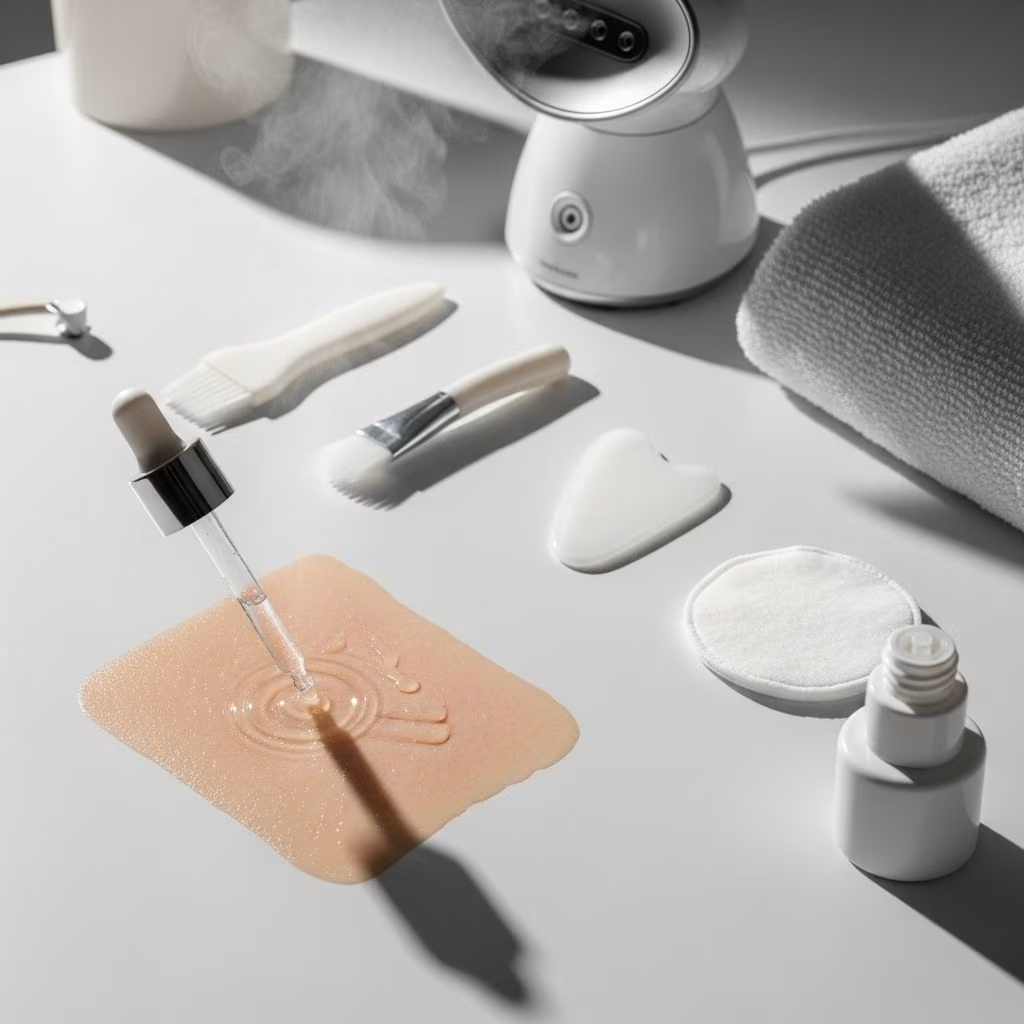
Understanding Skincare Absorption
One of the biggest misconceptions in the beauty industry is the idea that every product you apply to your skin is fully absorbed and delivers its promised benefits. In reality, the skin is not a passive sponge. Instead, it is a highly selective barrier, designed to keep certain substances out while allowing others to pass—albeit in very small amounts—into the deeper layers.
When you layer on multiple skincare products, the absorption process becomes even more complex. The outermost layer of your skin—the stratum corneum—is mostly composed of dead skin cells, which act as the first line of defense against environmental aggressors. Most skincare products are designed to work in this layer or just beneath it, primarily in the epidermis, and rarely reach the dermis, let alone your bloodstream.
Dr. Lía Fabiano, director of the LF Clinic, emphasizes: The skin is not a sponge that can absorb everything you put on it. It absorbs only the amount of cream it needs; putting more on saturates it and is counterproductive.
Excess product not only fails to provide additional benefits but can instead clog pores, leading to congestion and, in some cases, cosmetic acne.
The 60% Myth and Other Popular Misconceptions
A persistent myth claims that about 60% of products applied to the skin are absorbed into the bloodstream. This is completely false. If it were true, everyday activities like showering or walking in the rain would become hazardous, as water would flood the body through the skin.
In reality, skin selectively permits the passage of certain substances, usually small or specially formulated molecules, and in relatively small quantities. Most products, especially those intended for cosmetic or skincare use, do not penetrate deeply and are not designed to enter the bloodstream. The main purpose of these products is to act on the skin’s surface and upper layers, helping with hydration, protection, or lightening of pigmentation.
Moreover, the myth that the skin can become used to
certain products and stop responding is also incorrect. Changes in your skin’s response are usually due to external factors like stress, hormonal changes, or a need for different actives, not because the skin has become immune
to your favorite serum or moisturizer.
Factors Affecting Skincare Absorption
The ability of a product to penetrate the skin—commonly referred to as skin permeability—depends on multiple factors, including:
- Molecular Size: Smaller molecules, such as certain acids and retinoids, can penetrate the skin more easily, while larger molecules, like collagen, remain on the surface.
- Product Texture: Lighter, water-based formulations tend to be absorbed more readily than thick, oil-based creams, which often sit on the skin’s surface and can create a barrier effect.
- Skin Condition: Healthy, hydrated, and exfoliated skin generally absorbs products better. The skin’s permeability increases with regular exfoliation, which removes dead cells from the stratum corneum.
- pH Level: Acidic actives (like AHAs) penetrate better at lower pH values, while alkaline formulations may be less effective at penetrating.
- Formulation Technology: Some products use penetration enhancers—like alcohol, liposomes, or certain emulsifiers—to help active ingredients cross the skin barrier.
When Does Absorption Stop?
The skin does have an upper limit to how much it can absorb at once. Once this threshold is reached, additional product layers simply sit on top of the skin, potentially causing occlusion, clogged pores, or even product incompatibilities.
Lucía González, a dermatologist, notes: Applying layers and layers of products that the skin can’t absorb causes an occlusive effect that leads to acne breakouts and makes the cosmetic routine more expensive.
Essentially, overloading your skin not only wastes product but may also trigger irritation or breakouts, especially if you’re mixing multiple actives.
There is also a practical limit to the number of products your skin can benefit from in a single routine. Each layer should serve a distinct purpose and be formulated to complement the preceding one. The benefits of cosmetics do not increase by applying more product or using a greater number of them; instead, they increase with targeted, well-formulated use.
Can You Improve Skin Absorption?
While the skin’s absorption capacity is finite, certain strategies can help optimize product penetration:
Keeping skin clean, exfoliated, and hydrated allows for better absorption. Regular gentle exfoliation removes the build-up of dead skin cells, improving the ability of active ingredients to penetrate.
- Exfoliation: Removes the keratinized upper layer, allowing better penetration of actives.
- Toners: Some toners help prepare the skin for optimal absorption of subsequent products.
- pH Adjustment: Matching the pH of your product to the target ingredient’s optimal absorption range can enhance penetration.
- Product Order: Applying thinner, water-based serums before thicker creams ensures each layer can penetrate as intended.
- Penetration Enhancers: Some ingredients and formulations are designed to temporarily increase skin permeability, helping other actives cross the barrier.
| Strategy | How It Helps | Example |
|---|---|---|
| Exfoliation | Removes dead cells, clears the path | Chemical exfoliants (AHAs/BHAs) |
| pH Adjustment | Enables optimal active delivery | pH-adjusting toners |
| Product Layering | Thins to thick helps absorption | Serum before cream |
| Penetration Enhancers | Increases ingredient passage | Alcohol, liposomes |
Myths Versus Reality
To further clarify, here are some common skincare myths related to absorption, debunked:
- Myth: Your skin absorbs 60% of what you apply—Reality: This is a gross exaggeration. Most skincare stays on or near the surface, and only a tiny fraction (if any) enters the bloodstream.
- Myth: More products/layers = better results—Reality: Excess product can overload and irritate the skin, sometimes causing more harm than good.
- Myth: The skin gets
used to
and stops responding to products—Reality: Changes in skin response are usually due to environmental or hormonal factors, not product resistance. - Myth: All ingredients penetrate skin equally—Reality: Penetration depends on molecular size, formulation, and skin condition, among other factors.
Optimizing Your Skincare Routine
The key to an effective skincare routine is quality over quantity. Focus on a few well-chosen products that address your skin’s specific needs, rather than layering multiple serums, essences, and creams.
- Cleanse thoroughly: Always start with a clean face to remove dirt, oil, and other barriers to absorption.
- Exfoliate regularly: Gentle exfoliation helps active ingredients reach their target more effectively.
- Layer products wisely: Apply lighter, water-based products first, followed by heavier creams or oils.
- Be patient: Most products take weeks to show visible results, so consistent use is vital.
- Monitor your skin: If you notice irritation, congestion, or other adverse effects, reassess your routine and consider simplifying it.
Remember: Prepared skin is more receptive. Working to improve permeability and choose compatible products will yield better, more cost-effective results than simply adding more steps or products to your routine.
Common Pitfalls and How to Avoid Them
- Overloading Products: Using too many products, especially those with strong actives, can lead to irritation, breakouts, and wasted expense.
- Incompatible Combinations: Mixing certain actives (like vitamin C and retinol) can destabilize formulations and trigger irritation—always check for compatibility.
- Ignoring Skin Needs: Your skin changes with age, season, and environment. Your routine should adapt accordingly.
- Expecting Instant Results: Skincare is a marathon, not a sprint. Give products adequate time (often 4–8 weeks) before expecting visible changes.
Frequently Asked Questions (FAQs)
How much of skincare products are actually absorbed?
Most skincare products are only partially absorbed, primarily into the stratum corneum and epidermis. The amount absorbed varies with formulation, ingredient size, and skin condition, but generally, only a small fraction penetrates deeply—so the idea that 60% enters the bloodstream is a myth.
Can I increase my skin’s absorption rate?
You can optimize absorption by keeping your skin clean, gently exfoliated, and hydrated, and by using products formulated to enhance penetration. However, there is a hard limit to how much your skin can absorb, and overloading it is counterproductive.
Why don’t I see results from my skincare routine?
Sometimes, products don’t deliver because of low active concentrations, formulation issues, or changes in your skin’s needs. Patience is key—visible changes often take weeks. If a product seems ineffective, reassess your routine and consider consulting a dermatologist.
Are expensive products absorbed better?
Not necessarily. Absorption depends on ingredient size, formulation, and skin condition, not price. Focus on quality ingredients and compatibility with your skin, not price tags.
Is it safe to mix many skincare products?
Layering multiple products can increase risk of irritation or incompatibility. Focus on a simplified, targeted routine and introduce new products gradually to monitor effects.
Can the skin get used to products and stop responding?
No, the skin doesn’t become immune
to products. Changes in effectiveness are usually due to shifts in your skin’s condition or external factors, not resistance.
References
- https://english.elpais.com/lifestyle/2023-11-25/skin-absorption-rate-or-why-a-beauty-routine-with-a-lot-of-steps-can-be-counterproductive.html
- https://ethique.com/blogs/science/do-you-really-absorb-60-of-everything-you-put-on-your-skin
- https://pmc.ncbi.nlm.nih.gov/articles/PMC5579607/
- https://labmuffin.com/the-60-of-products-absorb-into-your-bloodstream-myth/
- https://www.health.harvard.edu/womens-health/dont-fall-for-these-skin-myths
- https://www.healthline.com/health/beauty-skin-care/myths-about-products
- https://pmc.ncbi.nlm.nih.gov/articles/PMC3266803/
- https://magazine.ucsf.edu/which-skin-care-products-do-we-really-need


