


Introduction
The skin barrier plays a vital role in protecting the body from external threats, regulating hydration, and maintaining overall skin health. In recent years, ASMR (Autonomous Sensory Meridian Response) has surged in popularity as a method of inducing relaxation and stress reduction. But could ASMR influence skin health — specifically, the integrity and function of the skin barrier? This article explores the current research and theories around ASMR’s impact on skin barrier physiology.
Understanding Skin Barrier Function
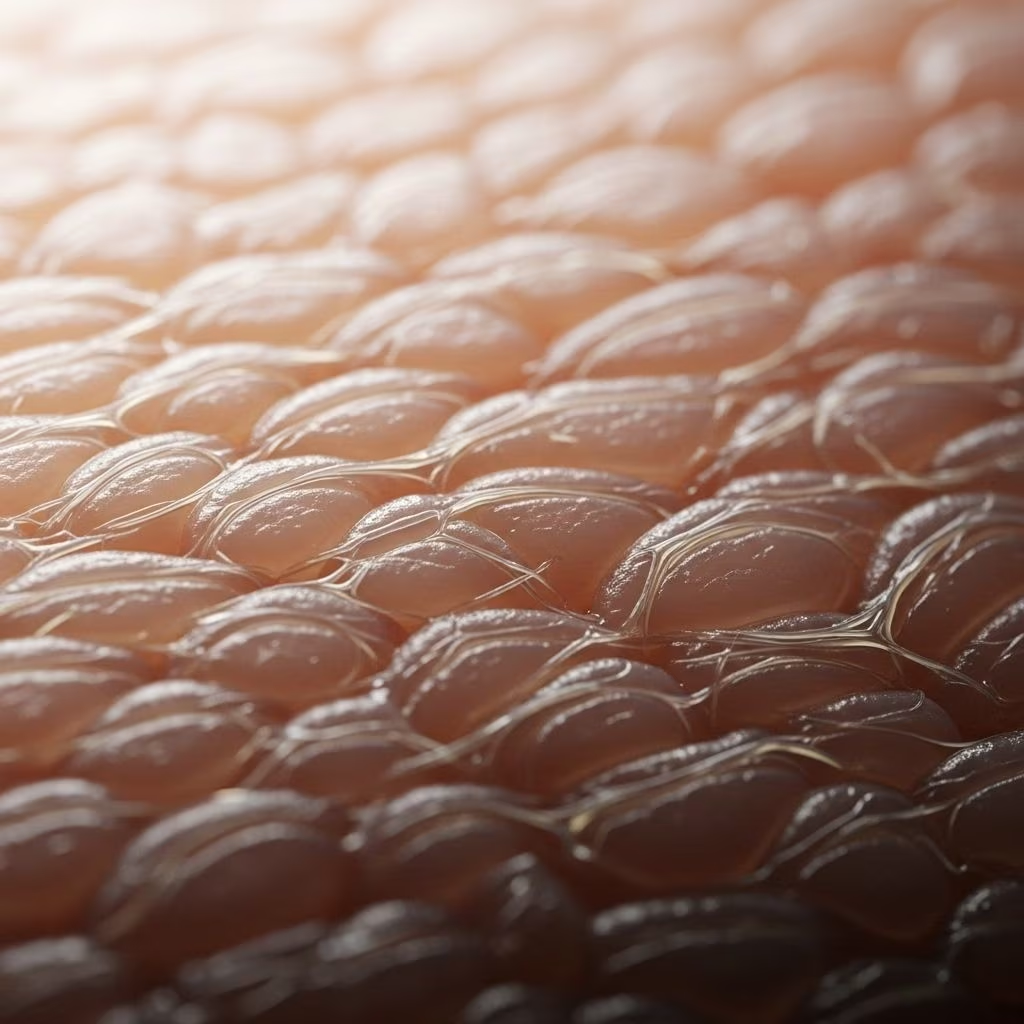
The skin barrier primarily consists of the stratum corneum, the outermost layer of skin, made up of corneocytes (dead skin cells) embedded in a lipid matrix. Its main functions include:
- Preventing water loss (transepidermal water loss, or TEWL)
- Protecting against pathogens, irritants, and allergens
- Maintaining skin hydration and elasticity
- Modulating immune responses and inflammation
Factors that disrupt the skin barrier — such as harsh chemicals, physical abrasion, chronic inflammation, and environmental stresses — can decrease skin health and lead to conditions like eczema, psoriasis, and increased sensitivity. Markers of skin barrier integrity include proteins such as filaggrin, loricrin, and involucrin, as well as measurements like TEER (transepithelial electrical resistance) and TEWL.
Skin Barrier Regulation
- Ceramides, fatty acids, and cholesterol are vital for cell cohesion and barrier function.
- Acid mantle: Skin’s surface pH is crucial for enzyme activity and defense against microbes.
- Immunological pathways: Interleukins, nuclear factor kappa B, VEGF, and sirtuins regulate inflammation, vascularization, and cellular repair.
What Is ASMR?
Autonomous Sensory Meridian Response (ASMR) refers to a relaxing sensation, often described as “tingles,” evoked by certain auditory, visual, and tactile triggers. Typical ASMR stimuli include gentle whispers, tapping, crinkling sounds, slow hand movements, or personal attention scenarios. Its popularity has exploded on platforms like YouTube, where creators craft content specifically designed to evoke relaxation and pleasure.
Common ASMR Triggers
- Whispering or soft speaking
- Tapping, scratching, and crinkling sounds
- Personal attention roleplays
- Gentle hand movements
- Visual focus and repetitive motions
Subjective Effects
People who experience ASMR report deep relaxation, reduced anxiety, improved mood, and sometimes a tingling sensation that starts on the scalp and moves down the neck and spine.
ASMR and Physiological Responses
Scientific studies have investigated how ASMR stimulation affects various physiological parameters, particularly those linked to relaxation and the body’s stress response.
Findings from Recent Studies
- Heart rate: ASMR triggers a moderate reduction in heart rate, suggesting a shift toward parasympathetic (rest-and-digest) nervous system dominance.
- Skin conductance: Some participants show small increases in skin conductance (sweat gland activity), often associated with heightened attention or emotional arousal, but overall relaxation.
- EEG (brain activity): Marginal changes in alpha frequency bands indicate relaxation; those who experience ‘tingles’ may show decreased alpha power in localized brain areas.
| Group | Heart Rate (ASMR) | Heart Rate (Control) | Skin Conductance (ASMR) | Skin Conductance (Control) |
|---|---|---|---|---|
| Tingles | 68.53 | 71.32 | 13.95 | 13.35 |
| No tingles | 68.99 | 70.34 | 16.78 | 16.99 |
These modest physiological shifts suggest ASMR may facilitate a relaxation response similar to meditation or mindfulness, which has well-established benefits for overall health.
Evidence: Can ASMR Affect the Skin Barrier?
Currently, there is no direct scientific evidence linking ASMR stimulation to measurable changes in skin barrier integrity, such as improved filaggrin or loricrin expression, reduced TEWL, or altered inflammatory markers. The available studies primarily examine ASMR’s effects on stress, mood, heart rate, and related psychological states, rather than direct skin physiology.
What the Research Shows
- Skin barrier function is directly influenced by chemical, mechanical, and inflammatory insults, not by sensory stimulation alone.
- ASMR does not act as a physical or topical intervention; its influence is mediated via the nervous system and psychological states.
- Existing research indicates that reduced psychological stress (from relaxation techniques like ASMR) can indirectly benefit skin barrier repair and lower inflammation, but these effects are secondary and not a result of ASMR itself.
For example, studies on stress reduction reveal improvements in chronic skin conditions (such as eczema or psoriasis), but these studies use interventions such as mindfulness, cognitive behavioral therapy, or meditation — not ASMR specifically.
Possible Mechanisms of Action
Hypothetically, ASMR’s ability to induce relaxation and reduce stress may have indirect benefits for skin barrier function. Here’s how:
- Stress and the skin barrier: Chronic psychological stress increases cortisol, which impairs skin barrier recovery, delays wound healing, and promotes inflammation.
- Relaxation: Reducing stress via relaxation techniques (mindfulness, meditation, or ASMR) may lower cortisol, decrease skin inflammation, and improve barrier repair over time.
- Autonomic nervous system shift: ASMR reliably stimulates the parasympathetic nervous system; this may decrease inflammation and enhance regenerative processes throughout the body, including the skin.
However, these mechanisms remain theoretical, as ASMR-specific studies targeting skin barrier outcomes are lacking. Most data comes from related fields studying stress-skin relationships and general wellness modalities.
Does ASMR Work for Skin Barrier Function?
Based on current evidence, ASMR does not directly improve skin barrier function. Its primary effects are on psychological and physiological relaxation. The possibility of indirect benefit exists through stress reduction, which can help with overall skin health, but there is no published data showing direct improvements in skin barrier integrity from ASMR alone.
Summary Table: ASMR vs. Direct Skin Barrier Interventions
| Intervention | Direct Effect on Skin Barrier? | Mechanism | Evidence Level |
|---|---|---|---|
| ASMR | No (indirect only) | Reduces psychological stress, possible reduction of inflammation | Theoretical/uncertain |
| Topical Ceramides | Yes | Restores lipid matrix of stratum corneum | High |
| Physical Barrier Methods (occlusion, wound care) | Yes | Direct protection, promotes regeneration | High |
| Mindfulness/Meditation | Indirect | Stress reduction, lower inflammation | Moderate |
Risks, Limitations, and Gaps in Research
Although ASMR is considered safe for most people, several key limitations apply when exploring its use for skin barrier health:
- No direct research: The impact of ASMR on skin barrier markers has not been systematically studied.
- Placebo effect: Relaxation and perceived well-being may enhance subjective skin sensations without measurable physiological change.
- Individual variability: Not everyone experiences ASMR or its ‘tingle’ sensation; responses are highly individualized.
- Potential sensory overload: For some, intense sensory stimulation may have the opposite effect, causing discomfort or agitation.
Future research should include controlled studies measuring the direct impact of ASMR on skin barrier biochemistry and markers like TEWL, filaggrin, and inflammatory cytokines.
ASMR in Holistic Skin Wellness
Holistic skin care recognizes the interplay between psychological well-being and physical health. While ASMR is not a substitute for medical skin barrier treatments, it may complement a broader wellness routine by:
- Reducing perceived stress and anxiety
- Supporting restful sleep
- Enhancing relaxation before topical treatment regimens
- Promoting mindfulness, which is associated with improved self-care and adherence to routines
In this context, ASMR may help maximize the benefit of proven topical or systemic treatments by fostering an environment conducive to healing.
Practical Tips
- Use ASMR videos or audio as a relaxation tool, especially before bed or during high-stress periods.
- Pair ASMR sessions with established skin barrier-supportive practices (gentle cleansing, moisturization with ceramides).
- If you have chronic skin conditions, follow dermatologist-recommended treatments and view ASMR as a supplement, not a replacement.
- Monitor your skin’s response over time — relaxation can improve indirectly, but always best to track changes objectively.
Frequently Asked Questions
Q: What is the skin barrier and why does it matter?
The skin barrier, mainly the stratum corneum, keeps moisture in and harmful elements out, maintaining healthy, resilient skin and regulating immune responses.
Q: Can ASMR replace topical creams or medical treatments for skin barrier issues?
No. ASMR provides relaxation but does not repair the skin barrier; medical and topical treatments remain the standard for rehabilitation.
Q: Does relaxing the mind help the skin?
Yes, indirectly. Lowering stress may improve inflammation and healing. Practices like mindfulness, meditation, and ASMR can help, but more research is needed for direct skin effects.
Q: Are there any risks to using ASMR for skin health?
ASMR is safe for most, but sensory overload may be uncomfortable for some. It should not be used as a sole treatment for skin conditions.
Q: How should I combine ASMR with my skincare routine?
Try ASMR sessions during a quiet time, especially before sleep or after stressful events, and continue proven topical skin barrier strategies alongside it.
Conclusion
ASMR offers mental relaxation and may help reduce perceived stress, which can indirectly support skin health. Current scientific evidence does not support a direct effect of ASMR on the skin barrier. Those interested in holistic wellness can incorporate ASMR as a relaxation practice while relying on established medical treatments and skincare routines for maintaining or restoring skin barrier integrity.
References
- https://www.frontiersin.org/journals/medicine/articles/10.3389/fmed.2024.1481645/full
- https://pmc.ncbi.nlm.nih.gov/articles/PMC10706187/
- https://pmc.ncbi.nlm.nih.gov/articles/PMC9142458/
- https://www.tandfonline.com/doi/full/10.1080/26408066.2025.2547220?src=
- https://www.frontiersin.org/journals/neuroscience/articles/10.3389/fnins.2023.1025745/full
- https://asmruniversity.com/wp-content/uploads/2019/12/asmr-effect-master-thesis-damiana-conti.pdf
- https://www.healthline.com/health/autonomous-sensory-meridian-response


