


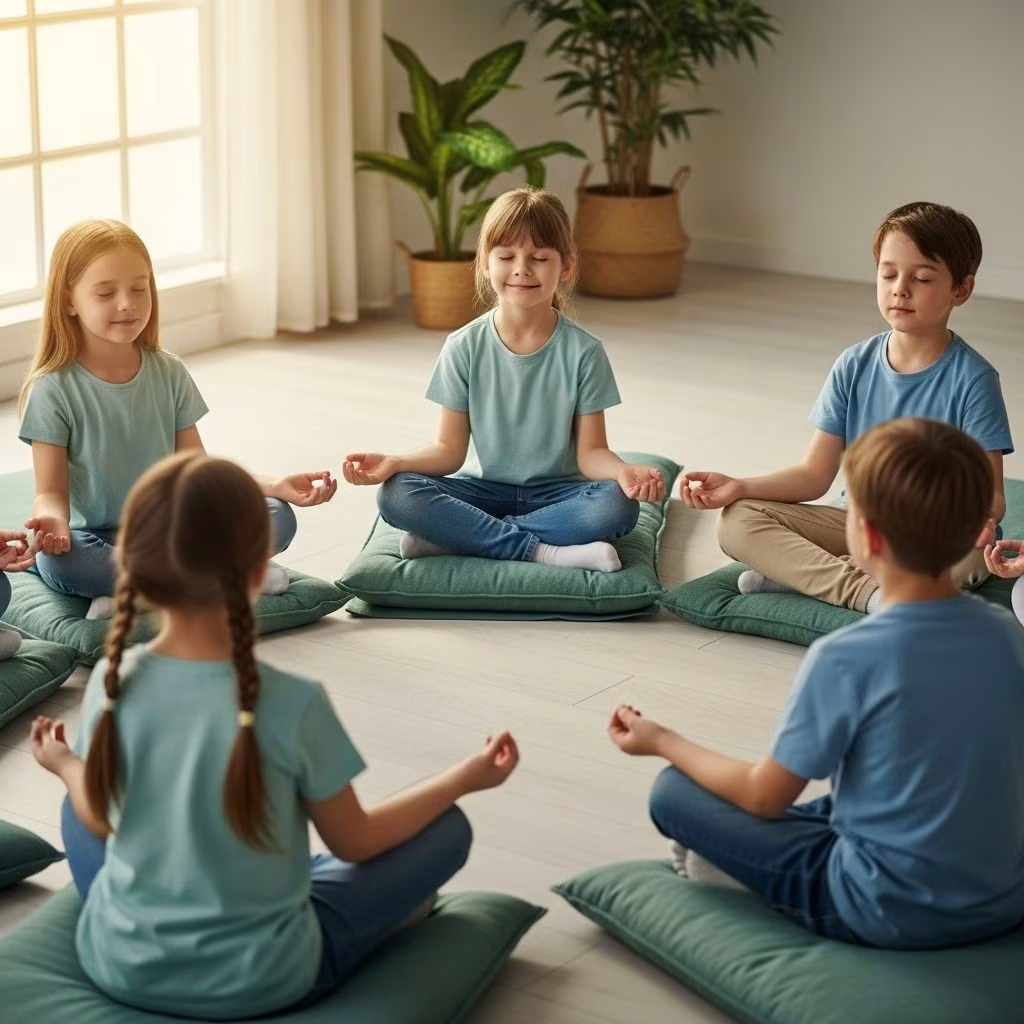
In a busy, often overstimulating world, children are increasingly exposed to stress, distractions, and the pressure to fit in. Mindfulness offers a powerful, practical tool for parents aiming to nurture their child’s emotional intelligence, resilience, and overall wellbeing. This comprehensive guide explains what mindfulness for kids truly means, its proven benefits, and how parents can confidently foster mindfulness at home.
What is Mindfulness for Kids?
Mindfulness, at its core, is the practice of paying attention on purpose, in the present moment, and without judgment. For children, this means noticing what is happening in their body, thoughts, feelings, and their surroundings, as it unfolds—without self-criticism or distraction.
Renowned mindfulness expert Jon Kabat-Zinn defines mindfulness as “paying attention in a particular way: on purpose, in the present moment and non-judgmentally.” For kids, mindfulness can be learned through simple practices like focusing on their breath, listening to sounds, or tuning into their emotions and sensations. These practices teach children to pause, observe, and respond thoughtfully rather than react impulsively to stressors or big emotions.
Key Principles of Mindfulness for Children
- Awareness: Noticing thoughts, emotions, and body sensations as they happen.
- Non-judgment: Accepting experiences as they are, without labeling them as “good” or “bad”.
- Present focus: Concentrating attention on the current moment rather than ruminating on the past or worrying about the future.
This approach encourages children to cultivate kindness, curiosity, and patience toward themselves and others.
Why Mindfulness is Important for Kids
Modern children face a barrage of stressors that can overwhelm their still-developing brains and emotional systems. School pressure, social dynamics, screen time, and societal expectations can challenge their ability to manage emotions, focus, and build social skills. Early mindfulness education equips kids with invaluable tools for:
- Emotional self-regulation: Managing anger, frustration, or anxiety before it escalates.
- Stress reduction: Calming the mind and body amidst daily pressures.
- Improved social relationships: Building empathy and patience toward peers and family members.
- Greater resilience: Bouncing back from setbacks more confidently.
Given these challenges, teaching children mindfulness isn’t just an optional enrichment—it’s a foundational skill, as essential as learning to read or swim.
The Science Behind Mindfulness
Hundreds of scientific studies affirm the broad value of mindfulness for children’s mental and physical health. Here’s a closer look at how mindfulness changes the brain and behavior:
| Brain Area | Role | Mindfulness Effect |
|---|---|---|
| Amygdala | Regulates emotions | Reduced reactivity and better self-regulation |
| Hippocampus | Memory and learning | Enhanced activity and memory formation; improved learning |
| Prefrontal Cortex | Decision-making, impulse control | Improved executive function, planning, and problem-solving |
Regular mindfulness practices help “train the brain”—children develop stronger attention, greater emotional balance, and greater cognitive flexibility. Remarkable research even points to physical changes: increased gray matter density, improved immune function, and better sleep.
Developmental Benefits
- Children as young as preschool can benefit from mindfulness activities, showing better attention span and self-control.
- Improvements in classroom behavior, academic performance (including higher math scores), and less aggression have been documented.
- Children with ADHD, autism, anxiety, or depression may find mindfulness especially helpful in managing impulses and big emotions.
Key Benefits of Mindfulness for Children
Mindfulness positively impacts children on many levels. Here is an in-depth look at the central benefits:
- Emotional Regulation: Kids learn to recognize and label their feelings, allowing them to pause and choose appropriate responses rather than acting out impulsively.
- Focus and Concentration: Mindfulness enhances a child’s ability to ignore distractions and stay on task, leading to better academic performance.
- Stress Reduction: Mindful breathing and body awareness release tension, lower cortisol, and help children cope with anxiety or overwhelm.
- Empathy and Self-awareness: By tuning into their own emotions, children develop compassion for others and become better friends and classmates.
- Improved Sleep: Calming the mind and body before bedtime encourages deeper, more restorative sleep.
- Increased Resilience: Children become more adaptive to setbacks and recover from disappointments with a positive outlook.
- Overall Wellbeing: Mindfulness encourages balanced growth across emotional, cognitive, and physical domains, providing a foundation for lifelong health.
Practical Mindfulness Activities for Kids
Mindfulness for children should be playful, engaging, and age-appropriate. Here are activities you can try at home:
- Mindful Breathing: Teach your child to “watch their breath” by placing a favorite stuffed animal on their belly and observing it go up and down as they breathe deeply.
- Five Senses Meditation: Guide your child to notice something they can see, hear, touch, taste, and smell, bringing attention fully to each sense.
- Gratitude Journaling: Encourage daily reflection by writing or drawing three things they’re grateful for.
- Body Scan: Starting from the toes and moving upward, invite your child to notice any sensations or tension in their body and try to relax each area.
- Belly Breathing with Bubbles: Blow bubbles together, focusing on taking slow inhales and watching the bubbles float (and pop) as a metaphor for thoughts and feelings that come and go.
- Mindful Listening: Close your eyes and ring a bell. See how long your child can hear the sound and when it stops. This anchors listening to the present.
- Guided Imagery: Tell a story that involves visualizing a peaceful scene—for example, lying on a warm beach—and encourage your child to imagine all the details.
- Heartful Wishes: Send good thoughts or wishes (“May you be happy. May you be safe.”) to friends, family, or the world.
Consistency is key, but even a few minutes a day makes a difference. Keep sessions short, playful, and judgement-free for best results.
How Parents Can Support Mindfulness at Home
- Model Mindfulness: Let your child see you practice mindful habits—pause before reacting, openly acknowledge your own feelings, and take calm breaths together.
- Create a Mindful Environment: Set aside “quiet time” with screens off, encourage slow eating or mindful walks, and provide a clutter-free space for reflection.
- Validate Emotions: Instead of dismissing or trying to “fix” big feelings, reflect them back (“I see you’re really frustrated. Let’s take a breath together.”)
- Use Reminders: Place visual cues (like a breathing jar or calm-down poster) in visible spots. Gentle prompts can help children pause and breathe when emotions run high.
- Schedule Routine Practice: Integrate mindfulness into daily routines—morning wake-ups, before homework, or right before bed. Predictable timing reinforces the habit.
- Celebrate Progress: Praise small efforts (“I noticed you calmed yourself quickly! That’s mindfulness in action.”)
Common Challenges and Misconceptions
- Myth: Mindfulness = Empty Mind
Reality: Mindfulness is about observing thoughts—not stopping them. The mind will wander, and that’s okay. - Myth: Kids Can’t Be Mindful
Reality: Even toddlers can develop mindful attention through play and stories, tailored to their age. - Myth: Mindfulness is Religious or Spiritual
Reality: While rooted in ancient traditions, modern mindfulness is secular, evidence-based, and medically endorsed for children’s wellbeing. - Challenge: Boredom or Resistance
Start with brief practices. Make it fun—add music, art, or movement to keep kids engaged. - Challenge: Inconsistency
Perfection isn’t necessary; small, everyday moments of awareness add up over time.
Frequently Asked Questions (FAQ)
What is the best age to start mindfulness with kids?
Children as young as preschool can benefit from simple mindfulness activities. Start with playful, sensory-based exercises that match your child’s developmental stage.
How long should mindfulness activities be for kids?
For younger children, start with 1-2 minutes. Gradually increase to 5-10 minutes as their attention span grows. Consistency is more important than duration.
Can mindfulness help children with ADHD, anxiety, or autism?
Yes. Mindfulness strategies are widely used for children with ADHD, anxiety disorders, and autism. They support self-regulation, impulse control, and stress management.
What if my child doesn’t want to participate?
Respect their feelings and invite participation through stories, play, and gentle modeling. Forced mindfulness is rarely effective; offer choices and let curiosity develop naturally.
Is mindfulness just for calming down?
Calm is a benefit, but mindfulness also builds focus, emotional intelligence, compassion, and resilience. It’s a broad life skill, not just a relaxation tool.
Resources: Books, Apps, and Programs
- Books for Parents and Kids:
- Sitting Still Like a Frog by Eline Snel
- Mindful Monkey, Happy Panda by Lauren Alderfer
- Breathe Like a Bear by Kira Willey
- Apps and Audio Resources:
- Calm (with kid-friendly guided meditations)
- Headspace for Kids
- Smiling Mind
- Insight Timer (has a children’s section)
- School Programs:
- MindUP Curriculum
- Empowering Minds by Empowering Education
- The Mindful Schools Program
Incorporating mindfulness into your child’s life doesn’t require perfection—just a willingness to pause, notice, and connect. By modeling and supporting mindful habits, parents give their children the lifelong toolkit to thrive in any circumstance.
References
- https://www.calm.com/blog/mindfulness-for-kids
- https://www.canr.msu.edu/news/mindfulness_has_many_benefits_for_children
- https://www.healthline.com/health/childrens-health/mindfulness-for-kids
- https://childmind.org/article/the-power-of-mindfulness/
- https://empoweringeducation.org/blog/benefits-of-mindfulness-for-children/
- https://mypacifichealth.com/mindfulness-for-kids-activities-benefits/
- https://www.youtube.com/watch?v=QTsUEOUaWpY
- https://kidshealth.org/en/teens/mindfulness.html


