


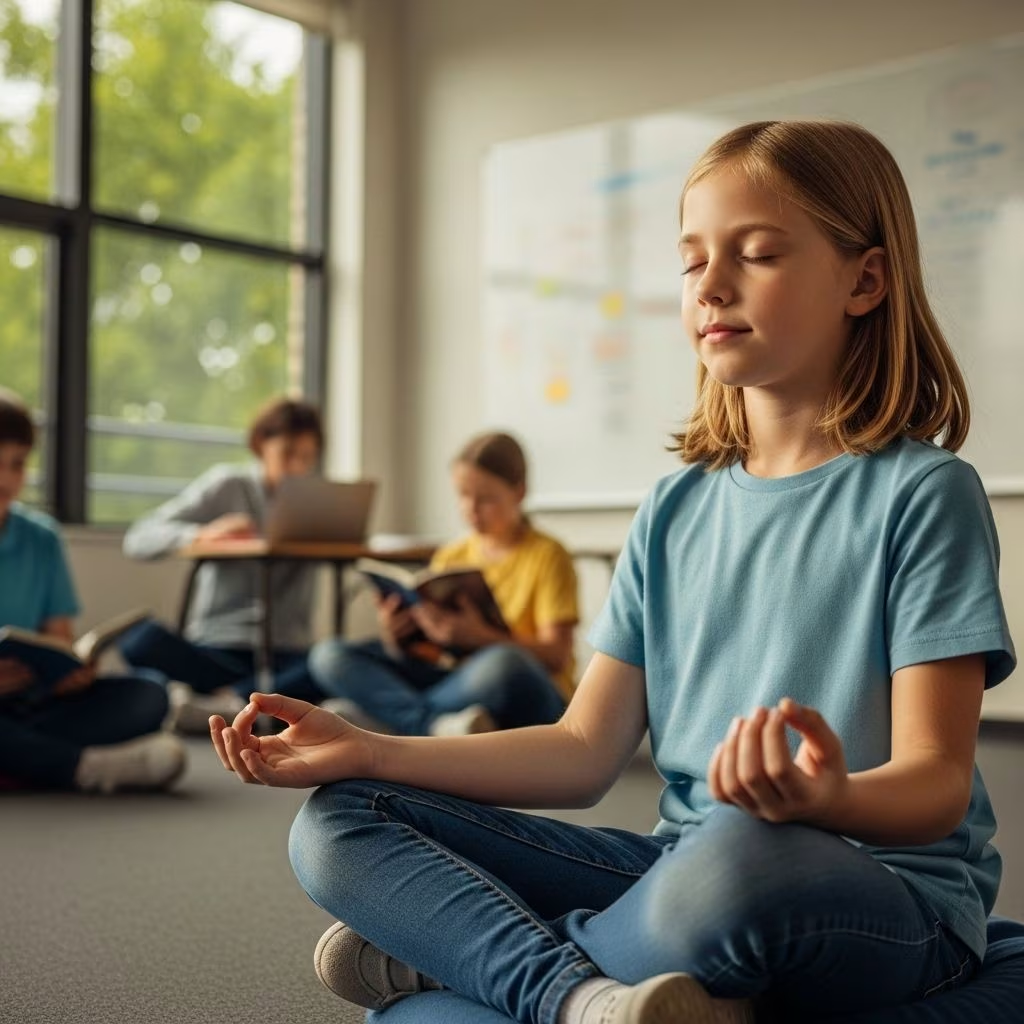
With the demands of modern education, students and teachers alike are seeking effective ways to manage stress and improve learning outcomes. Mindfulness, the practice of focusing attention on the present without judgment, has emerged as a powerful strategy to enhance students’ cognitive, emotional, and academic abilities. This comprehensive guide explores the research, methods, and real-world outcomes of mindfulness in schools, providing educators, parents, and students with actionable insights for boosting focus, grades, and well-being.
Introduction: The Need for Mindfulness in Schools
School environments can be highly stressful for students, who face academic pressure, social dynamics, and extracurricular commitments. Rates of anxiety, distraction, and even burnout are rising among school-aged children. Educators, recognizing these challenges, have begun to introduce mindfulness-based programs as a way to help students manage stress, build resilience, and sharpen their focus. The evidence supporting mindfulness in educational settings continues to grow, pointing to substantial benefits for learning and mental health.
What Is Mindfulness?
Mindfulness is the practice of paying deliberate attention to the present moment with an open, non-judgmental attitude. It involves being aware of thoughts, sensations, feelings, and the environment, moment by moment.
- Present-focused: Mindfulness emphasizes noticing what is happening right now, rather than ruminating on the past or worrying about the future.
- Acceptance: The practice involves observing thoughts and feelings without trying to change or judge them.
- Practical anchors: Techniques often use the breath, bodily sensations, or sounds as points of focus to cultivate presence and calm.
In school settings, mindfulness can be taught through brief guided exercises, breathing techniques, and reflective activities that encourage students to pause and notice their internal and external experience.
The Science-Backed Benefits of Mindfulness for Students
Extensive research illustrates that mindfulness-based school interventions (MBSIs) offer a range of psychological, cognitive, and academic benefits for students and even staff. Major review studies have shown the following effects:
- Reduced anxiety and stress: Mindfulness helps students manage stress, lower anxiety, and handle daily challenges with greater ease.
- Improved attention and executive function: Students participating in mindfulness programs demonstrate better attention control, reduced mind-wandering, and heightened executive function (the mental skills required for planning, focusing, and multitasking).
- Decreased behavioral problems: Evidence shows reductions in aggression, conduct problems, and impulsivity, contributing to a more positive school atmosphere.
- Enhanced emotional regulation: Students report improved awareness of and ability to manage emotions, leading to greater resilience and compassion.
- Increased prosocial behavior: Mindfulness fosters empathy, kindness, and connectedness among students.
- Improved academic performance: Several studies show measurable gains in grades, GPA, and performance on standardized academic tasks after mindfulness intervention, although some findings are mixed and suggest the importance of intervention quality.
Summary Table: Mindfulness Impact Areas
| Impact Area | Reported Benefits | Quality of Evidence |
|---|---|---|
| Anxiety & Stress | Reduces anxiety, coping with stress | High (A–B grade) |
| Attention/Focus | Improved sustained attention, less mind-wandering | High (A–B grade) |
| Executive Function | Better planning, organization, impulse control | High (A grade) |
| Academic Performance | Higher grades, improved GPA, better memory | Moderate–Strong (B grade) |
| Behavior | Reduced aggression, better classroom conduct | High (A grade) |
| Well-being | Improved mood, increased happiness | Moderate–Mixed (Some A, some lower) |
Mindfulness, Focus, and Attention in the Classroom
One of the most consistently documented benefits of mindfulness in schools is improved focus and sustained attention. Students trained in mindfulness exhibit greater:
- Concentration during lessons and exams
- Reduced distractibility, as measured by objective tests
- Enhanced executive functioning, supporting memory and cognitive flexibility
This is particularly important in the modern classroom, where digital distractions abound and students are expected to juggle multiple cognitive demands. Research indicates that even short, regular sessions of mindfulness can make a positive difference in students’ sustained attention spans and academic engagement.
Does Mindfulness Really Improve Academic Performance?
Improved attention and lower stress naturally support academic learning. Direct evidence shows that mindfulness-based programs can lead to measurable improvements in:
- Report card grades and GPA
- Specific subject performance such as math and social studies
- Working memory and auditory-verbal memory, essential for learning and retaining new material
It is important to note, however, that not every study finds academic improvement, likely due to differences in program delivery, duration, and quality of implementation. For example, while some systematic reviews report strong correlations between mindfulness and academic boosts, others cite no significant change in achievement. Nevertheless, most agree that at minimum, mindfulness helps by reducing barriers to learning, such as anxiety and distraction, which indirectly promote better grades.
Emotional Well-Being and Stress Reduction
Mindfulness programs are widely recognized for their power to enhance students’ emotional health. Key benefits include:
- Stress management: Mindfulness reduces students’ experience of stress and buffers the negative impact of daily pressures.
- Lower rates of anxiety and depressive symptoms: Students learn coping strategies to prevent and address anxiety and low mood, building lasting resilience.
- Improved self-awareness and compassion: Students become more attuned to their feelings and can extend kindness to themselves and classmates, bolstering classroom climate.
- Boosted teacher well-being: Teachers also benefit from mindfulness training, experiencing less burnout, anxiety, and emotional exhaustion, which, in turn, creates a more positive environment for students.
Such outcomes are critical given the mental health challenges faced by today’s youth and underline the holistic benefits of these programs, extending beyond just academic achievement.
Implementing Mindfulness Practices in Schools
Introducing mindfulness to the school day can be simple and highly flexible. Schools have used dedicated mindfulness curricula, daily short practices, or integrated mindfulness into existing lessons. Successful approaches often include:
- Structured programs: Evidence-based curricula deliver mindfulness in age-appropriate language with guided exercises over several weeks; e.g., the Master Mind program.
- Teacher-led daily practices: Short, consistent activities (5–15 minutes) at the start of the day or before stressful transitions.
- Integration with social-emotional learning: Combining mindfulness with skills for emotional literacy and interpersonal communication.
- Staff development: Training for teachers and administrators so they can effectively guide and support mindful practices in their classrooms.
Research suggests that regular practice—even just 15 minutes a day—can make a significant difference in mindset and well-being.
Key Elements of Mindfulness Education Programs
- Mindful breathing exercises
- Body scan or mindful movement practices
- Listening and sensory awareness activities
- Daily repetition and reflection
- Practical application to real-life situations—problem-solving, test anxiety, peer conflicts, etc.
Practical Mindfulness Exercises for Students
Here are some research-backed mindfulness exercises suitable for use in schools:
- Breathing Anchor: Guide students to focus attention on the natural rhythm of their breathing. When the mind wanders, gently return focus to the breath.
- 5 Senses Check-In: Have students quietly notice something they can see, hear, feel, smell, and taste in the present moment.
- Mindful Movement: Short sequences of gentle stretches or movements done with full awareness to the sensations.
- Body Scan: Direct attention sequentially to each part of the body, noting sensations without judgment.
- Gratitude Reflection: Once a week, ask students to silently recall something they are grateful for, fostering positive mood and perspective.
Simple, age-appropriate mindfulness activities can fit into morning meetings, transitions between lessons, or even before exams to prepare the mind for focused work.
Challenges, Dosage, and Considerations
- Dosage matters: The ideal length and frequency of mindfulness sessions for optimal academic and emotional benefits is not yet fully known. Research recommends regular practice, but more studies are needed to determine the exact “dosage” that maximizes attention and regulation gains.
- Individual differences: Response to mindfulness may vary by age, gender, and personal background. Some studies suggest girls may experience more pronounced increases in self-compassion and well-being, and already tend to earn higher grades. Tailoring programs to different student groups may enhance effectiveness.
- Program quality: Success depends on well-designed, evidence-based curricula and teacher training. Poorly delivered or ad hoc programs may yield limited benefits.
- Integration with broader school culture: Combining mindfulness with social-emotional learning and positive behavior support systems maximizes impact across the school community.
Frequently Asked Questions (FAQs)
Q: What age groups benefit from school-based mindfulness training?
A: Evidence shows that elementary, middle, and high school students all benefit, with age-appropriate adaptations of content enhancing outcomes from early childhood through adolescence.
Q: Is mindfulness a religious or spiritual practice?
A: No. In schools, mindfulness is presented as a secular, evidence-based set of skills for focusing attention and managing emotions. There is no religious content involved.
Q: How much time does a school need to invest for students to benefit?
A: Even as little as 10–15 minutes daily, implemented with consistency, can produce positive effects on focus and well-being. Long-term programs of several weeks tend to yield greater and more sustained benefits.
Q: Are teachers and staff also impacted by mindfulness training?
A: Yes. Teachers report reduced anxiety, improved well-being, and better classroom management, which directly benefit students by creating a more positive and responsive learning environment.
Q: Can mindfulness replace other social-emotional learning (SEL) approaches?
A: Mindfulness is best used as a complement to other SEL initiatives. It enhances focus and emotion regulation skills that support a broad range of social and academic competencies.
Q: Are there risks or drawbacks to mindfulness in schools?
A: Mindfulness is generally very safe, but programs should be voluntary, trauma-informed, and delivered by trained facilitators. More research is needed on optimal program design for different populations.
Conclusion
The implementation of mindfulness in schools represents a transformative approach to education that supports not only academic achievement, but also the emotional, cognitive, and social well-being of both students and educators. As research continues to confirm the powerful benefits of mindfulness, schools integrating these practices are likely to see improved focus, reduced stress, and, ultimately, higher grades and lifelong skills for success.
References
- https://pmc.ncbi.nlm.nih.gov/articles/PMC9524483/
- https://www.theindependenceschool.org/community/blog/the-benefits-of-mindfulness-in-schools
- https://www.psu.edu/news/research/story/new-study-shows-benefits-mindfulness-middle-school-teachers
- https://pmc.ncbi.nlm.nih.gov/articles/PMC4821437/
- https://www.gse.harvard.edu/ideas/usable-knowledge/19/01/making-time-mindfulness
- https://www.frontiersin.org/journals/education/articles/10.3389/feduc.2023.1179584/full
- https://childmind.org/article/the-power-of-mindfulness/
- https://www.psychologytoday.com/us/blog/evidence-based-living/202302/the-benefits-of-mindfulness-education-in-schools


