


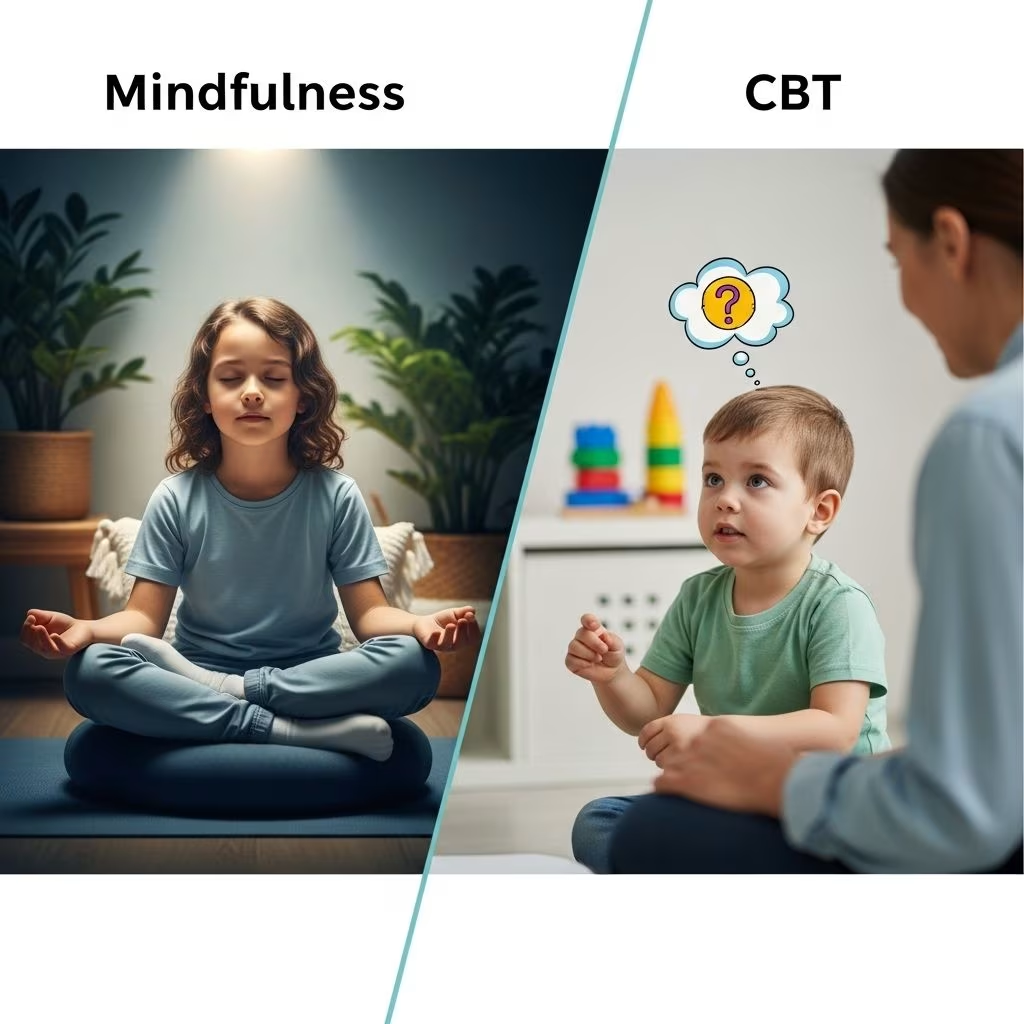
Childhood anxiety and emotional difficulties are increasingly prevalent concerns, prompting parents and clinicians to seek effective psychological interventions. Two prominent approaches—Mindfulness-Based Interventions and Cognitive Behavioral Therapy (CBT)—are widely practiced, but questions remain regarding which method better supports children’s mental health. This comprehensive article examines both therapies in depth, compares their effectiveness using current research, and explores which may be preferable in different contexts.
Introduction
Rapid changes in childhood development, social pressures, and the demands of modern life contribute to increased rates of anxiety, depression, and behavioral challenges among children. Early psychological intervention is crucial, as persistent emotional difficulties can lead to future mental health issues and reduced well-being.
Two therapeutic modalities—CBT, known for its problem-focused and skills-based approach, and Mindfulness-Based Cognitive Therapy for Children (MBCT-C), which integrates mindfulness practices—have emerged as leading options for addressing these concerns.
This article explores their methodologies, strengths, limitations, and supporting evidence to help caregivers and professionals make informed decisions.
Understanding Cognitive Behavioral Therapy (CBT) for Kids
CBT is a structured, time-limited psychotherapeutic approach, effective for treating anxiety disorders, depression, and a variety of behavioral concerns in children. Its core principle is that psychological distress results from maladaptive thoughts (cognitions) and behaviors, which can be modified through targeted interventions.
Key Components of CBT for Children
- Psychoeducation: Teaching children about emotions, thoughts, and behaviors.
- Cognitive restructuring: Identifying and challenging negative thought patterns.
- Behavioral activation and exposure: Encouraging participation in avoided activities and systematic desensitization to feared situations.
- Skills building: Teaching coping strategies, problem-solving, and emotion regulation techniques.
- Parental involvement: Oftentimes parents are included to reinforce learned skills in the home environment.
Benefits of CBT for Kids
- Highly structured sessions, usually with manualized protocols.
- Extensive evidence base supporting its efficacy for anxiety disorders, depression, and behavioral issues.
- Focuses on changing maladaptive thinking and behavior directly.
Limitations of CBT for Kids
- Requires active cognitive participation, which may be challenging for very young children or those with attention difficulties.
- Some children may resist engaging with thought-challenging exercises or exposure tasks.
- Effectiveness can vary depending on practitioner skill and engagement.
Understanding Mindfulness-Based Interventions for Kids
Mindfulness involves cultivating present-moment awareness and non-judgmental acceptance of thoughts, feelings, and sensations. Mindfulness-Based Cognitive Therapy for Children (MBCT-C) integrates mindfulness practices with elements of cognitive therapy, but with important distinctions:
- Sessions are modified in length and complexity to suit children’s developmental level.
- Language and exercises are adapted for younger participants.
- Emphasis is placed on awareness, self-acceptance, and emotion regulation rather than changing the content of negative thinking directly .
Core Practices in MBCT-C
- Mindful breathing: Focusing gently on the sensations of breathing as an anchor.
- Body scan: Noticing sensations throughout the body in a systematic way.
- Mindful movement: Incorporating gentle, attention-focused movement or yoga.
- Acceptance-based strategies: Teaching children to observe, label, and accept uncomfortable emotions without immediately trying to change them.
Benefits of Mindfulness-Based Interventions for Kids
- Improves emotional awareness and acceptance.
- Can enhance attention control and reduce reactivity.
- Promotes coping skills that may generalize outside of formal therapy.
- May offer a gentler approach for children who struggle with traditional CBT exercises .
Limitations of Mindfulness-Based Interventions for Kids
- Some meta-analyses find small to moderate effect sizes, suggesting variable impact .
- Effectiveness may depend on program structure, facilitator experience, and participant characteristics
- Long-term outcomes are less well-established compared to CBT.
Comparison: Mindfulness vs CBT
To understand how these therapies stack up, it is useful to compare their key attributes and goals.
| Aspect | Cognitive Behavioral Therapy (CBT) | Mindfulness-Based Interventions (MBCT-C/MBI) |
|---|---|---|
| Primary Goal | Change maladaptive thoughts and behaviors | Increase present-moment awareness, acceptance, emotion regulation |
| Techniques | Cognitive restructuring, exposure, homework assignments | Mindful breathing, body scans, acceptance-based practice |
| Approach | Problem-focused, directive | Process-oriented, experiential |
| Evidence Base | Extensive, well-established for anxiety, depression, behavioral concerns | Growing (especially for anxiety, emotion regulation); variable effectiveness by setting |
| Suitability | Older children/adolescents, structured and motivated participants | Children who resist cognitive work, those seeking self-acceptance and emotional resilience |
| Parental Role | Often direct involvement | May be less direct; focus on supporting mindfulness practice at home |
Effectiveness for Childhood Anxiety and Emotion Regulation
Research Findings: CBT
- Multiple randomized controlled trials (RCTs) and clinical observations confirm CBT’s effectiveness for childhood anxiety and depression .
- CBT programs often demonstrate moderate to large effect sizes; it remains the first-line treatment in many guidelines.
Research Findings: MBCT-C (Mindfulness-Based Cognitive Therapy for Children)
- A key RCT found MBCT-C was more effective than group CBT for reducing anxiety symptoms in children, with a large effect size (Cohen’s d = 1.05) .
- MBCT-C was as effective as CBT in reducing emotion suppression and improving emotion regulation .
- Studies involving MBCT-C for special populations (children with risk of bipolar disorder, math anxiety, cancer, and internalizing disorders) show reductions in clinical symptoms and improvements in mindfulness and emotion regulation .
- Meta-analyses indicate small to moderate effect sizes for mindfulness interventions, especially when led by experienced facilitators and tailored to child-specific needs .
- Some well-constructed studies report only limited differences between CBT and MBCT-C interventions, suggesting both programs help but are often comparable in impact .
Factors Affecting Effectiveness
- Program quality: Therapist training, session content, and delivery can significantly impact effectiveness in both therapies.
- Child characteristics: Age, engagement, cognitive ability, severity of symptoms, and family context all influence outcomes.
- Parent and teacher involvement: Increased support leads to better maintenance of learned strategies outside therapy settings .
Importantly, untreated anxiety has long-term consequences for children, including increased risk for depression, substance abuse, and further emotional difficulties later in life. Early intervention with either CBT or mindfulness can significantly improve long-term outcomes .
Practical Considerations for Parents and Clinicians
When to Choose CBT
- When a child experiences intense or persistent cognitive distortions or specific phobias.
- If a structured, manual-based approach is preferable.
- When parents and teachers are able to support homework and skills practice outside sessions.
When to Choose Mindfulness-Based Interventions
- For children who struggle with emotional acceptance or experience generalized stress and anxiety.
- If a child resists cognitive restructuring or finds it distressing.
- When the goal extends beyond symptom relief to long-term emotional resilience and awareness.
Combining Approaches
- Some programs blend CBT and mindfulness, leveraging both cognitive and acceptance-based strategies.
- Integration may provide broader benefits, allowing children to both challenge unhealthy thoughts and develop greater emotional regulation skills .
- Collaboration between therapist, parents, and teachers can amplify the benefits of either approach.
Which Therapy Is Better?
Current research suggests both CBT and mindfulness-based approaches are effective for children with anxiety and emotional difficulties . In some studies, MBCT-C demonstrates superior outcomes for anxiety, particularly where emotion regulation is a concern. Other research finds minimal differences or comparable outcomes between CBT and mindfulness-based programs, pointing to the value in tailoring therapy choice to the individual child’s needs, preferences, and context .
A key distinction lies in how each therapy addresses negative thoughts: CBT aims to change them, while mindfulness teaches children to relate to their thoughts and emotions differently. This means some children may find mindfulness-based practices more approachable, particularly if cognitive restructuring feels overwhelming or intrusive .
Ultimately, there is no single answer to which therapy is categorically better; rather, informed selection and adaptation to the child’s developmental stage, symptoms, and family involvement offers the best outcomes.
Frequently Asked Questions (FAQs)
Q: Is Mindfulness-Based Therapy safe and evidence-based for children?
A: Yes. Multiple studies and controlled trials support its safety and efficacy, especially for anxiety and emotion regulation .
Q: How does CBT differ from MBCT-C in treating childhood anxiety?
A: CBT focuses on changing negative thoughts and behaviors, whereas MBCT-C teaches children to observe and accept thoughts and emotions without immediately trying to change them .
Q: Is one therapy better for younger children compared to adolescents?
A: Mindfulness-based approaches may be easier for younger children who struggle with cognitive work. CBT typically works best in older children or adolescents who can engage in structured cognitive exercises .
Q: Can therapies be combined?
A: Yes. Many therapists blend cognitive and mindfulness-based strategies to meet individual child needs .
Q: Are parent or teacher supports necessary?
A: Parental and educational involvement can greatly strengthen both therapy forms by reinforcing skills and supporting in everyday contexts .
Conclusion
Both Mindfulness-Based Cognitive Therapy and Cognitive Behavioral Therapy offer valuable tools for supporting children’s emotional development, especially in managing anxiety and regulating emotions. The choice depends on individual goals, child characteristics, and family circumstances. While MBCT-C may edge ahead in specific situations, especially for emotion regulation and acceptance, CBT’s robust structure and long-standing evidence base continue to make it a mainstay of childhood psychological intervention.
The best outcomes arise from an informed, tailored approach, often blending elements of both therapies and involving family and educational supports. Early, compassionate intervention provides children with skills that can support their long-term mental health and resilience.
References
- https://pubmed.ncbi.nlm.nih.gov/33372125/
- https://pmc.ncbi.nlm.nih.gov/articles/PMC12331755/
- https://jamanetwork.com/journals/jamapsychiatry/fullarticle/2802550
- https://www.cebc4cw.org/program/mindfulness-based-cognitive-therapy-for-children-mbct-c/detailed
- https://pure.psu.edu/en/publications/comparing-traditional-cognitive-behavioral-therapy-with-mindfulne
- https://brieflands.com/articles/ijpbs-9653
- https://www.mastermindbehavior.com/post/the-role-of-mindfulness-in-behavior-therapy-for-children


