


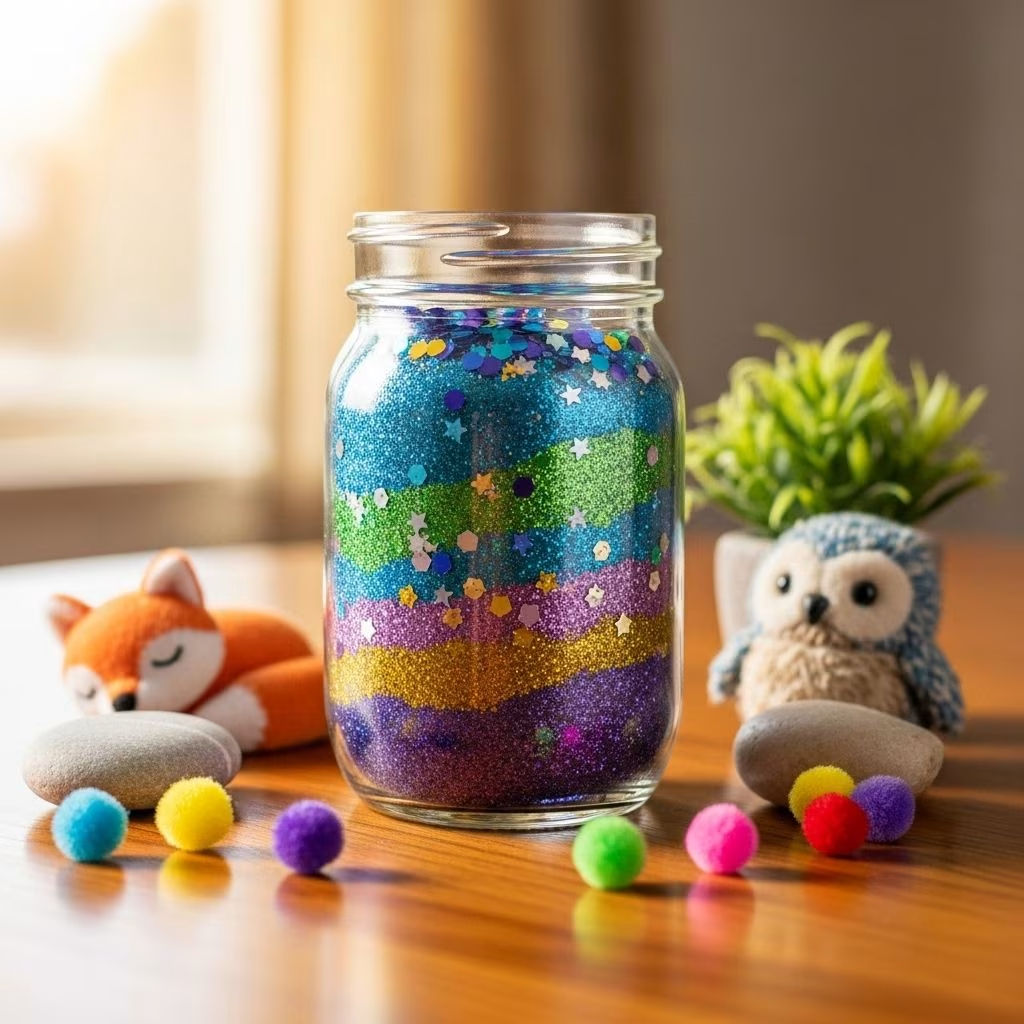
Every parent has witnessed those overwhelming moments when a child’s emotions spiral out of control—tears streaming down their face, frustration building, and rational conversation becoming impossible. In these challenging situations, a mindfulness jar emerges as a powerful yet simple tool that transforms emotional turmoil into tranquility. This visual and tactile approach to emotional regulation offers children a concrete way to understand and manage their feelings while developing lifelong self-regulation skills.
The mindfulness jar, also known as a calm jar or glitter jar, is more than just a craft project—it’s a scientifically-backed therapeutic tool that helps children visualize their emotions and learn the essential skill of self-regulation. By watching glitter swirl and gradually settle in water, children gain a tangible representation of how their own minds can move from chaos to calm.
Understanding the Mindfulness Jar
A mindfulness jar consists of a transparent container filled with water, clear glue, and colored glitter. When shaken, the contents create a mesmerizing whirlwind of movement that slowly settles over several minutes. This simple yet profound tool provides children with a physical metaphor for their emotional experiences, making abstract concepts like feelings and self-regulation accessible and understandable.
The concept draws from Montessori principles, which emphasize providing children with concrete tools to grasp abstract ideas. Maria Montessori understood that children learn best through hands-on experiences, and the mindfulness jar perfectly embodies this philosophy. The initial chaotic swirling of glitter represents an agitated emotional state, while the progressive settling symbolizes the natural return to inner peace that occurs when we give ourselves time and space to process difficult feelings.
The Science Behind Mindfulness Jars
The effectiveness of mindfulness jars is rooted in both neuroscience and cognitive psychology. When children experience strong emotions such as anger, fear, or frustration, the amygdala—the brain’s emotional center—triggers a fight, flight, or freeze response. During these moments, cortisol floods the brain, significantly reducing access to the prefrontal cortex, which is responsible for rational thinking, decision-making, and emotional regulation. This physiological response makes it nearly impossible for children to think clearly or make good choices when they’re emotionally overwhelmed.
The mindfulness jar works by activating the parasympathetic nervous system, which counteracts the stress response. As children focus their attention on watching the glitter slowly drift downward, several beneficial processes occur simultaneously. The hypnotic movement captures their attention, creating a state of relaxed concentration that interrupts the cycle of negative thoughts fueling their agitation. This visual focus serves as a grounding technique, anchoring children to the present moment rather than allowing them to remain trapped in distressing thoughts or feelings.
Additionally, using the jar naturally encourages slower, deeper breathing patterns. As children become absorbed in watching the glitter settle, their breathing often synchronizes with the gentle, rhythmic movement they’re observing. This deeper breathing amplifies the calming effect by sending signals to the brain that it’s safe to relax, further reducing stress hormones and promoting a sense of safety and calm.
Benefits of Using a Mindfulness Jar for Emotional Development
Regular use of a mindfulness jar offers numerous benefits that extend far beyond immediate calming effects. These advantages contribute to children’s long-term emotional intelligence and cognitive development in meaningful ways.
Emotional Intelligence Growth: The mindfulness jar helps children develop crucial emotional intelligence skills. Through repeated use, children learn to recognize when they’re feeling overwhelmed and understand that they have the power to influence their emotional state. This awareness is the foundation of emotional intelligence—the ability to identify, understand, and manage one’s own emotions while also recognizing and responding appropriately to others’ feelings.
Enhanced Self-Regulation: Self-regulation is the ability to manage emotions, thoughts, and behaviors in different situations. The mindfulness jar provides children with a concrete strategy for self-regulation that they can initiate independently. Rather than relying solely on adults to help them calm down, children become active participants in their own emotional management, fostering autonomy and confidence in their ability to handle difficult feelings.
Improved Executive Functions: Executive functions are the mental skills that help us plan, focus attention, remember instructions, and juggle multiple tasks. Regular mindfulness jar use strengthens three core executive functions. First, it develops inhibitory control—the ability to pause and reflect before reacting impulsively. Second, it enhances cognitive flexibility, helping children adapt to new situations and shift perspective. Third, it supports working memory by helping children maintain their goal of finding calm throughout the activity.
Increased Mindfulness Practice: The mindfulness jar introduces children to the practice of mindfulness in an accessible, engaging way. Mindfulness—characterized by present-moment awareness without judgment—has been shown through research to improve emotional regulation in young children and adolescents. By focusing on the here-and-now experience of watching glitter settle, children naturally practice mindfulness without needing complex instruction or prolonged sitting meditation.
Stress Reduction and Resilience: Children who regularly use mindfulness jars often demonstrate greater emotional resilience and reduced stress levels. They develop confidence in their ability to navigate difficult situations and bounce back from setbacks. This resilience becomes a protective factor that serves them throughout childhood and into adulthood.
How to Create Your Own Mindfulness Jar
Creating a mindfulness jar is a simple, inexpensive project that you can complete with your child in about five minutes. The collaborative creation process itself becomes a bonding experience and helps children feel ownership over this important emotional regulation tool.
Materials Needed:
– One clear plastic or glass jar with a tight-fitting lid (plastic is safer for younger children)
– Warm water
– Clear glue or glitter glue (about 1/4 to 1/2 cup depending on jar size)
– Fine glitter in one or multiple colors
– Optional: food coloring, small sequins, or confetti
– Optional: super glue to seal the lid permanently
Assembly Instructions:
Begin by filling your jar approximately three-quarters full with warm water. The warm temperature helps the glue mix more smoothly. Next, add the clear glue—the amount you use will determine how quickly the glitter settles. More glue creates a thicker mixture where glitter falls more slowly, while less glue allows faster settling. For younger children with shorter attention spans, aim for a settling time of one to two minutes. For older children, three to five minutes works well.
Add your glitter generously. Don’t be shy—more glitter creates a more dramatic and engaging visual effect. If you choose to use multiple colors, you can assign different meanings to each color. For example, one color might represent thoughts, another feelings, and a third behaviors or actions. Alternatively, a single color can represent all these concepts, with its meaning shifting based on the specific situation.
If desired, add a drop or two of food coloring to tint the water, which can make the glitter more visible. Seal the lid tightly and shake vigorously to mix all ingredients thoroughly. Test the settling time—if the glitter falls too quickly, add more glue; if it takes too long, add a bit more water. Once you’re satisfied with the result, consider using super glue around the lid’s inner rim to prevent accidental spills, especially for younger children.
How to Introduce the Mindfulness Jar to Your Child
The way you introduce the mindfulness jar significantly impacts how effectively your child will use it. Present the jar during a calm, peaceful moment rather than in the middle of an emotional crisis. This allows your child to understand its purpose and practice using it when they’re regulated and receptive to learning.
Explain the jar using age-appropriate language. You might say something like: “This is a special jar that shows us what happens inside our brains and bodies when we have big feelings. When we shake it up, all the glitter swirls around, just like our thoughts and feelings swirl around when we’re upset, angry, or worried. But watch what happens when we sit still and take deep breaths—the glitter slowly settles down, just like our thoughts and feelings can settle down too.”
Demonstrate how to use the jar yourself. Shake it vigorously, then sit quietly and watch the glitter settle while taking slow, deep breaths. Invite your child to try, making it a shared experience rather than a lecture. This collaborative approach helps children feel empowered rather than controlled.
Practice using the jar together several times during calm moments before expecting your child to use it independently during emotional upheaval. This repetition builds familiarity and creates positive associations with the tool.
Using the Mindfulness Jar During Emotional Moments
When your child is experiencing strong emotions, the mindfulness jar becomes a practical intervention tool. The key is to introduce it gently and supportively rather than as a punishment or forced activity.
Step 1: Acknowledge the Emotion
Before reaching for the mindfulness jar, validate your child’s feelings. You might say, “I can see you’re feeling really frustrated right now because your tower keeps falling down” or “I notice you’re feeling sad because your friend couldn’t come over today.” This acknowledgment helps children feel heard and understood, which is essential for emotional regulation.
Step 2: Offer the Jar as a Tool
Present the mindfulness jar as a helpful resource rather than a requirement: “Would you like to use your calm jar to help your body feel better?” or “Let’s shake up the glitter jar together and watch it settle.” This approach respects your child’s autonomy while providing support.
Step 3: Make the Connection
As you shake the jar together, verbally connect the swirling glitter to their internal experience: “Do you see how the glitter is moving all around, fast and wild? That’s what’s happening in your brain right now. All your thoughts and feelings are swirling around. But watch what happens as we breathe slowly together—the glitter starts to slow down and settle, just like your thoughts and feelings will settle too.”
Step 4: Practice Calm Breathing
While watching the glitter settle, guide your child through deep breathing exercises. You might count breaths together, blow imaginary bubbles, or use belly breathing techniques. The combination of visual focus and intentional breathing creates a powerful calming effect.
Step 5: Reflect Together
Once the glitter has settled and your child has calmed down, briefly reflect on the experience: “Your glitter is all settled now, and I notice your body looks calmer too. How do you feel now?” This reflection helps children connect the tool’s use with the positive outcome of feeling better, increasing the likelihood they’ll reach for it independently in the future.
Teaching Children to Use the Jar Independently
The ultimate goal is for children to recognize their emotional states and use the mindfulness jar independently without adult prompting. This independence develops gradually through consistent practice and positive reinforcement.
Create a designated calm space in your home where the mindfulness jar lives along with other calming tools like books, soft cushions, or stuffed animals. Make this space inviting and accessible so children can retreat there when needed. Encourage your child to use the jar proactively by suggesting it during homework time, before bed, or any time they need to focus or relax—not just during emotional crises.
As your child becomes more familiar with the jar, ask questions that promote self-awareness: “How does your body feel right now? Do you think the calm jar might help?” These questions teach children to tune into their physical and emotional states, developing the interoceptive awareness that underlies effective self-regulation.
Praise your child when they independently choose to use the jar, highlighting their growing emotional competence: “I noticed you got your calm jar all by yourself when you started feeling frustrated. That shows you’re learning to take care of your feelings. I’m proud of you!”
Adapting the Mindfulness Jar for Different Ages
Toddlers and Preschoolers (Ages 2-5): For very young children, keep language simple and concrete. Focus on the sensory experience rather than complex emotional explanations. Use faster-settling jars to match their shorter attention spans. Make the experience playful and engage other senses by talking about the colors, sounds of shaking, and how the jar feels in their hands.
Early Elementary (Ages 6-8): Children in this age range can understand more nuanced explanations about how emotions work in the brain and body. Introduce the concept that all feelings are okay and temporary. Encourage them to name specific emotions (frustrated, disappointed, anxious) rather than just “mad” or “sad.” They can begin using the jar more independently with occasional reminders.
Older Elementary and Teens (Ages 9+): Older children and adolescents can appreciate the deeper mindfulness principles behind the jar. Discuss how the practice relates to meditation and stress management. They might enjoy creating multiple jars with different settling times for different purposes—a quick-settling jar for brief moments of frustration and a slow-settling jar for deeper relaxation or sleep preparation.
Expanding Beyond the Basic Jar
Once your child is comfortable with a basic mindfulness jar, you can expand the practice in creative ways. Create themed jars for different emotions or situations—a calm-down jar for anger, a worry jar for anxiety, a focus jar for homework time, or a sleepy-time jar for bedtime routines. Each jar can have slightly different colors, glitter types, or settling speeds to match its specific purpose.
Some families create emotion exploration jars where different colored glitters represent different emotions. After using the jar, children identify which \”emotion colors\” were swirling most strongly for them, facilitating deeper emotional awareness and vocabulary development.
You might also pair the mindfulness jar with other calming strategies to create a comprehensive emotional toolkit. Combine jar time with affirmations, progressive muscle relaxation, guided imagery, or journaling to give children multiple pathways to emotional regulation.
Common Challenges and Solutions
Challenge: Child refuses to use the jar during emotional moments.
Solution: Don’t force it. Model using the jar yourself when you’re stressed. Children learn through observation. Make the jar available without pressure, and gradually they may become curious and willing to try it.
Challenge: The glitter settles too quickly or too slowly.
Solution: Adjust the glue-to-water ratio. More glue creates slower settling; more water speeds it up. Keep experimenting until you find the perfect timing for your child’s needs.
Challenge: Child shakes the jar repeatedly without watching it settle.
Solution: This is common initially. Gently guide them to watch at least a few moments of settling. Sometimes children need to regulate through movement first before they can engage in stillness.
Challenge: The novelty wears off and the jar loses effectiveness.
Solution: Refresh the jar periodically with new colors or materials. Create seasonal versions. Take breaks from the jar and reintroduce it after a few weeks. Rotate it with other calming tools to maintain interest.
Integration with Other Mindfulness Practices
The mindfulness jar serves as an excellent gateway to broader mindfulness practices. Once children understand the basic concept of calming their minds through focused attention, you can introduce other age-appropriate mindfulness activities.
Sensory awareness exercises teach children to pay attention to what they smell, touch, hear, see, and taste. This simple act of bringing awareness to sensory experiences has a powerful calming effect because it anchors attention in the present moment rather than anxious thoughts about the future or rumination about the past.
Body scan meditations help children notice physical sensations without judgment, developing the mind-body connection essential for emotional regulation. Mindful breathing exercises, gratitude practices, and loving-kindness meditations all build upon the foundational skills developed through mindfulness jar use.
The Long-Term Impact on Emotional Health
The benefits of introducing mindfulness practices like the jar in childhood extend far beyond the immediate calming effects. Research demonstrates that regular mindfulness practice contributes to overall executive functioning development, improved academic performance, better social relationships, and reduced anxiety and depression symptoms.
Children who learn emotional regulation skills early develop greater resilience—the ability to bounce back from adversity and cope effectively with life’s challenges. They build confidence in their capacity to manage difficult emotions rather than feeling overwhelmed or helpless when strong feelings arise.
Perhaps most importantly, the mindfulness jar teaches children that they have agency over their emotional experiences. While they can’t always control what happens to them or what emotions arise, they can influence how they respond to those emotions. This sense of personal power is foundational to mental health and well-being throughout the lifespan.
The practice also lays groundwork for empathy development. Children who understand their own emotional experiences are better equipped to recognize and respond compassionately to others’ emotions, fostering the social-emotional skills that support healthy relationships throughout life.
Frequently Asked Questions
Q: At what age can children start using a mindfulness jar?
A: Children as young as two years old can benefit from a mindfulness jar, though they’ll need significant adult support and guidance. The practice becomes increasingly effective as children develop language and self-awareness, typically around ages three to four, when they can begin to understand the connection between the swirling glitter and their internal emotional state.
Q: How long should a child watch the mindfulness jar?
A: The ideal duration depends on the child’s age and attention span. For toddlers, one to two minutes is appropriate. Preschoolers might watch for two to three minutes, while elementary-aged children can benefit from three to five minutes or longer. Follow your child’s lead—some children naturally watch until every piece of glitter has settled, while others feel calm enough to move on sooner.
Q: Can the mindfulness jar replace professional help for emotional difficulties?
A: No, the mindfulness jar is a supportive tool but not a replacement for professional mental health care. If your child experiences persistent emotional difficulties, intense anxiety, depression, trauma responses, or behaviors that interfere with daily functioning, consult a pediatrician or child mental health professional for comprehensive evaluation and treatment.
Q: What if my child wants to use the jar constantly?
A: Frequent use initially is normal as children explore this new tool. If excessive use continues, consider whether your child might be experiencing ongoing stress or anxiety that needs addressing. Also ensure the jar isn’t becoming an avoidance strategy that prevents children from developing other coping skills or facing manageable challenges.
Q: Should I use the mindfulness jar as a timeout or punishment?
A: Absolutely not. The mindfulness jar should never be presented as punishment or forced upon a child. Doing so creates negative associations that undermine its effectiveness. Instead, offer it as a supportive tool that helps children feel better, preserving its role as a positive self-care strategy.
Q: Can adults use mindfulness jars too?
A: Yes! Mindfulness jars are beneficial for people of all ages. Many adults find them helpful for managing work stress, anxiety, or insomnia. Using the jar alongside your child also provides powerful modeling and creates opportunities for connection through shared calming practices.
Q: How do I explain the brain science to my child?
A: Keep it simple and age-appropriate. For young children, you might say: “When we have big feelings, our thinking brain goes offline for a little while, like a computer that needs to restart. The calm jar helps our thinking brain come back online.” For older children, you can explain how stress hormones flood the brain during strong emotions and how focused attention and deep breathing activate the calming part of our nervous system.
The mindfulness jar represents far more than glitter swirling in water—it embodies a compassionate, empowering approach to emotional wellness that respects children’s capacity for self-regulation while providing the support and tools they need to develop this crucial life skill. By introducing this simple yet profound practice, parents and caregivers plant seeds of mindfulness that can blossom into lifelong emotional resilience and well-being.
References
- https://parentalife.com/calm-jar/
- https://www.truerootsfamilyyoga.com/post/how-to-make-a-mindfulness-jar-how-to-use-it
- https://www.firefliesandmudpies.com/glitter-timers/
- https://www.bayareacognitivehealth.com/blog/mindfulness_glitter_jar
- https://blissfulkids.com/mindfulness-kids-teens-calming-glitter-jar-aka-mind-jar/
- https://www.effectiveliving.com.au/mindfulness-glitter-jar/
- https://mindbodyenergy.com.au/2019/04/03/the-power-of-the-mindfulness-glitter-jar/
- https://www.canr.msu.edu/news/mindfulness_has_many_benefits_for_children


