


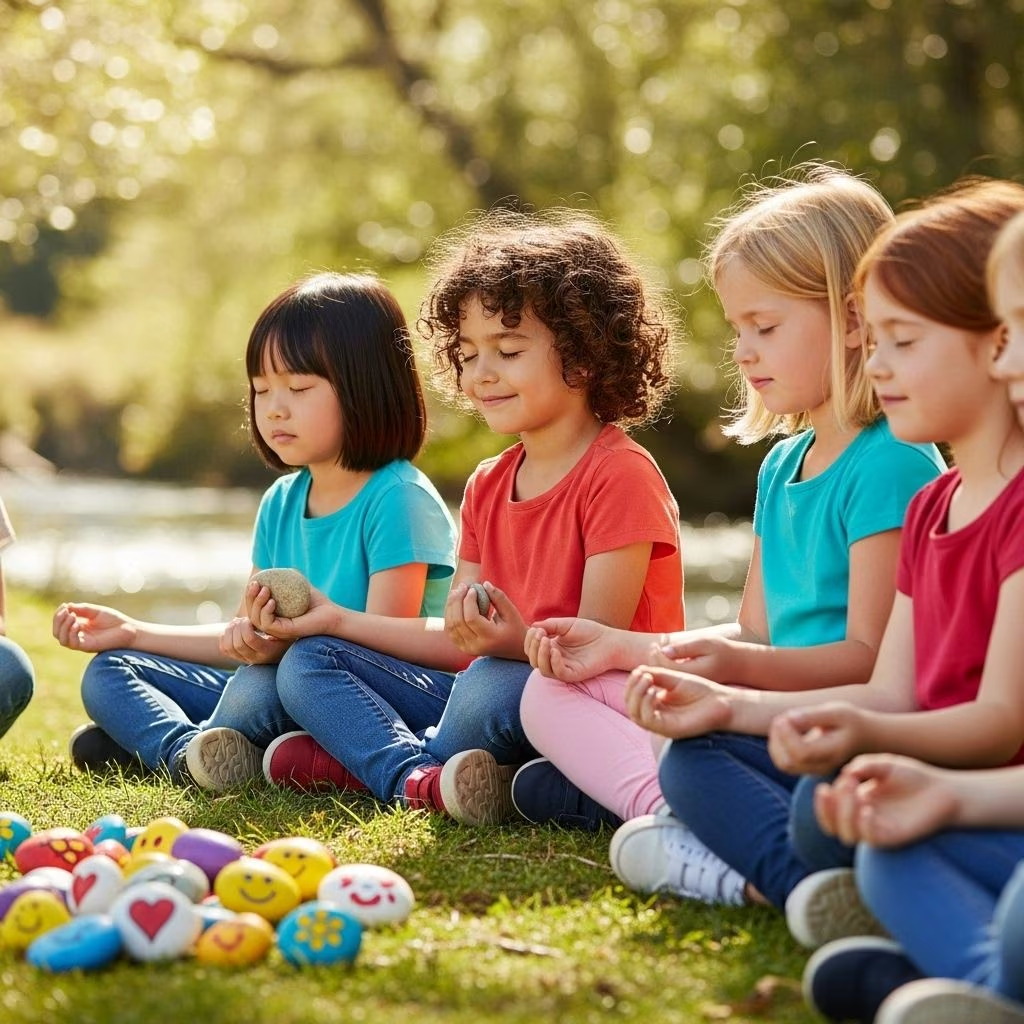
Mindfulness is increasingly recognized as a powerful practice for nurturing vital social-emotional skills in childhood. When thoughtfully integrated into a child’s routine, mindfulness not only calms anxious minds but also boosts empathy, improves self-regulation, and lays the foundation for compassionate and prosocial behavior. This article explores the science, methods, and practical approaches to fostering empathy in children through mindfulness.
Understanding Mindfulness and Empathy in Childhood
Mindfulness is commonly defined as “, paying attention in a particular way: on purpose, in the present moment, and nonjudgmentally,” according to Jon Kabat-Zinn. It is a skill rooted in ancient contemplative traditions and broadly recognized in modern psychology as a tool for emotional regulation and mental well-being.
Empathy is the ability to recognize, understand, and respond appropriately to others’ emotional states. In children, empathy lays the groundwork for prosocial behavior, healthy friendships, and emotional resilience.
Both mindfulness and empathy are closely linked: mindfulness cultivates the self-awareness necessary to perceive and respond compassionately to one’s own and others’ emotions.
Why Empathy Matters in Child Development
- Promotes prosocial behaviors such as sharing and cooperation
- Reduces incidents of bullying and aggression
- Enhances peer relationships and community building
- Supports mental health by fostering connectedness and reducing loneliness
- Forms the basis of ethical awareness and social responsibility
The Impact of Mindfulness on Empathy: Scientific Insights
Recent research demonstrates that integrating mindfulness into children’s routines significantly enhances their ability to empathize and engage in prosocial behaviors.
- SEL Programs with Mindfulness: Studies on social-emotional learning (SEL) programs that incorporate mindfulness show improvements in children’s cognitive control, stress management, peer-rated prosociality, and peer acceptance. These interventions also reduce symptoms of depression and aggression, while increasing self-reported empathy, perspective-taking, optimism, and school self-concept.
- Self-Regulation and Social Awareness: Mindfulness-based interventions (MBIs) not only support cognitive self-regulation—boosting attention, executive function, and behavioral control—but also foster socially healthy environments in classrooms by making children more kind, aware, and empathetic. Both caregivers and teachers report increased prosocial language and actions, as well as improved classroom climate.
- Direct Measurement of Social Skills: Experimental implementations of mindfulness activities—such as body scans, mindful movement, and meditative reflection—have produced measurable improvements in students’ connection to self and others, a sense of community, and depth of emotional understanding .
Key Mindfulness Practices for Cultivating Empathy
A range of mindfulness-based practices can be adapted for childhood settings to foster empathy. The following are among the most widely studied and effective:
- Mindful Breathing: Simple attention to the breath helps center awareness and calm stress responses, creating space for noticing one’s own and others’ feelings.
- Body Scan Exercises: Inviting kids to notice physical sensations helps them develop interoceptive awareness—a key precursor to emotional self-awareness and self-regulation.
- Mindful Movement: Practices such as yoga or slow, deliberate movement encourage embodied presence, which is linked to better emotional recognition and control in children.
- Mindful Communication: Children are guided to listen attentively and speak thoughtfully during group activities, fostering understanding and perspective-taking.
- Loving-Kindness Meditation: This meditation asks children to send kind wishes to themselves and others, including classmates, friends, and even those they find challenging, directly nurturing feelings of compassion and empathy.
- Reflection Practices: Journaling or sharing in a group helps children articulate their feelings and insights, deepening empathy for themselves and others.
Example: Loving-Kindness Script for Kids
Invite children to close their eyes and silently repeat:
- “May I be happy, safe, and loved.”
- “May you (a friend, classmate, or family member) be happy, safe, and loved.”
- “May all beings be happy, safe, and loved.”
Benefits of Mindfulness-Based Empathy Training in Kids
Integrating mindfulness to cultivate empathy offers broad developmental advantages. Below are the key benefits and supporting evidence from recent studies:
| Benefit | Description | Supporting Evidence |
|---|---|---|
| Better Cognitive Regulation | Improves attention, flexibility, and executive function. | MBI programs show significant gains in attention and executive control, especially for children with regulation difficulties. |
| Improved Emotional Control | Reduces emotional reactivity and increases resilience. | SEL programs with mindfulness decrease symptoms of depression and improve emotional self-concept. |
| Increased Prosocial Behavior | Promotes kindness, sharing, cooperation, and peer acceptance. | Students in MBI programs are rated as more prosocial and popular. |
| Reduced Stress | Lowers stress physiology and improves well-being. | Studies report reductions in cortisol, a stress indicator, and improved subjective well-being. |
| School Performance | Enhances academic outcomes via improved focus and reduced behavioral problems. | Some studies report higher math grades and decreased academic difficulties in mindfulness-trained classes. |
Strategies for Implementing Mindfulness in Everyday Settings
Applying mindfulness practices to nurture empathy in children is effective in various settings—from homes to classrooms:
For Educators
- Incorporate short mindfulness practices at the start or end of the school day (2-5 minutes of breathing or body scan).
- Use group reflection or sharing circles to help children voice and validate emotions collectively.
- Train staff in mindfulness facilitation to ensure consistency and effectiveness in delivery.
- Integrate mindful communication principles in conflict resolution and cooperative activities.
- Select developmentally appropriate mindfulness content—simplify language, use metaphors, and include movement for younger children.
For Parents and Caregivers
- Model mindfulness by visibly practicing breathing, pausing, or naming emotions during stress.
- Read mindfulness-themed storybooks addressing emotions and empathy with children.
- Practice mindful listening at home—give undivided attention when children speak and encourage them to do the same.
- Establish regular family rituals, such as gratefulness reflections or loving-kindness meditations before bedtime.
- Encourage physical activities with mindful components (e.g. mindful walks, nature observation).
For Community Programs
- Collaborate with schools and local health providers to offer group mindfulness and empathy workshops.
- Provide training and easy-to-follow guides for parents, teachers, and youth leaders.
- Use technology (apps, online videos) to make mindfulness accessible outside school hours.
Challenges and Considerations for Educators and Parents
- Developmental Readiness: Young children may need more concrete, physical, and brief mindfulness activities, while older children can adapt to more introspective or abstract practices.
- Cultural and Individual Differences: Adapt mindfulness practices to respect family backgrounds, beliefs, and individual temperament.
- Consistency: Benefits accumulate with regular practice. Plan for short, repetitive, and engaging mindfulness sessions.
- Evaluation and Feedback: Invite feedback from children, teachers, and parents—reflection can reveal insights on what practices deepen empathy most effectively.
- Training and Support: Professional development for teachers helps ensure high-quality implementation and sustained outcomes.
Frequently Asked Questions (FAQs)
Q: How young can children start practicing mindfulness for empathy?
A: Mindfulness can be introduced as early as preschool, using age-appropriate activities like guided breathing, mindful movement, or playful attention to sounds and sensations.
Q: How long do mindfulness practices take to show results in empathy?
A: Studies suggest that even short, daily practices over several weeks can produce significant improvements in empathy, self-regulation, and classroom climate.
Q: Are there children who benefit more from mindfulness-based interventions?
A: Mindfulness-based programs tend to yield especially strong benefits for children experiencing stress, behavioral challenges, or difficulties with emotional regulation. All children, however, can experience greater well-being and social connection through regular practice.
Q: What if a child resists mindfulness activities?
A: Keep practices brief, playful, and flexible—let children choose or modify activities to suit their interests. Respect their feelings and model mindfulness by not forcing participation, which helps foster genuine interest over time.
Q: Can mindfulness also improve parental or teacher empathy?
A: Yes. Research shows that adults who practice mindfulness experience greater emotional well-being and demonstrate more empathetic and supportive responses to children, creating a positive feedback loop in relational dynamics.
References
- Diamond, A. & Lee, K. (2011). Enhancing cognitive and social–emotional development through social and emotional learning with mindfulness.
- Uebelacker, L. A., et al. (2022). Using Mindfulness-Based Interventions to Support Self-regulation in Young Children.
- Cheek, D. (2017). Supporting Children’s Development Through Mindfulness.
- Moreno-Gómez, A. & Cejudo, J. (2019). The Effectiveness of Mindfulness- and Empathy-Based Intervention Programs for Children.
- Roth-Hanania, R., et al. (2025). Rethinking empathy development in childhood and adolescence.
- Education Northwest (2020). Developing Empathy in Children and Youth.
- PA Program on Empathy, Awareness, and Compassion in Education.
References
- https://pmc.ncbi.nlm.nih.gov/articles/PMC4323355/
- https://pmc.ncbi.nlm.nih.gov/articles/PMC8936381/
- https://digitalcommons.lesley.edu/cgi/viewcontent.cgi?article=1039&context=mindfulness_theses
- https://alaina-brenick.media.uconn.edu/wp-content/uploads/sites/2113/2024/05/Berger-et-al-2024-EED-Cultivating-Comp-31may2024.pdf
- https://www.frontiersin.org/journals/psychology/articles/10.3389/fpsyg.2025.1575249/full
- https://educationnorthwest.org/sites/default/files/developing-empathy-in-children-and-youth.pdf
- https://prevention.psu.edu/flagship_intitiative/program-on-empathy-awareness-and-compassion-in-education-peace-2/


