


Introduction
Grade 1 is a pivotal year in child development, marking the transition from preschool to formal education and laying the foundation for cognitive, emotional, and physical skills. Among the most significant developmental areas in this stage are fine motor skills, which underlie writing, cutting, and manipulating small objects, and mindfulness, a practice that fosters attention, self-regulation, and emotional balance. Increasing evidence supports the integration of mindfulness practices with fine motor activities to optimize both academic and personal growth for young students.
Understanding Mindfulness in Education
Mindfulness refers to the intentional focus on present-moment experiences with non-judgmental awareness. In educational settings, mindfulness practices can take the form of breathing exercises, guided attention practices, or mindful movement. The core objectives of classroom mindfulness are:
- Enhancing attention and executive function
- Improving emotional regulation and stress management
- Fostering positive social behavior and empathy
- Building resilience and self-awareness
Mindfulness-based interventions (MBIs) in classrooms typically involve short, age-appropriate activities embedded into daily routines. For younger children, these may include sitting quietly, focusing on breath or sensations, and mindful listening. Programs lasting from 1 week to 8 weeks have shown efficacy, with longer interventions yielding stronger psychological and behavioral benefits.
Why Grade 1 Is an Optimal Period for Mindfulness
Grade 1 students are at a developmental juncture where attention, impulse control, and emotional skills are rapidly forming. Early practice of mindfulness can shape lifelong habits, helping students better manage classroom challenges and social relationships.
Development of Fine Motor Skills in Grade 1
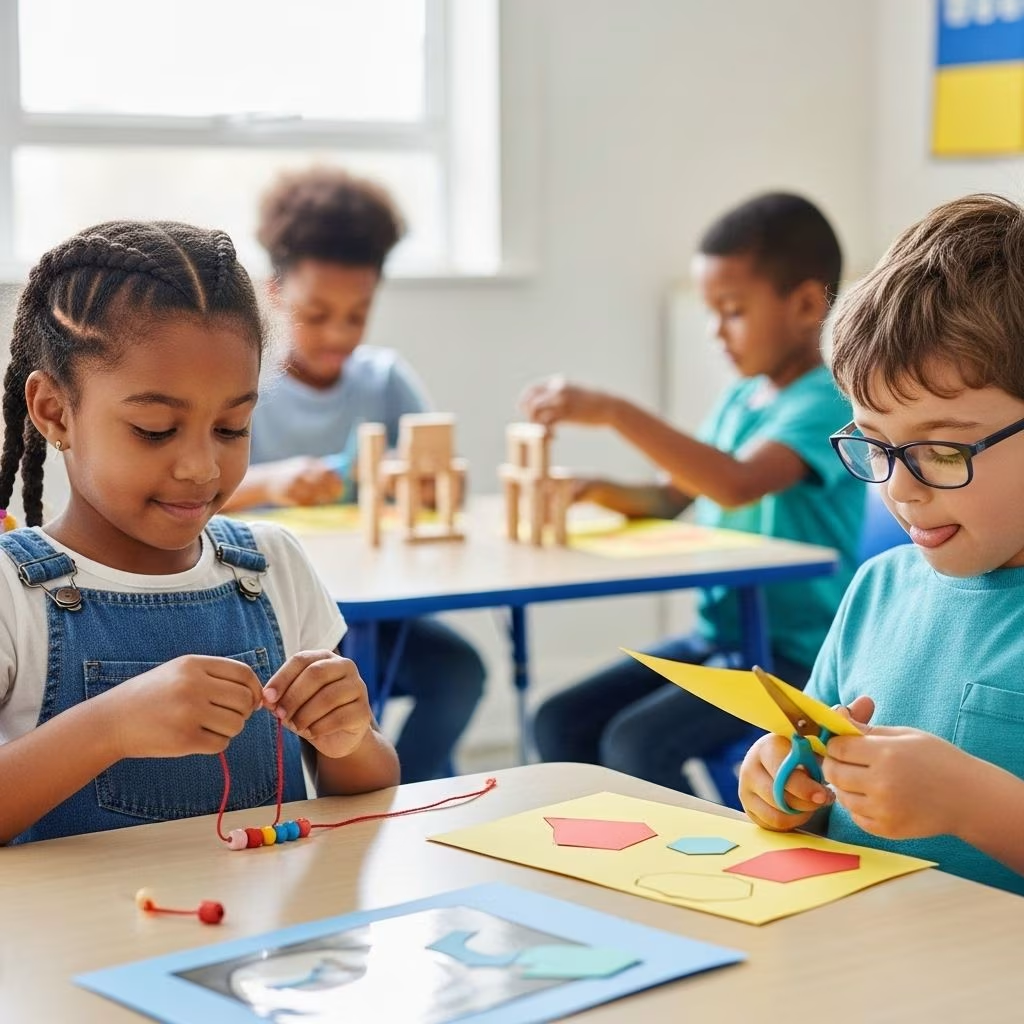
Fine motor skills involve coordinated movements of the small muscles in the hands and fingers. In Grade 1, children refine foundational abilities that underpin academic and everyday tasks, such as:
- Writing and drawing with pencils or crayons
- Cutting with scissors
- Buttoning, zipping, tying shoelaces
- Molding and building with clay or blocks
- Manipulating small objects (beads, puzzle pieces, etc.)
Development of fine motor skills is linked not only to physical dexterity but also to cognitive readiness, attention, and emotional self-regulation. Children with well-developed fine motor skills are better equipped to participate in classroom activities and demonstrate less frustration or anxiety during tasks requiring precision.
Milestones for Fine Motor Skills in Grade 1
- Consistent and legible handwriting
- Accurate cutting along lines
- Manipulating tools (glue sticks, paintbrushes) with control
- Coordinating hand movements for crafts, building, and play
Poor fine motor skill development can hinder academic achievement and self-esteem, often manifesting as difficulties in writing, drawing, or participating in classroom tasks.
Integrating Mindfulness with Fine Motor Skill Activities
A growing body of research suggests that blending mindfulness with fine motor training yields synergistic benefits for Grade 1 students. Mindfulness enhances attention and motivation, while fine motor activities provide an engaging, hands-on context for practicing present-moment awareness.
Examples of Mindful Fine Motor Activities
- Guided Drawing: Students focus on each movement while drawing shapes, letters, or patterns, intentionally observing how their hands move and how it feels.
- Mindful Beading: Making bead necklaces or bracelets while concentrating on picking, threading, and noticing textures.
- Clay Manipulation: Molding clay while paying deliberate attention to sensations in fingers and hands.
- Cutting Exercises: Carefully cutting shapes, focusing on the pressure and rhythm, breathing calmly.
- Finger Painting: Feeling the paint, noticing colors and sensations on the skin with slow, deliberate movements.
Benefits of Combined Mindfulness and Fine Motor Interventions
Integrating mindfulness into fine motor skills training amplifies the positive effects on learning and emotional well-being. The following table summarizes the key benefits found in research:
| Benefit | Mindfulness | Fine Motor Skills | Combined Approach |
|---|---|---|---|
| Improved Attention and Focus | Increases sustained attention in class | Requires concentration for accuracy | Enhanced through focused tactile activity |
| Emotional Regulation | Reduces anxiety, stress, and impulsivity | Builds frustration tolerance through practice | Bolsters calm and persistence during tasks |
| Academic Readiness | Enhances readiness by managing distractions | Improves writing, drawing, and task execution | Results in higher engagement and achievement |
| Social Skills | Fosters empathy and patience | Supports collaborative projects and sharing | Promotes cooperative learning |
| Self-Esteem and Motivation | Encourages positive self-perception | Creates sense of mastery | Motivates participation and goal-setting |
Beyond these benefits, research supports positive impacts on executive function and selective attention, which are crucial for academic tasks and learning new skills.
Evidence from Research Studies
Recent studies underscore the promising effects of mindfulness and fine motor interventions in early childhood and elementary classrooms:
- A 2024 study revealed that a brief, one-week mindfulness program in preschool and early grade settings led to significant improvements in both motor skills and social behavior compared to physical activity or no intervention.
- The "Mindful Movement Program" integrates mindfulness, movement, and music and demonstrated measurable improvements in motor coordination, executive function, and reductions in behavioral problems among students aged 6-7, indicating high feasibility and acceptability for real classroom environments.
- Fine motor skills training alone was found to substantially strengthen emotional processing and selective attention in elementary-aged students, especially those with learning disabilities.
- Motor competency–including fine motor skills–serves as a foundation for physical, cognitive, and academic development, with motor skills interventions supporting children’s overall growth.
Key Findings from Recent Studies
- Mindfulness-based classroom interventions show medium to large effects on attention, emotional regulation, and executive functions for children under eight.
- Combining mindfulness with movement and fine motor tasks produces greater improvements in self-regulation and academic readiness compared to either intervention alone.
- Students exhibiting improved fine motor skills through targeted intervention demonstrate higher selective attention and enhanced emotional processing, leading to better school participation.
Classroom Strategies for Grade 1 Teachers
Teachers can foster the development of fine motor skills and mindfulness through structured routines and engaging activities. Effective strategies include:
- Daily Mindfulness Practice: Start the day with a 3–5-minute mindful breathing or movement routine that invites students to slow down and become aware of their bodies.
- Mindful Transitions: Integrate brief mindfulness moments before task changes, such as deep breathing or simple finger movements to reset focus.
- Hands-on Craft Activities: Use arts and crafts as opportunities for mindful tactile engagement, guiding students to notice textures, shapes, and colors.
- Mindful Writing and Drawing: Emphasize slow, controlled handwriting and drawing, with prompts to observe how their grip feels and how each letter is formed.
- Collaborative Mindful Projects: Design group activities (e.g., building, sculpting, or beading) that require teamwork and present-moment awareness.
- Physical Fine Motor Games: Incorporate educational games (e.g., puzzles, block stacking, threading) that build dexterity while students focus on sensations, pace, and strategy.
- Reflection and Self-Assessment: Allow students to reflect on their feelings before and after activities, helping them become aware of how mindfulness and movement influence mood and performance.
Implementing Mindful Fine Motor Activities: Sample Weekly Schedule
| Day | Morning Mindfulness | Main Activity | Reflection |
|---|---|---|---|
| Monday | Breathing with hand movements | Clay modeling | Discuss sensations and thoughts |
| Tuesday | Mindful listening | Drawing letters/shapes | Share drawing experience |
| Wednesday | Guided body scan | Puzzle or block building | Talk about focus and teamwork |
| Thursday | Breathing and finger play | Cutting and collage making | Reflect on challenges, successes |
| Friday | Mindful movement to music | Free choice fine motor centers | End-of-week sharing |
Challenges and Solutions
Despite proven benefits, introducing mindfulness and fine motor activities can present practical challenges for teachers:
- Limited Time: Address by embedding short mindfulness practices into existing routines, such as transitions or start-of-day sessions.
- Lack of Training: Support professional development with online modules, collaborative planning, and access to evidence-based resources.
- Student Engagement: Use hands-on, playful, and age-appropriate activities to ensure students remain motivated and involved.
- Classroom Management: Establish clear expectations and gradually introduce mindfulness to avoid resistance or distraction, especially for students with attention difficulties.
Frequently Asked Questions (FAQs)
Q: Do mindfulness and fine motor skills interventions work for every child?
A: While most children benefit from these practices, adaptations may be needed for students with special needs or attention difficulties. Research shows positive outcomes across diverse populations, but individualized approaches enhance effectiveness.
Q: How often should mindfulness activities occur in Grade 1?
A: Studies suggest brief daily practices (3–10 minutes) are sufficient to yield measurable improvements, especially when consistently embedded within the school routine.
Q: Are there specific tools or materials recommended for mindful fine motor activities?
A: Common classroom materials such as pencils, crayons, clay, beads, scissors, and blocks support both mindfulness and motor skill development. The key is to pair these with guided awareness and reflection.
Q: What outcomes should teachers expect from combined mindfulness and fine motor programs?
A: Improved attention, better emotional regulation, stronger handwriting and art skills, increased classroom participation, and positive social interactions are typical results.
Q: Are there recommended resources or curricula for Grade 1 teachers?
A: Programs such as "Mindful Movement Program," short guided mindfulness scripts, and integrated arts/crafts lesson plans offer practical, evidence-based frameworks for implementation.
Summary
Integrating mindfulness practices with fine motor activities empowers Grade 1 students to develop core academic, emotional, and social skills. Evidence from research supports noticeable improvements in attention, emotional processing, executive functions, and school readiness when these interventions are consistently applied. Through mindful engagement in movement and tactile tasks, teachers can nurture resilience, self-regulation, and lifelong learning habits, setting students on a path toward well-being and success.
References
- https://journals.sagepub.com/doi/10.1177/00315125241267348
- https://journals.sagepub.com/doi/abs/10.1177/00315125241267348
- https://pmc.ncbi.nlm.nih.gov/articles/PMC12044745/
- https://journals.kmanpub.com/index.php/psychnexus/article/download/1325/2185/4964
- https://www.frontiersin.org/journals/psychology/articles/10.3389/fpsyg.2021.661961/epub
- https://pmc.ncbi.nlm.nih.gov/articles/PMC11430831/
- https://www.continued.com/early-childhood-education/articles/benefits-fine-motor-skills-in-23879
- https://www.frontiersin.org/journals/psychology/articles/10.3389/fpsyg.2021.759480/full


