


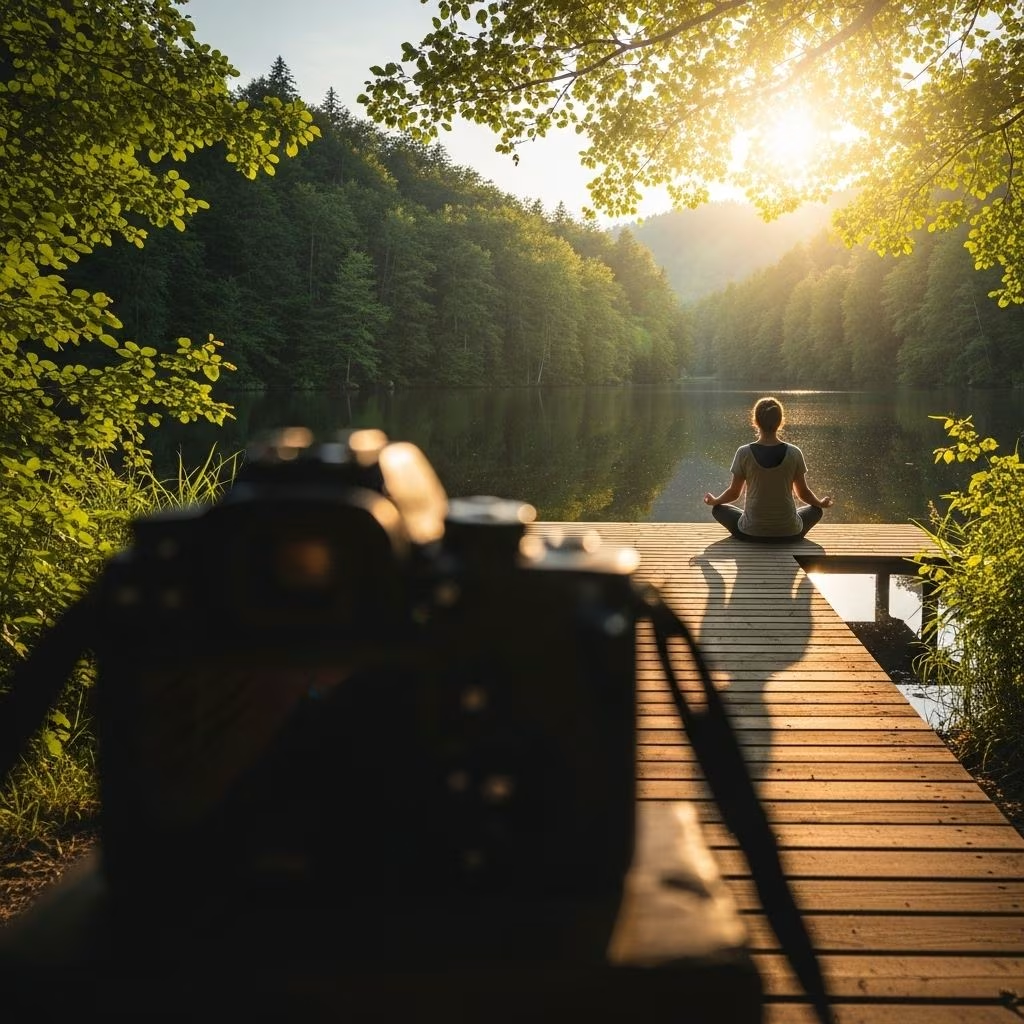
Mindful photography is emerging as a powerful tool for not only enhancing photographic skills, but also fostering deeper self-awareness, calm, and presence in the world. By integrating principles of mindfulness with the creative act of taking photos, anyone can learn to observe their surroundings with new eyes, finding beauty and meaning in the everyday. This extensive guide explores how mindful photography can lead to deep observation and enrich both your photography and your personal life.
What is Mindful Photography?
Mindful photography is the practice of being fully present with your surroundings while engaging in photography, focusing less on technical perfection and more on the genuine act of noticing, observing, and responding to the environment as it is. It is about:
- Slowing down and paying close attention to details
- Letting go of the pressure to capture the “perfect” image
- Engaging all the senses to interpret a scene or subject
- Evoking a sense of curiosity and openness
- Being intentional with each shot
Whereas traditional photography techniques often emphasize camera settings, gear, or composition guidelines, mindful photography shifts the focus toward the process of seeing, feeling, and experiencing.
The Essence of Deep Observation
Deep observation is the heart of mindful photography. It asks the photographer to truly see, being sensitive to subtleties in light, form, color, and emotion. Deep observation involves:
- Noticing small details that might otherwise go unrecognized
- Sensing atmosphere, mood, and shifts in light
- Becoming aware of your internal responses to your environment
- Witnessing the fleeting nature of moments
- Practicing patience and allowing scenes to unfold naturally
By observing deeply, photographers connect more profoundly with both their subjects and themselves, often resulting in images that are honest, unique, and emotionally resonant.
Benefits of Mindful Photography
- Enhanced creative vision: You make images that reflect your unique way of seeing, not just technical expertise.
- Stress reduction: Mindful engagement with photography can be as calming as meditation, reducing anxiety and mental clutter.
- Deeper connection to place: You develop a sense of belonging and appreciation for your immediate environment.
- Increased patience and focus: Cultivating patience waiting for the right moment sharpens your ability to focus in other areas of life as well.
- Discovery of beauty in the ordinary: Everyday objects and scenes become fascinating when viewed with mindful attention.
- Better mood and mental clarity: The practice can enhance well-being through positive psychology and mindful enjoyment.
Principles of Mindful Photography
While there are no rigid rules, there are guiding principles that make mindful photography a transformative process:
- Non-judgment: Observe without criticizing yourself or your images for not meeting a standard.
- Presence: Bring your full awareness to the here and now.
- Intentionality: Choose carefully what to photograph and how, rather than snapping impulsively.
- Curiosity: Let go of expectations; approach each subject and moment with curiosity.
- Simplicity: Focus on clear, uncomplicated compositions to reflect tranquility and clarity.
- Empathy: Try to understand and feel with your subjects, whether human, animal, or object.
These principles echo key aspects of mindfulness meditation, where awareness, acceptance, and gentle focus are core.
Daily Practices and Techniques
You don’t need expensive gear to practice mindful photography. These techniques foster a deeper connection with your creative process:
- Slow Down and Observe: Take time before lifting your camera. Walk, sit, and notice your environment closely. Note the textures, colors, light, and shadows around you.
- Focus on One Sense at a Time: Even though photography is visual, pause to notice sounds, smells, or tactile sensations. Let these inform your sense of presence and guide your attention.
- Embrace Simplicity: Start with minimal scenes or a single subject. Explore different angles and perspectives, isolating the main point of interest.
- Wait for the Right Moment: Practice patience. Sometimes, an ordinary scene will transform with a shift in light or movement. Be ready, but unhurried.
- Limit Your Shots: Rather than taking many photos quickly, limit yourself to fewer frames and spend more time composing each shot.
- Use Manual Modes or a Prime Lens: Shooting in manual mode or with a fixed focal length lens forces you to slow down and think carefully about composition and settings.
- Let Go of Outcome: Detach from the need to create a “perfect” image, and enjoy the process regardless of the results.
- Reflect on Your Experience: After a photo walk, reflect—either in writing or contemplation—on what you noticed, felt, and learned.
Developing the Art of Seeing
The true mark of a mindful photographer is not technical mastery, but the ability to see deeply and authentically. This is sometimes called “attentional aperture”—opening your mind as well as your camera to the world around you:
- Mindful Walking: Combine slow, deliberate walking with photographic observation. This brings a meditative rhythm, syncing your mind and body.
- Notice Without Labeling: Simply observe shapes, lines, contrasts, and patterns without needing to immediately define them or find meaning.
- Experiment with Play: Change perspectives—bend down, look up, or shoot through other objects. Playfulness invites creativity.
- Work With Natural Light: Observe how light changes form, color temperature, and emotion in a scene.
| Traditional Photography | Mindful Photography |
|---|---|
| Focus on technical perfection | Focus on deep observation and presence |
| Goal-oriented (get a great shot) | Process-oriented (enjoy seeing and creating) |
| Many rapid shots | Intentional, limited shots |
| Often hurried and distracted | Unhurried and attentive |
| Judges images by standard criteria | Accepts images as authentic reflections |
Common Misconceptions
- “Mindful photography is only for beginners or amateurs.” In reality, even highly experienced photographers benefit from mindfulness, often finding renewed creativity.
- “I need a fancy camera or special gear.” The practice emphasizes seeing, not equipment. Even a mobile phone is enough.
- “It’s just taking pictures without planning.” Mindful photography requires intention, reflection, and presence, making it far more meaningful than random snapping.
- “There’s no room for technical skill.” While technical mastery is useful, it’s only meaningful when guided by authentic seeing and experience.
Recommended Tools and Approaches
While tools are secondary to experience, certain approaches can support deep observation:
- Prime (fixed) lenses: Encourage engagement with the subject by forcing you to move around and recompose thoughtfully.
- Manual camera mode: Forces slower, more deliberate technical choices aligned with your intention.
- Keeping a visual journal: Collect and reflect on daily images and notes on what you observed or felt.
- Occasional group walks: Practicing mindful observation with others can spark new insights and keep you accountable.
- Shoot in different environments: Urban, rural, and natural settings all offer unique opportunities to practice deep observation.
Applying Mindful Photography in Everyday Life
You can integrate mindful photography into your routine in simple but effective ways:
- Daily walks: Bring your camera (or phone) and commit to seeing something new each day, even in familiar places.
- Focused weekly projects: Each week, choose a theme—like shadows, reflections, or a single color—to deepen your observation skills.
- Digital detox days: Leave social media behind and treat photography as a personal, rather than performative, act.
- Mindfulness breaks: When stressed, step outside and take a few mindful photos as a reset.
- Family or friend collaborations: Share and discuss images with others, focusing on the act of noticing rather than critique.
Frequently Asked Questions (FAQs)
What’s the difference between mindful and traditional photography?
Traditional photography often prioritizes gear, technique, and results, while mindful photography emphasizes the act of seeing, present-moment awareness, and process over outcome.
Do I need special equipment to practice mindful photography?
No. Any camera—even a phone camera—will work. The key is your awareness, intention, and attention, not the device.
How does mindful photography benefit mental health?
The practice is closely related to mindfulness meditation, which is shown to reduce stress, cultivate calm, and increase feelings of happiness and gratitude.
Can mindful photography make me a better photographer?
Yes. By cultivating deep observation, you train your eye and improve your sense of timing, composition, and storytelling, often leading to more original and resonant images.
How can I start practicing mindful photography today?
Start by going for a walk without any specific goal for photographs. Notice what catches your attention, pause to observe fully, and take a thoughtful photo only when you feel ready. Reflect on your experience afterward.
References
- https://www.iphotography.com/blog/mindful-photography-how-to-use-your-camera-to-slow-down-and-see-the-world-differently/
- https://www.digitalphotomentor.com/develop-art-seeing-mindful-photography/
- https://positivepsychology.com/mindful-photography/
- https://alexandriaarttherapy.com/blog/mindful-photography
- https://benjaminstevens.com.au/the-true-power-of-mindfulness-photography/
- https://www.psychologytoday.com/us/blog/child-development-central/202410/mindfulness-and-contemplative-photography
- https://tinybuddha.com/blog/how-to-create-peace-and-calm-through-mindful-photography/


