


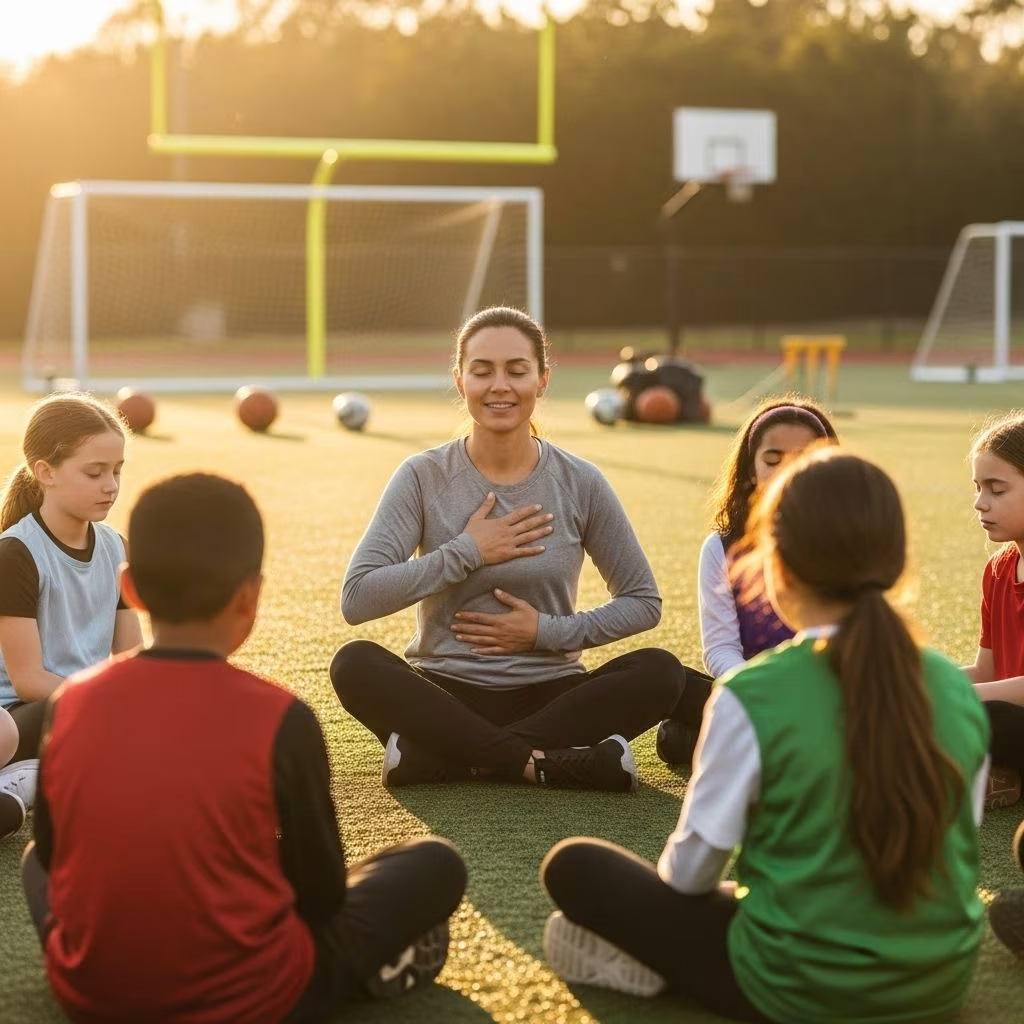
Mindfulness is rapidly gaining recognition as a cornerstone of youth sports coaching, not only improving athletic performance but supporting children’s emotional health, focus, and resilience. For fathers who always strive to encourage their children, integrating mindfulness into sports can turn every practice and game into an opportunity for growth—both on and off the field. This guide equips dads with the knowledge and tools to adopt mindfulness, making youth sports a more fulfilling and balanced journey for kids.
Introduction: Why Mindfulness Matters in Kids’ Sports
Children today face unprecedented levels of stress, performance anxiety, and distraction—both in school and on the playing field. According to recent research, there has been a striking increase in depression and anxiety among youth athletes, which can undermine both their mental health and sporting enjoyment. Fortunately, simple mindfulness practices have emerged as powerful, accessible tools to help kids manage stress, strengthen their self-awareness, and find joy in sport.
For fathers, adopting mindfulness is not just about boosting a child’s athletic performance; it’s about supporting their overall development into balanced, confident, and self-regulating individuals—traits that carry far beyond the final whistle.
What is Mindfulness? The Basics for Dads
Mindfulness is the practice of focusing attention on the present moment with openness and without judgment. In sports, mindfulness prompts young athletes to become aware of their bodies, thoughts, and emotions during practices and games, rather than being distracted by worries about the past or future. Key points about mindfulness in youth sports:
- Pays attention to physical sensations, thoughts, and feelings as they arise in the moment
- Encourages acceptance of internal experiences without labeling them as ‘good’ or ‘bad’
- Focuses on process, not just outcomes (e.g., enjoying playing, learning from mistakes)
Mindfulness is not meditation alone; it is a way of approaching challenges, setbacks, and pressure during sports and in everyday life.
Key Benefits of Mindfulness for Young Athletes
Research underscores the multifaceted benefits of mindfulness for kids who play sports. These gains are well-documented among youth from various sporting backgrounds:
| Benefit | Description | Research Insight |
|---|---|---|
| Emotional Regulation | Reduces emotional outbursts and helps children handle stress, disappointment, or competition pressure. | Kids learn to observe and accept their emotions, fostering emotional intelligence. |
| Improved Focus & Concentration | Enhances ability to block out distractions and remain present during training and matches. | Studies show mindfulness aids goal-directed attention in noisy or high-pressure environments. |
| Reduced Anxiety & Stress | Lowers performance anxiety, supports relaxation, and helps athletes recover from setbacks or mistakes. | Mindful breathing and awareness reduces cortisol and promotes calm. |
| Enhanced Performance | Improved consistency, confidence, and enjoyment. Athletes often experience a ‘flow’ state or being ‘in the zone’. | Coach and athlete ratings show increased commitment and performance in mindful athletes. |
| Resilience & Recovery | Helps athletes bounce back from injuries, losses, or criticism with a positive, proactive outlook. | Mindfulness supports the psychological side of recovery and perseverance. |
| Better Sleep Quality | Improves rest, which is crucial for training, healing, and growing children. | Mindfulness helps activate the body’s relaxation response for deeper sleep. |
Over time, mindful young athletes tend to develop a resilient attitude and a toolkit for coping not just with game-day pressure, but with academic and social challenges too.
Coaching with Mindfulness: The Father’s Role
Fathers play a pivotal role as coaches and mentors—modeling behaviors and mindsets children often mirror. Whether coaching directly or encouraging from the sidelines, dads can nurture an environment where kids feel safe to express themselves, take healthy risks, and learn from experience . Key mindful strategies for fathers include:
- Lead by example: Practice simple mindful habits yourself and discuss them openly with your child.
- Prioritize process over outcome: Value effort, learning, and teamwork more than winning or losing. This teaches kids to love the journey of sport.
- Offer non-judgmental feedback: Use the “sandwich method” (praise-growth area-praise) when discussing games or practices, focusing on what went well and how to improve constructively.
- Create psychological safety: Encourage kids to acknowledge their thoughts and feelings before games, without shame or dismissal.
- Support self-reflection: After matches, ask open questions like “How did you feel out there?” or “What did you notice about your focus?”
- Empower self-regulation: Guide kids toward mindful breathing or visualization before high-pressure moments.
Mindful coaching empowers children to take charge of their own experiences, promoting autonomy, confidence, and resilience.
Practical Mindfulness Techniques for Kids’ Sports
Integrating mindfulness doesn’t require special knowledge or equipment. Here are accessible techniques you can introduce as a father:
1. Mindful Breathing
- Encourage your child to take slow, deep breaths, focusing on the rise and fall of their chest before games, during timeouts, or after stressful moments.
- Try counting breaths or imagining exhaling tension and inhaling confidence.
2. Visualization and Imagery
- Guide your child to imagine successful plays, friendly crowds, or handling mistakes calmly.
- This shapes positive “mental blueprints” that make real-life situations less intimidating.
3. Body Scan Awareness
- Have your child close their eyes and scan their body for tension or discomfort, relaxing muscle groups one by one.
- This releases physical stress and increases self-awareness.
4. Mindful Listening
- Practice listening to teammates, coaches, and even the sounds of sport (a whistle, ball bounce) with full attention.
5. Acceptance of Mistakes
- When errors occur, lead your child through a quick acceptance ritual: Identify, accept, and redirect focus to the next play instead of dwelling on the past.
6. Journaling and Reflection
- Encourage brief post-practice reflection. Ask: What felt good? What challenged you? What do you want to notice next time?
Introduce these activities gradually, making them part of warm-ups, cool-downs, or even car rides home. Consistency is key to building mindfulness as a natural athletic habit.
Navigating Challenges and Resistance
Even with evidence on their side, fathers may encounter resistance or practical barriers when introducing mindfulness to their kids. Addressing these proactively helps foster buy-in and persistence:
- “It feels weird/boring”: Reframe mindfulness as ‘mental strength training’ or an ‘athletic superpower’—not a punishment or therapy.
- “I don’t have time”: Integrate mindfulness into existing routines (e.g., use the drive to practice or a minute before warm-ups).
- “It’s only for the anxious or struggling”: Emphasize that elite athletes use mindfulness to gain a competitive edge and enjoy the sport more fully.
Regular encouragement and visible fatherly participation can turn mindfulness from a novelty into a valued family ritual.
Success Stories: How Mindful Coaching Transformed Young Athletes
Numerous case studies and experiments demonstrate mindfulness’s transformative power in youth sports:
- Ice Hockey (Sweden): Teams trained in mindfulness scored more goals, showed better focus, and were rated as more committed by coaches.
- School-Based Programs: Kids reported lower anxiety, higher emotional health, and even measurable changes in brain regions linked to emotion and cognition.
- Athlete Recovery: Injured athletes who practiced mindfulness reported quicker psychological healing and more optimism returning to play.
Fathers who champion mindfulness often notice their children not only perform better but display gratitude, resilience, and maturity—even after losses or tough calls.
Frequently Asked Questions (FAQs)
Q: At what age is it appropriate to start mindfulness with young athletes?
A: Research suggests benefits for children as young as five or six, with practices tailored to short attention spans and playful engagement.
Q: Do I need to be an expert or practice meditation myself to help my child?
A: No prior experience is required. Fathers can learn alongside their children and keep practices short, simple, and consistent.
Q: Is mindfulness useful for highly competitive or very shy kids?
A: Yes, in both cases. It helps competitive kids with pressure and perfectionism while offering shy kids tools for self-confidence and social engagement.
Q: Can mindfulness replace traditional coaching tactics?
A: Mindfulness is a complement, not a substitute. It augments physical and tactical training with mental and emotional resilience for a more complete athlete.
Further Resources
- “Teach Mindfulness to Young Athletes” – TrueSport.org
- iSport360 Guide to Mindfulness in Youth Sports
- Frontiers for Young Minds: The Magic of Mindfulness in Sport
- American Psychological Association: Mindfulness Programs for Coaches
- Mindfulness for Young Athletes – Research and Reviews
By weaving mindfulness into sports coaching, fathers can empower their children to reach their athletic best while nurturing lasting life skills. The journey is about more than trophies; it’s about helping kids grow into kinder, wiser, and more resilient human beings.
References
- https://truesport.org/performance-anxiety/teach-mindfulness-young-athletes/
- https://isport360.com/tips-on-incorporating-mindfulness-in-youth-sports/
- https://plus.imgacademy.com/developmental-coaching/mental-performance/articles/benefits-mindfulness-student-athletes
- https://kids.frontiersin.org/articles/10.3389/frym.2022.683827
- https://pmc.ncbi.nlm.nih.gov/articles/PMC10916786/
- https://www.sportsengine.com/blog/8-benefits-mindfulness-coaches-and-athletes/
- https://www.apa.org/news/press/releases/2017/08/mindfulness-method
- https://www.heartlandsoccer.net/2023/08/12/what-are-the-benefits-of-meditation-for-kids-and-what-do-they-learn-out-of-it/


