


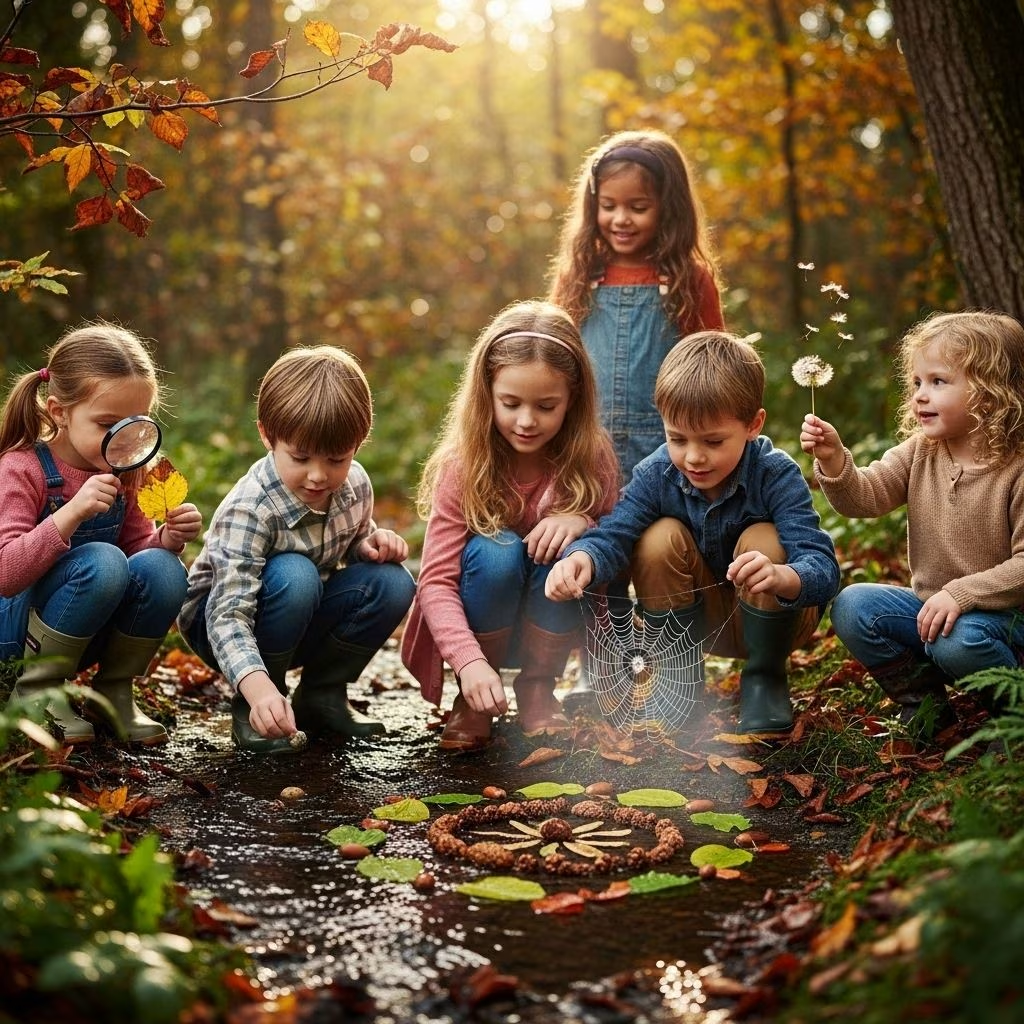
In a world that often emphasizes achievement, consistency, and the illusion of permanence, teaching children about impermanence—the understanding that all things are transient and subject to change—can be a profound gift. Nature, with its endless cycles of growth, decay, and renewal, offers a tangible, gentle, and deeply meaningful classroom in which children can observe and absorb this essential truth.
What Is Impermanence?
Impermanence is a fundamental concept found in many of the world’s wisdom traditions, especially Buddhism. It refers to the understanding that everything—people, objects, feelings, and even thoughts—is in a constant state of change. Nothing remains exactly the same from one moment to the next. This idea may seem abstract, but it is deeply connected to children’s everyday experiences once they begin to notice the world around them.
Why Teach Impermanence to Children?
Teaching children about impermanence offers several important benefits:
- Emotional Resilience: When children learn to accept change, they are less likely to be overwhelmed by loss, disappointment, or failure. They begin to see change not as something to fear, but as a natural part of life.
- Reduced Attachment and Grasping: Understanding that things change can help children let go of rigid expectations and develop a healthier relationship with possessions, experiences, and even relationships.
- Greater Appreciation for the Present: Recognizing that moments with friends, family, or even favorite toys are temporary encourages children to value and cherish these experiences more deeply.
- Preparation for Life’s Challenges: Life inevitably brings change—loss of a pet, a move to a new city, the changing of seasons. Preparing children for these experiences with the concept of impermanence can make transitions easier.
The Role of Nature in Learning Impermanence
Nature is perhaps the most effective teacher of impermanence. The natural world is in a constant state of transformation: leaves fall and are replaced, flowers bloom and fade, streams rise and dry, and animals are born and eventually pass away. These changes are visible, tangible, and fascinating to children, making nature the perfect environment for exploring the concept of impermanence.
Practical Activities for Teaching Impermanence
There are many hands-on, experiential ways to help children understand impermanence through nature. These activities should be repeated over time, as repeated exposure helps solidify the lessons.
Building Impermanence Man
One creative activity is to build a “person” out of natural materials such as stones, leaves, grass, shells, and sticks. As children construct this figure, they begin to see how separate elements come together to create something whole—just as our bodies are made of many parts. Over time, children observe how wind, rain, animals, and time itself affect their creation. This tangible experience helps them see firsthand how all things change, and that even our own bodies are subject to impermanence.
Making Nature Mandalas
Creating mandalas from leaves, flowers, pebbles, and other found objects is another engaging activity. After spending time arranging these materials into beautiful, intricate designs, children can watch as wind, insects, or rain gradually dismantle their artwork. This teaches them to appreciate beauty in the moment and to let go of the idea that anything stays unchanged.
Sand Mandalas
Colored sand mandalas, common in some spiritual traditions, are created with care and detail—only to be swept away at the end. This powerful symbol of impermanence can be adapted for children using colored sand or chalk. The act of creation and dissolution reinforces the lesson that all things are transient.
Nature Walks and Scavenger Hunts
Take children on walks to observe seasonal changes. Look for fallen leaves, budding flowers, animal tracks, and streams that flow in different seasons. Use scavenger hunts to find signs of change—a brown leaf, a blooming flower, a bird’s nest, or cracked earth. These activities help children connect the idea of impermanence to their everyday environment.
Planting and Gardening
Planting seeds, watching them sprout, grow, and eventually wither or be harvested, provides a longitudinal lesson in cycles and change. Children witness the full arc of life and decay, and learn that endings are also beginnings.
Incorporating Storytelling
Stories are powerful tools for teaching abstract concepts to children. Classic books like Leo Buscaglia’s The Fall of Freddie the Leaf use simple, relatable narratives to illustrate the cycle of life, the inevitability of change, and the beauty in letting go. Listening to or reading stories together can spark questions and reflection, helping children process complex feelings.
Role-Playing
Role-playing, such as imagining an alien from a planet where nothing ever changes, can help children articulate the value of impermanence. By debating which is better—constant change or eternal sameness—children develop critical thinking and empathy for different perspectives.
Family Stories
Sharing simple family stories about how things have changed—such as how a grandparent’s old home looks different now, or how a baby sibling has grown—helps children relate impermanence to their own lives.
Mindfulness and Reflection
Mindfulness practices can deepen a child’s understanding of impermanence. Even brief moments of guided meditation, focusing on the breath or on the changing sensations in the body, can help children become more aware of the present moment and the constant flux within themselves.
Reflective Questions
After activities, guide children with questions such as:
- How did your nature mandala change over time?
- What changes have you noticed in yourself since you were younger?
- What would it feel like if nothing ever changed?
- Is there anything that never changes?
Words of Wisdom
Introducing children to simple, age-appropriate wisdom can help reinforce the lessons. For example, “Impermanence is a principle of harmony. When we don’t struggle against it, we are in harmony with reality.” — Pema Chödrön.
The Benefits of Celebrating Impermanence
Teaching children about impermanence through nature not only builds emotional resilience but also fosters a deep respect for the environment. By seeing themselves as part of the natural world’s continuous cycle, children are more likely to care for and protect their surroundings. This understanding can also help children develop:
- Curiosity and wonder
- Empathy and compassion
- Adaptability and flexibility
- A sense of inner peace and acceptance
Frequently Asked Questions
Q: How old should my child be to understand impermanence?
A: Children as young as preschoolers can begin to notice and discuss change, especially when it is demonstrated concretely through activities and stories. By age 8 to 12, children are usually capable of more abstract reflection on impermanence.
Q: Is talking about impermanence the same as talking about death?
A: Not exactly. Impermanence includes the concept of death but is broader—it refers to all types of change, from the changing seasons to the loss of a tooth or the end of a fun day. These everyday examples help gently introduce the idea before more difficult topics arise.
Q: Won’t teaching impermanence make my child anxious about change?
A: When taught in a gentle and age-appropriate way, impermanence can actually reduce anxiety. It helps children see that change is a normal, natural part of life, and that feelings of loss or uncertainty are temporary too.
Q: What’s the difference between impermanence and mindfulness?
A: Impermanence is the concept that all things change. Mindfulness is the practice of paying attention to the present moment. Mindfulness helps children observe impermanence directly in their thoughts, feelings, and surroundings.
Q: How often should I revisit this topic with my child?
A: Regular, repeated experiences help reinforce understanding. Try to incorporate nature walks, seasonal activities, and occasional discussions about change as part of your routine.
Practical Tips for Parents and Educators
- Be Present: Make time to explore nature with your child without distraction. Your own curiosity and enjoyment will be contagious.
- Model Acceptance: When you encounter change or loss, talk about your feelings and how you manage them. This models healthy coping for your child.
- Celebrate Small Changes: Point out everyday changes—a flower opening, a cloud moving, a caterpillar becoming a butterfly—to normalize impermanence.
- Encourage Questions: Let your child ask questions and share their thoughts. There are no “right” answers, only opportunities to explore together.
Conclusion
Introducing impermanence to children through nature is not about teaching them a sad truth, but about opening their eyes to the beauty and wonder of change. By nurturing a child’s awareness of transience, you help them develop emotional intelligence, resilience, and a deep, abiding connection to the world around them. Nature, with its endless cycles of birth, growth, decay, and renewal, is the perfect teacher for this vital life lesson—one that will serve them for a lifetime.
References
- https://middlewayeducation.org/resources/lesson-impermanence-man/
- https://middlewayeducation.org/resources/lesson-impermanence/
- https://www.summitkids.com/blog/7-tips-for-teaching-kids-to-respect-the-environment/
- https://www.stillwatermpc.org/dharma-topics/blindsided-by-impermanence/
- https://www.homehospiceassociation.com/post/nature-as-my-teacher-exploring-impermanence
- https://embracemindfulness.org/2022/10/16/impermanence/


