


Introduction to Sustained Attention
Sustained attention, or the ability to maintain focus over time, is a vital cognitive skill that significantly influences learning and development in children. As children grow, particularly around the age of 7, sustained attention becomes increasingly important for academic success and overall cognitive development. This article will delve into the concept of sustained attention, its importance, and explore innovative methods such as ‘bell watching’ to enhance this skill in 7-year-olds.
What is Sustained Attention?
Sustained attention refers to the ability to maintain focus on a single task over a prolonged period. It is a critical component of self-regulation and plays a significant role in various cognitive processes, including learning, memory, and problem-solving. In children, sustained attention is closely linked to their ability to engage with educational materials and participate effectively in classroom activities.
Importance of Sustained Attention
Sustained attention is essential for children’s academic performance. It helps them to follow instructions, complete tasks, and retain information, all of which are crucial for learning. Moreover, sustained attention is linked to emotional regulation and social interaction skills, as children who can focus better tend to have fewer behavioral issues and more positive relationships with peers and teachers.
Assessing Sustained Attention
Assessing sustained attention in children often involves observing their engagement with tasks that require prolonged focus. This can include reading, puzzles, or even simple tasks like watching a stimulus for a set period. Researchers also use physiological measures, such as heart rate changes, to gauge sustained attention, as seen in infant studies where heart rate deceleration indicates attentional engagement.
Bell Watching for Sustained Attention
A novel approach to enhancing sustained attention in children is through sensory stimulation activities, such as ‘bell watching.’ This involves a child focusing on the sound of a bell for a set duration, which can help improve their ability to concentrate. The method is based on the principle that sustained auditory attention can translate into improved visual and cognitive focus.
Methodology
To implement ‘bell watching,’ follow these steps:
- Preparation: Choose a quiet room with minimal distractions. Ensure the child understands the task and is motivated to focus.
- Activity Setup: Ring a bell softly and ask the child to close their eyes and focus on the sound until it fades away.
- Duration and Repetition: Start with short durations (e.g., 5 seconds) and gradually increase as the child becomes more adept at sustaining attention. Repeat the exercise several times.
- Feedback and Reinforcement: Provide positive feedback and encouragement to motivate the child to continue improving their focus.
Other Methods to Enhance Sustained Attention
Beyond ‘bell watching,’ several other strategies can be employed to enhance sustained attention in children:
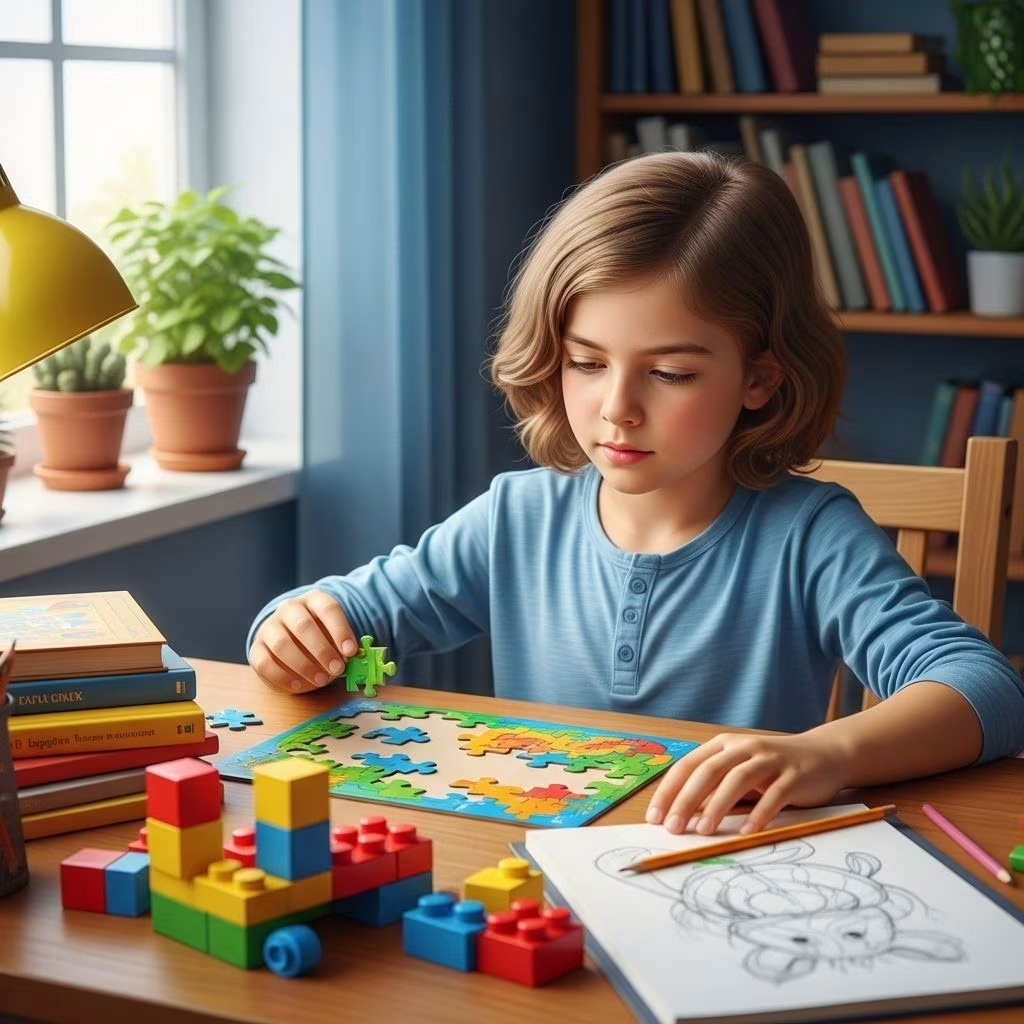
- Puzzles and Games: Engaging in activities that require prolonged focus, such as puzzles or board games, can help build sustained attention skills.
- Reading: Encouraging children to read books independently can improve their ability to maintain focus over time.
- Physical Activity: Regular physical exercise has been shown to enhance cognitive abilities, including sustained attention.
Conclusion
Sustained attention is a critical component of cognitive development in children. By incorporating methods like ‘bell watching’ and other engaging activities, parents and educators can help enhance this skill, leading to better academic performance and overall cognitive function. Early intervention and consistent practice are key to fostering sustained attention in children.
Frequently Asked Questions (FAQs)
Q: How can sustained attention be improved in children?
A: Sustained attention can be improved through activities that require prolonged focus, such as puzzles, reading, and sensory stimulation tasks like ‘bell watching.’ Regular physical activity also supports cognitive development.
Q: Why is sustained attention important for children?
A: Sustained attention is crucial for learning, academic success, and emotional regulation. It helps children engage effectively with educational materials and build better relationships with peers.
Q: What are some signs of poor sustained attention in children?
A: Signs may include difficulty following instructions, frequent distraction, and an inability to complete tasks without constant supervision. Behavioral issues and restlessness are also common indicators.
Summary
This article has explored the concept of sustained attention, its significance in child development, and innovative methods to enhance it. By leveraging techniques such as ‘bell watching’ and supporting children with engaging activities, parents and educators can play a pivotal role in fostering stronger cognitive skills and better academic outcomes.
References
- https://pmc.ncbi.nlm.nih.gov/articles/PMC6528818/
- https://www.nature.com/articles/s41598-025-96794-x
- https://www.frontiersin.org/journals/systems-neuroscience/articles/10.3389/fnsys.2016.00015/full
- https://jerlab.sc.edu/wp-content/uploads/2018/07/CNA2004.pdf
- https://pmc.ncbi.nlm.nih.gov/articles/PMC3511648/
- https://www.youtube.com/watch?v=vJG698U2Mvo
- https://www.youtube.com/watch?v=167se17RNHw
- https://www.youtube.com/watch?v=flJSHj8PQYQ


