


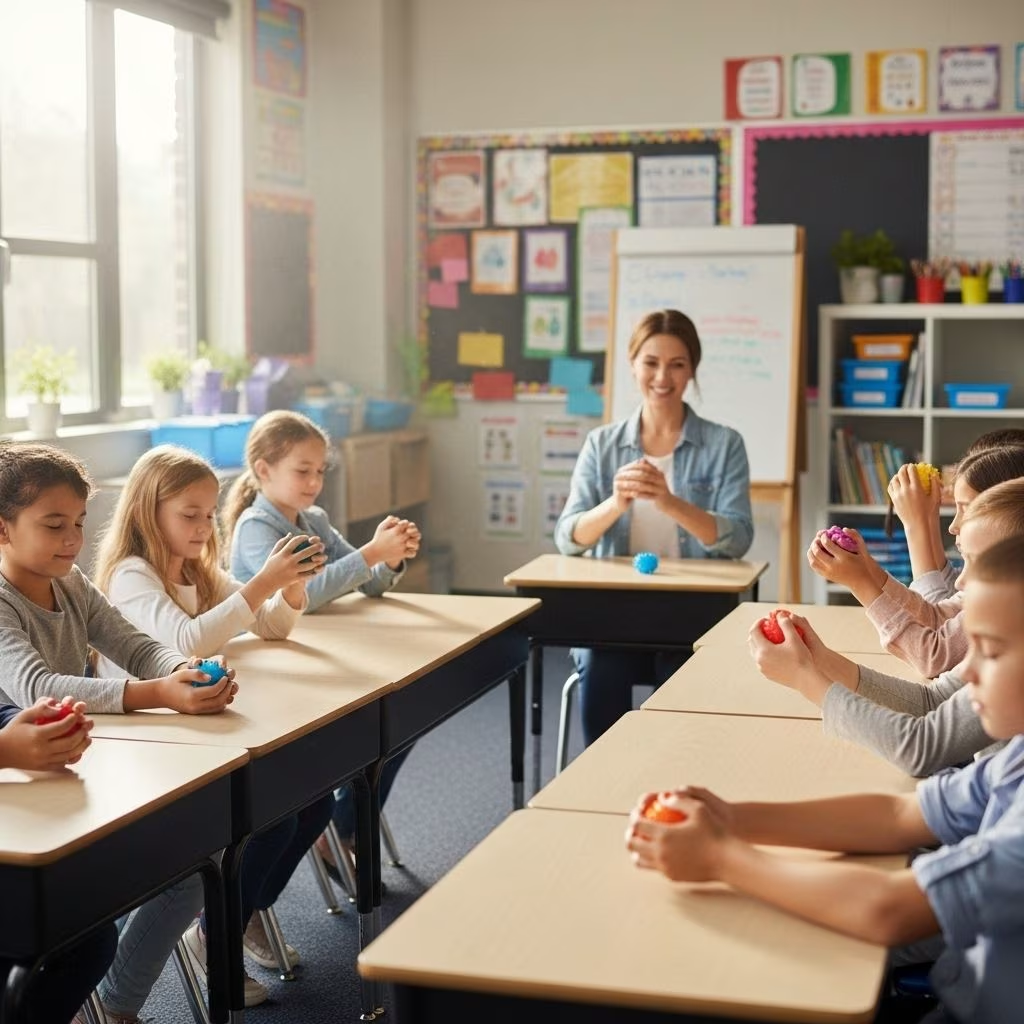
Introduction to Mindful Stress Ball Activities
In today’s fast-paced and stimulating school environments, introducing mindfulness can empower elementary students to better manage their emotions, attention, and stress. A mindful stress ball activity offers a hands-on way to teach these foundational skills. Through crafting and using homemade stress balls, children learn how to anchor themselves in the present, using their senses and breath to navigate anxiety or strong feelings. This article provides a comprehensive script and classroom strategy, transforming a simple craft into a robust learning experience for young minds.
Why Teach Mindfulness in Elementary Settings?
Mindfulness means paying full attention to the present moment, noticing thoughts, body sensations, and feelings with kindness and without judgment. In the elementary years, students are building self-awareness and emotional regulation skills that are critical for lifelong well-being and academic success.
- Helps children identify and manage stress and big emotions more effectively.
- Improves focus, attention span, and overall engagement in learning tasks.
- Boosts resilience and ability to cope with new or challenging situations.
- Encourages empathy and self-compassion.
By integrating mindfulness into the curriculum, teachers enable young learners to build a toolkit for mental and emotional health that goes far beyond the classroom walls.
Benefits of Mindful Stress Ball Activities
The stress ball is more than a craft—it’s a practical, sensory tool that brings immediate emotional relief and helps develop mindful awareness. When used intentionally, stress balls can:
- Calm the nervous system: Squeezing and releasing helps dissipate tension in the body, generating a calming effect.
- Focus the mind: Attention is directed to the tactile sensations, which grounds the student in the present moment rather than worries.
- Foster breathing awareness: Pairing squeezes with slow breaths reinforces relaxation and mindfulness.
- Promote emotional expression: Students can use the stress ball as a way to process and soothe strong emotions safely.
- Enhance fine motor skills: The act of crafting and manipulating the ball strengthens hand muscles and coordination.
Materials Needed for the Activity
- Balloons (latex or non-latex, 12″ and 9″ sizes work well)
- Filler (flour, rice, dried beans, small beads, or corn starch; avoid liquids)
- Plastic funnel or paper funnel (for pouring filler into the balloon)
- Plastic bottle (optional, for easy transfer of contents)
- Spoons
- Scissors
- Permanent markers or stickers (for decoration)
- Sandwich bags (optional for extra durability or reducing mess)
- Paper towels or a tray (to contain spills)
Note: For students with allergies or sensory sensitivities, consult with your school nurse or allow students to customize the materials.
Preparation Tips for Educators
- Test in advance: Make a stress ball yourself to anticipate challenges and demonstrate confidently.
- Prepare materials: Portion fillers and pre-cut funnels can streamline the process for younger children.
- Set expectations: Explain that this is not just a craft but a mindfulness tool for calm and focus.
- Safety first: Supervise scissors use and ensure proper clean-up of spilled materials.
- Discussion starter: Begin with a talk about stress, focus, and how tools can help with self-regulation.
Mindful Stress Ball Activity: Step-by-Step Script
This guided activity can be delivered in a whole-class format or small group. The script integrates mindfulness cues and reflection opportunities. Adjust the pacing for your students’ age and developmental level.
Part 1: Setting the Intention
Teacher Script:
- “Today we’re going to learn about mindfulness—a way to help our brains and bodies feel calm and focused.”
- “Do you ever feel stressed, worried, or just like you need to take a break?” (Invite responses.)
- “We’re going to make our very own stress balls. These are special tools you can use to help your mind and body when you need to feel calm or focused.”
Part 2: Activating Prior Knowledge
Teacher Prompts:
- “Can anyone share what it means to be mindful?”
- “Have you ever used something like a stress ball or a fidget tool before? How did it help you?”
- “Let’s use our senses and our curiosity as we make our stress balls together.”
Part 3: Step-by-Step Creation
- Stretch the balloon: Give each student a balloon and ask them to stretch it gently by pulling it in different directions. You can blow it up to “pre-stretch” and then let the air out again.
- Prepare the filling: Choose a filler material (flour, rice, or beans). With a spoon, scoop about ½ cup into a paper funnel or plastic funnel placed inside a plastic bottle opening.
- Fill the balloon: Secure the balloon over the bottle or funnel, then carefully tip and squeeze the filler into the balloon, releasing the funnel once done.
- Remove air: Pinch the neck of the balloon, gently press out air, and quickly tie the end into a knot.
- Double up for durability: For extra strength, cut the neck off a second balloon and stretch it around the first, hiding the knot. Repeat if desired for softness and strength.
- Decorate: Use permanent markers or stickers to personalize each stress ball.
Allow students to help one another as needed, fostering teamwork and social interaction.
Part 4: Guided Mindfulness Practice with the Stress Ball
Teacher Script:
- “Let’s hold our new stress balls quietly in our hands, and notice how they feel.”
- “Is it soft, squishy, or firm? Is it warm from your hands, or a little cool? What do you notice about how it moves or sounds?”
- “Close your eyes if you’re comfortable, and squeeze the ball gently as you breathe in, then relax your grip as you breathe out.”
- “Try this for five slow breaths: squeeze… inhale… pause… release… exhale. What do you notice in your body or mind?”
- “If you like, you can roll your stress ball between your palms, or from hand to hand, simply noticing the sensations.”
This mindful moment demonstrates to students how their stress ball can help redirect attention and offer sensory comfort during moments of need.
Part 5: Reflection and Sharing
- “How did it feel to use your stress ball mindfully?”
- “Can you imagine a time in your school day when your stress ball could help?”
- “What other tools or strategies help you find calm or focus?”
Encourage students to journal, draw, or discuss their feelings about the activity.
Extension Activities and Variations
- Mindfulness Stations: Create a corner with different sensory tools (stress balls, glitter jars, soft fabrics) where students can choose their preferred tool during quiet times.
- Guided Scripts: Pair the stress ball with a short guided body scan or breathing script (e.g., “Take three mindful squeezes each time you need a break”).
- Art & Writing Extension: Invite students to name their stress balls and write a story or letter describing its “superpower.”
- Emotions Chart: Use stress balls as a gateway to talking about feelings—have students gently squeeze their ball when identifying or sharing emotions.
- Take-Home Kits: Provide instructions to families for recreating the activity at home.
Frequently Asked Questions
Q: What do stress balls actually accomplish for kids in a classroom?
A: Stress balls help kids focus their energy and attention, reduce fidgeting, and provide an outlet for physical and emotional tension. When paired with mindfulness exercises, they teach practical self-regulation skills.
Q: Are stress balls safe for all children?
A: As long as the materials are age-appropriate and non-toxic, stress balls are generally safe. Always supervise young children during use to prevent breakage and choking hazards, and check for latex allergies before starting.
Q: Can homemade stress balls replace professional mental health support?
A: No—stress balls and mindfulness activities are helpful self-care tools but are not substitutes for therapy or mental health interventions when those are needed.
Q: How can stress balls be integrated into daily classroom routines?
A: Teachers can allow mindful stress ball use during transitions, independent work, or emotional check-ins. Establish clear routines and expectations so the tool remains helpful, not distracting.
Q: What should I do if a student’s stress ball breaks?
A: Have extra materials on hand for repairs or replacements. Involve the student in fixing or remaking the ball to reinforce problem-solving and resilience.
Teacher Tips and Troubleshooting
- Test various fillers: Some fillers (e.g., play dough, kinetic sand) create different tactile sensations; offer choice if possible.
- Contain mess: Use trays or work outdoors for easy cleanup, especially when using flour or rice.
- Handle resistance gently: If a student isn’t interested in the activity, provide alternate ways to participate in mindfulness (drawing, listening, movement).
- Model use: Show students how and when to use the stress ball, with clear guidelines for appropriate classroom use.
- Connect to curriculum: Tie in social-emotional learning standards, focusing on self-awareness and self-regulation skills.
Conclusion: Integrating Mindfulness Daily
Bringing the mindful stress ball activity into elementary classrooms is a powerful way to nurture student mindfulness, resilience, and focus. This experience provides young learners with tangible tools for navigating the ups and downs of their school day—and builds a foundation for emotional wellness that lasts. By revisiting these practices regularly, teachers can create a classroom culture where mindfulness is a valued, everyday skill.
References
- https://thekindnesscurriculum.com/wp-content/uploads/2021/03/8.Mindfulness-Years-7-10-making-stress-balls-ready.pdf
- https://inthenowcounseling.org/2023/08/11/diy-stress-balls-for-kids-to-practice-mindfulness-therapy-in-washington-pa-for-kids-and-teens/
- https://www.osyconsortium.org/_files/ugd/3bc542_555ba6aae1214902a567969ef249edcb.pdf?index=true
- https://www.kidsgrief.ca/pluginfile.php/1377/mod_lesson/page_contents/1339/Stress%20balls%20activity.pdf
- https://positivepsychology.com/mindfulness-for-kids/
- https://www.islhd.health.nsw.gov.au/sites/default/files/mental-health/School_link_Newsletters/Mindfulness%20and%20Calming%20Activities.pdf
- https://proactivemindfulness.com/one-minute/
- https://parent-list.com/blog/how-to-make-your-own-stress-balls


