


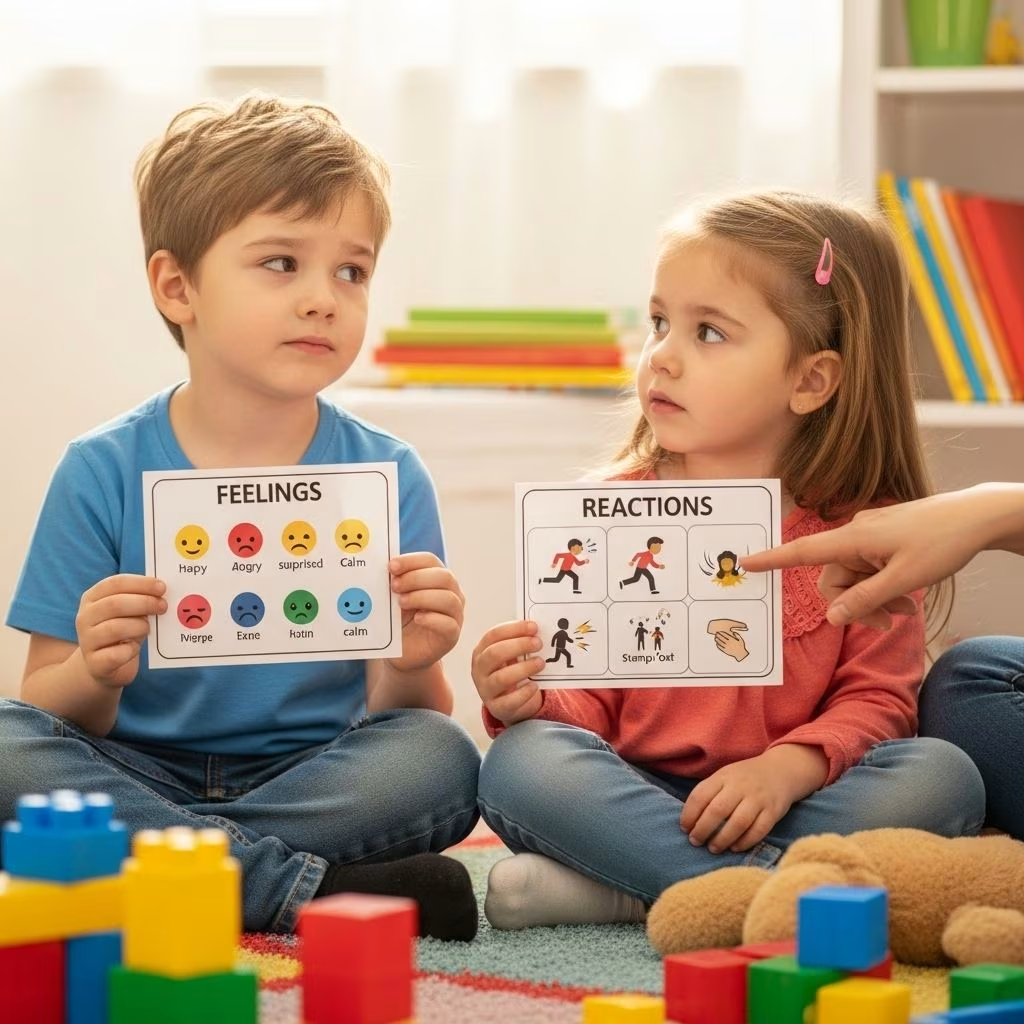
Teaching Kids: Feeling vs Reaction Difference
Helping children discern the difference between what they feel and how they act upon those feelings is at the core of emotional intelligence. When guided to distinguish feelings (internal emotional experiences) from reactions (external behaviors or responses), children build better self-control, stronger relationships, and more resilient mental health. This comprehensive guide explores why this distinction is crucial, common challenges, developmental considerations, and practical techniques for parents, caregivers, and educators.
Why Understanding the Difference Matters
Children often act impulsively on their emotions. Teaching them to distinguish feeling from reaction enables self-regulation, empathy, and thoughtful problem-solving. Recognizing this difference is fundamental to:
- Developing emotional literacy (the ability to identify and label emotions)
- Improving behavioral self-control and reducing impulsivity
- Enhancing mental well-being and resilience
- Building stronger social skills and relationships
When kids learn, “I can feel angry, but I do not have to hit or shout when I’m angry,” they begin to gain control over their actions, not letting momentary feelings dictate unhelpful or unsafe responses .
Understanding Feelings: The Internal Experience
Feelings, also referred to as emotions, are internal states that arise naturally in response to people, places, events, or even memories. Common examples for children include happiness, sadness, anger, fear, and excitement. Children experience emotions intensely and often lack the vocabulary or self-awareness to name them .
What Are Feelings?
- Natural, internal responses to situations or thoughts
- Neither good nor bad, but rather signals about personal needs or experiences
- Present for everyone, regardless of age or circumstance
Understanding and expressing feelings helps children gain insight into themselves, paving the way for self-reflection and emotional growth .
Helping Kids Recognize Feelings
- Labeling Emotions: Naming how they feel (e.g., “I feel frustrated”) .
- Discussing Past Situations: Reflecting on recent events to recognize emotions involved.
- Identifying Physical Signals: Noticing changes like butterflies in the stomach or clenched fists.
Using feelings language (“You look upset. How can I help you?”) and reading books on emotions are great tools for teaching children to become emotionally aware .
Understanding Reactions: How Feelings Influence Behavior
Reactions are external responses—what we say or do as a result of our feelings. These include behaviors like crying, yelling, withdrawing, or even positive actions like hugging or asking for help. Reactions can be impulsive or thoughtful.
Types of Reactions
- Constructive reactions: Expressing feelings in a safe and appropriate manner, such as talking, drawing, or seeking support.
- Destructive reactions: Hurting oneself or others, breaking objects, or shutting down emotionally.
- Passive reactions: Withdrawing, silent treatment, or avoiding situations.
Children need support to pause, identify their emotions, and choose positive reactions. Without this awareness, strong emotions can overwhelm them, leading to regrettable behaviors .
Feelings vs Reactions: Comparison Table
| Aspect | Feelings | Reactions |
|---|---|---|
| Where it happens | Inside (mind/body) | Outside (words/actions) |
| Duration | Usually brief (can pass quickly) | Can be instant or prolonged |
| Voluntary? | Involuntary (cannot choose feelings) | Voluntary with awareness (can choose response) |
| Examples | Sadness, anger, excitement, worry | Crying, shouting, hugging, asking for help, withdrawing |
| What we control | How we talk about them | How we act/respond |
How Kids Learn About Feelings and Reactions
Children are not born with the ability to distinguish between their emotions and their actions. Their brains are still maturing, making impulse control a challenge . Through interaction, modeling, and practice, they develop this skill step by step.
Developmental Considerations
- Infants and toddlers: Express feelings with simple behaviors (crying, laughing). They need caregivers to validate, label, and guide these experiences.
- Preschoolers: Begin to identify emotions, but still need help making the link between feelings and behaviors .
- School-aged children: Practice self-regulation and start anticipating consequences; benefit from discussing coping strategies.
- Adolescents: Form deeper understanding, but still benefit from guidance on complex emotions and reactions.
Caregivers can guide children by being curious (“What happened right before you got upset?”), validating their emotions, and discussing possible responses .
Common Challenges in Teaching the Difference
- Mislabeling or ignoring emotions: Kids may act out because they cannot name what they feel .
- Judging or punishing feelings: If parents scold children for feeling sad or angry, kids may suppress emotions, leading to unhealthy patterns .
- Confusing feelings with behavior: Statements like “Don’t be mad” or “Stop being sad” may inadvertently teach children to hide or dismiss emotions.
- Modeling poor self-control: Children copy adult behavior, including both calm and explosive reactions.
- Executive function immaturity: Young brains process emotions fast; skills like impulse control are still under construction.
Strategies and Activities for Teaching the Difference
Building emotional intelligence is an ongoing process. The following evidence-based strategies can help children learn to notice, name, and separate feelings from reactions:
1. Name and Validate Emotions
- Use statements like, “It looks like you feel excited,” or “I notice you are scared; that’s OK.”
- Show that all feelings are acceptable—even difficult ones.
- Encourage children to describe how emotions feel in their body (e.g., “My tummy feels tight when I’m worried.”) .
2. Teach the Pause
- Show children how to pause before reacting by taking deep breaths, counting to ten, or squeezing a soft toy .
- Remind them: “Feelings are not actions. You can choose what you do next.”
3. Use Stories, Drawing, and Role-Play
- Read books about feelings and discuss characters’ emotions and actions.
- Encourage children to draw what different feelings look and feel like, and what choices they make when feeling strong emotions .
- Role-play common scenarios (e.g., “What could you do when you feel left out at school?”).
4. Create an “Emotions Chart” or Feelings Journal
- Help children track daily emotions and what reactions they chose.
- Reflect together on how reactions helped or hurt the situation .
5. Talk Openly About Mistakes and Repair
- Reinforce that everyone makes mistakes, and it’s never too late to apologize or try again.
- Model apologizing for your own overreactions (“I was frustrated and yelled. That wasn’t OK. Next time, I’ll take a deep breath.”).
6. Pose Guiding Questions
- Help children distinguish motivation from action: “You felt angry when your toy was taken. What could you do besides hitting?” .
- Discuss whether certain responses are helpful or hurtful, justified or not, and why.
7. Practice Coping Skills
- Teach safe and constructive ways to express strong emotions: talking to an adult, squeezing a stress ball, moving to a calm space .
- Brainstorm alternative reactions together for frequent triggers.
The Importance of Adult Role Modeling
Children learn through observation. Adults who verbalize feelings (“I’m frustrated right now, I’m going to take a breath”) and show healthy coping are powerful teachers . Staying calm, present, and engaged during a child’s “emotional storm” builds trust and security, modeling emotional regulation.
Self-reflection by the adult (“What am I feeling? How will I choose to react?”) helps avoid escalating situations and teaches children by example.
Frequently Asked Questions (FAQs)
Q: Why do children struggle to separate feelings from reactions?
A: Young brains process emotions rapidly and impulsively. Children lack experience, emotional vocabulary, and mature impulse control, so they need consistent guidance and modeling from adults to learn this distinction.
Q: Are all feelings acceptable for children?
A: Yes. Every feeling is valid and normal, even if it is negative or uncomfortable. The key is learning that not every reaction is acceptable, and children can choose safe, helpful responses.
Q: What should I do when my child reacts inappropriately?
A: Stay calm and present, validate the emotion, and gently correct the behavior. After the situation, discuss alternative reactions together so the child is better prepared next time.
Q: When is the best time to teach these skills?
A: Start as early as possible, even in toddlerhood. Use everyday moments, books, play, and conversations to reinforce these concepts consistently.
Q: What resources can help parents teach these skills?
A: Emotion charts, children’s books about feelings, parenting classes, and daily reflection journals are valuable tools. Seek support from mental health professionals or educators if your child struggles significantly with emotional or behavioral challenges.
Conclusion
Distinguishing between feelings and reactions is a lifelong skill that underpins emotional health, resilience, and strong relationships. By consistently teaching, modeling, and nurturing these abilities, caregivers equip children to navigate life with empathy, self-confidence, and wisdom.
References
- https://octf.ohio.gov/wps/portal/gov/octf/resources-for-parents/articles/understanding-emotions-behaviors
- https://kidsmentalhealthfoundation.org/mental-health-resources/behaviors-and-emotions/noticing-emotions
- https://mentalhealthcenterkids.com/blogs/articles/emotions-vs-feelings-vs-moods
- https://capriplus3.com/teaching-children-difference-feelings-behavior/
- https://www.youtube.com/watch?v=xdq-WBAuxCI
- https://raisingchildren.net.au/preschoolers/development/preschoolers-social-emotional-development/understanding-managing-emotions-children-teenagers
- https://www.childrens.com/health-wellness/teaching-kids-about-emotions
- https://www.ecmhc.org/ideas/emotions.html


