


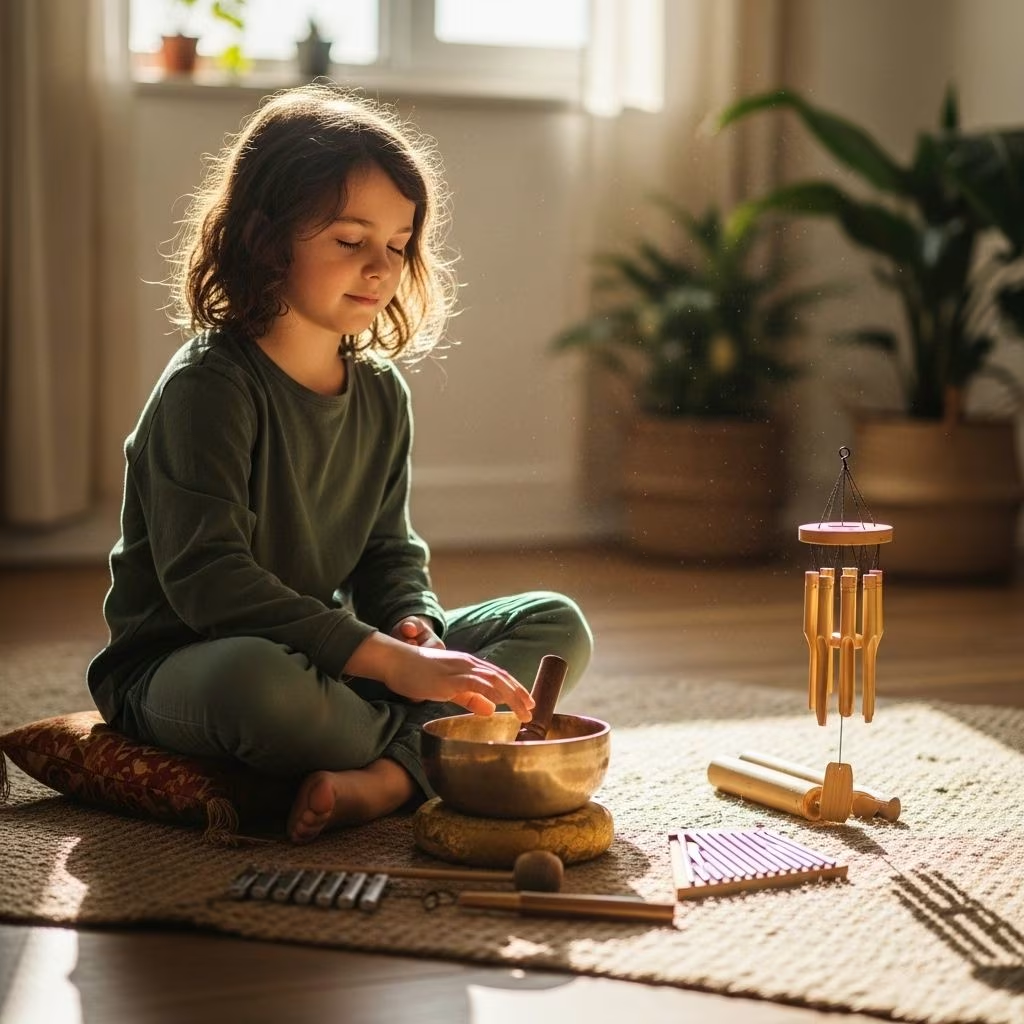
In today’s fast-paced world, children face unprecedented levels of stress, anxiety, and overstimulation. As parents and educators seek effective tools to help young ones find calm and balance, singing bowls and chimes have emerged as powerful instruments for introducing meditation and mindfulness practices to children. These ancient sound healing tools offer a gentle, engaging approach to teaching kids the art of inner peace and self-awareness.
The resonant tones produced by singing bowls and the delicate sounds of meditation chimes create an acoustic environment that naturally draws children into the present moment. Unlike traditional meditation approaches that may feel abstract or challenging for young minds, sound-based practices provide a tangible focal point that makes mindfulness accessible and enjoyable for children of all ages.
Understanding Singing Bowls and Chimes as Meditation Tools
Singing bowls, traditionally crafted from metal alloys or crystal, produce rich harmonic overtones when struck or played around the rim with a wooden mallet. These vibrations create waves of sound that can be both heard and felt, offering a multi-sensory experience that captivates children’s attention. Meditation chimes, on the other hand, produce clear, crystalline tones that fade gradually into silence, providing a different but equally valuable auditory experience for meditation practice.
The use of these instruments in children’s meditation is not about rigid techniques or forcing stillness. Instead, they serve as gentle guides that help young minds naturally settle into a state of calm awareness. The sound vibrations work on multiple levels, engaging auditory processing while simultaneously calming the nervous system through their soothing frequencies.
The Science Behind Sound Healing for Children
Research into sound therapy has revealed compelling evidence for its effectiveness in promoting relaxation and reducing stress across various age groups. When children listen to the sustained tones of singing bowls, their brainwave patterns naturally begin to slow down, shifting from the active beta state associated with daily activities toward the calmer alpha and theta states linked to relaxation and meditation.
The vibrations produced by these instruments create a phenomenon known as entrainment, where the body’s rhythms synchronize with the sound frequencies. This process can help regulate heart rate, breathing patterns, and even emotional states in children. The gentle, non-invasive nature of sound healing makes it particularly suitable for young ones who may struggle with sitting still or following complex meditation instructions.
Key Benefits of Singing Bowls and Chimes for Children
Promoting Deep Relaxation and Stress Relief
One of the most significant advantages of incorporating singing bowls into children’s routines is their remarkable ability to induce relaxation. The soothing sound that emanates from these instruments helps calm racing minds and releases physical tension that children may hold in their bodies. This becomes especially valuable for kids who experience bedtime resistance or struggle to transition between high-energy activities and quiet time.
The calming effect extends beyond the immediate meditation session. Regular exposure to these healing sounds helps children develop stress management skills they can carry throughout their lives. When kids learn to associate the sound of singing bowls with feelings of peace and safety, they build positive neural pathways that support emotional regulation.
Enhancing Focus and Concentration
In an age of constant digital stimulation, many children struggle with maintaining attention and focus. Singing bowls offer a unique solution by providing a single point of auditory focus that naturally draws wandering minds back to center. The practice of listening carefully to the sound as it gradually fades away trains children’s brains to sustain attention over extended periods.
This enhanced concentration ability translates beyond meditation sessions into academic performance and daily activities. Children who regularly practice listening meditation with singing bowls often show improvements in classroom focus and task completion. The mindful listening skills they develop become valuable tools for navigating an increasingly distracting world.
Improving Sleep Quality
Sleep challenges affect countless families, and singing bowls provide a natural, drug-free approach to supporting healthy sleep patterns in children. When incorporated into bedtime routines, the gentle vibrations and tones signal to a child’s nervous system that it’s time to wind down. The sounds create a peaceful acoustic environment that helps quiet the mental chatter often preventing children from falling asleep.
Parents who use singing bowls as part of evening rituals report that their children fall asleep faster and experience more restful, uninterrupted sleep. The practice becomes a comforting bedtime signal that helps establish consistent sleep-wake cycles, which are crucial for children’s physical and emotional development.
Reducing Anxiety and Emotional Distress
Childhood anxiety is increasingly common, manifesting in various forms from separation anxiety to performance stress. Singing bowls serve as valuable tools for managing these emotional challenges by helping children access calm states even when feeling overwhelmed. The sound vibrations work to release tension held in the body while simultaneously providing a soothing sensory experience that counters anxiety symptoms.
When children learn to turn to singing bowls during moments of stress, they develop healthy coping mechanisms that serve them throughout life. The practice empowers kids with a sense of control over their emotional states, building resilience and self-regulation skills that extend far beyond the meditation cushion.
Developing Sensory Awareness
Children are naturally curious about their sensory experiences, and singing bowls provide rich opportunities for exploring sound and vibration. Through regular practice, kids become more attuned to subtle sensory information in their environment. They learn to distinguish between different tones, notice how sounds change and fade, and even feel vibrations in their bodies when holding or sitting near the bowls.
This heightened sensory awareness supports overall cognitive development and helps children process sensory information more effectively. For kids who are highly sensitive or on the autism spectrum, controlled sound experiences with singing bowls can be particularly beneficial in helping them regulate sensory input.
Stimulating Creativity and Imagination
The ethereal sounds produced by singing bowls and chimes naturally inspire creative thinking and imaginative play. Children often describe visualizing colors, shapes, or stories while listening to these instruments. This creative engagement makes meditation feel less like a chore and more like an adventure, increasing children’s willingness to participate in regular practice.
The sound vibrations can unlock imaginative potential, encouraging kids to explore their inner creative landscapes. This aspect makes singing bowl meditation particularly appealing for artistic children who may struggle with more verbal or physically-oriented mindfulness practices.
Cultivating Compassion and Kindness
When introduced mindfully, singing bowl meditation can become a practice for developing loving-kindness and compassion. Children can be guided to send peaceful intentions through the sound vibrations, imagining the healing tones reaching loved ones or even spreading peace throughout the world. This practice helps young ones develop empathy and a sense of connection with others.
Starting compassion practices early through singing bowl meditation helps children build strong foundations for prosocial behavior. The association between the peaceful sound and kind intentions reinforces positive values and encourages thoughtful action toward others.
Introducing Singing Bowls to Children: Practical Guidelines
Selecting the Right Singing Bowl
When choosing a singing bowl for children, several factors require consideration. Smaller bowls are generally more appropriate for young hands, as they are easier to hold and less likely to cause injury if accidentally dropped. Additionally, durability matters significantly when working with children, so selecting a sturdy metal bowl rather than a fragile crystal one often proves wise for beginners.
The tone and volume of the bowl should also match the child’s sensitivity. Some children may find high-pitched sounds uncomfortable, so starting with bowls that produce deeper, mellower tones often works better. Allow your child to listen to different bowls if possible before making a purchase, ensuring they respond positively to the sound.
Safety Considerations and Supervision
Singing bowls, while wonderful tools, require proper handling to ensure safety. Adult supervision is essential, especially with younger children who are still developing fine motor control and spatial awareness. Establish clear guidelines about handling the bowl carefully and using the mallet gently rather than striking forcefully.
Create a dedicated space for singing bowl practice where the bowl sits securely on a cushion or stable surface. Teach children that these are special instruments deserving respect and gentle treatment. This approach not only ensures safety but also helps children develop reverence for the practice itself.
Starting with Appropriate Volume and Duration
When introducing singing bowls to children, begin with softer volumes and shorter sessions. Young ears are sensitive, and overwhelming them with loud sounds can create negative associations that undermine the practice. Start with gentle tones played for just a few minutes, gradually increasing duration as children become comfortable and engaged.
Playing the bowl in a quiet environment without competing background noise helps children focus on the sound. This dedicated attention teaches them to distinguish the pure tones of the singing bowl and appreciate the subtleties of the sound as it evolves and fades.
Teaching Children Mindfulness Through Singing Bowls
The Bell Master Practice
One beautiful approach to teaching children meditation with singing bowls involves designating a “bell master” who takes responsibility for inviting the bell to sing. This practice, inspired by mindfulness traditions, transforms meditation into an honored role that children can rotate through in group settings or assume individually at home.
The bell master sits before the singing bowl, bringing their hands together at their heart center in a gesture of respect. They focus on their breath, bow to the bell acknowledging its peaceful energy, and then carefully lift the bowl. With mindful awareness, they gently touch the mallet to the bowl to awaken it before inviting it to sing more fully. This ritual teaches children to approach meditation with intentionality and reverence.
As the bell sings, everyone present listens with focused attention, breathing with the sound. Some practitioners encourage children to imagine the peaceful vibrations traveling into the world or settling into their own hearts. This visualization adds depth to the practice while keeping young minds engaged.
Mindful Listening Games
Transforming singing bowl meditation into playful games makes the practice more appealing to children while still delivering mindfulness benefits. One effective game involves playing the bowl and asking children to raise their hand the moment they can no longer hear any sound. This activity trains sustained attention and present-moment awareness while feeling fun rather than formal.
Another engaging approach involves having children describe what they hear as the bowl plays. Encourage them to notice how the sound changes, whether it reminds them of anything, or what sensations they feel in their bodies while listening. These discussions help children develop vocabulary for their inner experiences while reinforcing mindful observation skills.
Breath Awareness Practices
Singing bowls provide excellent anchors for teaching breath awareness to children. Guide kids to synchronize their breathing with the sound of the bowl, taking a deep breath in as it’s struck and breathing out slowly as the sound fades. This coordination between breath and sound helps children learn breath control while staying focused on the present moment.
For younger children, you might create a simple rhythm: breathe in for three counts while the bowl plays, hold briefly, then breathe out for three counts as they continue listening. This structured approach makes the abstract concept of breath awareness more concrete and manageable for developing minds.
Bedtime and Naptime Rituals
Incorporating singing bowls into sleep transitions can transform bedtime struggles into peaceful rituals. Rather than announcing “naptime,” which may trigger resistance, try a sequence of gentle yoga poses followed by rest while the singing bowl plays. Child’s pose, butterfly stretch, and reclining poses work well for preparing bodies for rest.
Finish with savasana, encouraging children to lie still with eyes closed while you play the singing bowl softly. Guide them to relax different body parts as the sound washes over them. Many children naturally drift into sleep during this practice, even when they insisted they weren’t tired. The key is framing it as a relaxation activity rather than sleep enforcement.
For bedtime specifically, establish consistency by playing the singing bowl at the same point in your evening routine each night. This auditory cue signals the body that sleep time approaches, helping regulate circadian rhythms naturally.
Integrating Chimes into Children’s Meditation Practice
While singing bowls offer sustained tones, meditation chimes provide a complementary experience with their clear, pure notes that gradually fade into silence. Chimes work beautifully for marking transitions between activities or meditation segments, helping children develop awareness of time and change.
The crystalline sound of chimes can signal the beginning of quiet time in classrooms or homes, creating an auditory boundary that helps children shift mental gears. Unlike harsh bells or buzzers, chimes invite rather than demand attention, aligning with the gentle philosophy underlying mindfulness practice.
You can also use chimes for interval meditation, where children sit quietly from one chime sound to the next. This approach provides a clear structure that helps kids understand the duration of practice without constantly checking the time. The anticipation of the next chime keeps young minds engaged while building tolerance for stillness.
Creating a Meditation Space for Children
Establishing a dedicated area for singing bowl meditation helps children develop positive associations with the practice. This space need not be elaborate—a corner with a cushion, the singing bowl on a stable surface, and perhaps some soft lighting or natural elements creates an inviting environment for mindfulness.
Allow children to participate in setting up their meditation space, giving them ownership of the practice. They might choose a special cushion, select items from nature to display, or create artwork that represents peace and calm. This involvement increases their investment in using the space regularly.
Keep the space relatively simple and uncluttered to minimize distractions. The singing bowl should be the focal point, positioned where children can easily see and access it during practice. Consider having different bowls or chimes for specific purposes—one for morning energizing, another for bedtime calming, and perhaps a third for general meditation practice.
Age-Appropriate Approaches to Sound Meditation
Preschool and Early Elementary (Ages 3-7)
Young children benefit from very short, highly interactive sessions with singing bowls. Keep initial practices to 2-5 minutes, focusing on simple activities like listening for when the sound stops or describing what they hear. Make it playful and avoid pressuring perfect stillness.
For this age group, incorporating movement with the sound works well. Children might sway gently as the bowl plays or make flowing hand motions that mirror the sound waves. This combination of auditory and kinesthetic input suits their developmental stage while introducing mindfulness concepts.
Upper Elementary (Ages 8-11)
Older elementary children can handle longer sessions of 5-15 minutes and appreciate more structured meditation practices. They’re ready to learn about breath awareness, body scans guided by singing bowl tones, and the bell master role. These kids often enjoy understanding the “why” behind the practice, so explaining how sound affects the brain and body enhances their engagement.
This age group also responds well to journaling or drawing after meditation sessions, documenting their experiences with the singing bowls. These reflection activities deepen their mindfulness practice while developing self-awareness and emotional literacy.
Adolescents (Ages 12+)
Teenagers can engage with singing bowl meditation at more sophisticated levels, including extended sessions of 15-30 minutes. They may appreciate learning the traditional aspects of singing bowl practice and can take on teaching roles with younger siblings or peers. Adolescents benefit from understanding how meditation helps manage the unique stresses of their developmental stage.
Older teens might explore combining singing bowls with other mindfulness practices like loving-kindness meditation or body scans. They can also learn to play the bowls themselves, which adds another dimension to their practice and provides a creative outlet for stress relief.
Addressing Common Challenges
Resistance to Practice
Some children initially resist meditation, viewing it as boring or pointless. When this happens, focus on the playful aspects of singing bowls rather than formal meditation. Let them experiment with creating different sounds, feeling the vibrations, or incorporating the bowl into imaginative play. Once they develop positive associations with the instrument, you can gradually introduce more structured mindfulness practices.
Difficulty Sitting Still
Many children, particularly those with ADHD or high energy levels, struggle with stillness. Remember that meditation doesn’t require perfect immobility. Allow children to fidget quietly, sit in comfortable positions rather than rigid postures, or even lie down during singing bowl sessions. The goal is mental focus, not physical perfection.
Overstimulation or Discomfort
While rare, some children may find certain singing bowl frequencies uncomfortable or overstimulating. If your child seems distressed by the sound, try different bowls with varied tones, adjust the volume, or switch to softer chimes instead. Always respect a child’s sensory preferences and never force continued exposure to sounds that genuinely disturb them.
Incorporating Singing Bowls into Daily Life
Beyond formal meditation sessions, singing bowls can become helpful tools throughout the day. Use them to signal transitions between activities, helping children shift their attention mindfully. A brief bowl sound before meals can invite grateful awareness of food. Playing the bowl when emotions run high offers a quick reset for the entire family.
Consider creating a family ritual where everyone gathers for a few minutes of singing bowl meditation together. This shared practice strengthens family bonds while normalizing mindfulness as a regular part of daily life. Even just one or two minutes can make a meaningful difference in household atmosphere.
Combining Singing Bowls with Other Mindfulness Practices
Singing bowls complement numerous other mindfulness activities for children. Pair them with yoga sessions, using the bowl to mark transitions between poses or to deepen savasana. Combine bowl sounds with nature walks, encouraging children to notice both the bowl’s tones and natural sounds in the environment.
Breathing exercises become more engaging when accompanied by singing bowl tones. Teach children to match their breath length to the duration of the sound or to breathe in patterns synchronized with multiple bowl strikes. These combinations create rich, multi-layered mindfulness experiences that hold children’s attention more effectively than single-modality practices.
Building Long-Term Practice Habits
Consistency matters more than duration when establishing meditation habits in children. Brief daily sessions prove more beneficial than occasional longer practices. Aim for the same time each day if possible, whether morning, after school, or bedtime, to help the practice become automatic.
Track progress in age-appropriate ways. Younger children might earn stickers for completing sessions, while older kids could maintain a meditation journal. Celebrate milestones like completing 30 consecutive days of practice, but avoid creating pressure that transforms meditation into another performance-oriented activity.
Remember that children’s interest will naturally wax and wane. During periods of low enthusiasm, scale back rather than abandoning the practice entirely. Even maintaining a minimal weekly session keeps the connection alive until renewed interest emerges.
Frequently Asked Questions
Q: At what age can children start using singing bowls for meditation?
A: Children as young as three years old can benefit from singing bowl exposure, though practices should be very brief and playful. Most children can engage meaningfully with structured singing bowl meditation by age five or six, with practices adapted to their developmental stage and attention span.
Q: Are singing bowls safe for children with sensory processing issues?
A: Singing bowls can be beneficial for children with sensory processing differences, but introduction should be gradual and respectful of individual sensitivities. Start with very soft volumes and brief exposures, always allowing the child to control their proximity to the sound. Some children with sensory challenges find the predictable, pure tones of singing bowls easier to process than complex environmental sounds.
Q: How long should a singing bowl meditation session last for children?
A: Session length should match the child’s age and experience level. Preschoolers benefit from 2-5 minute sessions, elementary-aged children can handle 5-15 minutes, and adolescents may enjoy 15-30 minute practices. Always prioritize quality of attention over duration, and remember that even brief sessions deliver meaningful benefits.
Q: Can singing bowls help children with ADHD?
A: Research suggests that singing bowls can support children with ADHD by providing a single focal point for attention and promoting calming brainwave patterns. The practice helps develop sustained attention skills while offering a non-pharmaceutical tool for managing hyperactivity and impulsivity. However, singing bowls should complement rather than replace comprehensive ADHD treatment approaches.
Q: Do I need special training to use singing bowls with my child?
A: No special certification is required to introduce singing bowls to your own children at home. Basic guidance on proper handling and age-appropriate practices is sufficient for most families. However, if you plan to teach groups of children or use singing bowls in therapeutic contexts, additional training in both sound healing and child development proves valuable.
Q: What’s the difference between metal and crystal singing bowls for children?
A: Metal singing bowls are generally more durable and produce warmer, more complex tones with rich overtones. They’re typically recommended for children due to their resilience. Crystal singing bowls produce purer, clearer tones but are more fragile and expensive. Both types offer benefits; choice depends on your child’s preferences, your budget, and practical considerations around durability.
Q: Can singing bowls replace therapy for anxious children?
A: While singing bowls offer valuable support for managing childhood anxiety, they should not replace professional mental health care when needed. They work best as complementary tools within a comprehensive approach that may include therapy, appropriate medical care, and other anxiety management strategies. Consult healthcare providers about integrating singing bowls into your child’s overall wellness plan.
Q: How do I choose between singing bowls and chimes for my child?
A: Both instruments offer unique benefits. Singing bowls provide sustained tones ideal for longer meditation sessions and creating ambient sound environments. Chimes produce brief, clear notes perfect for marking transitions and interval meditation. Many families find having both types valuable, using each for different purposes. Consider starting with a singing bowl for versatility, then adding chimes as your practice develops.
Conclusion
Singing bowls and chimes offer children accessible pathways into meditation and mindfulness practices that might otherwise feel abstract or challenging. These ancient instruments speak to something universal in the human experience—the recognition that certain sounds naturally quiet the mind and soothe the spirit. By introducing children to these tools early, we equip them with lifelong resources for managing stress, cultivating focus, and accessing inner peace.
The benefits extend far beyond the immediate meditation session. Children who regularly practice with singing bowls develop enhanced emotional regulation, improved concentration, better sleep patterns, and greater overall wellbeing. They learn that they possess the power to influence their own mental and emotional states, a realization that builds confidence and resilience.
As with any worthwhile practice, patience and consistency matter more than perfection. Some days your child will be deeply engaged with the singing bowl; other days they may barely tolerate a brief session. Both responses are normal and acceptable. The goal is not to create meditation prodigies but to plant seeds of mindfulness that will grow throughout their lives.
Whether you’re a parent seeking tools to help your anxious child, a teacher looking to enhance classroom focus, or simply someone who believes in supporting children’s holistic development, singing bowls and chimes offer profound possibilities. These humble instruments carry within their tones the potential to transform not just individual practice sessions, but the overall quality of children’s inner lives. In a world that increasingly pulls young attention outward, singing bowls provide a gentle invitation to turn inward, discover stillness, and touch the peace that exists within every child.
References
- https://www.himalayasshop.com/blogs/guides/can-kids-benefit-from-singing-bowls
- https://teachchildrenmeditation.com/singing-bowls-and-mindfulness-for-children-inspired-by-thich-nhat-hahn/
- https://www.silentmindsingingbowls.com/blogs/news/singing-bowls-and-kids-making-time-at-home-mindful
- https://pmc.ncbi.nlm.nih.gov/articles/PMC12063014/
- https://www.sensoryland.com/blog1/sound-healing-for-children
- https://bellsofbliss.com/blogs/good-to-know/fields-of-application-for-singing-bowls
- https://meinlsonicenergy.com/en/topics/sound-therapy-for-kids


