


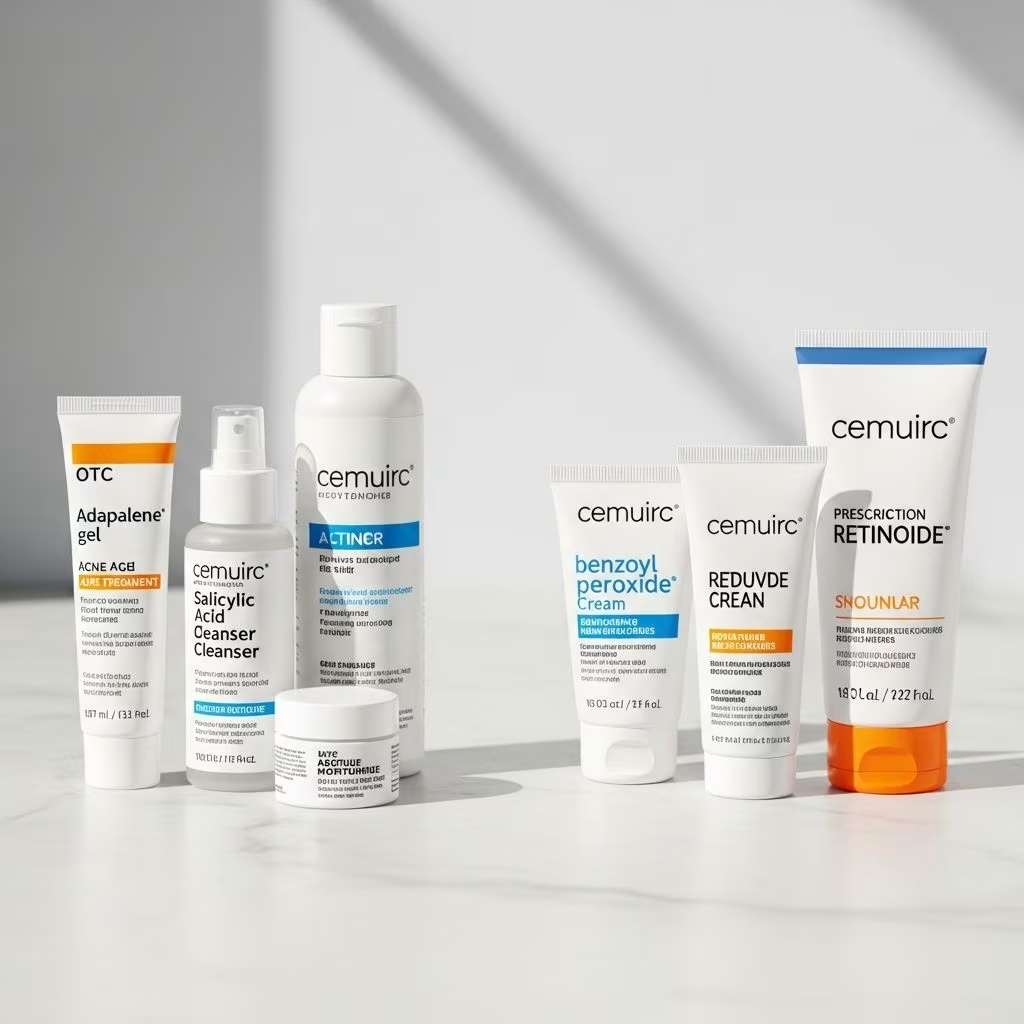
Acne affects millions globally, cutting across age, gender, and skin types. Among the broad spectrum of available treatments, topical therapies stand out for their accessibility and effectiveness—especially over-the-counter (OTC) medications and prescription retinoids. This comprehensive guide explores the nuances of both options, enabling you to make an informed decision tailored to your skin’s needs.
Understanding Acne: Causes and Signs
Acne vulgaris is a chronic inflammatory skin disorder primarily affecting the face, chest, and back. It emerges when pores become blocked by excess sebum, dead skin cells, and bacteria. Hormonal changes, stress, diet, and genetics all influence its development, leading to whiteheads, blackheads, papules, pustules, and even cysts. Recognizing the nature and severity of your acne is the crucial first step in selecting appropriate treatment options.
The Importance of Topical Therapy
Topical treatments, directly applied to the skin, are the first-line approach for mild-to-moderate acne and a vital part of multipronged regimens for more severe cases. They act locally, minimizing systemic side effects and targeting blocked pores, comedones (whiteheads and blackheads), and inflammation where they arise. Topical treatments are available as gels, creams, lotions, foams, and washes, allowing tailored care to individual preferences and skin types.
OTC Topical Acne Treatments
Over-the-counter acne products are accessible without a prescription and offer effective solutions for many individuals, particularly those with mild to moderate acne. The primary active ingredients include:
- Benzoyl Peroxide: An antibacterial and keratolytic agent that eradicates C. acnes bacteria while helping to keep pores unclogged. Available in concentrations (2.5%–10%) and formulations like cleansers, gels, and creams. Effective for inflammatory and non-inflammatory acne but can cause irritation or bleaching of fabrics.
Best for: All types of acne.
Common brands: PanOxyl, Clean & Clear, Neutrogena. - Salicylic Acid: A beta hydroxy acid (BHA) with exfoliating and anti-inflammatory properties. It breaks down the glue-like substance binding dead skin cells, making it particularly effective for comedonal acne.
Best for: Whiteheads, blackheads.
Common brands: Stridex, Neutrogena, Paula’s Choice. - Sulfur: Possesses mild antibacterial and keratolytic effects. Often included in masks or spot treatments; may cause mild dryness or an odor.
Best for: Sensitive skin, combination therapy. - Adapalene (Differin 0.1%): The first retinoid approved for OTC use. It normalizes skin cell turnover, preventing blocked pores and reducing inflammation. Less irritating than many older prescription retinoids.
Best for: Comedonal and inflammatory acne.
Note: Higher strengths (0.3%) are prescription-only. - Cleansers and Leave-on Products: Formulated with the above actives or as gentle washes to complement other treatments.
Role: Preparation and maintenance for acne-prone skin.
OTC products are typically less potent than prescription medications but are safe for long-term use in most individuals and may be used as part of broader maintenance strategies.
Comparison Table: Major OTC Acne Actives
| Ingredient | Mechanism | Best For | Potential Side Effects |
|---|---|---|---|
| Benzoyl Peroxide | Kills acne bacteria, unclogs pores | All acne types | Redness, peeling, bleaching |
| Salicylic Acid | Exfoliates, clears pores | Blackheads, whiteheads | Dryness, irritation |
| Adapalene (0.1%) | Regulates skin cell turnover, anti-inflammatory | Comedones, mild-moderate acne | Mild irritation, dryness |
| Sulfur | Absorbs oil, antibacterial | Mild acne, sensitive skin | Odor, mild dryness |
OTC Retinoids vs. Prescription Retinoids
Retinoids, derivatives of vitamin A, are cornerstone acne treatments thanks to their ability to speed up cell turnover, unclog pores, reduce inflammation, and improve pigmentation. Their use in acne spans decades, but recent innovations have expanded their accessibility and tolerability.
OTC Retinoid: Adapalene (Differin 0.1%)
- Mechanism: Normalizes desquamation (the natural shedding of skin cells), keeps pores clear, and exerts anti-inflammatory actions.
- Potency: Considered milder and generally less irritating than most prescription retinoids.
- Accessibility: First and only retinoid currently available without a prescription in many countries.
Great option for those with mild to moderate acne or wishing to start slowly.
Prescription Retinoids
- Tretinoin (Retin-A, Atralin, Avita): The original topical retinoid, extensively studied for its anti-acne and skin-renewal benefits.
Effective For: Comedonal and inflammatory acne; reducing post-inflammatory hyperpigmentation. - Adapalene (Differin 0.3%): Higher prescription-only strength for those who don’t respond to the OTC version.
- Tazarotene (Tazorac, Fabior): Potent third-generation retinoid, particularly effective but also more likely to cause irritation.
Effective For: Stubborn or resistant acne, as well as photoaging. - Trifarotene (Aklief): Newer, selective retinoid formulated for improved tolerability. Especially valuable for truncal acne (chest, back).
Prescription retinoids are best reserved for moderate-to-severe acne, treatment-resistant cases, or when significant post-acne hyperpigmentation or scarring is present. Dermatologist guidance is recommended due to the potential for side effects and the need for individualized titration.
Efficacy Comparison: OTC vs. Prescription Retinoids
The effectiveness of acne treatments depends heavily on the severity, persistence, and type of lesions:
- Numerous studies and meta-analyses show that topical retinoids are among the most effective treatments for mild to moderate acne, with prescription strengths outperforming OTC adapalene in head-to-head trials.
- OTC options (adapalene 0.1%) deliver substantial improvement for comedonal acne and mild papular/pustular acne but may be insufficient for more extensive or nodulocystic cases.
- Prescription-strength topical retinoids (especially when combined with benzoyl peroxide and/or antibiotics) achieve higher clearance rates and address both active and residual lesions.
- Example: A combination of a topical retinoid, benzoyl peroxide, and a topical antibiotic offers significantly higher lesion count reduction compared to monotherapy.
Key Evidence: In a comprehensive network meta-analysis covering over 65,000 patients, the most effective topical intervention after oral isotretinoin was a triple therapy of topical retinoid, benzoyl peroxide, and a topical antibiotic. For monotherapies, topical retinoids held comparable efficacy to oral/topical antibiotics for inflammatory lesions but showed greater benefit for noninflammatory acne.
Table: Summary Comparison of Topical Retinoids
| Retinoid | Strength | Route | Regulation | Best For | Tolerability |
|---|---|---|---|---|---|
| Adapalene | 0.1% (OTC) 0.3% (Rx) | Topical | OTC/Rx | Mild-moderate acne | High |
| Tretinoin | 0.025-0.1% | Topical | Rx | Moderate-severe acne, PIH | Moderate |
| Tazarotene | 0.05-0.1% | Topical | Rx | Stubborn/resistant acne | Lower (Irritation risk) |
| Trifarotene | 0.005% | Topical | Rx | Truncal acne | High |
Choosing the Right Treatment: Factors to Consider
Your ideal acne therapy should be tailored based on:
- Severity and Type of Acne: OTC products are well-suited for mild or early lesions, while persistent, inflammatory, or scarring acne typically requires prescription-strength solutions.
- Skin Sensitivity and Type: Sensitive skin may benefit from gentle formulations and lower strengths. Individuals with oily or thicker skin may tolerate stronger treatments.
- Cost and Accessibility: OTC medications are widely available and more affordable, while prescription drugs offer higher efficacy but may entail additional consultations.
- Risk of Side Effects: Retinoids (especially prescription types) often cause initial irritation, redness, and increased sun sensitivity. Gradual up-titration and daily sunscreen are critical.
- Comorbid Conditions and Medications: Pregnant or breastfeeding women should avoid retinoids and instead use safer options such as benzoyl peroxide under physician supervision.
Combining Treatments for Enhanced Results
Combining different classes of topical agents boosts overall efficacy while minimizing bacterial resistance or irritation. Some recommended combinations include:
- Benzoyl peroxide + topical retinoid: Targets multiple pathways in acne formation, offering anti-bacterial and comedolytic effects.
- Adapalene + benzoyl peroxide (Epiduo): Available as a single product for ease of use.
- Retinoid + topical antibiotic (e.g., tretinoin + clindamycin): Addresses inflammation, bacteria, and comedones simultaneously.
Always introduce one new product at a time to monitor skin tolerance and avoid unnecessary irritation or interactions.
Side Effects and Safety Considerations
- Initial Irritation: Redness, flaking, and burning are common during the first few weeks of retinoid use.
- Sun Sensitivity: All retinoids heighten susceptibility to sunburn. Daily use of broad-spectrum sunscreen is mandatory.
- Pregnancy and Lactation: All topical retinoids are contraindicated due to potential teratogenic risk.
- Allergic Reactions: Rare but possible with any topical product. Discontinue use and consult a physician if severe irritation or hives develop.
- Antibiotic Resistance: Using topical antibiotics alone can foster resistance. Always pair with benzoyl peroxide, if prescribed.
Moisturizing and slow initiation (using alternate nights, then increasing frequency) improve tolerability.
Tips for Optimizing Topical Therapy
- Cleanse skin with a gentle, non-irritating wash morning and night.
- Apply products to dry skin to minimize irritation from retinoids and acids.
- Use a pea-sized amount for the entire face when applying retinoids.
- Avoid using harsh scrubs or overlapping exfoliating products (e.g., glycolic acid with retinoid) initially.
- Consistently apply sunscreen every morning, even on cloudy days.
- Be patient—acne improvement may take 6–12 weeks with any topical therapy.
Frequently Asked Questions (FAQs)
Q: Can I combine OTC and prescription treatments?
Yes, dermatologists frequently combine OTC products (such as benzoyl peroxide or salicylic acid) with prescription retinoids to enhance efficacy and minimize resistance.
Q: How long before I see results from a retinoid?
Noticeable improvements generally appear in 6–12 weeks. Initial worsening (‘purging’) may occur as clogged pores surface.
Q: Is it safe to use topical retinoids long-term?
Yes, when tolerated, long-term use of topical retinoids is safe and provides ongoing prevention of acne recurrence.
Q: Who should avoid topical retinoids?
Pregnant or breastfeeding individuals and those with a history of severe retinoid reaction should not use topical retinoids.
Q: Are there alternatives if my skin is too sensitive?
Yes. Lower-strength adapalene, azelaic acid, or using retinoids less frequently with a richer moisturizer can help. Consult a dermatologist for personalized solutions.
Conclusion
Topical acne treatments, whether OTC or prescription, are highly effective and form the backbone of most acne management strategies. OTC options, including benzoyl peroxide, salicylic acid, and adapalene 0.1%, are accessible, affordable, and work well for most people with mild to moderate acne. Prescription retinoids, such as tretinoin and tazarotene, offer more powerful results—particularly for moderate to severe or persistent lesions—but typically require a physician’s supervision. The best regimen is individualized, balancing potency, tolerability, and convenience. For stubborn, scarring, or extensive acne, consult a dermatologist for tailored combination therapies from both the OTC and prescription spectrum.
References
- https://www.goodrx.com/conditions/acne/acne-treatment-guide
- https://www.rexburgskincare.com/over-the-counter-vs-prescription-treatments-for-acne-whats-best
- https://www.goodrx.com/conditions/acne/best-value-acne-medications
- https://pmc.ncbi.nlm.nih.gov/articles/PMC10365865/
- https://www.mayoclinic.org/diseases-conditions/acne/in-depth/acne-treatments/art-20045814
- https://pmc.ncbi.nlm.nih.gov/articles/PMC3366450/
- https://www.uspharmacist.com/article/acne-vulgaris-different-otc-treatments
- https://www.aafp.org/pubs/afp/issues/2000/0115/p357.html


