


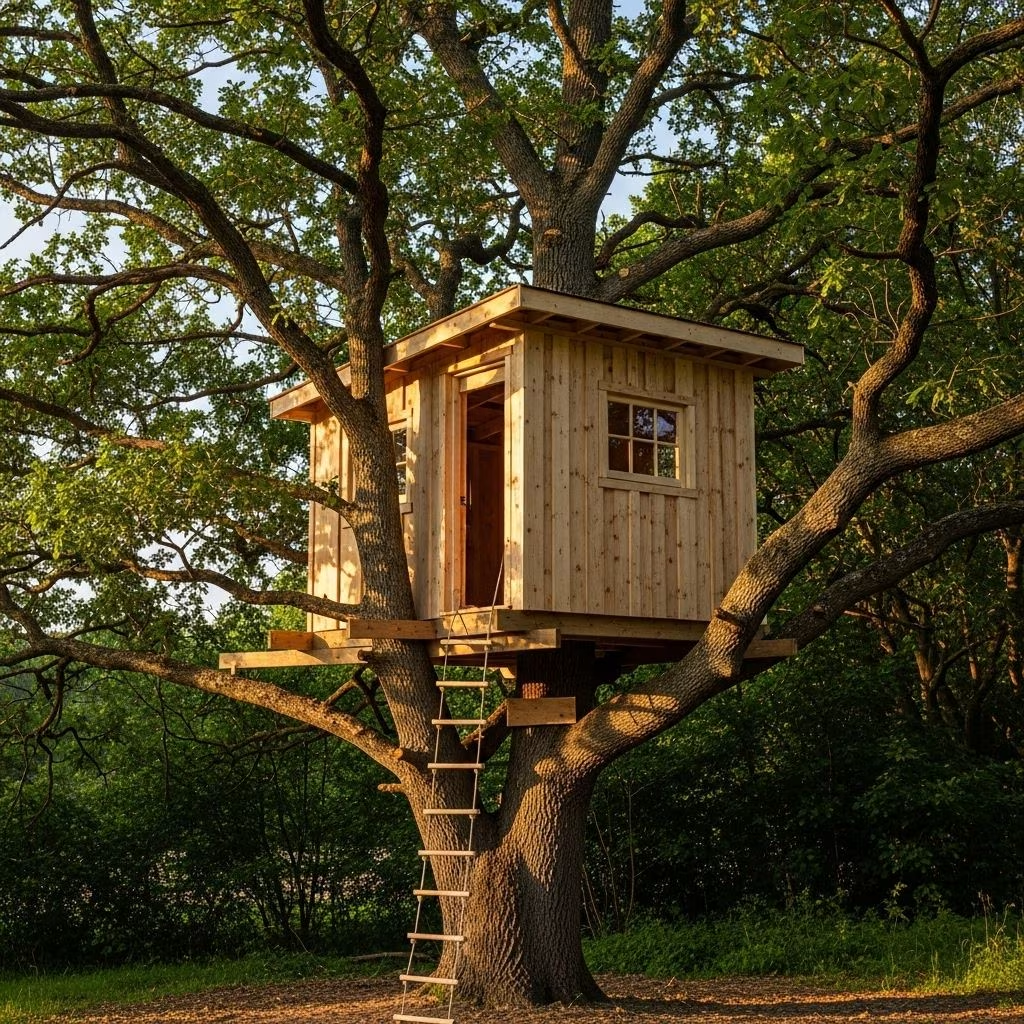
Building a treehouse is a classic childhood dream and a rewarding project for families and beginner DIY enthusiasts alike. While elaborate treehouses can require advanced tools and carpentry skills, a simple treehouse can be safely built with basic materials and a thoughtful approach. This guide delivers everything you need to know about constructing a straightforward, sturdy treehouse for beginners—from assessing your tree and selecting safe materials, to assembly, finishing touches, and keeping fun and safety at the forefront.
Introduction
Whether you’re looking for a child’s hideout, a creative play space, or a tranquil spot for nature watching, a simple treehouse offers endless possibilities. With careful planning, basic carpentry skills, and the right materials, you can complete a treehouse project over a few weekends. This guide will walk you through each phase, ensuring your treehouse is stable, safe, and suited to beginner builders.
Planning and Preparation
Every successful DIY project begins with a clear plan. For a treehouse, this involves several steps:
- Assess your yard’s trees: Identify healthy, mature trees suitable for supporting a small structure.
- Choose a location: Consider visibility, safety, accessibility, and your overall landscape design.
- Design your treehouse: Sketch simple floor plans, select materials, and determine features such as access, railing, and roof.
- Set a budget: Calculate estimated costs for lumber, tools, hardware, and finishes.
Ask Yourself Before Building
- Is the tree healthy and free of disease?
- How high off the ground is safe for children?
- Do local building codes or homeowner associations require approvals?
Choosing the Right Tree
The quality and health of your tree are crucial to the safety and longevity of your treehouse. Recommended species for treehouses include maple, oak, fir, and beech—hardwood trees with sturdy trunks and roots.
- Trunk Diameter: Look for a trunk at least 12 inches in diameter.
- Branch Strength: Avoid weak or dead branches; select a location where the trunk or a major branch provides support.
- Tree Health: Inspect for pests, rot, or signs of disease. A tree in poor condition will not safely support a structure.
- Accessibility: Choose a tree that’s easy to reach and is not close to hazards (like power lines).
Treehouse Designs for Beginners
For first-time builders, single-platform designs are usually safest and simplest. Here are popular beginner options:
- Platform Only: A deck suspended between sturdy branches or anchored to the trunk, open or with railings.
- Basic Enclosed Treehouse: A single enclosed room, usually no larger than 6’ x 8’, with simple walls and a sloped roof.
- Raised Platform on Posts: For yards without suitable trees, platforms can be built using posts as supports.
| Design Type | Difficulty | Key Features |
|---|---|---|
| Open Platform | Low | Deck only, safety railings, ladder or stairs |
| Basic Treehouse | Medium | Walls, roof, windows, secure entryway |
| Platform with Posts | Low | Deck over posts, for treeless yards |
Essential Materials and Tools
Gathering the right supplies is critical for safety, weatherproofing, and usability. For most simple beginner builds, you’ll need:
- Lumber: Pressure-treated 2×6 and 2×4 boards for framing; plywood or cedar planks for floor/walls.
- Fasteners: Galvanized screws, lag bolts, washers (to prevent rust and bark damage).
- Weatherproofing: Non-toxic sealants or stains, metal or shingle roofing materials.
- Access Materials: Sturdy wood for a ladder or stairs, bolts for secure mounting.
- Safety Railings: 2x4s or pre-made railing kits.
Required Tools:
- Drill and bits
- Saw (hand saw or circular saw)
- Hammer
- Measuring tape/level
- Wrench (for lag bolts)
- Utility knife
- Safety gear—gloves, eyewear, dust mask
Step-by-Step Construction Process
Step 1: Pick Your Tree and Plan the Location
Mark the spot on your chosen tree (or between trees) that’s at least one foot higher than your head—a practical height for younger kids is about 6–8 feet above ground.
Step 2: Platform Construction
- Use light wood strips to mark the planned height and level the area using a spirit level.
- Pre-drill holes in the tree for mounting—allow a small gap between wood and bark for tree growth.
- Install main supports with lag bolts and washers, avoiding overtightening to prevent harming the tree.
- Ensure beams and joists are level and securely attached; use pressure-treated lumber.
Step 3: Lay the Floor
- Cut lumber to size, accounting for the platform’s dimensions and allowing for space around the trunk for growth and drainage.
- Lay deck boards with small gaps between them for water drainage; secure firmly but avoid excessive fasteners which can harm the tree.
Step 4: Build Railings and Walls
- Railings: Install 2×4 struts or branches around the perimeter—height of 36 inches is typical for safety.
- Walls: Frame with 2×4 studs, leaving openings for a door and windows. Use lightweight woods like cedar or plywood for sheathing. Add cross-bracing for stability.
- Roof: Metal roofing panels are light and durable. If a branch passes through, seal carefully around openings and use a vapor barrier.
Step 5: Entrance and Access
- Build a stable ladder or stairs from the ground to the floor’s entrance.
- Optional: Construct a small porch or landing for easier access and a safer entryway.
Step 6: Features and Finishing Touches
- Sand rough edges and seal the wood with a non-toxic, weatherproof finish.
- Install a pulley or basket for lifting snacks, books, or tools up to the platform.
- Choose paint or stain colors to personalize the treehouse.
Safety Considerations
Safety should always be the top priority in any treehouse build. Key tips include:
- Never build higher than 10 feet above ground for beginner builds.
- Use sturdy railings and gates at entry points.
- Avoid nails or bolts that penetrate deeply into the tree’s heartwood.
- Pad exposed edges and seal cracks to prevent splinters.
- Test weight capacity regularly.
- Supervise children and instruct them on safe climbing and play behavior.
Finishing Touches & Fun Features
Once the basic structure is complete, personalize your treehouse by adding:
- Windows: Cut out openings for light and ventilation. Plexiglass can be safer than glass.
- Paint/Stain: Choose outdoor-safe options to protect from rot and add personality.
- Decorative Railings: Use decorative branches or rope for a whimsical look.
- Accessories: Hang a chalkboard, install shelves, or add a weather-resistant beanbag for comfort.
- Pulley System: Install a basket for lifting supplies for fun or convenience.
Maintenance Tips
- Inspect all supports, bolts, and boards each spring and fall.
- Reapply sealant or stain every 2-3 years to prevent rot.
- Trim branches growing close to the structure.
- Clear leaves and debris from the roof and floor routinely.
- Check for insect nests or signs of tree disease regularly.
Frequently Asked Questions (FAQs)
Q: How much does a simple treehouse cost?
A: Most beginner builds cost between $300 and $1000, depending on lumber quality, features, and whether recycled materials are used.
Q: Can you build a treehouse without a tree?
A: Yes! Simple platforms can be installed atop posts anchored in the ground for yards without suitable trees.
Q: What’s the safest way for kids to enter and exit?
A: Use wide, sturdy stairs or ladders with handrails—avoid rope ladders for young children.
Q: Does building a treehouse harm the tree?
A: If you use proper techniques (lag bolts, not too tight, allow for tree growth), and avoid major roots and heartwood, the tree should remain healthy. Always consult an arborist for large or old trees.
Q: How can I make my treehouse waterproof?
A: Seal gaps with caulk, use water-resistant roofing materials, and add vapor barriers in wall and roof assemblies.
Q: What if the tree moves or grows?
A: Slots in mounting boards and flexible fasteners allow for tree movement and growth, reducing stress on the structure.
Final Tips for Beginner Treehouse Builders
- Start small: a modest platform or single-room structure provides a manageable first project.
- Recruit help: building is more fun and safer with a teammate.
- Keep things level: use a spirit level at every stage.
- Don’t rush: double-check every fastener, board, and measurement before moving to the next step.
- Choose low-maintenance materials for longevity—pressure-treated lumber, metal roofing.
With good planning and attention to detail, beginner builders can create a durable, attractive, and safe treehouse—providing endless backyard adventures and family memories for years to come.
References
- https://www.instructables.com/How-to-build-a-treehouse/
- https://www.enchantedforesttreehouse.com/blogs/how-to-build-a-treehouse-a-step-by-step-guide
- https://www.popularmechanics.com/home/how-to-plans/a33001389/build-a-treehouse/
- https://www.youtube.com/watch?v=HE1QWWR3mbg
- https://thetreehouseguide.com
- https://www.homedepot.com/c/ah/how-to-build-a-treehouse/9ba683603be9fa5395fab90b198077c
- https://www.youtube.com/watch?v=nGyjfusevk4
- https://builtbykids.com/how-to-build-a-treehouse-without-tree/


