


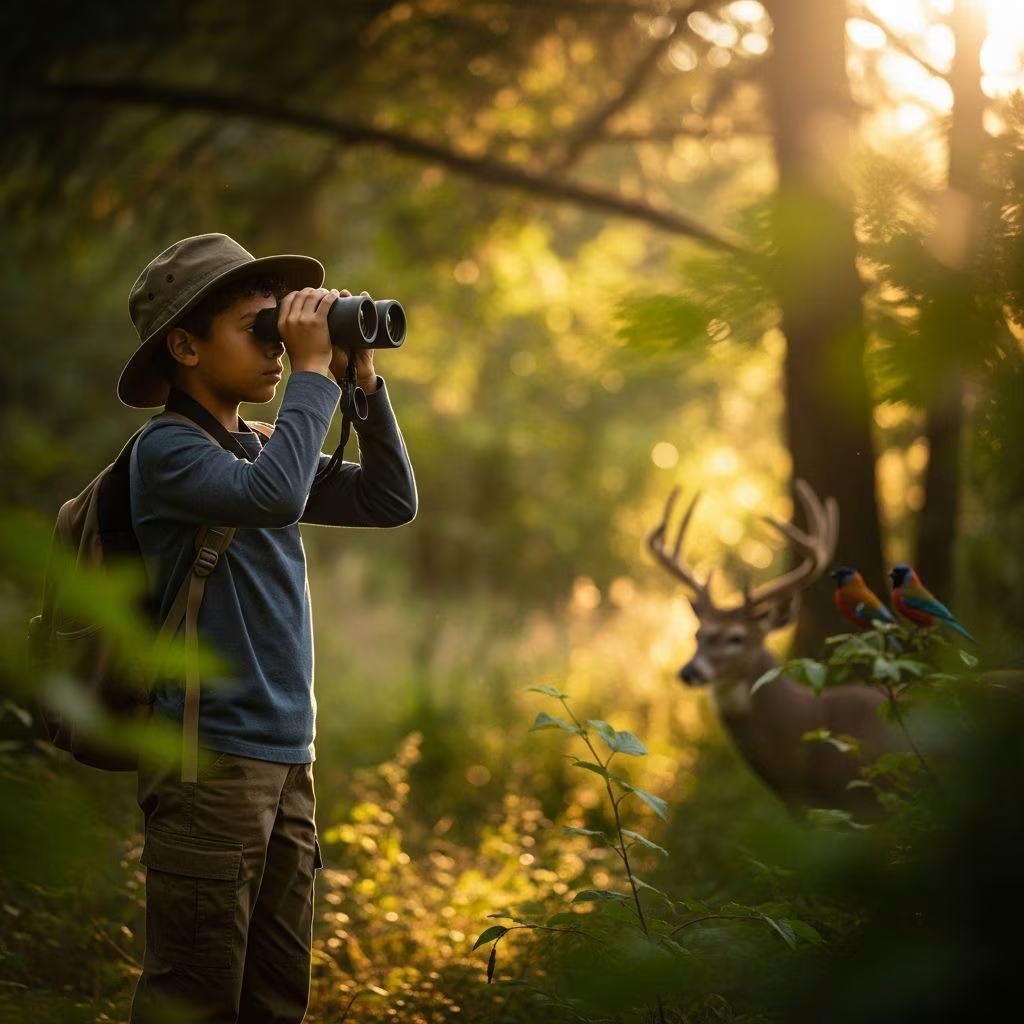
Parents, educators, and health professionals are increasingly concerned about the attention spans and mental health of tweens—children between 9 and 12 years old. Wildlife watching, a simple yet profound activity that invites children to observe and connect with the natural world, is emerging as an evidence-backed antidote to the distractions and stresses of modern childhood.
Introduction: Tweens, Focus, and Nature Today
The tween years mark a critical transitional phase in a child’s life. As they navigate the challenges of changing bodies, academic pressures, and growing social awareness, tweens often grapple with rising distractions, screen time, and anxiety. Increasingly, parents and educators are seeking natural solutions to counter attention difficulties and nurture overall wellbeing. Wildlife watching is one such solution, offering tweens opportunities for calming focus, wonder, and real-world learning that digital environments struggle to match.
Recent research supports the notion that time in nature—and especially activities like wildlife watching—support children’s mental, emotional, and physical wellbeing. Tweens who regularly spend time outdoors show improved concentration, reduced stress, greater creativity, and healthier social interactions.
Nature and Cognitive Focus in Tweens
Children’s brains are constantly bombarded by stimuli—from academic assignments and social media to video games and television. While digital devices can offer enrichment, they often come at the cost of fragmented attention and mental fatigue. Natural settings, on the other hand, present a restorative environment. Time spent outdoors allows tweens to escape the sensory overload of modern life and reconnect with simpler, slower rhythms.
Multiple studies show that exposure to green spaces is directly linked to improvements in attention span, problem-solving, memory, and self-regulation in children. For those with conditions like ADHD, the positive impact of even brief outdoor experiences is particularly notable, with measurable improvements in classroom focus and self-control.
- Natural environments reduce cognitive fatigue and provide sensory breaks
- Wildlife watching requires patience and attention, naturally lengthening focus
- Direct encounters with animals or birds offer moments of awe, which research links to mental clarity and emotional regulation
Why Wildlife Watching Works
Unlike more structured outdoor activities (such as organized sports), wildlife watching is both inherently calming and intellectually engaging. It’s a form of applied mindfulness, encouraging tweens to be present, curious, and observant in real time. Watching birds, bugs, or mammals in their habitats engages all the senses and stimulates both curiosity and a gentle sense of responsibility for the world beyond themselves.
- Wildlife watching requires quiet, steady observation—greatly enhancing self-discipline and focus
- The unpredictability of wild animals maintains excitement, encouraging sustained attention
- Each experience is unique, sparking creativity and reflective thinking
Key Benefits of Wildlife Watching for Tweens
Experts and research agree that regularly engaging in wildlife watching leads to wide-ranging benefits for tweens. These extend beyond focus—and lay the groundwork for healthy mental, emotional, and social habits later in life.
| Benefit | Description | Supporting Research |
|---|---|---|
| Improved Focus & Attention | Slower pace and observational demands foster longer attention spans and deeper engagement | Stanford & Cornell University studies, APA review |
| Reduced Stress & Anxiety | Natural settings lower cortisol, calm ‘busy minds’, and ease mood disorders | NIH, Medical College of Wisconsin, National Wildlife Federation |
| Enhanced Creativity & Problem-Solving | Unstructured observation sparks imaginative play and flexible thinking | National Library of Medicine, Center for Parenting Education |
| Social Skills & Empathy | Group wildlife watching encourages communication, perspective-taking, and empathy for animals | NG Kids, North Carolina Wildlife Federation |
| Environmental Awareness & Responsibility | Direct interaction with wildlife fosters lifelong respect for nature and conservation values | National Wildlife Federation, Greater Good Science Center |
Additional Benefits
- Improved Mood: Even brief outdoor time is associated with increased happiness and lower risk of depression
- Better Sleep Quality: Daytime outdoor activity regulates circadian rhythms, leading to deeper sleep
- Physical Activity: Wildlife watching often involves walking or hiking—boosting physical health without competitive pressure
The Science Behind Nature and Focus
What is it about nature—and specifically wildlife watching—that sharpens focus in tweens? Researchers offer several explanations grounded in neuroscience and psychology:
- Attention Restoration Theory (ART): Natural environments allow the brain to recover from directed attention fatigue, improving concentration and self-control when tweens return indoors.
- Sensory Engagement: Rich, diverse stimuli in outdoor environments activate multiple brain regions associated with focus, empathy, and creativity.
- Reduction of Rumination: Studies show decreased activity in the brain regions linked to negative thought cycles after walks in green spaces.
- Physiological Relaxation: Nature exposure reduces stress hormones, lowers blood pressure, and triggers a general sense of calm, all of which support attentive learning.
A notable study by Stanford University found that participants who walked through natural areas reported greater attentiveness and positivity than those who walked in urban environments. Follow-up studies using brain scans confirmed that nature walks quiet ‘ruminative’ thoughts, supporting both focus and emotional balance.
Practical Tips: Making Wildlife Watching Engaging for Tweens
For parents, educators, or community leaders hoping to introduce wildlife watching to tweens, success lies in keeping things accessible and rewarding. Here are some evidence-based suggestions:
- Start Close to Home: Even city parks and schoolyards offer opportunities to spot birds, insects, and small mammals. The key is regular exposure, not remoteness.
- Equip with Simple Tools: Binoculars and field guides help make wildlife watching more engaging, but a notebook and colored pencils work just as well.
- Incorporate Mindfulness: Encourage tweens to listen quietly, note unusual sounds, or try to spot subtle animal behaviors—this gentle focus primes the mind for later attention-demanding tasks.
- Make it Social: Wildlife watching with friends or family often leads to more positive, lasting experiences and builds communication skills.
- Link to Larger Topics: Help tweens connect their observations to school subjects like science, geography, or art, deepening both engagement and educational value.
- Join Citizen Science Projects: Teenage tweens may enjoy logging sightings with local conservation organizations or participating in bird counts, adding purpose to their outdoor time.
Case Studies: Wildlife Watching in Action
Case 1: A group of 10–12-year-olds in a suburban afterschool club was tasked with monitoring bird feeders and recording sightings over a three-month period. Teachers noted significant improvements in students’ patience, teamwork, and classroom focus.
Case 2: In a school that introduced ‘nature journaling’ walks twice weekly, students displayed better mood regulation, fewer behavioral outbursts, and increased attentiveness across all subjects. Parents reported improved sleep and fewer conflicts at home.
Case 3: Tweens in a city summer camp engaged in weekly wildlife hikes with naturalist guides. Social observation exercises—such as mapping out squirrel movements—boosted both focus and empathy, especially among students with learning differences.
Expert Insights and Recommendations
- Dr. Nancy Wells, Cornell University: Even modest increases in green space near a child’s home have measurable effects on attention and resilience in children.
- Linda Buzzell-Saltzman, Ecotherapy Expert: Mindful, slow-paced walks encourage kids to engage all senses and foster both focus and empathy.
- Psychologists at the American Psychological Association: Nature is not only therapeutic—it is developmentally necessary for both attention and emotional regulation in growing children.
- Greater Good Science Center: A sense of awe and wonder experienced outdoors helps build a ‘protective buffer’ for mental health and resilience in young people.
Frequently Asked Questions (FAQs)
Q: How much time should tweens spend on wildlife watching each week?
A: Research suggests that even 30 minutes a day, several times a week, is enough to see benefits in focus, mood, and resilience. The key is regular, mindful engagement, not duration.
Q: Does wildlife watching help tweens with ADHD?
A: Yes. Numerous studies show that outdoor exposure—especially in activities that foster calm observation—can significantly enhance attention and self-regulation for children with ADHD.
Q: What if my home is in an urban area?
A: City parks, gardens, schoolyards, or even balcony bird feeders can provide accessible wildlife watching opportunities. Urban environments can be surprisingly rich habitats for observing birds and insects.
Q: Is wildlife watching safe for tweens?
A: Yes, when standard outdoor safety guidelines are followed, wildlife watching is a safe, low-impact, and family-friendly activity suitable for most children in the tween age group.
Conclusion: Fostering Focused, Resilient Tweens
In a world filled with distractions, cultivating focus in tweens is a growing challenge. Wildlife watching stands out as a powerful, accessible, and holistic intervention—one that supports not only attention and academic performance but also emotional health, creativity, and social bonds. The evidence is clear: gifting tweens time in nature, with their senses engaged and curiosity piqued, builds stronger, more resilient minds capable of thriving in the modern world. Start small, stay consistent, and watch young attention blossom among the wonders of the wild.
References
- https://greatergood.berkeley.edu/article/item/how_moments_in_nature_help_kids_thrive
- https://lawleypublishing.com/benefits-of-bird-watching-with-kids/
- https://www.natgeokids.com/uk/parents/ecotherapy-can-boost-kids-wellbeing/
- https://centerforparentingeducation.org/library-of-articles/nutrition-and-healthy-lifestyle/nature-and-children-a-natural-fit/
- https://health.ucdavis.edu/blog/cultivating-health/3-ways-getting-outside-into-nature-helps-improve-your-health/2023/05
- https://sparkandstitchinstitute.com/exploring-nature-with-children/
- https://www.nwf.org/Kids-and-Family/Connecting-Kids-and-Nature/Health-Benefits-and-Tips
- https://www.apa.org/monitor/2020/04/nurtured-nature
- https://ncwf.org/blog/connecting-kids-to-nature/


