


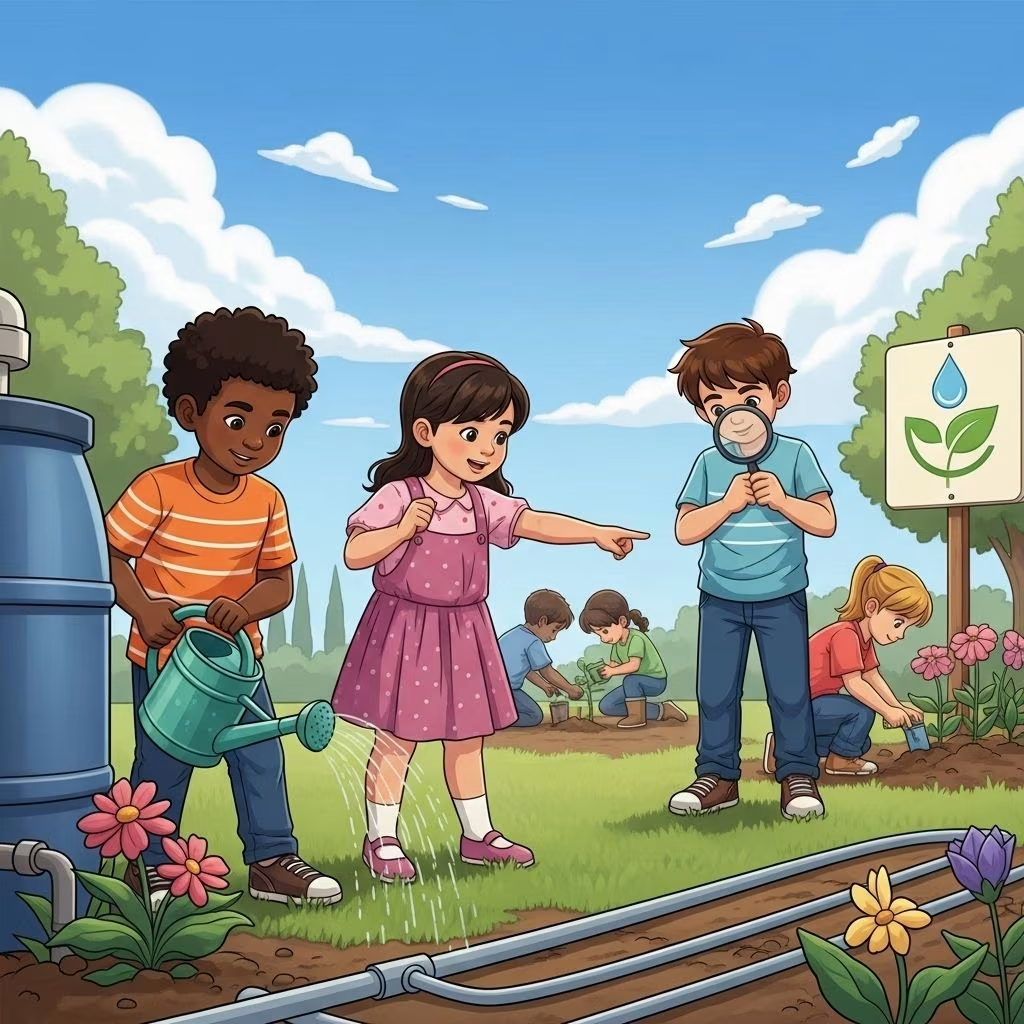
Water conservation education has become increasingly critical as communities worldwide face growing challenges related to water scarcity and resource management. Outdoor activities provide an exceptional platform for teaching children and youth about water conservation principles through experiential learning that combines environmental science, practical skills, and community engagement. These hands-on experiences create lasting impressions that classroom lessons alone cannot achieve, fostering a generation of environmentally conscious individuals who understand their role in protecting our planet’s most precious resource.
Outdoor water conservation learning transcends traditional education by immersing students in real-world environments where they can observe, interact with, and understand water systems firsthand. Through carefully designed activities that blend education with adventure, young learners develop a comprehensive understanding of how water moves through ecosystems, how human activities impact water resources, and what actions they can take to make a positive difference in their communities.
Understanding Water Conservation Through Outdoor Education
Outdoor education for water conservation encompasses a wide range of activities that take students beyond classroom walls into natural and managed environments where they can witness water systems in action. These experiences help students connect abstract concepts about water cycles, watersheds, and conservation strategies with tangible, observable phenomena in their surroundings.
The foundation of effective outdoor water conservation education rests on several key principles. First, students must understand where their water comes from and the journey it takes to reach their homes. Second, they need to recognize the interconnected nature of water systems and how actions in one location can affect water quality and availability elsewhere. Third, learners should develop practical skills for measuring, monitoring, and conserving water in their daily lives.
Educational programs that incorporate outdoor learning demonstrate significantly higher retention rates compared to traditional classroom instruction. When students physically participate in water conservation activities, they form emotional connections with the subject matter that translate into long-term behavioral changes and environmental stewardship.
Field Trip Experiences That Transform Understanding
Field trips to water-related facilities and natural environments provide students with invaluable insights into water management and conservation. These excursions transform abstract concepts into concrete understanding through direct observation and guided exploration.
Visits to water treatment plants offer students a behind-the-scenes look at how communities process and purify water for safe consumption. During these trips, students observe the multiple stages of water treatment, from initial filtration to final disinfection, gaining appreciation for the complex infrastructure required to deliver clean water to their homes. Many facilities offer interactive demonstrations where students can conduct basic water quality tests, examine microscopic organisms, and understand the energy and resources required for water treatment.
Reservoir and watershed tours provide another powerful educational opportunity. Students exploring these environments learn how natural landscapes capture, filter, and store water while supporting diverse ecosystems. Guided nature walks along waterways allow students to identify native plants adapted to water conservation, observe wildlife dependent on aquatic habitats, and understand how human activities impact water quality through runoff and pollution.
Water conservation gardens present specialized outdoor classrooms designed specifically for teaching sustainable water practices. These demonstration gardens showcase drought-resistant plants, efficient irrigation systems, rainwater harvesting techniques, and soil management strategies that minimize water waste. Students participating in garden-based programs engage in planting, composting, and maintaining water-wise landscapes while learning about plant adaptations, pollinator relationships, and the connection between gardening practices and water conservation.
Interactive Simulation Activities for Active Learning
Simulation activities bring water conservation concepts to life through engaging, whole-body experiences that require teamwork, problem-solving, and critical thinking. These activities help students understand complex water management challenges in accessible, memorable ways.
One highly effective simulation involves students representing different water users within a community, each with specific water needs and priorities. Participants must work together to allocate limited water resources fairly while navigating challenges like droughts, floods, and competing demands. This activity teaches students that multiple stakeholders depend on shared water sources and that conservation requires cooperation, compromise, and sustainable management practices. Students quickly realize that decisions made upstream affect communities downstream, reinforcing the concept that everyone lives within interconnected watersheds.
Water transport challenges provide another powerful learning experience. Students carrying water over distances using various containers experience firsthand the physical effort required to access water in communities without modern infrastructure. This activity builds empathy for the estimated 200 million hours that women and girls worldwide spend daily collecting water, highlighting issues of water scarcity, gender equity, and the importance of accessible water systems. Educators can expand this activity by incorporating mathematical calculations about water volume, distance traveled, and time invested, creating interdisciplinary learning opportunities.
River and watershed simulations allow students to physically represent water molecules moving through ecosystems. Participants follow pathways from precipitation to groundwater, through rivers and wetlands, eventually reaching oceans or returning to the atmosphere through evaporation. Along their journey, students encounter obstacles representing pollution sources, dams, and water extraction points, helping them understand how human activities alter natural water cycles and impact water quality.
Hands-On Conservation Projects
Practical conservation projects enable students to apply their learning while making tangible contributions to water conservation efforts in their schools and communities. These activities develop technical skills, environmental awareness, and a sense of personal agency in addressing environmental challenges.
Rainwater harvesting projects teach students to capture and utilize precipitation for non-potable purposes like garden irrigation and outdoor cleaning. Students design, build, and install rain barrels connected to downspouts, calculating potential water savings based on roof area and local rainfall patterns. These projects integrate mathematics, engineering, and environmental science while producing functional systems that demonstrate immediate water conservation benefits.
School water audits empower students to investigate water use patterns and identify conservation opportunities within their educational facilities. Armed with clipboards, measuring tools, and data collection sheets, students inspect restrooms, kitchens, athletic fields, and landscaping areas to document water consumption and detect leaks or inefficient fixtures. After analyzing their findings, students present recommendations to school administrators, potentially influencing decisions about infrastructure improvements and conservation policies.
Native plant restoration projects connect water conservation with ecosystem health and biodiversity. Students remove invasive species and plant native vegetation adapted to local rainfall patterns, requiring minimal irrigation once established. These projects teach plant identification, ecological relationships, and landscape management techniques while creating wildlife habitat and reducing water demand for landscape maintenance.
Technology-Enhanced Outdoor Learning
Modern technology enhances outdoor water conservation education by providing tools for data collection, analysis, and visualization that deepen student understanding and engagement.
Water quality monitoring programs equip students with testing kits to measure parameters like pH, dissolved oxygen, turbidity, and nutrient levels in local water bodies. Students collect samples from multiple locations and times, creating datasets that reveal patterns in water quality related to weather events, seasonal changes, and human activities. This scientific inquiry develops analytical skills while contributing valuable data to community watershed monitoring efforts.
Geographic information systems and mapping technologies enable students to visualize watersheds, trace water flow patterns, and identify potential pollution sources in their communities. Students create maps showing the relationship between land use and water quality, understanding how urban development, agriculture, and industrial activities impact nearby water resources. These digital tools transform abstract watershed concepts into visible, understandable representations.
Smartphone applications and online calculators help students calculate their personal water footprints, including both direct water use and the virtual water embedded in products they consume. Students discover that significant water consumption occurs indirectly through food production, manufacturing, and energy generation. This awareness expands their understanding of conservation beyond simple actions like shorter showers to include broader lifestyle choices affecting water resources.
Seasonal Water Conservation Experiences
Different seasons offer unique opportunities for outdoor water conservation learning, allowing students to observe how water availability and ecosystem needs change throughout the year.
Spring activities focus on planting water-wise gardens, observing seasonal rains and snowmelt, and monitoring how precipitation replenishes groundwater and surface water sources. Students plant drought-tolerant species, learn about soil moisture retention, and implement mulching techniques that reduce evaporation. Spring also provides opportunities to observe how plants emerging from dormancy require water and how natural systems have adapted to seasonal moisture patterns.
Summer programs emphasize water conservation during peak demand periods when outdoor water use for landscaping, recreation, and cooling significantly increases. Students monitor soil moisture levels, adjust irrigation schedules based on weather conditions, and observe how plants show signs of water stress. Summer activities include building and testing solar stills, creating shade structures that reduce plant water needs, and exploring how traditional cultures adapted to hot, dry conditions through architecture and landscape design.
Autumn experiences teach students about water storage and preparation for winter. Activities include harvesting rainwater before winter freezes, observing how trees conserve water by shedding leaves, and understanding how ecosystems prepare for seasonal changes in water availability. Students collect and analyze data about decreasing daylight and temperatures, connecting these changes to water conservation strategies in natural systems.
Winter programs in appropriate climates explore snow as a water storage mechanism, teaching students about snowpack monitoring and spring runoff predictions. Students measure snow depth and density, calculating the water content that will become available during spring melt. Winter also offers opportunities to discuss how climate change affects precipitation patterns, snowpack reliability, and water resource planning.
Community Engagement and Service Learning
Connecting outdoor water conservation activities with community service deepens student engagement while addressing real local water challenges. Service learning projects demonstrate that young people can contribute meaningfully to environmental problem-solving.
Students partnering with local water conservation organizations participate in stream cleanups, removing trash and debris that degrades water quality and harms aquatic life. These events combine outdoor physical activity with environmental stewardship, community building, and public education. Students often create informational materials explaining the sources and impacts of water pollution, sharing their knowledge with community members encountered during cleanup efforts.
Public awareness campaigns designed and implemented by students extend water conservation education beyond their classrooms into broader communities. Students create signs for public spaces explaining water-saving landscaping techniques, produce videos demonstrating conservation practices, and staff information booths at community events. These activities develop communication skills while multiplying the impact of student learning.
Mentorship programs connect older students who have participated in water conservation education with younger learners, creating peer-to-peer teaching opportunities. Experienced students lead nature walks, demonstrate water testing procedures, and share their knowledge about local watersheds. This approach reinforces learning for student teachers while making education more relatable and engaging for younger participants.
Integrating Multiple Subject Areas
Effective water conservation education integrates concepts from multiple academic disciplines, creating rich, interdisciplinary learning experiences that demonstrate real-world applications of classroom subjects.
Science concepts naturally pervade water conservation education through studies of the water cycle, ecosystem dynamics, plant physiology, and climate systems. Students conduct experiments testing water filtration methods, investigate how different soil types affect water absorption and retention, and observe the relationships between plants, pollinators, and water availability in different habitats.
Mathematics applications include calculating water volumes, measuring flow rates, analyzing consumption data, and projecting conservation savings. Students determine the water capacity of rain barrels, compute the water requirements for different plant species, and create graphs showing seasonal patterns in water use or precipitation. These practical applications demonstrate the relevance of mathematical skills beyond abstract problem sets.
Social studies connections emerge through examination of water rights, investigation of how different cultures approach water management, and analysis of the historical development of water infrastructure. Students explore how water access affects human settlement patterns, economic development, and social equity. Discussions about global water scarcity and conflicts over water resources help students understand the geopolitical significance of water conservation.
Language arts opportunities arise through research projects, persuasive writing advocating for conservation policies, creative storytelling about water’s journey through ecosystems, and communication of findings to various audiences. Students develop technical writing skills through lab reports and data analysis while exercising creativity through poetry, art, and multimedia presentations about water themes.
Age-Appropriate Activity Progression
Effective water conservation education adapts activities and concepts to match the developmental stages and abilities of different age groups, ensuring engagement and comprehension across grade levels.
Kindergarten and early elementary students focus on basic plant parts, sensory exploration of water and soil, and simple conservation actions like turning off taps. Outdoor activities for this age group emphasize discovery, wonder, and positive experiences in nature. Scavenger hunts identifying plants with different water needs, storytime in garden settings, and art projects using natural materials create foundational connections with water and nature.
Upper elementary students explore seed dispersal mechanisms, plant life cycles, and the basic water cycle through more structured investigations. Activities include planting gardens, observing pollinator behavior, conducting simple water quality tests, and participating in water transport challenges that build empathy for communities without easy water access. Students at this level can begin understanding cause-and-effect relationships between human actions and water availability.
Middle school students investigate plant adaptations to different moisture conditions, watershed dynamics, and water conservation strategies employed by various organisms. Activities include more sophisticated water quality monitoring, data analysis projects, and design challenges creating water-efficient irrigation systems or rainwater harvesting solutions. Students at this developmental stage can grasp more abstract concepts about interconnected systems and long-term environmental consequences.
High school students engage with complex topics including water capture and storage technologies, climate change impacts on water resources, water policy and governance, and sustainable water management strategies. Advanced activities might include extended water quality monitoring projects contributing to citizen science initiatives, designing and implementing conservation interventions in their schools or communities, and researching innovative water technologies addressing global water challenges.
Assessment and Measuring Learning Outcomes
Evaluating the effectiveness of outdoor water conservation education requires diverse assessment strategies that capture knowledge gains, skill development, and behavioral changes resulting from these experiences.
Pre- and post-activity assessments measure changes in student knowledge about water systems, conservation strategies, and environmental concepts. These assessments might include written tests, concept maps showing relationships between water-related concepts, or practical demonstrations of skills like water quality testing or plant identification.
Behavioral observations during activities reveal student engagement, collaboration, problem-solving approaches, and developing attitudes toward nature and conservation. Educators note how students interact with natural materials, whether they apply learned concepts in new situations, and how their questions evolve throughout the learning experience.
Student reflections through journals, discussions, or multimedia presentations provide insights into how outdoor experiences shape their understanding and values related to water conservation. Prompts might ask students to describe surprising discoveries, explain how their thinking about water has changed, or identify conservation actions they plan to implement at home.
Long-term follow-up assessments determine whether outdoor learning experiences lead to sustained behavioral changes and continued environmental engagement. Surveys conducted months after programs conclude can reveal whether students maintain conservation practices, share their knowledge with others, or seek additional opportunities for environmental action.
Overcoming Barriers to Outdoor Water Conservation Education
Despite the significant benefits of outdoor learning for water conservation education, educators often encounter obstacles that must be addressed to implement these programs successfully.
Limited access to appropriate outdoor spaces challenges schools in urban environments or those lacking natural areas nearby. Solutions include partnering with local parks, botanical gardens, or water conservation organizations that offer educational programs and field trip opportunities. Even small outdoor spaces like school courtyards or container gardens can support meaningful water conservation learning when thoughtfully designed and utilized.
Safety concerns and liability issues may discourage outdoor activities, particularly those involving water or field trips to unfamiliar locations. Addressing these concerns requires thorough risk assessments, appropriate supervision ratios, clear safety protocols, and securing necessary permissions and insurance coverage. Many successful programs develop strong partnerships with outdoor education organizations that provide expertise in managing outdoor learning safely.
Budget constraints limit the resources available for field trips, materials, and specialized equipment for outdoor activities. Creative solutions include seeking grants from environmental organizations, partnering with community groups that can provide volunteers or materials, and designing low-cost activities using readily available resources. Many water conservation activities require minimal investment beyond time and planning.
Curriculum pressures and time limitations make it challenging to incorporate outdoor experiences into already packed academic schedules. Successful programs demonstrate how outdoor water conservation activities address multiple learning standards across subject areas, making efficient use of instructional time while providing rich, memorable learning experiences. Integrating outdoor activities with existing curriculum units rather than treating them as separate additions helps maximize their educational value.
Building Sustainable Outdoor Education Programs
Creating lasting outdoor water conservation education programs requires strategic planning, community partnerships, and ongoing support for educators implementing these experiences.
Professional development opportunities help teachers develop the knowledge, skills, and confidence needed to facilitate outdoor learning effectively. Training in water conservation concepts, outdoor teaching strategies, and activity facilitation prepares educators to maximize the learning potential of outdoor experiences. Ongoing support through mentorship, resource sharing, and collaborative planning strengthens teacher capacity over time.
Partnerships with environmental organizations, water utilities, and community groups expand the resources and expertise available for outdoor water conservation education. These partnerships may provide guest speakers, field trip destinations, funding support, or volunteers to assist with activities. Strong community connections also help programs remain relevant to local water challenges and conservation priorities.
Curriculum integration ensures that outdoor water conservation activities connect meaningfully with classroom learning and academic standards. Well-designed programs include pre-activity preparation that builds necessary background knowledge, outdoor experiences that provide hands-on investigation opportunities, and follow-up activities that deepen understanding and extend learning. This coherent sequence maximizes educational impact while demonstrating the relevance of outdoor experiences to academic achievement.
Documentation and sharing of successful practices helps outdoor water conservation education programs spread and improve. Educators who document their activities, student outcomes, and lessons learned contribute valuable knowledge that benefits others developing similar programs. Online platforms, professional conferences, and educational publications provide venues for sharing innovations and building collective expertise in outdoor water conservation education.
Frequently Asked Questions
Q: What age groups benefit most from outdoor water conservation activities?
A: All age groups benefit from outdoor water conservation learning when activities are appropriately designed for their developmental stage. Younger children build foundational nature connections through sensory exploration, while older students engage with complex concepts like watershed dynamics and water policy through data collection and analysis projects.
Q: How can schools implement outdoor water conservation education with limited outdoor space?
A: Schools with limited outdoor space can utilize container gardens, partner with nearby parks or botanical gardens, take virtual field trips supplemented with hands-on experiments, or participate in community water conservation projects. Even small spaces can support meaningful learning about water-wise planting and rainwater collection.
Q: What are the most important concepts for students to learn through outdoor water conservation activities?
A: Key concepts include understanding where water comes from and how it reaches our homes, recognizing the interconnected nature of watersheds where actions upstream affect downstream communities, appreciating the water required to produce food and goods, and knowing practical conservation strategies they can implement in daily life.
Q: How do outdoor activities improve water conservation learning compared to classroom instruction?
A: Outdoor activities create emotional connections with water systems and nature that increase retention and motivation for conservation behaviors. Hands-on experiences make abstract concepts tangible, engage multiple senses, and provide real-world context that classroom instruction alone cannot achieve, resulting in deeper understanding and longer-lasting behavioral changes.
Q: What equipment and materials are essential for outdoor water conservation education?
A: Basic materials include water quality testing kits, measuring tools like rain gauges and graduated cylinders, gardening supplies for planting demonstrations, containers for water transport activities, and field guides for plant and wildlife identification. Many effective activities require minimal specialized equipment beyond clipboards, data sheets, and natural materials found outdoors.
Q: How can parents support outdoor water conservation learning at home?
A: Parents can conduct home water audits with children, install rain barrels together, create water-wise gardens, visit local watersheds and water treatment facilities, calculate family water footprints, and involve children in household conservation decisions. Regular nature walks near water bodies provide opportunities to observe seasonal changes and discuss water in ecosystems.
Q: What safety considerations are important for outdoor water conservation activities?
A: Important safety measures include appropriate adult supervision ratios, site assessment for hazards before activities, clear boundaries for exploration areas, sun protection and hydration during outdoor time, proper protocols for water quality testing to avoid contamination, and emergency action plans. Activities near water bodies require extra vigilance and may need specialized safety equipment.
Q: How can educators assess learning from outdoor water conservation experiences?
A: Assessment strategies include pre- and post-activity knowledge tests, observation of student engagement and collaboration during activities, student journals reflecting on discoveries and changed thinking, practical demonstrations of learned skills, and long-term surveys measuring sustained conservation behaviors. Multiple assessment methods provide comprehensive understanding of learning outcomes.
References
- https://thegarden.org/learn/youth-education/
- https://www.survivorfilter.com/blogs/home/fun-and-educational-ways-to-teach-kids-about-water-conservation
- https://www.projectwet.org/blog/best-project-wet-activities-outdoor-learning-part-two
- https://water.ca.gov/What-We-Do/Education
- https://watercalculator.org/resource/teaching-conservation-with-water-footprint-calculator/
- https://gpm.nasa.gov/education/lesson-plans/water-conservation
- https://ecology.wa.gov/blog/july-2021/water-conservation-activities-for-kids
- https://www.epa.gov/watersense/watersense-kids


