


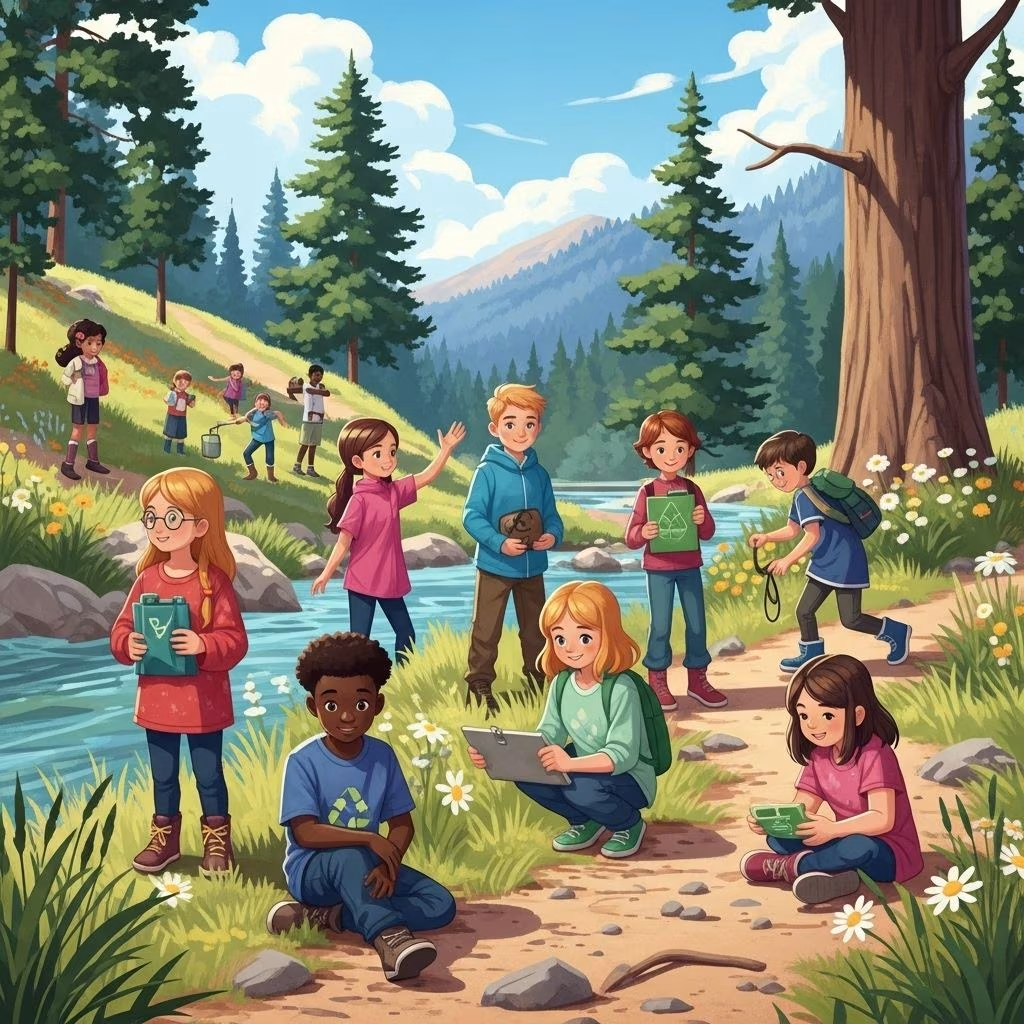
Teaching young children to respect and protect the natural world is one of the most valuable gifts we can provide. The Leave No Trace principles, developed by the Center for Outdoor Ethics, offer a framework for minimizing our environmental impact during outdoor recreation. While these principles were originally designed for adult outdoor enthusiasts, they can be beautifully adapted for young children through creative, engaging, and age-appropriate approaches that transform environmental education into joyful discovery.
When we introduce Leave No Trace concepts to children early, we’re not just teaching rules—we’re cultivating a lifelong relationship with nature built on respect, responsibility, and wonder. Young children are naturally curious explorers who want to touch, collect, and investigate everything they encounter. By channeling this enthusiasm through the lens of Leave No Trace, we help them understand how their actions impact the environment while still allowing them to experience the magic of outdoor exploration.
Understanding Leave No Trace for the Youngest Adventurers
The traditional seven Leave No Trace principles provide comprehensive guidance for outdoor ethics, but young children need simplified concepts that connect to their developmental stage and understanding. The goal isn’t perfection or memorization of exact wording—it’s about building awareness and developing positive habits that will grow with them throughout their lives.
Children learn best through hands-on experiences, storytelling, and play. Rather than lecturing about environmental impact, we can create scenarios where kids actively participate in making good choices. This experiential approach helps them internalize the principles naturally, making outdoor ethics feel like an adventure rather than a set of restrictions.
Principle One: Plan Ahead and Prepare – Know Before You Go
Planning ahead might seem like an adult responsibility, but involving children in trip preparation teaches valuable skills while building excitement for upcoming adventures. This principle helps prevent emergency situations that could damage the environment and ensures everyone has a safe, enjoyable experience.
Age-Appropriate Planning Activities:
For young children, planning can be transformed into a fun pre-adventure ritual. Have your children check the weather forecast with you and help them choose appropriate clothing based on conditions. This teaches them to think ahead about comfort and safety. Create a simple pictorial checklist showing essential items like water bottles, snacks, and extra layers—even pre-readers can use picture guides to help pack their adventure bags.
Looking at trail maps together, whether paper maps, online resources, or phone apps, helps children develop spatial awareness and understand where they’re going. Let them trace the route with their finger and identify landmarks or points of interest. For older children who can read, allow them to select their own trail snacks from healthy options, teaching decision-making skills and personal responsibility.
Creating an adventure pack specifically for your child gives them ownership of the experience. Include age-appropriate items like a small water bottle, healthy snacks, a simple journal for drawings, a magnifying glass or pocket microscope, and perhaps a favorite small toy for comfort. This preparation ritual builds anticipation and teaches that outdoor adventures require thoughtful planning.
Principle Two: Travel and Camp on Durable Surfaces – Stay on the Trail
Keeping energetic young explorers on established trails presents one of the biggest challenges for parents teaching Leave No Trace principles. Children naturally want to investigate every interesting plant, climb every rock, and explore every side path. However, wandering off-trail damages vegetation, increases erosion, and disrupts animal habitats.
Creative Strategies for Trail Awareness:
Transform staying on the trail into an engaging game rather than a restriction. The “lava game” works wonderfully—pretend the vegetation on either side of the trail is hot lava, and children must stay in the center of the path to avoid getting burned. This simple imaginative play keeps kids focused on the trail while adding an element of adventure.
The “ninja” or “secret spy” game encourages children to walk quietly and lightly, disturbing as little as possible to avoid detection by imaginary forest creatures. This game naturally teaches mindful walking while making it fun. Children often become so engaged in moving stealthily that they forget they wanted to wander off-trail.
Use teaching moments to explain why staying on trails matters. Point out areas where erosion has occurred or vegetation has been trampled, helping children visualize the impact of repeated off-trail travel. Frame the conversation positively: “When we stay on the trail, we protect the homes of tiny insects and plants that live here.”
For necessary off-trail excursions like potty breaks, teach children to look for durable surfaces such as rock, gravel, or dry grass. Take a bathroom break before starting your hike to minimize these situations. When they must occur, use them as teaching opportunities about minimizing impact on living vegetation.
Principle Three: Dispose of Waste Properly – Pack It In, Pack It Out
The concept of properly managing waste resonates strongly with young children, especially when framed as protecting animals and keeping nature beautiful. This principle covers everything from trash and food scraps to human waste management.
Teaching Waste Responsibility:
Introduce the simple mantra “Pack it in, pack it out” and make it a game to see who can collect all their own trash. Give each child their own small trash bag to carry, creating personal responsibility for their waste. Many children take pride in ensuring they don’t leave anything behind.
Explain that even biodegradable items like apple cores and orange peels should be packed out because they can attract animals and alter natural feeding behaviors. Help children understand that animals should eat their natural foods, not human snacks. Use the Trash Timeline activity to demonstrate how long different materials last in nature—plastic bottles taking hundreds of years makes a memorable impression on young minds.
For human waste, teach age-appropriate practices. On day hikes, encourage bathroom breaks before the trail. For longer adventures where facilities aren’t available, teach the “cat hole” method for older children who can understand: digging a small hole six to eight inches deep, at least 200 feet from water sources, trails, and campsites. Make this less awkward by using scientific language and emphasizing how even our bathroom habits can protect water quality and wildlife.
Create a “trash art” project after hikes where children use collected litter to make sculptures or collages, turning cleanup into creative expression. This reinforces the importance of removing trash while making it memorable and fun.
Principle Four: Leave What You Find – Take Only Pictures
Children’s natural inclination to collect treasures—interesting rocks, pretty flowers, cool sticks—directly conflicts with this principle. However, with creative reframing, we can satisfy their desire to connect with nature while teaching respect for natural objects and cultural artifacts.
Collection Alternatives:
Replace physical collecting with photographic documentation. Give children disposable cameras or allow supervised use of phones/tablets to photograph interesting finds. Create a nature journal where they can draw or describe discoveries. This shifts focus from possession to observation and memory-making.
Explain that when everyone takes “just one” rock or flower, those items quickly disappear from the landscape. Use concrete examples: “If 100 people each took one of these pretty flowers, there wouldn’t be any left for the butterflies that need them or for other families to enjoy.” Young children understand fairness, so framing it as sharing nature with others and wildlife resonates.
Teach the “nature museum” concept—we can visit and observe, but we don’t take items home from museums. Nature is the ultimate museum where everything should stay in place. For children who desperately want a souvenir, consider purchasing something from a nature center gift shop or creating art at home inspired by what they observed.
The exception to this principle involves collecting natural materials through supervised foraging or identifying invasive species that should be removed. These activities require careful adult guidance and should be clearly distinguished from general “leave what you find” practices.
Principle Five: Minimize Campfire Impacts – Fire Safety and Alternatives
Campfires hold special magic for children, but they also pose environmental and safety concerns. Teaching young children about campfire impacts requires balancing safety education with environmental awareness.
Child-Friendly Fire Practices:
Begin with fire safety fundamentals appropriate for their age. Very young children should understand that fires are hot and dangerous, maintaining a safe distance at all times. Older children can learn about proper fire building techniques, using established fire rings, keeping fires small, and burning wood completely to ash.
Introduce alternatives to traditional campfires that reduce environmental impact. Portable camp stoves for cooking eliminate the need for cooking fires. Battery-operated lanterns provide light without fire. For the campfire experience children crave, use established fire rings in designated camping areas rather than creating new fire sites.
Teach children never to leave fires unattended and how to properly extinguish them. Make fire extinguishing a participatory activity where they help pour water and stir ashes until everything is completely cold. The responsibility of fire management teaches respect for this powerful element.
During fire bans or in areas where fires aren’t appropriate, create “pretend” campfires using battery-operated LED flameless candles surrounded by rocks. This provides the cozy campfire ambiance without environmental impact or safety concerns, perfect for very young children.
Principle Six: Respect Wildlife – Observe from a Distance
Encounters with wildlife create memorable moments for children, but inappropriate interactions can harm animals and create dangerous situations. Teaching respectful wildlife observation builds empathy while ensuring safety.
Wildlife Education Strategies:
Help children understand that wild animals are not pets. Explain that approaching wildlife causes stress, may separate babies from parents, or could result in defensive behavior. Use the “five animal lengths” rule—if you can’t fit five of that animal between you and it, you’re too close.
Teach children never to feed wildlife, explaining that human food makes animals sick and creates dependency. Share stories of how “friendly” animals that become used to humans often have to be relocated or euthanized. This consequence helps children understand the serious impact of their choices.
Use binoculars or spotting scopes to bring wildlife closer without physical approach. This transforms wildlife viewing into an exciting safari-style adventure while maintaining proper distance. Practice quiet observation—whispering and moving slowly increases the likelihood of seeing animals behaving naturally.
Discuss proper pet behavior on trails. Dogs should remain on leashes both for their safety and to avoid disturbing wildlife. Children can help by watching for other hikers and their pets, practicing trail courtesy alongside wildlife respect.
Principle Seven: Be Considerate of Other Visitors – Trail Courtesy
Social awareness and courtesy might seem beyond young children’s capabilities, but they can learn basic trail etiquette that creates positive experiences for everyone enjoying outdoor spaces.
Teaching Trail Etiquette:
Practice using “inside voices” becoming “outside voices”—not silent, but quieter and more respectful of others seeking peaceful nature experiences. Explain that loud noises can scare away wildlife that other hikers might want to see.
Teach basic trail right-of-way rules through simple guidelines: step aside for uphill hikers, give way to horses, and be friendly to everyone you meet. Model greeting other trail users with a smile and “hello,” demonstrating that outdoor communities are welcoming places.
When your group needs to stop for snacks or rest, move completely off the trail so others can pass easily. This consideration teaches spatial awareness and respect for shared spaces. Use these moments to practice leaving rest areas cleaner than you found them.
For children with exuberant energy, establish “running zones” versus “walking zones” on trails. Blind corners, narrow paths, and steep sections require careful walking, while wider, straight sections might allow for more energetic movement. This gives children appropriate outlets for their energy while maintaining safety and courtesy.
Engaging Activities That Reinforce Leave No Trace Principles
Interactive activities transform abstract principles into concrete understanding. The Leave No Trace Center for Outdoor Ethics provides numerous resources specifically designed for youth education, including games, hand signals, and activity booklets.
The Seven Principles Hand Signals:
Learning hand signals for each principle makes the concepts memorable and fun. Children can practice these signals before hikes and use them on the trail as reminders. The physical movement helps kinesthetic learners internalize the information.
Bigfoot Activity Booklet:
This engaging resource features activities children can complete during outdoor adventures, connecting Leave No Trace education directly to their experiences. The booklet includes scavenger hunts, drawing prompts, and observation challenges that reinforce ethical outdoor behavior.
Role-Playing Scenarios:
Create situations where children act out both positive and negative examples of Leave No Trace principles. This dramatic play helps them understand consequences while allowing them to be creative. Provide simple props to make scenarios realistic—a stuffed animal for wildlife encounters, candy wrappers for trash scenarios, or toy camping gear for campsite setup demonstrations.
Nature Journal Projects:
Regular journaling about outdoor experiences encourages reflection on how they practiced Leave No Trace principles during adventures. Children can draw pictures of things they saw but left behind, write about staying on trails, or create stories about protecting nature. This ongoing documentation builds awareness and creates a record of their growing environmental consciousness.
Age-Specific Adaptations
Different developmental stages require different approaches to Leave No Trace education. Tailoring your teaching to your child’s age and abilities ensures concepts are both accessible and meaningful.
Ages 3-5: Introduction Through Play
Very young children need simple, concrete concepts. Focus on basic ideas like
References
- https://ladyonarock.com/learning-7-leave-no-trace-principles/
- https://turtlefur.com/blogs/blog/leave-no-trace-with-little-ones
- https://lnt.org/our-work/youth-education/youth-educator-library/activities/
- https://lnt.org/our-work/youth-education/
- https://www.exploremorecleanless.com/20-leave-no-trace-activities-for-kids/
- https://lnt.org/why/7-principles/
- https://www.scouting.org/programs/scouts-bsa/resources/leave-no-trace/teaching-leave-no-trace/
- https://homeschoolgardens.com/exploring-nature-with-kids-with-leave-no-trace/


