


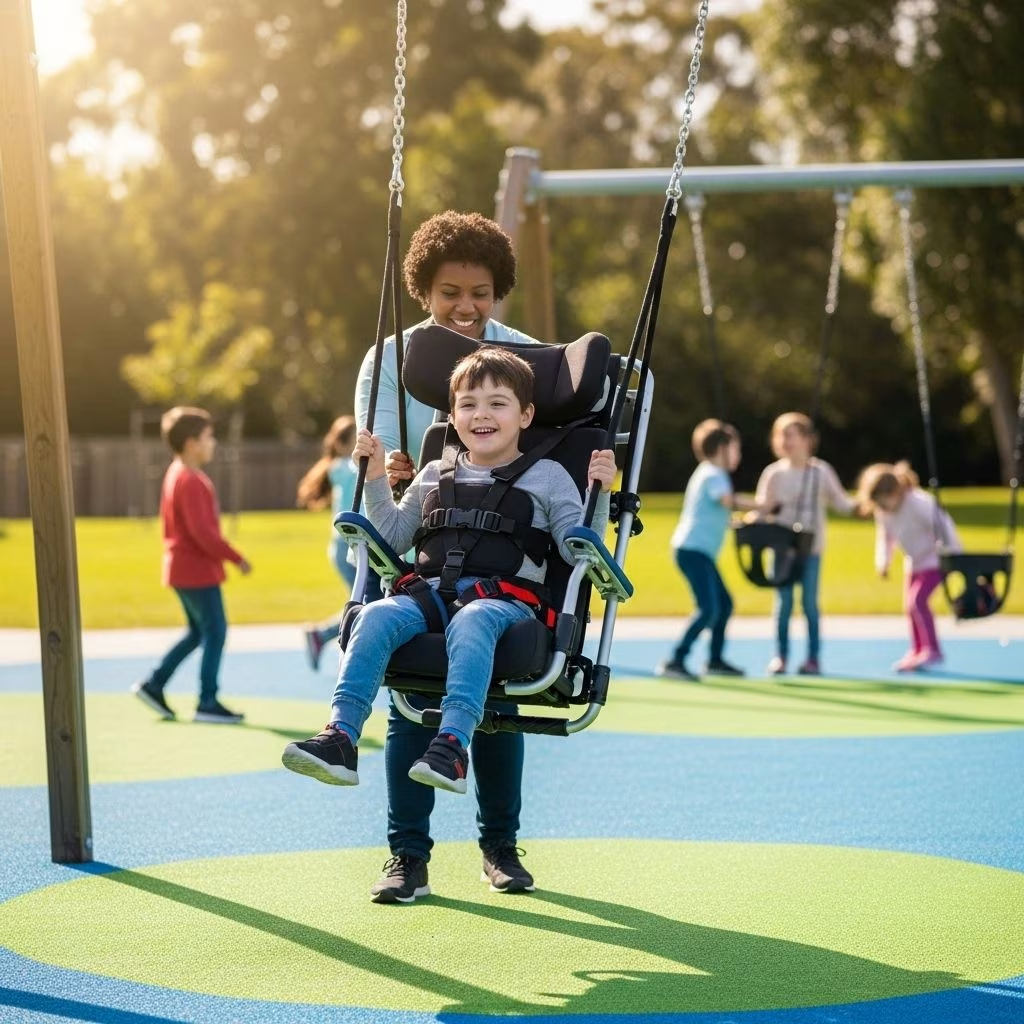
Ensuring that every child enjoys the freedom and thrill of play is a fundamental aspect of building inclusive communities. For children with physical disabilities, adapting swing sets transforms playgrounds into welcoming places that foster fun, friendship, growth, and development—no matter the child’s abilities. This article offers a deep dive into the strategies, equipment, guidelines, and innovations that make swings accessible for all.
Introduction: The Importance of Accessibility in Play
Playgrounds are integral to every child’s development—physically, emotionally, socially, and cognitively. However, traditional playgrounds often present barriers for children with physical disabilities, limiting access to the benefits of play. Adapting swing sets ensures kids with disabilities can experience swinging’s physical and sensory joy alongside their peers, promoting inclusivity and equal opportunity for development and enjoyment.
Understanding the Challenges Facing Children with Disabilities
Children with physical disabilities may encounter playground obstacles such as uneven surfacing, high transfer heights, lack of support or safety harnesses, limited space to navigate mobility devices, or swings that require independent balance and grip. These barriers can hinder not only play but also opportunities for social interaction and community integration.
- Mobility barriers: Narrow spaces, inaccessible surfaces, and high transfer platforms.
- Sensory barriers: Overstimulating or unengaging environments.
- Safety risks: Lack of harnesses, improper seat design, or unstable equipment.
To overcome these obstacles, swing set designers and playground planners must anticipate varying abilities and incorporate adaptable solutions.
Principles of Inclusive Playground Design
- Physical Accessibility: Unobstructed paths, ramps, and transfer stations for easy access to swinging equipment.
- Usability: Swing seats and platforms catering to diverse needs, such as head, neck, and back support, or no-transfer wheelchair options.
- Participation: Designs that promote shared play between children of all abilities, including siblings and peers, to foster social inclusion.
- Safety Compliance: Equipment meeting ADA (Americans with Disabilities Act) requirements and industry safety standards.
Inclusive design ensures children can not only access playgrounds but also participate actively in play experiences with dignity and security.
Adaptive and Accessible Swing Set Options
Advancements in playground equipment have led to a wide array of swing set adaptations to serve children with various physical needs:
| Type of Swing | Description | Best For |
|---|---|---|
| Wheelchair Platform Swings | Feature a flat platform that accommodates a wheelchair. Roll-on access without requiring transfer; secured with safety gates or straps. | Children who use wheelchairs or have minimal mobility; caregivers who prefer minimal lifting. |
| Adaptive Swing Seats | Bucket or high-backed molded seats with harnesses, providing head, neck, and trunk support. May include leg straps. | Children with impaired muscle tone, poor balance, or limited grip/strength. |
| No-Transfer Inclusive Swings | Swings like the We-Go-Swing® with ramps for roll-on access, allowing multiple children (including those in mobility devices) to share the swinging motion without transfers. | Children with a range of mobility, for shared play; group inclusivity. |
| Standard Swings with Adaptive Add-Ons | Traditional swings modified with support harnesses, reclined backrests, or added handles. | Children needing partial support or transitioning toward more independent swinging. |
Essential Adaptive Features and Accessories
Adaptive swing sets are more than just specialized seats. They include a suite of supportive features to maximize safety, accessibility, and user autonomy:
- Supportive Harnesses and Restraints: To keep children safely secured, particularly if they lack muscle control or balance.
- Adjustable Head/Neck and Leg Supports: Ensuring comfort for varying postural needs.
- Transfer Platforms and Ramps: For wheelchairs and other mobility devices, ensuring smooth and independent access.
- Interactive Motion Controls: Features such as pull chains for self-propulsion or hand controls, empowering children to engage independently where possible.
- Customizable Seats: Tailoring size, color, sensory features, and materials to the specific needs and abilities of the children using the swings.
- Sensory Enhancements: Textured grips, visual cues, or gentle music/vibration to provide stimulating and calming feedback.
Accessible Surfacing Solutions
Safe, navigable surfacing is vital in adaptive playgrounds. The right surfaces offer stability, cushioning, and accessible transitions from walkways to play equipment:
- Rubber-Coated Pathways and Tiles: Durable for high-traffic areas, provides a smooth surface for wheelchairs. Can be spot-installed as cost-effective solutions.
- Poured-in-Place Rubber: Seamless, impact-absorbing surfacing that covers entire play zones, though often at a higher cost.
- Composite or Interlocking Mats: Easily added to existing playgrounds but require regular maintenance for stability.
- Alternative Loose-Fill Materials: Engineered wood fiber or rubber chips used in combination with solid paths to minimize costs while maximizing accessibility.
Proper surfacing reduces fall injury risk, allows for smooth mobility device movement, and highlights accessible routes.
Integrating Swings into Inclusive Playgrounds
Swings should not be segregated but rather fully integrated into the playground design, positioned alongside other activities to promote togetherness. Ideal placement and connections include:
- Central Positions: Locating adaptive swings near standard ones to enable shared play among children of all abilities.
- Accessible Entry Points: Ramps and transfer stations placed at logical, easily navigable points from main walkways.
- Ground-Level Interactive Elements: Sensory panels and activities positioned next to swing sets, enabling children to wait, play, or participate while in mobility devices.
- Equipment Variety: Including a mix of adaptive seats, wheelchair swings, and traditional swings in the same bay for true inclusion.
- Shade and Safety Barriers: Physical protection from sun exposure and clear boundaries for safety and navigation.
Best Practices for Installation and Maintenance
From the drawing board to daily use, careful planning and ongoing attention are needed to keep adaptive swing sets functional, inviting, and safe.
- Community Consultation: Engage families, pediatric therapists, and children to tailor features and placement to real-world needs.
- Routine Inspections: Daily visual checks, regular structural inspections, and prompt repairs of harnesses, surfacing, chains, and connections to ensure safety and accessibility for all users.
- Age-Appropriate Design: Select swings and components suitable for the age group and abilities anticipated for the playground to prevent accidental misuse or injury.
- Clear Instructional Signage: Simple signs showing how to use equipment safely, with text and pictograms.
- Flexible and Modular Systems: Retrofit older swing sets with adaptive seats, mounting hardware, or access paths to maximize existing investments.
- Inclusive Culture: Train staff or volunteers to promote and support inclusive play, assist with transfers, and foster peer interaction.
Case Studies and Community Success Stories
Across the country, organizations and families are successfully implementing adaptive swing sets. Key takeaways from their experiences include:
- Customizing for Local Needs: Some communities select a mix of adaptive seats and wheelchair platforms, often painting and branding their swings in school colors or using unique, themed designs.
- Phased Upgrades: Budget-conscious organizations often start with rubberized entry paths and one inclusive swing, expanding as funds allow.
- Positive Social Impact: Reports frequently mention that inclusion-focused playgrounds draw more families—both disabled and non-disabled—enhancing community engagement and recreation time.
- Ongoing Support: Successful sites benefit from a designated champion—such as a committed PTA, city recreation team, or special-needs advocacy group—who oversee routine upkeep and fundraising for expansions.
Frequently Asked Questions (FAQs)
Q: What is an ADA swing?
An ADA swing is designed in compliance with the Americans with Disabilities Act, featuring accessible seats, transfer platforms, or roll-on wheelchair access so children of varying abilities can enjoy swinging safely and comfortably.
Q: Can existing playgrounds be retrofitted to include adaptive swings?
Yes, many existing swing sets can be upgraded with adaptive seats, transfer platforms, or accessible frames without a complete overhaul. Modular and retrofit components are widely available from specialized suppliers.
Q: Are special surfaces required around adaptive swing sets?
Yes, surfacing such as rubber tiles, poured rubber, or engineered wood fiber is essential for both safety and accessibility, helping mobility device users reach the swings with ease and minimizing injury risk from falls.
Q: What safety features should be considered for adaptive swings?
Harnesses, high backs, headrests, supportive sides, safety gates for platforms, and clear instructional signage enhance safety for children with limited physical control or impaired balance.
Q: How can communities fund adaptive swing projects?
Grants, local fundraising, community partnerships, and support from disability-focused nonprofits often fund adaptive playground improvements. Selling engraved tiles, donor plaques, or hosting inclusive play events can also help raise necessary funds.
Resources for Further Reading and Support
- Americans with Disabilities Act (ADA) Playground Guidelines
- Local parks and recreation boards
- National Center on Accessibility
- Inclusive Playground Equipment Manufacturers (search for ADA swings, adaptive swings, and wheelchair platform swings)
- Pediatric occupational and physical therapists specializing in adaptive recreation
Every child deserves to soar and laugh in a safe, inclusive environment. By thoughtfully adapting swing sets and integrating inclusive design principles, we can create playgrounds where all children—regardless of ability—can swing, play, and belong.
References
- https://www.bluegrassplaygrounds.com/product-category/swingsets/ada-swingset/
- https://www.rehabmart.com/post/how-to-create-an-accessible-inclusive-playground
- https://www.playlsi.com/en/ad/we-go-swing/
- https://www.rainbowplay.com/commercial-playground-equipment-ada-accessible/
- https://playgroundoutfitters.com/wheelchair-accessible-playground-equipment/wheelchair-accessible-swings
- https://www.swingsetmall.com/swing-set-accessories/swings/ada-swings/
- https://discountplaygroundsupply.com/ada-products/
- https://www.aaastateofplay.com/accessible/
- https://willygoat.com/collections/handicap-accessible-swing-sets


