


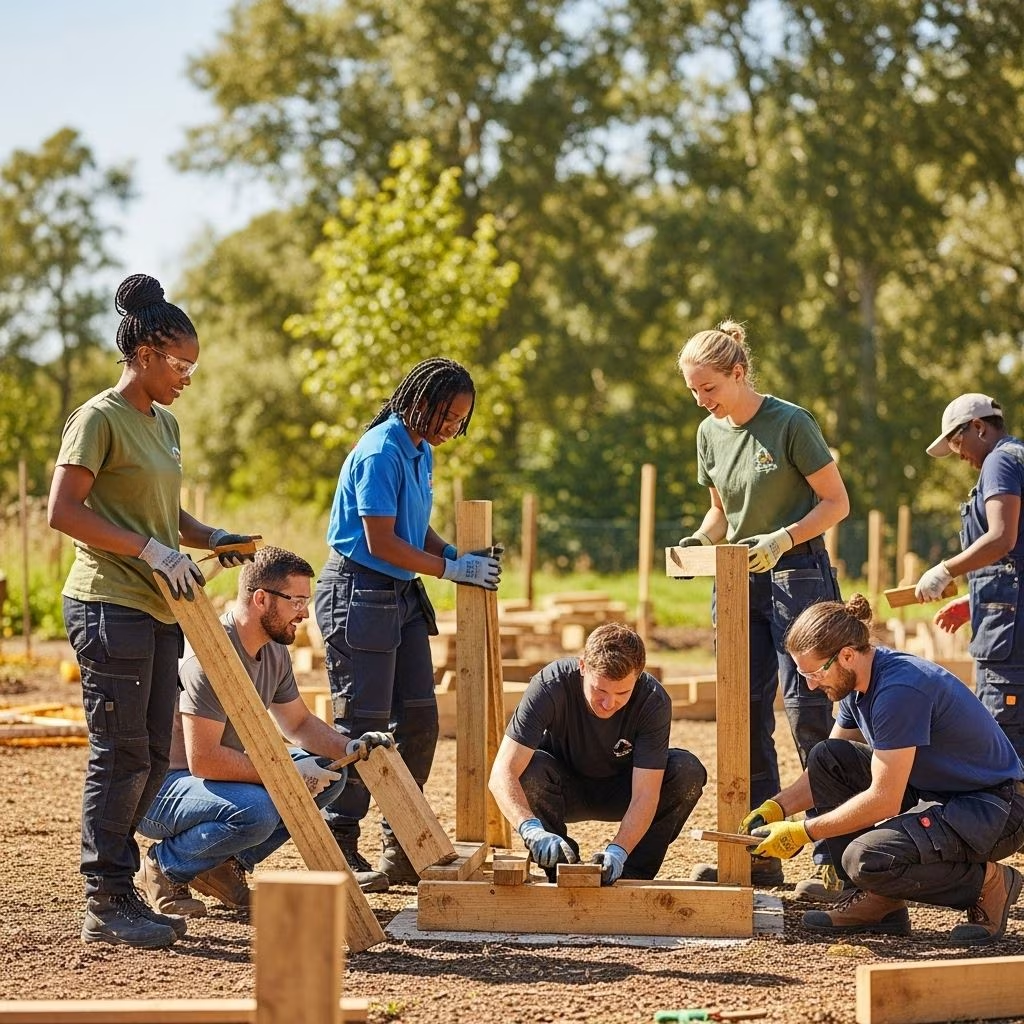
This article explores how outdoor building projects function as practical laboratories for developing cooperation skills, drawing on educational, corporate, and community contexts. Through extensive research and real-world case studies, we examine the methods, benefits, challenges, and long-term impacts of leveraging outdoor activities to nurture teamwork, communication, and collaborative problem-solving.
Introduction to Cooperation Skills in Outdoor Projects
Cooperation is at the heart of any successful group endeavor. In recent years, educators, organizational leaders, and outdoor facilitators have increasingly utilized outdoor building projects as powerful vehicles to foster these vital soft skills. From constructing school gardens to tackling obstacle courses and team challenges, these experiences offer rich, hands-on opportunities for teams to learn, adapt, and thrive together.
Defining Cooperation Skills
Cooperation involves individuals working together to achieve a common goal. The core elements include:
- Communication: Sharing ideas, feedback, and information clearly within a team.
- Mutual Support: Offering help, encouragement, and constructive guidance to peers.
- Conflict Resolution: Addressing disagreements constructively and finding viable compromises.
- Shared Responsibility: Distributing tasks and being accountable for collective outcomes.
- Adaptability: Adjusting strategies and roles in response to changing conditions or feedback.
Theoretical Underpinnings of Outdoor Teamwork
Research on group dynamics suggests that learning-by-doing—especially in challenging and unfamiliar environments—accelerates the acquisition of cooperation skills. The intersection of experiential learning theory and social constructivist approaches forms the backbone of project-based outdoor education. When teams work together on concrete tasks, they must jointly plan, execute, and adapt, mirroring real-world collaboration challenges.
Types of Outdoor Building Projects
Outdoor building projects span a wide array of activities, each offering unique formats for team engagement:
- Community Gardens and Green Spaces: Planning, planting, and maintaining shared outdoor areas.
- Scavenger Hunts and Treasure Quests: Collaborative problem-solving in competitive or cooperative settings.
- Obstacle Courses and Team Challenges: Physical and mental trials requiring coordination, trust, and communication.
- Environmental Restoration: Teams work together on projects aimed at improving habitats or local infrastructure.
- Creative Construction: Building functional installations, such as benches, shelters, or play structures.
These projects can be tailored for various age groups—from elementary students to corporate teams—and can incorporate subject-specific learning such as STEM, arts, or social studies.
Case Examples: Schools & Corporations
Education Sector: Cross-Disciplinary Learning and Outdoor Classrooms
The integration of outdoor projects into educational curricula provides authentic, context-rich experiences. For example, Cottonwood Classical school involved sixth graders in planning a rainwater-friendly garden. Students collaborated with teachers and architects, applying math to calculate water needs and geography to understand site topography. This fostered cross-curriculum skill development and high levels of student engagement.
At Glenridge Elementary, outdoor project-based learning incorporated design, sustainability, and robotics. The school tailored its courtyard for STREAM (Science, Technology, Reading, Engineering, Arts, Mathematics) activities, where students built an obstacle course to test robots. This collaboration involved students, teachers, and external experts, expanding students’ social and technical skills while championing environmental stewardship.
Corporate Sector: Transforming Teams Through Nature
Companies such as Creative Solutions Ltd. and Tech Innovators Inc. have increasingly adopted outdoor building projects for team development. These initiatives involve taking employees out of the office environment to participate in challenges that demand shared strategy, trust-building, and collaborative execution. According to post-activity feedback, participants reported improved morale, better communication, and a stronger sense of belonging within their teams.
How Outdoor Projects Build Cooperation Skills
Outdoor building projects serve as practical arenas for cooperation skill development by embedding participants in dynamic, real-world scenarios:
- Active Communication: Outdoor settings necessitate clear verbal and non-verbal communication, especially when solving novel problems or delegating tasks in real-time.
- Role Flexibility: Teams often need to shift roles spontaneously, based on emerging needs or group strengths.
- Problem Solving Under Pressure: Activities like scavenger hunts and physical builds place teams in time-constrained and complex situations, promoting creative problem-solving and stress management.
- Empathy and Inclusivity: Meaningful cooperation requires awareness and respect for differing perspectives and strengths, which outdoor projects naturally highlight as teams strategize and execute together.
- Trust Formation: Relying on teammates to complete physical challenges or contribute ideas for joint decision-making strengthens interpersonal bonds.
Sample Table: Skills Developed Through Common Outdoor Team Projects
| Activity Type | Key Cooperation Skills Enhanced | Example Outcome |
|---|---|---|
| Scavenger Hunt | Communication, Strategic Planning, Active Listening | Increased group engagement and focus as seen in school-based projects |
| Community Garden Build | Shared Responsibility, Joint Decision-Making, Conflict Resolution | Improved collaboration and technical problem-solving |
| Obstacle Course | Trust, Adaptability, Cooperation under Pressure | Greater team cohesion and ability to navigate uncertainty |
| Creative Construction | Delegation, Innovative Thinking, Feedback Acceptance | Enhanced creativity and appreciation of diverse skills |
Common Challenges and Solutions
While outdoor projects offer rich opportunities for learning, they also present certain hurdles:
- Managing Diverse Abilities: Groups often comprise individuals with varying experience or physical abilities. Inclusive design and differentiated task allocation can help address this.
- Resource Constraints: Lack of materials, time, or expertise may hinder project execution. Partnerships with local organizations or modular project planning can bridge these gaps.
- Weather and Environmental Factors: Outdoor conditions are inherently unpredictable. Contingency planning and adaptable project timelines are essential.
- Maintaining Focus and Motivation: In less-structured settings, group focus can wane. Clearly defined goals, regular check-ins, and reflective debriefs help maintain engagement.
Key Strategies for Success
Effective facilitation and careful planning maximize the benefits of outdoor building projects for cooperation skills:
- Set Clear Expectations: Begin activities with a briefing on group goals, behavioral norms, and success criteria.
- Encourage Role Rotation: Allowing group members to experience different roles (planner, builder, observer, leader) develops both breadth and depth in cooperation skills.
- Provide Reflective Opportunities: Post-activity debriefs or journaling enable teams to distill lessons learned and anchor new skills.
- Promote Inclusivity: Ensure that all voices are heard in planning sessions and that power dynamics do not overshadow shy or less experienced participants.
- Integrate Real-World Contexts: Connecting projects to broader community or sustainability goals elevates relevance and investment among team members.
Benefits and Measurable Outcomes
The impact of cooperation-focused outdoor projects is supported by both qualitative and quantitative findings:
- Enhanced Teamwork: Participants report deeper trust, greater openness, and more fluid collaboration when tackling future tasks.
- Greater Resilience: Teams learn to adapt to setbacks, boosting collective efficacy and perseverance.
- Improved Communication: Teams develop concise, clear communication patterns, reducing misunderstandings and misaligned goals.
- Cognitive Skill Development: Problem-solving, planning, and negotiation abilities are strengthened, with transfer to academic or professional settings.
- Positive Emotional Outcomes: Participants often feel greater engagement, enjoyment, and sense of belonging as a result of shared accomplishments.
Frequently Asked Questions (FAQs)
Why are outdoor building projects especially effective for teaching cooperation skills?
Outdoor projects immerse participants in tangible, real-world challenges that require communication, adaptation, and joint problem-solving. The dynamic, often unpredictable environment demands trust and fosters mutual respect more directly than traditional classroom or office activities.
What precautions should facilitators take to ensure every participant is included?
Facilitators should monitor group interactions, encourage diverse perspectives, and create systems for rotating roles so every member has the opportunity to contribute meaningfully. Adapting activities for ability levels and ensuring physical safety is also crucial.
How can the success of outdoor building projects be measured?
Effectiveness can be assessed through self-report surveys, peer feedback, facilitator observations, and tangible outcomes such as quality of finished projects or observable improvements in future collaborative tasks.
Are these projects suitable for workplaces as well as schools?
Absolutely—outdoor building projects are adaptable across settings and age groups, offering unique benefits for corporate teams by breaking down communication barriers, promoting creativity, and enhancing morale.
Conclusion
Outdoor building projects are transformative platforms for fostering robust cooperation skills. Drawing on both structured activities and spontaneous challenges, participants learn to communicate, trust, and problem-solve in ways that deliver lasting benefits. Whether in schools or the workplace, embracing outdoor project-based learning not only strengthens teams but also instills a deeper sense of community, shared purpose, and actionable environmental awareness.
References
- https://projectavatar.fun/outdoor-team-building/
- https://www.edutopia.org/article/simple-outdoor-activity-build-students-collaboration-skills/
- https://eenm.org/wp-content/uploads/2021/10/Outdoor-Learning-Case-Studies_compressed.pdf
- https://greenwoodmusic.co.uk/how-team-building-in-nature-can-transform-your-workforce/
- https://ndc-md.org/case-study/glenridge-elementary-school
- https://www.offsite.com/blog/team-building-activities-outdoor
- http://www.nccouncil.org/wp-content/uploads/2022/01/Education-Outdoor-Classrooms-and-Learning-Case-Studies.pdf
- https://grapeaventura.com/en/benefits-of-contact-with-nature-in-corporate-team-building/
- https://calandscapestewardshipnetwork.org/sites/default/files/2019-05/CLSN_Case-Study_11_30_18_Print_Ready.pdf


