


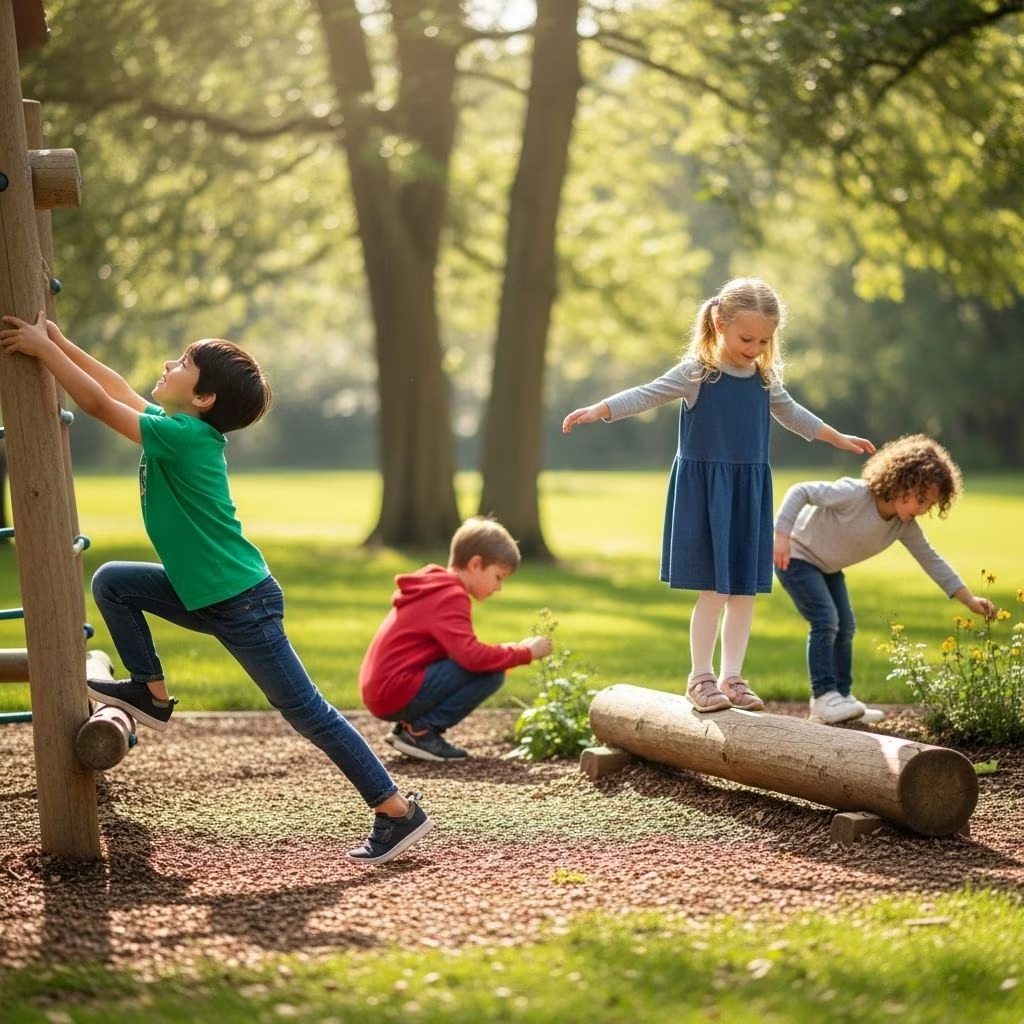
Outdoor play is not merely a source of fun and recreation for children—it is a cornerstone of healthy development, particularly for combating postural deficiencies. As postural issues in childhood rise due to sedentary lifestyles and screen time, understanding how outdoor play can address these deficiencies and promote overall well-being is more vital than ever.
Understanding Childhood Postural Deficiencies
Postural deficiencies in childhood are increasingly recognized as a public health concern. These deficiencies manifest as slouching, forward head posture, rounded shoulders, or uneven weight distribution. Factors contributing to poor posture in children include:
- Prolonged sitting (often at desks or using screens)
- Lack of diverse physical activity
- Poor muscle tone and imbalance
- Obesity or underactivity
- Improper furniture and ergonomics
Over time, these issues can lead to musculoskeletal discomfort, reduced physical performance, and impact social confidence and academic engagement.
The Role of Outdoor Play in Addressing Posture
Outdoor play inherently encourages movement diversity—running, jumping, climbing, balancing—which stimulates the dynamic use of postural muscles. The natural environments and less structured activities found outside actively counteract the static postures associated with indoor, sedentary behaviors. Key mechanisms include:
- Dynamic muscle engagement: Outdoor surfaces and play structures challenge stability and coordination, requiring the activation of core postural muscles.
- Varied movement patterns: Activities such as climbing, crawling, riding bikes, and balancing on uneven terrain stimulate the full range of motion and functional posture.
- Encouragement of upright, active posture: Play often rewards alert, flexible, and reactive body positions rather than passivity.
Comparative Impact: Indoor vs. Outdoor Play on Posture
| Aspects | Indoor Play (Sedentary) | Outdoor Play |
|---|---|---|
| Postural Demand | Low/static (e.g. desk work, screen time) | High/dynamic (e.g. climbing, running) |
| Muscle Engagement | Limited, repetitive | Broad range, functional |
| Movement Variety | Narrow range | High diversity, spontaneous |
| Postural Correction | Minimal, may reinforce poor patterns | Encourages natural postural adjustment |
Physical Benefits: Motor Skills and Musculoskeletal Health
Scientific research consistently associates outdoor play with the improvement and correction of childhood posture through multiple pathways:
Gross Motor Skills Development
- Agility, balance, and coordination are developed when children navigate playgrounds, balance beams, tree roots, or uneven grass. These activities recruit deep postural muscles and reinforce stable, upright positioning.
- Running, climbing, skipping, hopping, and carrying objects all demand effective postural alignment and core control, which is often not required during sedentary play.
Musculoskeletal Strength and Endurance
- Regular use of upper and lower body muscles stimulates growth and postural strength, addressing slouches and forward head posture.
- Consistent sunlight exposure during outdoor play supports vitamin D synthesis, which is essential for bone health and muscle function.
Prevention and Correction of Obesity-linked Postural Issues
- Physical activity outdoors helps maintain healthy body mass index (BMI), preventing poor postural adaptations associated with overweight and obesity in children.
- Unstructured outdoor movement patterns promote energy expenditure, countering the stiffness and muscular weakness that results from inactivity.
Enhanced Immune Function and Sleep Regulation
- Children who play outdoors regularly enjoy stronger immune systems, helping to maintain physical health for active engagement in play.
- Studies show that outdoor play improves sleep quality, which is critical for postural recovery and growth.
Cognitive and Emotional Benefits of Outdoor Activity
Postural control is not purely physical—it is tightly linked to the brain’s ability to perceive, coordinate, and regulate movement. Outdoor play supports these cognitive dimensions:
Spatial Awareness and Sensory Integration
- Negotiating natural landscapes and play equipment improves spatial intelligence and awareness of body position, critical to good posture.
- Exposure to diverse sensory input outdoors fine-tunes balance and coordination, supporting postural adaptation.
Stress Regulation and Focus
- Physical engagement outdoors helps children manage stress, anxiety, and emotional excitability, fostering calm and sustained attention in classroom settings.
- Stress reduction is linked to improvements in physical relaxation and postural tone, reducing muscle tension and habitual slouching.
Building Emotional Resilience
- Overcoming physical challenges—like climbing or balancing—builds self-confidence, risk assessment, and determination, supporting upright, positive posture.
- Children learn to assess risk, manage fear, and solve problems, all of which serve to enhance self-esteem and social engagement.
Social and Communication Skills
- Outdoor, group-oriented activities require collaboration, friendship-building, and nonverbal communication—skills that relate directly to social posture and presence.
Practical Strategies: Integrating Outdoor Play for Better Posture
To maximize the postural and developmental benefits of outdoor play, a multi-faceted approach is recommended. Effective strategies include:
1. Structured and Unstructured Outdoor Play
- Unstructured play (free exploration, imaginative games, open-ended activities) stimulates creativity and a wide range of movements essential for postural development.
- Structured play (organized sports, obstacle courses, group challenges) allows targeted practice of motor and postural skills.
2. Diverse Outdoor Environments
- Natural terrains such as grass, sand, hills, forest, and playground equipment offer different postural challenges and sensory experiences, maximizing the adaptive use of the body.
3. Purposeful Activities for Posture
- Incorporate activities that specifically encourage upright postures and core stability:
- Balancing on beams, stepping stones, or logs
- Climbing structures, trees, or playground walls
- Crawling under/over obstacles (tunnels, branches)
- Sports that require quick changes in direction (soccer, tag)
- Wheelbarrow walks, cartwheels, and animal walks (bear, crab)
4. Daily Recommendations
- Healthcare specialists and child development experts recommend at least one hour of active outdoor play per day. Longer periods yield even greater benefits, especially if diversified through seasons and weather conditions.
Common Obstacles and Tips for Overcoming Them
- Urban Environments: Lack of green space can be managed through community parks, rooftop gardens, or creative use of school yards.
- Parental Safety Concerns: Supervised group play and safe, visible playgrounds help alleviate safety worries.
- Weather Barriers: Proper clothing and embracing all-weather play (rain, snow, sun) support year-round activity.
- Busy Schedules: Intentionally scheduling outdoor time into routines, including walk-to-school programs or after-dinner park visits, is vital.
Frequently Asked Questions (FAQs)
Q: How does outdoor play help correct slouching in children?
A: Outdoor play introduces a wide variety of movements—such as climbing, balancing, and running—that naturally strengthen the core muscles and encourage spinal alignment. This stimulation helps children build and maintain correct posture both during activity and at rest.
Q: What type of outdoor activities are best for postural improvement?
A: Activities that require coordination, dynamic balance, and full-body involvement—such as climbing frames, crawling through tunnels, balancing on uneven surfaces, or jumping and skipping—are especially effective in improving posture and core strength.
Q: Are there risks involved with letting children play outdoors?
A: All play involves some risk, but supervised outdoor play reduces the likelihood of serious injury and helps children learn to manage and evaluate risk, building confidence and resilience.
Q: How much daily outdoor play is recommended for children?
A: Health organizations and child development experts recommend at least 60 minutes of active outdoor play per day for most children.
Q: Can outdoor play help with conditions like scoliosis or flat feet?
A: While serious structural conditions require medical assessment, outdoor play can enhance muscular balance, joint flexibility, and movement awareness, providing preventive benefits and sometimes aiding in the management of mild postural conditions. Severe or persistent issues should always be discussed with a healthcare professional.
Conclusion
Outdoor play is a natural and effective antidote to the growing issue of childhood postural deficiencies. By encouraging children to move dynamically, make use of diverse environments, and face engaging physical and social challenges, outdoor play helps correct posture, improve gross and fine motor skills, boost self-confidence, and support lifelong health. Integrating both structured and spontaneous outdoor activities into children’s routines is key to ensuring robust postural development as part of a balanced, healthy childhood.
References
- https://www.kidsfirstservices.com/first-insights/the-benefits-of-outdoor-play-for-child-development
- https://www.miracle-recreation.com/blog/why-should-my-child-play-outside-benefits-of-outdoor-play-for-kids/
- https://www.cmosc.org/benefits-of-outdoor-play-in-early-childhood-development/
- https://www.purdueglobal.edu/blog/education/benefits-outdoor-play/
- https://www.naeyc.org/resources/pubs/yc/may2019/outdoor-play-is-essential
- https://www.chop.edu/news/health-tip/benefits-outdoor-play-why-it-matters
- https://cps.ca/en/documents/position/outdoor-risky-play
- https://www.cdc.gov/early-care/communication-resources/outdoor-play-and-safety-for-children-in-ece.html


