


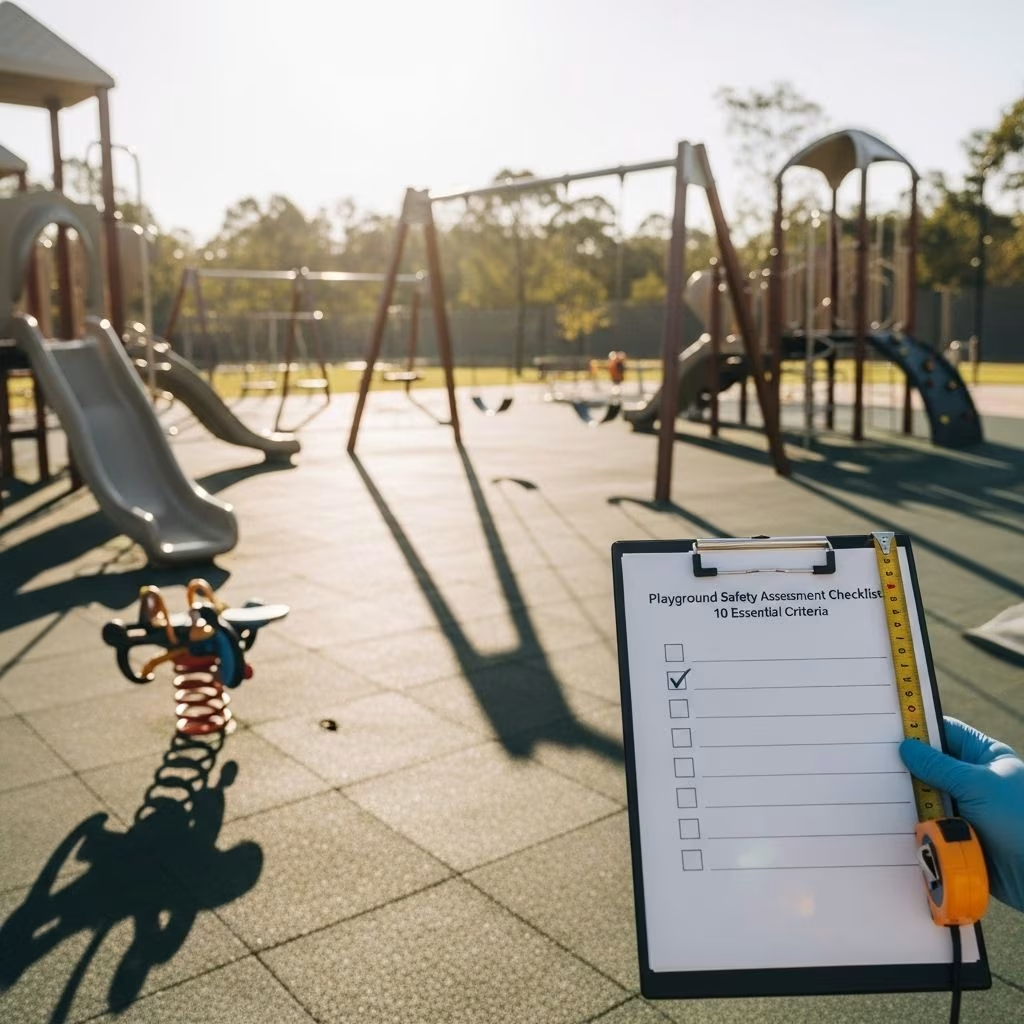
Every year, over 200,000 children visit emergency rooms due to playground-related injuries, with the majority resulting from falls onto inadequate surfaces. Ensuring that local playgrounds meet safety and quality standards is not just a regulatory requirement but a community responsibility that directly impacts child welfare. A comprehensive assessment checklist serves as an invaluable tool for parents, educators, facility managers, and community leaders to identify potential hazards and maintain safe play environments.
This detailed guide provides a structured approach to evaluating playground safety and quality, covering everything from surface materials and equipment integrity to environmental factors and maintenance protocols. Whether you’re a parent concerned about your neighborhood park or a facility manager responsible for school playgrounds, understanding these assessment criteria will help create safer spaces where children can play, explore, and develop without unnecessary risk.
Understanding Playground Safety Standards
Before conducting any playground assessment, it’s essential to understand the governing standards that define safe playground design and maintenance. In the United States, playground safety is primarily guided by two authoritative sources: the Consumer Product Safety Commission (CPSC) guidelines and the American Society for Testing and Materials (ASTM) standards. These frameworks establish baseline requirements for equipment design, installation, surfacing, maintenance, and inspection protocols.
The CPSC provides comprehensive public playground safety guidelines that address critical fall zones, equipment spacing, entrapment hazards, and surfacing requirements. Meanwhile, ASTM standards offer technical specifications for equipment manufacturing, installation procedures, and performance testing. Together, these standards form the foundation for any thorough playground safety assessment.
Professional playground inspectors typically hold certifications demonstrating their knowledge of these standards and their ability to identify hazards. However, regular informal assessments by trained staff members, parents, and community volunteers play an equally important role in maintaining ongoing safety between professional audits.
Surface Material Assessment
Playground surfacing represents the single most critical factor in preventing serious injuries from falls. Proper surface materials can absorb impact energy and significantly reduce the severity of injuries when children fall from equipment. A comprehensive surface assessment should evaluate both the type of material used and its condition.
Surface Material Requirements
Acceptable playground surfaces must have adequate shock-absorbing properties to cushion falls. The surface material should consist of at least 12 inches of loose-fill materials such as wood chips, engineered wood fiber, mulch, sand, or pea gravel. Alternatively, unitary surfaces made of safety-tested rubber mats or poured-in-place rubber surfacing can provide excellent protection when properly installed and maintained.
Each surface type has specific advantages and maintenance requirements. Loose-fill materials are generally more affordable but require regular replenishment and redistribution to maintain proper depth. Unitary surfaces offer better accessibility for children with mobility devices but represent a higher initial investment. Regardless of the material chosen, the critical fall height rating must be appropriate for the tallest equipment on the playground.
Surface Coverage and Depth
Safety surfacing must extend at least 6 feet in all directions from stationary play equipment. For swings, the use zone extends much further, requiring protective surfacing to extend both in front and behind the swing to a distance equal to twice the height of the swing’s suspending bar. These extended zones account for the arc of swing motion and the distance children may travel when dismounting or falling from swings.
Regular depth measurements are essential, particularly in high-traffic areas where surface materials naturally compress or displace over time. Fall zones directly under equipment and at landing areas for slides typically experience the most displacement and require frequent monitoring and replenishment.
Surface Condition Inspection
Beyond checking depth and coverage, assessors should examine surface materials for contamination, deterioration, and hazards. Loose-fill surfaces should be free from glass, metal fragments, animal waste, and other foreign objects. The material should not be compacted or forming hard layers that reduce shock absorption. For unitary surfaces, inspectors should look for cracks, gaps, uplifting edges, or deterioration that could create tripping hazards or reduce impact attenuation properties.
Drainage is another critical consideration. Standing water indicates poor drainage that can accelerate surface deterioration, create slip hazards, and provide breeding grounds for insects. Proper grading and drainage systems should channel water away from play areas.
Playground Equipment Evaluation
The condition and design of playground equipment directly affect both safety and play value. A thorough equipment assessment examines structural integrity, moving parts, protective barriers, and potential hazards across all play structures.
Structural Integrity and Anchoring
Begin equipment inspection by examining the overall structural soundness. Check that all equipment is securely anchored to the ground with no loose, exposed, or cracked footings visible. Concrete footings should be buried beneath the protective surface to eliminate tripping hazards. Look for signs of structural weakness including bent frames, cracked welds, rotted wood, or significant rust that compromises material strength.
Posts, beams, and support structures should be stable without excessive movement when pressure is applied. Any wobbling or instability indicates potential anchoring problems or structural deterioration that requires immediate attention. Wood components should be checked for rot, particularly at ground level where moisture exposure is greatest.
Moving Components and Dynamic Elements
Swings, spinners, seesaws, and other moving equipment require special attention during inspections. Verify that all moving parts operate smoothly without binding, excessive resistance, or unusual sounds that might indicate worn bearings or damaged components. Chains should be free from twists, excessive wear, or damaged links. Swing seats should be made of appropriate lightweight, flexible materials rather than rigid materials that could cause injury during collisions.
Bearings and pivot points on merry-go-rounds, gliders, and track rides should be examined for proper lubrication and wear. These high-use components typically require more frequent maintenance and eventual replacement as normal wear occurs.
Protective Barriers and Fall Prevention
All elevated surfaces above 30 inches require protective barriers such as guardrails to prevent falls. These barriers should be securely attached with spacing that prevents entrapment while providing adequate fall protection. The barrier height should be appropriate for the platform elevation and the age group using the equipment.
Transition points between different play elements, such as where slides connect to platforms or stairs meet elevated decks, represent common hazard areas. These connections should be secure, properly aligned, and free from gaps that could catch clothing or allow unintended falls.
Spacing and Layout Requirements
Proper spacing between playground components prevents collisions, allows adequate fall zones, and ensures children can move safely between play elements. Assessment of playground layout should verify compliance with recommended spacing guidelines.
Play structures taller than 30 inches should be spaced at least 9 feet apart to prevent overlapping use zones and reduce collision risks between children using different equipment. This spacing also ensures that fall zones from one structure do not overlap with the equipment or use zones of another structure.
Swings require particular attention to spacing and location. Swing structures should be located toward the perimeter of play areas, away from high-traffic circulation routes. Individual swings within a bay should maintain adequate spacing to prevent collisions between children swinging at different rates or heights. Tire swings and other rotating swings require even greater clearance due to their circular motion pattern.
Hardware and Fasteners Inspection
The hardware connecting playground components represents a frequent source of injuries and equipment failure. A detailed hardware inspection should examine every accessible fastener, connection point, and mechanical element.
Dangerous Hardware Configurations
Open S-hooks on swing chains pose significant entanglement and puncture hazards. All S-hooks should be completely closed to a gap of less than 0.04 inches, preventing them from catching clothing, skin, or jewelry. Protruding bolt ends that extend more than two threads beyond the nut create snagging and laceration hazards and should be cut flush or covered with protective caps.
Missing protective caps or plugs on tubing ends create finger entrapment hazards and sharp edges. All tube ends should be capped or plugged securely. Similarly, any exposed sharp edges on metal components should be filed smooth or covered to prevent cuts.
Hardware Security and Wear
Check that all nuts, bolts, clamps, and rivets are present, properly tightened, and showing no signs of excessive wear or corrosion. Hardware subjected to moving loads, such as swing hangers or seesaw pivot bolts, requires particular attention as these components experience the highest stress and wear rates.
Rust and corrosion can significantly weaken metal hardware and should be addressed promptly. While surface rust may be primarily cosmetic, deep corrosion that reduces material thickness compromises structural integrity and requires component replacement.
Environmental and Site Conditions
The environment surrounding playground equipment significantly impacts safety and usability. A comprehensive site assessment examines pathways, vegetation, environmental hazards, and site conditions that affect playground safety.
Pathways and Access Routes
Sidewalks and paths leading to playground areas should be even, free from cracks, and clear of tripping hazards. These access routes should flush smoothly with playground surfaces without abrupt elevation changes. Check for organic debris, low-hanging branches, fallen limbs, and seasonal hazards such as ice or snow that could impede safe access.
Adequate lighting for paths and play areas extends usability into evening hours while improving safety and security. Assess whether lighting is sufficient for supervision and safe navigation during times when the playground might be used.
Vegetation Management
Tree limbs should maintain a minimum clearance of 84 inches above all playground equipment and use zones. Lower branches create head injury hazards and can interfere with proper equipment use. Dead or damaged trees near play areas pose falling hazard risks and should be removed promptly.
Roots from nearby trees can create surface irregularities and tripping hazards as they grow and heave surrounding surfaces. Regular monitoring and surface adjustment help prevent root-related hazards from developing.
Environmental Hazards
Inspect the playground perimeter for environmental hazards including busy roads without adequate fencing, bodies of water, steep drop-offs, or other dangerous features. Appropriate barriers and setbacks should isolate play areas from these hazards. Check fencing for damage, adequate height, and secure gates that prevent children from leaving the play area unsupervised.
Assess sun exposure and shade availability, particularly for metal slides and climbing structures that can reach dangerous temperatures under direct sunlight. Adequate shade structures or strategic equipment placement helps prevent contact burns and provides comfortable play conditions.
Maintenance and Documentation Protocols
Even well-designed playgrounds require systematic maintenance and documentation to remain safe over time. Establishing comprehensive inspection and maintenance protocols ensures problems are identified and addressed before they result in injuries.
Inspection Frequency and Responsibilities
Different inspection levels serve complementary purposes in playground safety programs. High-frequency visual inspections should occur daily or before each use period for high-traffic playgrounds. These quick scans identify obvious hazards like broken glass, displaced surfacing, vandalism, or newly damaged equipment requiring immediate attention.
Monthly functional inspections conducted by trained staff provide more thorough evaluation of equipment condition, hardware security, and surface depth. These documented inspections should follow a standardized checklist covering all major assessment categories. Annual professional inspections by certified playground safety inspectors provide comprehensive audits verifying compliance with current standards and identifying developing problems that may not be apparent during routine checks.
Documentation Requirements
Maintaining detailed inspection records serves multiple purposes beyond regulatory compliance. Documentation provides historical data tracking equipment condition over time, demonstrates due diligence in facility maintenance, and creates accountability for addressing identified hazards. Inspection forms should record the date, inspector name, specific conditions observed, and corrective actions taken or scheduled.
Photographs supplement written records by documenting conditions and changes over time. Digital inspection tools and mobile applications can streamline documentation while ensuring consistent coverage of all assessment areas.
Repair and Maintenance Response
Inspection alone does not constitute adequate safety management. Identified hazards must be addressed promptly according to severity. Immediate hazards such as exposed sharp edges, structural failures, or inadequate surfacing require equipment closure and emergency repair. Less critical maintenance items should be scheduled and tracked to completion.
All repairs and component replacements must follow manufacturer specifications using approved parts and installation methods. Unauthorized modifications or improvised repairs can void warranties, violate safety standards, and create unexpected hazards. When original manufacturer parts are unavailable, replacement components must meet or exceed the original specifications and maintain compliance with applicable safety standards.
Age-Appropriate Design Considerations
Playground equipment designed for specific age groups provides appropriate developmental challenges while minimizing injury risks. Assessment should verify that equipment is used by the intended age group and that design features match user capabilities.
Playgrounds serving preschool children aged 2 to 5 years require different design considerations than those for school-age children aged 5 to 12 years. Younger children have different physical capabilities, judgment skills, and supervision needs. Equipment scale, challenge level, and protective features should reflect these developmental differences.
Clear signage indicating intended age groups helps guide appropriate use. When playgrounds serve multiple age groups, physical separation between age-specific zones reduces conflicts and prevents younger children from attempting equipment beyond their capabilities. Elevation limits, opening sizes, and protective barrier requirements differ between age groups based on typical physical dimensions and abilities.
Accessibility and Inclusion Features
Modern playground design emphasizes inclusive play opportunities for children with diverse abilities. Assessment of accessibility features ensures that playgrounds provide meaningful play experiences for all community members.
Accessible routes should connect parking areas, facility entrances, and playground components with firm, stable surfaces navigable by wheelchair users and children with mobility devices. These routes should maintain appropriate width, slope, and cross-slope specifications without protruding obstacles or surface irregularities that impede access.
Ground-level play components and transfer systems to elevated structures expand participation opportunities. Sensory-rich play elements including tactile panels, musical components, and varied textures engage children with different abilities and learning styles. Assess whether the playground offers varied play experiences accessible to children across the ability spectrum rather than merely meeting minimum compliance standards.
Emergency Preparedness and Signage
Clear communication and emergency preparedness features support safe playground use and effective response when injuries occur. Assessment should verify that appropriate signage, emergency information, and first aid resources are readily available.
Visible signage should display emergency contact information, facility rules, age-appropriate use guidelines, and any specific hazard warnings. Signs should be positioned where supervising adults can easily see them and should remain legible with weather-resistant materials and clear lettering.
The playground location should be clearly identifiable for emergency responders with visible addressing and landmark information. Access routes must accommodate emergency vehicles without obstacles or locked gates that could delay response. First aid supplies appropriate for common playground injuries should be readily accessible to supervising adults with clear instructions for their location and use.
Frequently Asked Questions
How often should playground inspections be conducted?
Playgrounds require multiple inspection levels at different frequencies. High-use playgrounds should receive daily visual inspections for obvious hazards, monthly functional inspections by trained staff following standardized checklists, and annual comprehensive audits by certified playground safety inspectors. Inspection frequency should increase based on usage levels and equipment age.
What is the most important safety feature of any playground?
Proper impact-absorbing surfacing is the single most critical safety feature, as the majority of serious playground injuries result from falls. Surfaces should maintain at least 12 inches of appropriate loose-fill material or properly installed unitary surfacing, extending at least 6 feet from equipment in all directions and further for swings.
Who is qualified to conduct playground safety inspections?
Different inspection levels require different qualifications. Daily visual inspections can be performed by any responsible adult familiar with common hazards. Monthly functional inspections should be conducted by staff members trained in playground safety standards. Annual comprehensive inspections require certified playground safety inspectors with specialized training in CPSC guidelines and ASTM standards.
What should I do if I identify a safety hazard at a public playground?
Immediately prevent children from using the hazardous equipment if possible, then notify the playground owner or operator such as the parks department, school administration, or property manager. Document the hazard with photographs and written description including the date and specific location. Follow up to ensure the hazard is addressed promptly.
Are wooden playground structures less safe than metal or plastic equipment?
Wood, metal, and plastic equipment can all be equally safe when properly designed, installed, and maintained. Each material has different maintenance requirements and potential hazards. Wood requires monitoring for rot, splinters, and structural integrity. Metal needs inspection for rust and extreme temperatures. Plastic should be checked for UV degradation and cracks. Proper maintenance is more important than material choice.
What measurements determine if an opening is an entrapment hazard?
Openings that could trap children, such as spaces in guardrails or between ladder rungs, must measure either less than 3.5 inches or more than 9 inches. This critical range prevents head entrapment, which occurs when a child’s body passes through an opening but the head cannot, creating a potentially fatal strangulation hazard.
How deep should playground surfacing material be?
Loose-fill surfacing materials should maintain a minimum compressed depth of 12 inches under and around all playground equipment. However, the required depth depends on the critical fall height of the equipment and the specific material used. Higher equipment or materials with lower impact attenuation may require greater depth to provide adequate protection.
Can I install playground equipment myself or does it require professional installation?
While some simple equipment may be suitable for careful do-it-yourself installation following manufacturer instructions, most playground structures require professional installation to ensure compliance with safety standards. Improper installation is a leading cause of playground injuries and equipment failure. Professional installers have specialized knowledge of anchoring requirements, spacing standards, and assembly procedures that affect long-term safety.
References
- https://www.cpsc.gov/safety-education/safety-guides/playgrounds/public-playground-safety-checklist
- https://playgroundsafetyinspections.net/playground-safety-checklist/
- https://ncchildcare.ncdhhs.gov/Portals/0/documents/pdf/P/Playground_Inspection_Checklist.pdf?ver=CxfeyCmo15O0_ztbu2–ng%3D%3D
- https://productiveparks.com/playground-inspection-checklists-what-include
- https://www.nrpa.org/siteassets/the-daily-dozen-12-point-playground-safety-checklist.pdf
- https://public.militarychildcare.csd.disa.mil/mcc-central/node/36327
- https://assemblysmart.com/playground-safety-checklist/
- https://headstart.gov/facilities/article/resources-safe-playgrounds
- https://www.playcore.com/resources/publications-guides/playground-maintenance


