


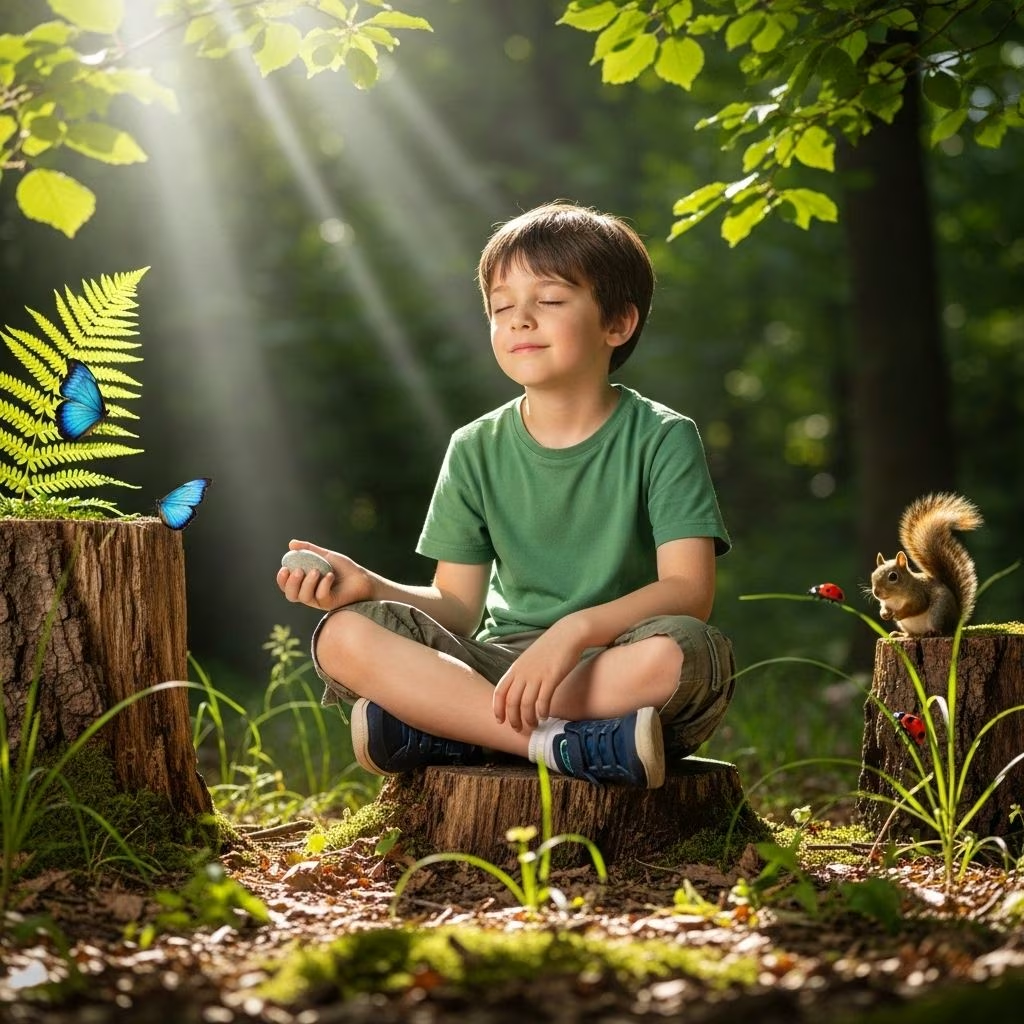
What Is a Sit Spot?
A sit spot is a specific location in nature where a child (or adult) sits quietly, observes, and reflects on their surroundings—using all their senses to notice the sights, sounds, smells, and even the tactile sensations of the natural world. The sit spot practice encourages deep observation and mindfulness, fostering a connection with the environment that is meaningful and personal. Importantly, it is not about grand wilderness excursions—any accessible natural space, including backyards, parks, or even a comfortable window seat, can serve as a sit spot.
Returning to the same spot over time allows children to witness the subtle changes of the seasons, recognize patterns in animal behavior, and develop a sense of familiarity and comfort in the natural world. This routine is rooted in historical nature connection practices and is popularized by nature education books such as Coyote’s Guide to Connecting with Nature.
Why Is Sit Spot Practice Important for Kids?
The sit spot practice is more than just quiet time outdoors. It is a foundational routine that supports sensory awareness, mindfulness, ecological literacy, and emotional well-being. For children especially, regular sit spot time:
- Develops patience and observational skills
- Encourages curiosity and scientific thinking
- Fosters a sense of place and belonging
- Reduces stress and promotes mental health
- Deepens empathy for living things
By repeatedly visiting their sit spot, children not only witness the cycles of nature but also become more attuned to the “baseline” behaviors of local wildlife, rather than seeing only startled animals fleeing in response to human disturbance.
How to Choose a Sit Spot
Selecting the right sit spot is crucial for a successful practice. The spot should be:
- Accessible and Safe: It should be easy to reach, even on busy days, and free from hazards like traffic or poisonous plants.
- Comfortable: Find a place where a child can sit comfortably for 10–20 minutes. Bring a cushion or small mat if needed.
- Interesting: There should be something to observe—birds, insects, plants, or even changing light and weather.
- Quiet and Free from Distractions: Minimize human interruption and technological interference as much as possible.
Urban, suburban, or rural, any bit of nature can become a sit spot—even a concrete patio with a potted plant and visiting ants. The key is regularity and an openness to notice the small details.
How to Conduct a Sit Spot Session: Step-by-Step
Follow these steps to lead a child (or group) through a sit spot session:
- Prepare: Dress appropriately for the weather and bring a journal, drawing supplies, and water if needed.
- Arrive and Settle In: Walk calmly to the spot. Set a timer for 10–20 minutes, depending on age and attention span.
- Begin with Mindfulness: Take a few deep breaths to help transition from busyness to quiet awareness.
- Engage the Senses: Invite the child to notice what they see, hear, smell, and feel. Ask them to focus on one sense at a time, starting with sight, then sound, then touch, and so on.
- Observe Without Judging: Encourage curiosity and open-ended questions, such as “What do you notice that is new?” or “What animal sounds can you identify?”.
- Record Observations: Use a journal, drawing, or voice memo to note changes, patterns, or questions that arise.
- Recap and Share: At the end, discuss what was observed and felt, and plan for the next session.
Over time, children will begin to recognize patterns, seasonal changes, and the unique personalities of local animals and plants.
Sit Spot Prompts and Activities for Kids
To guide children’s attention and deepen their engagement, consider these prompts and activities:
- How Many Different Bird Calls Can You Hear? Emphasize listening and identification.
- I Notice, I Wonder, It Reminds Me Of: Encourage children to verbalize their observations, questions, and associations.
- Changes Over Time: Track three things that have changed since the last visit—leaves fallen, new flowers, different animal visitors, etc.
- Sensory Scavenger Hunt: Find something smooth, something rough, something that moves, something that smells, etc.
- Weather Watch: Observe how the weather affects the environment and mood.
- Nature Journaling: Draw, write, or collage impressions from the spot.
Tools and Materials for Sit Spot Practice
| Tool | Purpose | Optional/Required |
|---|---|---|
| Nature Journal | Recording observations, drawings, reflections | Optional, highly recommended |
| Pencils, Crayons, Colored Pencils | Drawing, coloring, note-taking | Optional |
| Comfortable Seating (cushion, mat) | Ensures comfort for longer sits | Optional |
| Timer | Helps structure the session | Optional |
| Magnifying Glass, Binoculars | Enhancing observation | Optional |
Remember, the primary tools are the child’s senses and curiosity—everything else is a bonus.
Benefits of Regular Sit Spot Practice
The routine of visiting a sit spot yields numerous benefits for children:
- Sensory Awareness: Sharpens perception and attention to detail.
- Mindfulness and Calm: Provides a break from screens and busyness, fostering emotional regulation.
- Connection to Place: Builds a sense of belonging and stewardship for local ecosystems.
- Scientific Inquiry: Introduces the basics of observation, hypothesis, and pattern recognition.
- Creativity and Self-Expression: Journaling and drawing allow for creative processing of experiences.
- Social and Emotional Growth: Sharing observations builds communication and empathy.
Educational and Emotional Learning Outcomes
Sit spot practice aligns with several recognized educational frameworks:
- Place-Based Education: Sit spots embody the learner-centered, community-as-classroom approach, emphasizing direct experience and inquiry.
- Next Generation Science Standards (NGSS): Encourages pattern recognition, stability and change, and the first steps of the scientific method.
- Social and Emotional Learning (SEL): Develops self-awareness, empathy, and relationship skills through repeated, reflective nature immersion.
When children invest time in a particular place, they become sensitive to its rhythms and changes, which in turn deepens their care for the natural world.
Overcoming Common Challenges
Sit spot practice can face a few hurdles, especially with younger children:
- Restlessness: Start with short sessions (5–10 minutes) and gradually increase the duration as attention improves.
- Distractions: Choose spots away from high-traffic areas and encourage mindful transitions into the session with breathing or a quieting ritual.
- Weather and Environment: Dress appropriately, and be flexible—sometimes a rainy sit spot is just as revealing as a sunny one.
- Lack of Interest: Use engaging prompts, storytelling, or games to spark curiosity.
The key is consistency, not perfection. Over time, most children come to value their sit spot as a personal sanctuary.
Incorporating Sit Spot Practice in School Programs
Schools can integrate sit spot routines into science, environmental education, or mindfulness curricula:
- Daily or Weekly Routine: Dedicate time each week for students to visit their sit spots, either individually or in small groups.
- Cross-Curricular Connections: Link observations to writing, art, biology, and social studies.
- Community Sharing: Create opportunities for students to share discoveries and questions with classmates.
- Assessment: Use nature journals, drawings, or presentations as evidence of learning and growth.
Schools with limited outdoor space can use schoolyard corners, courtyard gardens, or even indoor window spots as sit spots, focusing on whatever nature is present.
Frequently Asked Questions
Q: How long should a sit spot session last for kids?
A: Start with 5–10 minutes for young children, gradually increasing to 15–20 minutes as their attention and comfort grow. The key is consistency, not duration.
Q: Does a sit spot have to be in the wilderness?
A: No, a sit spot can be anywhere with access to a bit of nature—backyards, parks, school grounds, balconies, or even by a window.
Q: What if my child finds it boring?
A: Use prompts, games, or storytelling to spark interest. Over time, most children find their spot increasingly engaging as they notice more details and changes.
Q: How often should kids visit their sit spot?
A: Ideally, daily or several times a week. Even weekly visits can yield meaningful observations and connections.
Q: Can sit spot practice be done in groups?
A: Yes, though it’s best to space children at least 10 feet apart to minimize distraction and allow for personal observation. Group sharing afterwards can enrich the experience.
Q: What are the benefits for children with special needs?
A: Sit spot practice can be adapted for all abilities, offering sensory integration, calming routines, and opportunities for non-verbal expression and connection.
Conclusion
Sit spot practice is a simple yet profound way to nurture children’s connection to nature, cultivate mindfulness, and foster a lifelong love of learning. By regularly sitting quietly in a chosen outdoor spot, children develop keen observation skills, patience, empathy, and a deeper understanding of the natural world around them. Whether in a bustling city or a quiet forest, the sit spot becomes a personal window into the rhythms of life—one that grows richer with each visit.
Start small, be consistent, and let curiosity be the guide. The benefits—for the child, the community, and the planet—are limitless.
References
- https://www.beaninnature.com/blog/sit-spot
- https://www.canr.msu.edu/news/discover-the-many-benefits-of-a-sit-spot
- https://www.tetonscience.org/wp-content/uploads/2020/07/sitspots.pdf
- https://www.awakentonature.com/post/the-sit-spot-practice-all-you-need-to-know
- https://www.outdoorapothecary.com/sit-spot/
- https://www.deceptionpassfoundation.org/wp-content/uploads/Reflective-Sit-Spots.pdf


