


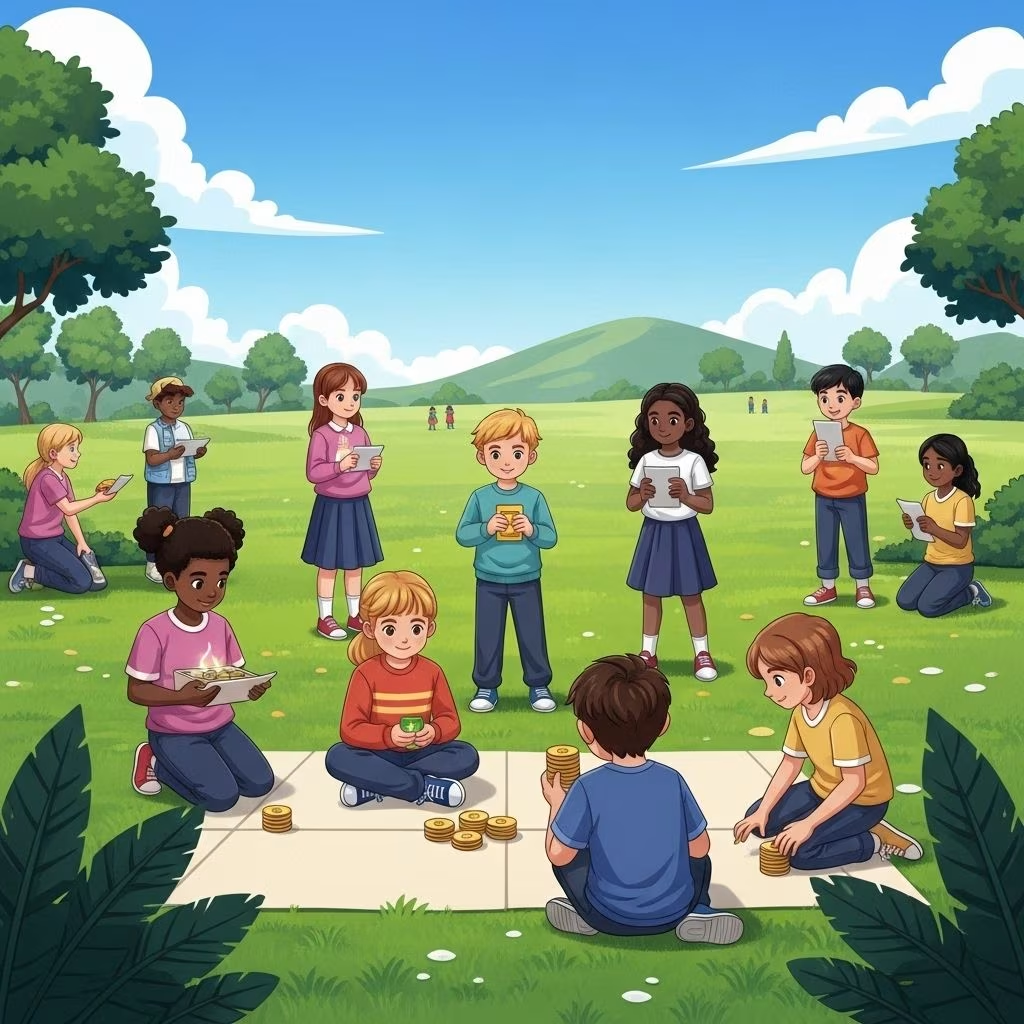
Financial literacy is an essential life skill, yet it’s rarely taught through engaging, hands-on experiences — especially outdoors. By integrating budgeting and bartering lessons into outdoor games, parents, educators, and youth leaders can transform abstract economic principles into memorable, practical knowledge for children. This guide explores a variety of creative outdoor activities that foster financial responsibility, critical thinking, and collaborative problem-solving while keeping learning fun and active.
Introduction & Benefits
Financial skills such as budgeting and bartering are not only practical but deeply impactful, shaping how individuals interact with money, manage resources, and solve problems throughout their lives. While classroom teaching offers the basics, experiential learning through games allows children to develop these skills in dynamic, social, and memorable ways. Outdoor settings leverage physical movement, collaboration, and real-world scenarios, helping learners connect financial concepts to everyday life.
- Active and Engaging: Outdoor games harness children’s natural energy and curiosity, combating learning fatigue.
- Real-World Application: Simulated economic environments help children link lessons to real-life situations.
- Teamwork and Communication: Most games require negotiating, trading, sharing strategies, and collaborating to achieve goals.
- Critical Thinking: Kids learn to prioritize, allocate resources, and adapt to changing circumstances — all in a low-stakes, playful context.
Core Concepts: Budgeting and Bartering
Budgeting is the process of planning how to allocate limited resources (typically money) to satisfy various needs and wants. Bartering involves exchanging goods or services directly without using money. Both concepts build a foundation for understanding modern economics, decision-making, and personal responsibility.
| Concept | Definition | Real-World Example |
|---|---|---|
| Budgeting | Creating a plan to spend or save money/resources | Deciding how to spend allowance to buy different toys or snacks |
| Bartering | Trading goods/services without using money | Swapping a baseball card for a comic book among friends |
Outdoor games that integrate these elements allow children to:
- Identify needs vs. wants
- Make trade-offs and prioritize choices
- Understand the value of different items or actions
- Practice negotiation and cooperation
Designing Effective Outdoor Financial Games
To maximize educational value and engagement, outdoor games for budgeting and bartering should follow key design principles:
- Clear Objectives: Define the specific skills and concepts you want children to learn, such as planning a budget or making fair trades.
- Simplicity and Accessibility: Rules should be clear and easily explained, using common materials found in the home or outdoors.
- Active Participation: Every child should be involved, with ample opportunities for hands-on engagement, collaboration, and independent decision-making.
- Relevant Rewards: Game outcomes (such as earning play money or trading for desired treats) should reflect the real-life stakes of budgeting and bartering.
- Built-in Reflection: Incorporate post-game discussions to help participants connect gameplay to real-world money management.
Top Outdoor Games for Budgeting & Bartering Skills
Below are tried-and-true outdoor games and activities proven to help children master budgeting and bartering, along with adaptations for different age groups.
1. Budget Scavenger Hunt
A classic outdoor scavenger hunt is reinvented with budgeting and spending decisions. Children receive a limited amount of play money and a list of items (such as leaves, rocks, or sticks) each with an assigned monetary value. They ‘purchase’ the privilege to collect these objects with their budget, honing the skills of prioritizing, saving, and spending wisely.
Setup:
- Prepare scavenger lists with each item carrying a different price.
- Hand out identical amounts of play money.
- Kids decide which objects to find and ‘buy’ to maximize their points or rewards within their budget.
This activity not only encourages smart budgeting but also links physical movement with mental calculation, making the learning stick.
Extension: Allow students to barter items amongst themselves to optimize their collections or budgets.
2. Barter Market Simulation
Transform an open field into a vibrant barter market. Children are assigned different roles (farmer, baker, builder, artist, etc.) with their own set of goods or resources represented by cards, tokens, or real items. The objective is to complete a ‘shopping list’ by negotiating trades with others, learning both the challenges and strategies of a barter system.
- Start with trading goods only (no money allowed).
- Each child’s ‘list’ requires items they don’t initially possess, motivating trade and negotiation.
- Incorporate bonus rounds: Introduce currency or new items to demonstrate how money improves trading efficiency.
Facilitators can discuss difficulties, fairness in trades, and how bartering leads to the invention of money, mapping directly onto economic history lessons.
3. Needs vs. Wants Game Show
Set up a relay-style game where children race to pick up cards or pictures representing various goods or experiences (e.g., water, candy, a toy, a book). Their ‘budget’ only allows them to select a certain number of items, so they must quickly discuss or decide which are needs (essentials) versus wants (nice-to-have).
Options:
- Reward teams for making wise selections aligned with basic survival needs.
- Follow up with discussions about how choices change with available resources.
The quick decision-making and group collaboration reinforce prioritization, a central principle in both budgeting and bartering.
4. The Trading Post Relay
Inspired by historical trading posts, this outdoor relay game divides children into teams with unique sets of ‘resources’ (different colored beanbags, balls, or cards). Each round, teams race to a central ‘trading post’ where they can barter for needed items with other teams or the facilitator. The first team to assemble a full set of assigned ‘goods’ wins. This activity builds skills in negotiation, cooperation, and resource allocation.
5. Backyard Marketplace
Invite kids to create their own outdoor shops or market stalls, offering handmade crafts, snacks, or toys. Each participant is given a starting budget in play money. Children must price their ‘goods’, decide what to buy or trade, and keep track of their spending throughout the activity. The game teaches:
- Basic accounting and price-setting
- How to make purchasing decisions within budget constraints
- The mechanics of simple bartering versus using standardized “money”
This game can be reimagined with seasonal twists (e.g., lemonade stands, seed trading, Halloween treats, or holiday crafts).
6. Resource Management Obstacle Course
Set up an obstacle course where each checkpoint offers choices for ‘spending’ tokens or play money (e.g., choosing an easier route for a higher fee, or a challenging one for free). At the finish line, discuss who still has resources left and whether their choices led to the fastest or most satisfying outcome. Children learn about opportunity cost, risk, and strategy — all vital to both budgeting and negotiations in bartering.
7. The Pizza Budget Picnic
This activity transforms planning a picnic into a budgeting lesson. Give kids a menu of potential snacks or picnic items, each with prices, and a fixed budget. Working in teams, they plan a balanced meal that stays within their ‘budget’ — deciding together whether to prioritize treats, healthy choices, or quantity. After shopping, everyone enjoys the results together, tying the lesson to real-life experiences.
Implementation Tips for Educators and Parents
- Preparation: Use easily sourced materials (rocks, leaves, balls, paper notes, etc.) and set clear objectives for the session to maintain focus.
- Age Appropriateness: Adjust rules and complexity to suit age and development. Younger children can focus on basics (counting, simple trading), while older children can handle negotiation and more complex budgeting constraints.
- Group Size: Many games work best in small groups of 4–8; however, relays or market simulations can scale up for larger gatherings.
- Encourage Reflection: Debrief after the activity. Discuss what strategies worked, what was challenging, and how the experience relates to handling money or making exchanges in daily life.
- Integrate Real-World Elements: Visits to real markets or garage sales, or involving real coins (supervised) can reinforce lessons.
Common Challenges and Exciting Variations
- Handling Fairness: Some children may barter aggressively or misunderstand value. Use these moments for teachable discussions on fairness, ethics, and value creation.
- Interest Imbalance: To prevent disengagement, rotate roles and responsibilities so all children have a chance to ‘sell’, ‘buy’, and ‘trade’.
- Keeping It Fresh: Introduce ‘unexpected events’ (e.g., “market floods” or surprise bonuses) to show how real-life economic factors affect budgeting and bartering.
- Competition vs. Cooperation: Some games reward the most successful ‘businessperson’, but cooperation-based games build empathy and teamwork. Switch between competitive and collaborative formats.
Frequently Asked Questions (FAQs)
Q: At what age can children start learning about budgeting and bartering?
Children as young as 4 or 5 can begin to grasp simple concepts, like trading toys (bartering) and counting play money (budgeting). As they grow, lessons can become more complex and realistic.
Q: Are these games suitable for school classrooms and home learning alike?
Yes. Most activities are easily adapted for both formal and informal settings — including summer camps, scout meetings, parties, or neighborhood play dates.
Q: How do I keep kids motivated and focused on the educational objectives?
Keep games playful, introduce small prizes or privileges for in-game achievements, and connect activities to real-life situations, such as choosing a snack, trading cards, or planning a group event.
Q: What if children struggle with negotiation or managing losses?
It’s common for children (and adults!) to find negotiating difficult or to feel frustrated by ‘losing’ in bartering. Use this as an opportunity to discuss communication skills, empathy, and how to make better decisions in the future.
Q: Can these games be adapted to teach about saving, investing, or charitable giving?
Absolutely. Building on these foundations, facilitators can introduce advanced concepts such as delayed gratification, interest accrual, or pooling resources for donations after children master the basics of budgeting and bartering.
Resources & References
- OneUnited Bank Blog – Financial literacy outdoor scavenger hunts and summer activity ideas
- Teachers Pay Teachers – Bartering games and classroom simulations
- WeAreTeachers – Online and outdoor budgeting simulation ideas
- SageVest Kids – Family activities for hands-on money education
- Fitzsimons Credit Union – Financial literacy games such as Escape from Barter Island
- Edutopia – Classroom-tested financial adventure games
- Omaha Mom – List of fun money-oriented games for children
The fusion of outdoor play with budgeting and bartering challenges not only strengthens children’s financial literacy but also cultivates resilience, adaptability, and collaborative spirit. By leveraging these creative approaches, we can set the next generation on a path of empowerment, responsibility, and lifelong learning, all while enjoying the sunshine and fresh air.
References
- https://www.oneunited.com/blog/5-must-do-summer-activities-for-kids/
- https://www.teacherspayteachers.com/browse?search=bartering+game
- https://www.weareteachers.com/saving-budgeting-activities/
- https://www.kidsfinancialeducation.com/15-fun-money-activities-for-kids/
- https://www.fitzsimonscu.com/blog/financial-literacy-games-for-children-and-adults/
- https://www.edutopia.org/article/10-free-financial-literacy-games-high-school-students/
- https://theomahamom.com/education-literacy/money-games-play-kids/
- https://councilforeconed.org/wp-content/uploads/FamilyAtHomeFinancialFunPack_All_Final3.pdf


