


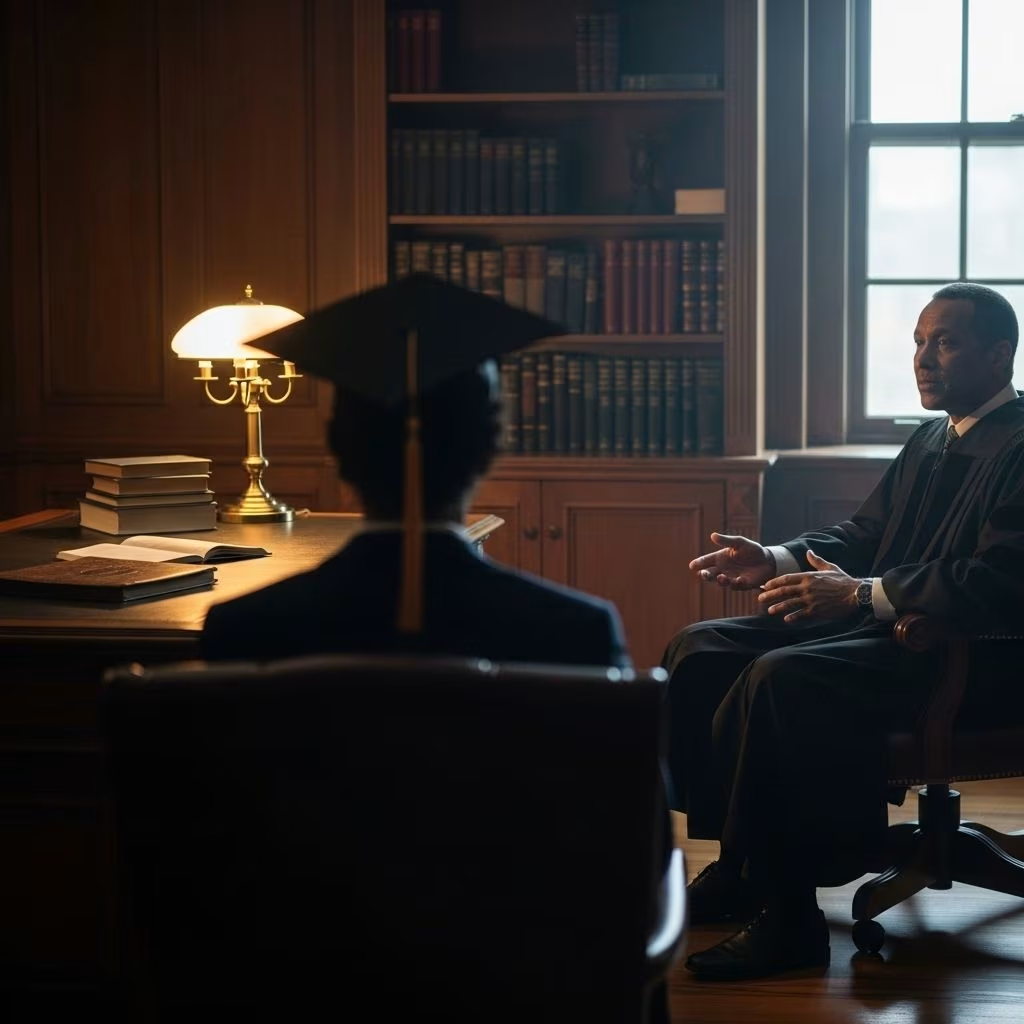
Student-Professor Relationships: Navigating Ethics, Power, and Policy
In the realm of higher education, student-professor relationships emerge as a contentious subject, loaded with ethical, legal, and cultural debates. The evolving dialogue spans personal anecdotes and institutional reforms, questioning the nature of consent, the reality of power imbalances, and the way universities respond. This article unpacks the issues at stake, outlining perspectives from academia, policy frameworks, and lived experiences.
Why Are Student-Professor Relationships So Contentious?
At the heart of the debate lies the power imbalance: professors hold authority over students through grading, recommendations, and access to professional opportunities, which complicates the concept of genuine consent. Such relationships can affect not only the individuals involved, but also classmates, colleagues, and the integrity of the academic environment.
- Authority: Professors control grades, future academic recommendations, and career prospects.
- Trust and Respect: Students may feel unable to refuse advances or end a relationship due to fear of reprisal.
- Perception of Fairness: Other students may perceive favoritism or inequity.
Institutional Policies: How Universities Govern Relationships
Universities increasingly see a need to clarify their positions on romance between faculty and students. Policies vary, typically falling under one of three models:
- Prohibition: Outright banning all romantic or sexual relationships between faculty and undergraduate students, regardless of context.
- Conditional Allowance: Allowing relationships only if there is no direct teaching, supervisory, or evaluative connection, often with mandatory disclosure and management plans.
- Discouragement/Reporting: Strongly discouraging such relationships or requiring prompt reporting and mitigation of conflicts of interest.
For example, Duke University prohibits faculty-undergraduate relationships entirely due to the unbridgeable power differential, while faculty-graduate student relationships are permitted only in the absence of a direct supervisory role and with proper disclosure.
Comparison of Common Policy Models
| Policy Model | Typical Stance on Undergraduate Relationships | Stance on Graduate Relationships | Disclosure Requirements |
|---|---|---|---|
| Prohibition | Banned entirely | Banned if direct supervisory role; possible if none | Usually not required (since not permitted) |
| Conditional Allowance | Discouraged, but possible with no direct power | Permitted if no conflict, with disclosure | Required for all relationships |
| Reporting/Discouragement | Strongly discouraged, often requires reporting | Discouraged, with possible oversight | Required if relationship exists |
Legal and Ethical Considerations
While adult students and professors can legally enter relationships, institutions argue that the professional context creates unique risks:
- Sexual Harassment Claims: Relationships can later be reinterpreted as coercive or exploitative, resulting in costly lawsuits.
- Ethical Codes: Professional associations commonly prohibit ‘professional-client’ sexual relationships, citing risks of exploitation and conflicts of interest.
- Power of Authority: The ability of a professor to reward or penalize a student, whether overtly or subtly, is seen as undermining true autonomy.
Some argue that banning relationships may infringe on constitutional rights to association and privacy—but the dominant concern remains safeguarding students and the integrity of academic evaluation.
The Human Factor: Real Experiences and Social Perceptions
Despite institutional warnings, stories of student-professor relationships persist, ranging from consensual romance to allegations of abuse. These experiences reflect the blurred lines between professional and personal boundaries that can arise in education, especially when mentorship develops into deeper emotional intimacy.
- Emotional Complexity: Relationships may begin with genuine affection, but often become complicated by issues of secrecy, gossip, and peer judgment.
- Cultural Stigma: Society views such relationships warily, seeing them as either glamorized or taboo, which affects disclosure and honesty.
- Risk of Retaliation: Students who end relationships may fear negative repercussions to their academic progress.
Potential Consequences: Academic, Professional, and Personal
The fallout from student-professor relationships extends far beyond those directly involved.
- Academic Integrity: Perceived or real favoritism can undermine trust in grades, recommendations, and academic advancement.
- Legal Risks: Post-relationship disputes sometimes result in sexual harassment claims or lawsuits, carrying institutional and personal consequences.
- Reputation: Both faculty and students may face lasting damage to their reputations, complicating future job prospects and peer relationships.
- Impact on Others: Classmates and colleagues may feel alienated or unjustly treated.
Best Practices and Guidance: Safeguarding All Parties
Institutions and professional associations recommend safeguards designed to protect students and preserve the integrity of educational relationships:
- Clear Policies: Written policies on consensual relationships, regularly reviewed and updated, set transparent boundaries.
- Disclosure and Management Plans: Where relationships are allowed, immediate reporting and conflict mitigation strategies are mandated.
- Training: Ethics education and awareness workshops can help faculty and students understand risks and their rights.
Professional Standards and Ethics
Professional organizations like the American College Personnel Association (ACPA) and the National Association of Student Personnel Administrators (NASPA) outline clear ethical standards. For example, ACPA’s policies explicitly require abstaining from sexual relationships with students under one’s supervision or authority. These standards not only protect students but foster a climate of professionalism and equitable treatment.
Frequently Asked Questions (FAQs)
Q: Are student-professor relationships illegal?
A: Generally, consensual relationships between adult students and professors are not illegal, but many universities explicitly prohibit or regulate them because of ethical, professional, and legal concerns.
Q: Why do universities ban these relationships?
A: Universities ban or restrict student-professor relationships due to the inherent power differential, risk of exploitation, conflicts of interest, and the possibility of future harassment claims.
Q: What happens if a professor and student are in a relationship?
A: Responses depend on the institution’s policy. Typically, undisclosed relationships can result in disciplinary action against the faculty member; if reported, universities may attempt to remove direct oversight and implement conflict management.
Q: How are graduate student relationships treated?
A: Many universities permit faculty-graduate student relationships only if there is no supervisory or evaluative role, and with appropriate disclosure. If any conflict is present, the relationship is usually prohibited.
Q: What are the risks for students?
A: Students may face academic disadvantages, social isolation, reputational harm, and potential retaliation if the relationship ends or becomes public. There are also risks of exploitation and trauma if the relationship is not truly consensual.
Global Perspectives: The Debate Beyond Local Context
Attitudes and policies vary across cultures and national education systems. Some countries take a hardline stance, banning faculty-student relationships entirely in universities, while others rely on individual discretion and ethical frameworks. In most cases, trends point toward stronger regulation and an emphasis on institutional responsibility.
- In the United States: The majority of major institutions now either ban or strictly regulate such relationships.
- Globally: A growing number of universities are following suit, motivated by increased scrutiny and evolving professional standards.
Discussion and Takeaways
- Broad Consensus: Most experts and institutions agree on the problematic nature of student-professor relationships—especially where direct power or supervision exists.
- Complex Realities: While not always exploitative, even fully consensual relationships are fraught with risk and challenging dynamics.
- Responsibility: It remains incumbent on those with authority to protect student welfare and ensure equity in academic evaluation and advancement.
- Ongoing Debate: As new generations challenge old norms and as higher education evolves, policies and cultural attitudes will likely continue to shift.
Further Reading and Resources
- Professional Ethics in Academia: Review ethical codes by ACPA, NASPA, and discipline-specific associations for guidance.
- University Handbooks: Most institutions publish faculty and student relationship policies online.
- Legal Resources: Consult university compliance offices or legal aid for questions about policies.
Final Thought
Ultimately, the conversation about student-professor relationships in academia is a microcosm of broader ethical challenges in society—touching on autonomy, authority, and trust. Striking a balance between personal freedom and institutional responsibility calls for transparent processes, rigorous oversight, and a shared commitment to the principles that underlie educational excellence.
References
- https://scholarworks.uni.edu/cgi/viewcontent.cgi?article=2585&context=grp
- https://www.ue.org/risk-management/sexual-assault-and-misconduct/faculty-student-consensual-relationship-policies/
- https://policies.provost.duke.edu/docs/faculty-handbook-appendix-l-faculty-student-relationships
- https://compliance.gwu.edu/prohibited-relationships-students-policy
- https://policy.rice.edu/829
- https://www.facultysenate.vt.edu/about/principles-of-ethical-behavior.html
- https://provost.umich.edu/resources-policies/faculty-resources/additional-faculty-policies/policy-on-faculty-student-relationships/


