


Introduction
Attraction doesn’t always follow society’s rules—especially when it comes to someone who’s already in a relationship. Psychologists have long been fascinated by the phenomenon known as mate poaching: the act of attempting to attract someone who is already romantically involved with someone else. While the ethics of this behavior are hotly debated, the science behind it offers a clear picture of which tactics are perceived as most effective, how men and women differ in their approaches, and what this means for modern dating dynamics.
What Is Mate Poaching?
Mate poaching is the process by which individuals attempt to attract and form romantic or sexual relationships with people who are already in a partnership. This behavior is not limited to any one gender, culture, or age group, and research suggests it’s more common than you might think. Evolutionary psychology offers insights into why some people are drawn to those already taken and how certain tactics increase the likelihood of success.
How Psychologists Study Relationship Infiltration
To understand mate poaching, researchers often use surveys and experimental vignettes. In one study, participants read scenarios describing different infiltration tactics and rated their effectiveness. This method reveals not just what people say works, but also how perceptions vary by gender and context.
Most Effective Tactics to Infiltrate a Relationship
Through careful observation and experimentation, psychologists have identified several tactics that are perceived as most effective for attracting someone already in a relationship:
- Friendship as a Gateway: Becoming friends with the target is one of the most effective strategies. A close friendship increases the perceived likelihood of a successful long-term relationship and reduces the risk of future infidelity, as it signals investment and emotional connection.
- Attention and Compliments: Being attentive, offering genuine compliments, and showing concern for the target’s well-being are universally seen as effective by both men and women.
- Shared Activities: Spending time together, especially in casual, relatable settings like studying or working, helps build intimacy and trust.
- Getting Close to Their Friends: Integrating into the target’s social circle makes the poacher seem safe, familiar, and part of the community.
- Subtle Flirting: Flirting, smiling, and light touching can signal romantic interest without being too aggressive.
- Talking Badly About the Partner: Disparaging the target’s current partner can sometimes weaken their attachment, though this tactic is seen as riskier and more manipulative.
- Online Communication: Texting, Snapchatting, or other forms of digital communication allow for ongoing, private connection.
Gender Differences in Infiltration Tactics
Research shows that men and women sometimes differ in which tactics they view as most effective:
| Tactic | Men’s Perception | Women’s Perception |
|---|---|---|
| Drinking together | More likely to see as effective | Less likely to see as effective |
| Talking poorly about partner | More likely to see as effective | Less likely to see as effective |
| Flirting, touching, dancing | More likely to see as effective | Less likely to see as effective |
| Being attentive, helpful | Equally seen as effective | Equally seen as effective |
| Integrating with friends | Equally seen as effective | Equally seen as effective |
Despite these differences, both genders generally agree that demonstrating emotional investment, reliability, and genuine interest are key to successfully infiltrating a relationship.
Friendship as a Strategic Tool
Perhaps the most striking finding is the role of friendship in mate poaching. Becoming friends not only increases the chances of a romantic or sexual encounter, but also makes the resulting relationship more likely to last. People perceive that a bond formed through friendship is more stable and less prone to future infidelity, likely because friendship signals commitment and emotional compatibility.
The Ethics and Emotional Impact of Mate Poaching
While the science is clear on what works, the ethical implications are complex. Infiltrating a relationship can cause significant emotional distress, betrayal, and long-term damage to the original partnership. Understanding these tactics can also help individuals recognize when they might be the target of such strategies, empowering them to protect their relationships.
Triangulation: Manipulation in Relationships
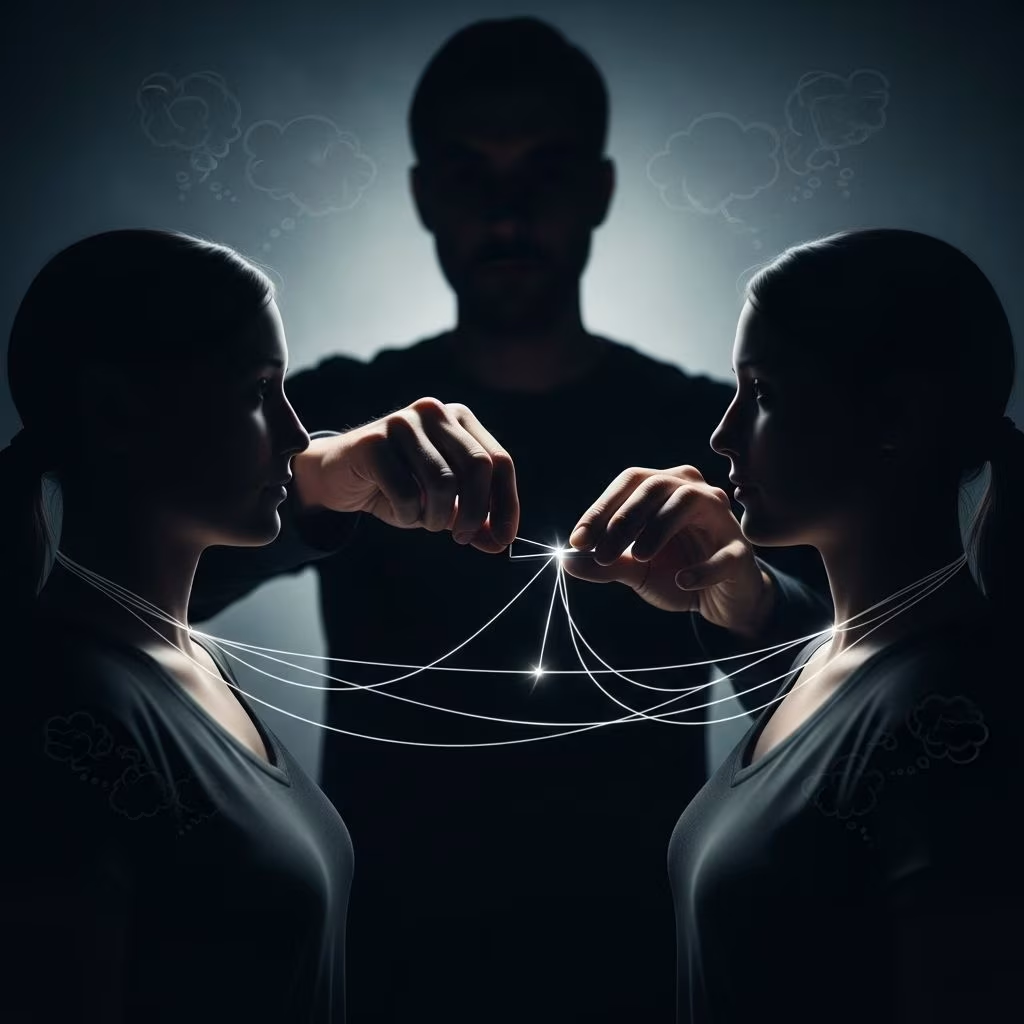
Beyond simple attraction tactics, researchers have identified triangulation as a manipulative strategy sometimes used in relationships. This involves introducing a third party—often a new romantic interest or friend—to create jealousy, insecurity, or competition within the original relationship. Triangulation can destabilize partnerships, breed distrust, and lead to long-term emotional harm.
- How It Works: The manipulator might flirt with someone else to provoke jealousy, compare their partner unfavorably to an ex, or spread rumors to create discord.
- Impact: This tactic can make the target feel insecure, anxious, and emotionally dependent on the manipulator.
- Prevention: Recognizing triangulation is the first step in defending against it. Strategies include setting boundaries, direct communication, and seeking support from trusted individuals or professionals.
Why Do People Attempt to Poach Mates?
Evolutionary psychology suggests that mate poaching may stem from a desire for status, novelty, or perceived higher-value partners. The thrill of competition, the challenge of “winning” someone already taken, and the belief that partnered individuals are more desirable can all play a role. Additionally, some research indicates that poachers may be seeking short-term flings as well as long-term partnerships, depending on their individual goals.
How to Protect Your Relationship from Infiltration
Understanding the tactics of mate poaching is half the battle. Here are some strategies for safeguarding your partnership:
- Open Communication: Regularly check in with your partner about your feelings, concerns, and boundaries.
- Recognize Red Flags: Be aware of anyone who seems overly friendly, attentive, or interested in driving a wedge between you and your partner.
- Maintain Emotional Connection: Strong emotional bonds are the best defense against outside interference.
- Set Boundaries: Clearly communicate what behaviors are acceptable in your friendships and social circles.
Frequently Asked Questions (FAQs)
Q: Are men or women more likely to attempt mate poaching?
A: Both men and women engage in mate poaching, but research shows some differences in the tactics they use and their motivations. Men may be more likely to pursue short-term encounters, while women may focus on longer-term potential, though there is considerable overlap.
Q: How common is mate poaching?
A: Studies suggest that mate poaching is relatively common, with a significant portion of people reporting either attempting to attract someone in a relationship or being the target of such attempts during their lifetime.
Q: Can mate poaching ever lead to a healthy relationship?
A: While relationships that begin through mate poaching can sometimes last, they often start with lower trust and higher risk of infidelity. The success of such relationships depends on the individuals involved and the circumstances of how the partnership began.
Q: What should I do if I suspect someone is trying to poach my partner?
A: Address your concerns openly and honestly with your partner. Set clear boundaries, and if necessary, limit contact with the person in question. Trust and communication are key to navigating these situations.
Conclusion
Mate poaching is a complex, psychologically driven phenomenon with real-world consequences for individuals and relationships. By understanding the tactics used to infiltrate partnerships and the motivations behind them, people can better recognize potential threats and take steps to protect their own romantic bonds. Whether you’re curious about the psychology of attraction or looking to safeguard your relationship, knowledge is the most powerful tool available.
References
- https://pmc.ncbi.nlm.nih.gov/articles/PMC10426952/
- https://www.psypost.org/psychologists-investigate-best-ways-infiltrate-romantic-relationship/
- https://digitalcommons.bucknell.edu/cgi/viewcontent.cgi?article=1102&context=masters_theses
- https://journals.sagepub.com/doi/abs/10.1177/147470491301100415
- https://bayareacbtcenter.com/triangulation/
- https://pubmed.ncbi.nlm.nih.gov/33772820/
- https://www.couplesinstitute.com/making-strong-confrontations-in-the-aftermath-of-infidelity/


