


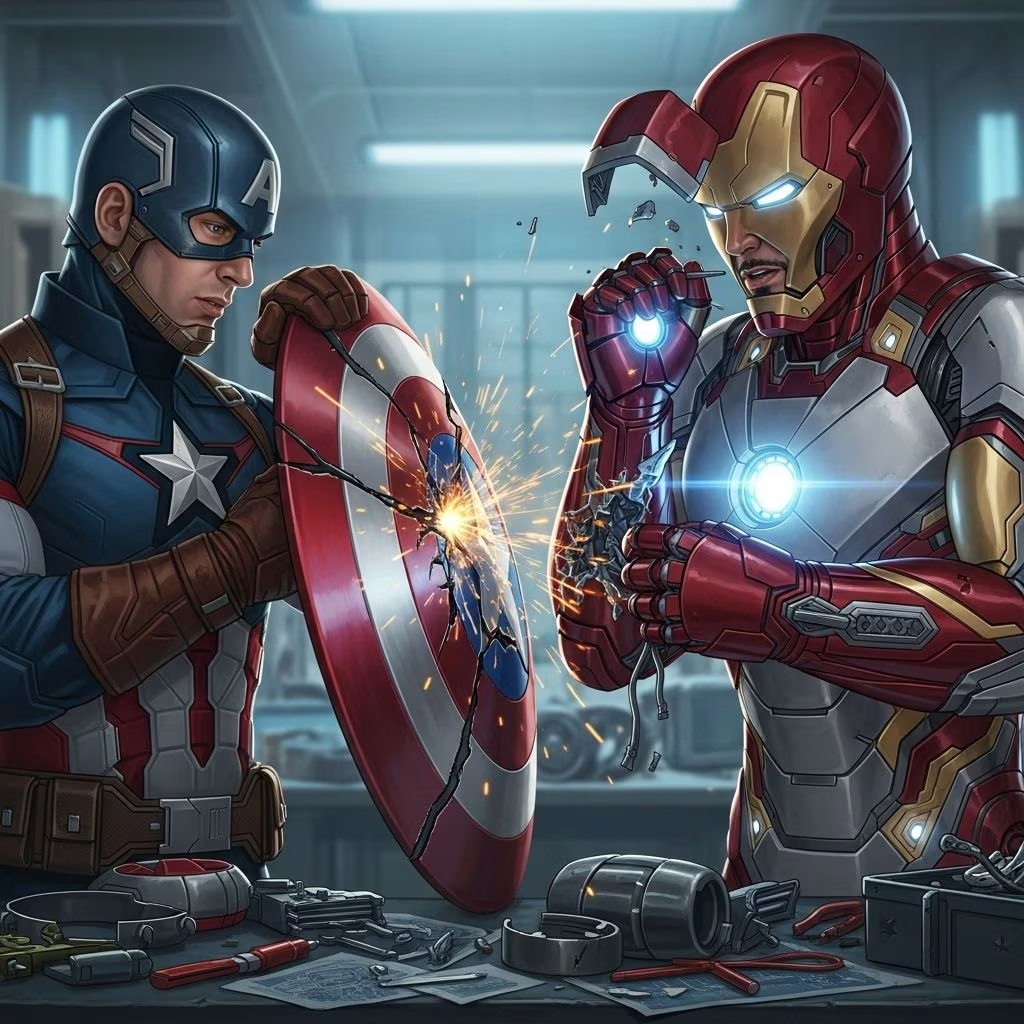
The relationship between Captain America and Iron Man stands as one of the most compelling and complex dynamics in superhero storytelling. What began as a promising alliance between two of Marvel’s greatest heroes evolved into a fractured partnership marked by profound ideological differences, devastating conflicts, and ultimately, a relationship that needed serious repair. Understanding how these two iconic characters reached such a breaking point—and exploring potential paths toward reconciliation—offers valuable insights into not just superhero narratives, but the very nature of friendship, compromise, and redemption.
The Foundation of a Legendary Partnership
Steve Rogers and Tony Stark entered the Marvel Cinematic Universe from vastly different origins. Captain America emerged from World War II as the embodiment of unwavering moral conviction and selfless sacrifice. His journey began as a weak young man who possessed an inner strength that no serum could create—a fundamental goodness and determination to do what was right, regardless of personal cost. Tony Stark, conversely, started his superhero career as a billionaire industrialist whose transformation into Iron Man was born from both trauma and ego. His initial approach to heroism was deeply individualistic, rooted in the belief that he alone could be trusted with such immense power.
Their early interactions revealed both promise and tension. When they first assembled as Avengers, the clash was immediate but not yet destructive. Tony’s quip-filled arrogance rubbed against Steve’s earnest leadership style, creating friction that was initially more comedic than catastrophic. However, beneath these surface-level differences lay fundamental disagreements about authority, accountability, and the proper use of power—disagreements that would eventually tear them apart.
The beauty of their initial partnership was how they complemented each other. Steve provided moral clarity and tactical expertise, while Tony brought technological innovation and strategic resources. Together, they represented the ideal balance between heart and mind, principle and pragmatism. Their friendship, forged in the fires of battle against alien invasions and technological threats, seemed unbreakable. For years, they managed to navigate their differences, finding common ground in their shared commitment to protecting the world.
The Seeds of Ideological Conflict
The cracks in their relationship began to show long before the Sokovia Accords brought everything crashing down. Tony Stark’s journey through the MCU involved a gradual shift in his worldview. Starting as someone who refused to share responsibility with anyone—famously declaring he had “successfully privatized world peace”—Tony’s experiences slowly convinced him of the need for external oversight and accountability. The destruction caused by Ultron, a creation of his own hubris, weighed heavily on his conscience and pushed him toward accepting governmental control.
Steve Rogers traveled the opposite trajectory. Beginning his superhero career as literally a mascot for the U.S. Army, Captain America initially represented institutional authority. However, his experiences with S.H.I.E.L.D.’s corruption and Hydra’s infiltration fundamentally altered his perspective. Steve came to believe that institutions, no matter how well-intentioned, could be compromised and corrupted. His conclusion was stark: corrupt institutions cannot be reformed; they must be completely dismantled. This philosophy put him on a collision course with Tony’s newfound faith in governmental oversight.
The irony of their respective evolutions cannot be overstated. By the time Civil War erupted, Tony Stark—the man who once thumbed his nose at Senate committees—was advocating for United Nations oversight of superhero activities. Meanwhile, Steve Rogers—the literal symbol of American institutional authority—had become a fugitive rebel, trusting his own moral compass over any external authority. They had essentially swapped philosophical positions, yet neither could see the other’s perspective clearly enough to find middle ground.
The Devastating Impact of Civil War
The Sokovia Accords represented more than just a policy disagreement; they crystall
References
- https://bookriot.com/captain-america-and-iron-man-are-married/
- https://www.cbr.com/captain-america-iron-man-mcu-relationship-evolution/
- https://www.youtube.com/watch?v=IzL_1e-Pipo
- https://screenrant.com/mcu-quotes-iron-man-captain-america-friendship/
- https://shipping.fandom.com/wiki/Stony
- https://disney.fandom.com/wiki/Iron_Man/Relationships


