


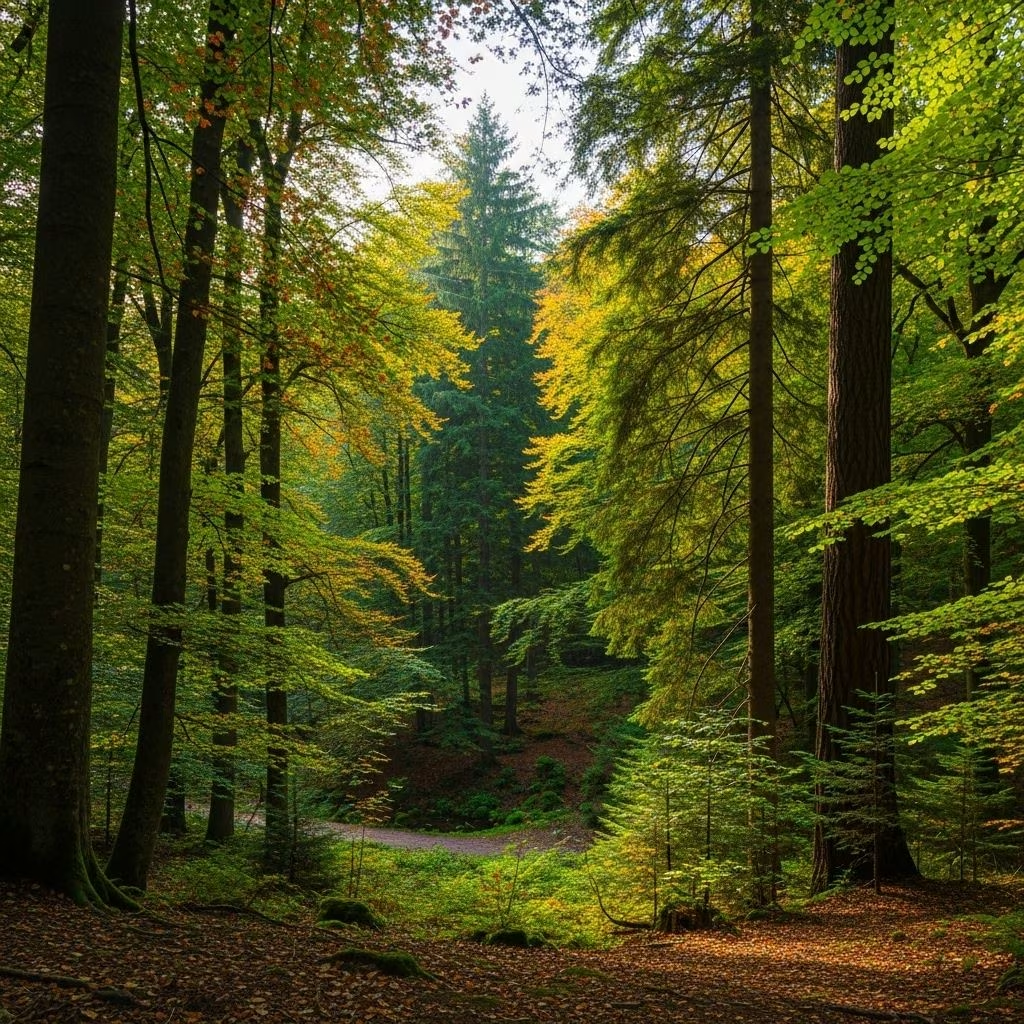
Forests are foundational to life on Earth. Covering about one third of the world’s land surface, they nurture biodiversity, regulate climate, supply resources, and enrich human culture and wellbeing. Yet, their significance often goes unnoticed or underappreciated, despite mounting threats from deforestation, degradation, and unsustainable exploitation. This article explores 13 key reasons forests remain indispensable, drawing on ecological, economic, and social perspectives to highlight their value for our planet’s health and humanity’s future.
1. Forests Are Ancient Cradles and Reservoirs of Life
Forests have persisted for over 380 million years, serving as evolutionary hotspots. These vast ecosystems have provided shelter, sustenance, and evolutionary opportunities for myriad species, tracing the story of plant and animal life across eons. Rich fossil records show ancient forests fostering biodiversity, forming complex habitats, and influencing atmospheric conditions integral to life’s emergence on land.
2. Forests Harbor More Than Half the World’s Land Species
Biodiversity in forests is peerless. They are home to roughly 80% of terrestrial animal, plant, and fungal species, concentrated especially in rainforests where conditions favor biological richness. This diversity carries immense ecological, genetic, and medical value, representing a source of future discoveries, ecosystem resilience, and evolutionary vitality.
- Tropical forests support the most diversity, with dense canopies sheltering countless species at risk from deforestation.
- Rare and endemic species rely on intact forests for survival and adaptation.
3. Forests Stabilize Climate and Store Carbon
Forests play a central role in regulating the global climate. They are among the planet’s largest carbon sinks, locking away hundreds of gigatons of carbon in living biomass and soils. Through photosynthesis, trees absorb atmospheric carbon dioxide (CO2), mitigating greenhouse gas buildup and slowing global warming.
- Deforestation and degradation release vast quantities of stored carbon, intensifying climate change.
- Forest protection and restoration are critical elements in international climate action strategies.
4. Forests Breathe Out Oxygen for All
Trees and forests underpin the planet’s oxygen cycle. During photosynthesis, forests produce more than a quarter of the world’s oxygen, making breathable air possible for people and animals alike.
- Forests and oceans together maintain atmospheric oxygen.
- The destruction of forests threatens oxygen supplies regionally.
5. Forests Clean Water and Regulate Hydrological Cycles
Forests act as water towers, filtering, purifying, and regulating freshwater sources worldwide. Their root systems anchor soils, reduce erosion, and facilitate groundwater recharge. Canopies intercept rainfall, slowing runoff and reducing the impact of flooding.
- Up to 75% of freshwater resources originate in forested catchments.
- Forests maintain water quality by buffering streams and filtering out pollutants and sediments.
6. Forests Protect and Build Soils
The structure and health of soils depend on forests. Leaf litter, woody debris, and root activity enrich soils, maintain fertility, and prevent erosion. Healthy forest soils support nutrient cycling, microbial life, and agriculture in surrounding areas.
- Deforestation strips soils of nutrients and exposes them to wind and water erosion.
- Forest-derived humus contributes to soil stability and fertility, critical for crop growth and ecosystem services.
7. Forests Support the Global Economy and Livelihoods
Forests fuel economies, especially for rural and Indigenous communities. About 1.6 billion people globally depend directly on forests for jobs, livelihoods, and survival — from harvesting wood and non-timber products to fostering ecotourism and green industries.
- Forestry, timber, and pulp industries remain central to many nations’ economies.
- Wild harvesting, nuts, fruits, resins, medicinal plants, and other non-timber products are essential for traditional and modern livelihoods.
8. Forests Contain Irreplaceable Medicinal and Genetic Resources
Modern medicine owes much to forests. Over 25% of pharmaceutical drugs are derived from forest plants, with countless more untapped species potentially holding cures for diseases. Indigenous knowledge and biodiversity ensure future advances in healthcare and biotechnology.
- Quinine, cancer drugs, antibiotics, and painkillers have forest origins.
- Loss of forest habitats threatens bio-prospecting and scientific discovery.
9. Forests Influence Weather and Support Global Rainfall
Forests contribute to regional and global weather systems by cycling water vapor back into the atmosphere. Through a process called evapotranspiration, forests release moisture, encouraging cloud formation and rainfall not only nearby but also thousands of miles downwind.
- Amazon rainforest ‘flying rivers’ drive rainfall patterns across South America.
- Deforestation can cause severe droughts and disrupt agricultural productivity far beyond the immediate area.
10. Forests Offer Habitat and Refuge in a Changing World
As climate change progresses, forests serve as refuges for displaced wildlife. Their microclimates and habitat complexity enable adaptation, migration, and survival for species under pressure from shifting conditions everywhere else.
- Forest corridors enable gene flow and migration for climate resilience.
- Protecting intact forests buffers against extinction events and ecosystem collapse.
11. Forests Foster Recreation, Inspiration, and Well-Being
For millions of people, forests provide spaces for recreation, spiritual renewal, inspiration, and education. Scientific evidence demonstrates that immersion in forest environments lowers stress, improves mood, and benefits overall health.
- National parks, reserves, and urban forests host countless recreational opportunities.
- Forest therapy and nature exposure are increasingly recognized as tools for public health.
12. Forests Shape Cultural Heritage and Indigenous Identity
Forest landscapes are deeply woven into the cultural and spiritual fabric of societies worldwide. For Indigenous peoples, forests are sacred homelands, sources of cultural knowledge, and living libraries of traditions and language.
- Over 5,000 Indigenous groups depend on forests for cultural survival.
- Traditional ecological knowledge is vital for sustainable forest management and conservation.
13. Forests are Key to a Sustainable Future
With climate and biodiversity crises converging, safeguarding forests lies at the heart of a sustainable future. Protecting, restoring, and managing forests responsibly enables carbon sequestration, species conservation, and resilience to environmental shocks essential for generations ahead.
- Reforestation and afforestation are major climate mitigation strategies.
- Community-led conservation and policy reform are necessary to balance human needs and forest health.
Quick Comparison: Forest Ecosystem Services
| Service | Description | Key Benefits |
|---|---|---|
| Biodiversity | Supports vast numbers of plant and animal species | Genetic resources, ecosystem stability |
| Carbon Storage | Absorbs and stores carbon dioxide from atmosphere | Mitigates global warming |
| Water Regulation | Filters, stores, and gradually releases freshwater | Clean water, reduced floods and droughts |
| Soil Protection | Prevents erosion and sustains fertile soils | Supports agriculture and land productivity |
| Cultural Value | Supports traditions, recreation, and spiritual life | Human well-being and diversity |
Frequently Asked Questions (FAQs)
Q: How much of the world is covered by forests today?
A: Approximately 31% of the Earth’s land surface is forested, though this area is declining due to ongoing deforestation and conversion for agriculture.
Q: What are the main threats facing forests?
A: The main threats are deforestation, illegal logging, forest fires, climate change, invasive species, and conversion to agriculture or urban use.
Q: Why are old-growth forests especially important?
A: Old-growth forests store large amounts of carbon, maintain unique biodiversity, and support ecological processes that cannot be replaced by young plantations.
Q: Can tree planting replace natural forests?
A: While planting trees aids reforestation, it cannot fully replace the complex functions and biodiversity of mature, natural forests.
Q: How can we protect forests more effectively?
A: Key actions include enforcing legal protections, supporting Indigenous and community management, reducing consumption of forest-risk goods, and participating in restoration initiatives.
Conclusion: Our Responsibility Towards Forests
Forests enrich and sustain life at every scale imaginable. They regulate the climate, purify air and water, support biodiversity, and shape cultures and economies. As we confront unprecedented environmental challenges, protecting forests is no longer optional — it is a necessity for ecological stability, social resilience, and human well-being. By recognizing the profound value of forests and taking action to safeguard them, we can ensure a livable planet for ourselves and future generations.
References
- https://www.youtube.com/watch?v=iVgUASgRQcc
- https://www.gettingmoreontheground.com/2014/11/24/okay-hug-tree/
- https://www.forestsociety.org/blog-post/forest-journal-tree-hugging-everyone-should-have-favorite-tree
- https://www.jstor.org/stable/41209926
- https://underthebanyan.blog/2010/09/05/a-challenge-to-anyone-who-ever-used-the-phrase-tree-hugger/


