


Introduction
Mercury is a toxic metal found in various forms throughout the environment, but its presence in fish raises significant health concerns. While fish are a nutritious source of protein and omega-3 fatty acids, mercury contamination can undermine these benefits, especially for vulnerable populations. This article explores how mercury enters the food chain, which fish species are most affected, the health risks associated with mercury exposure, and practical strategies for enjoying seafood safely.
How Mercury Enters the Environment
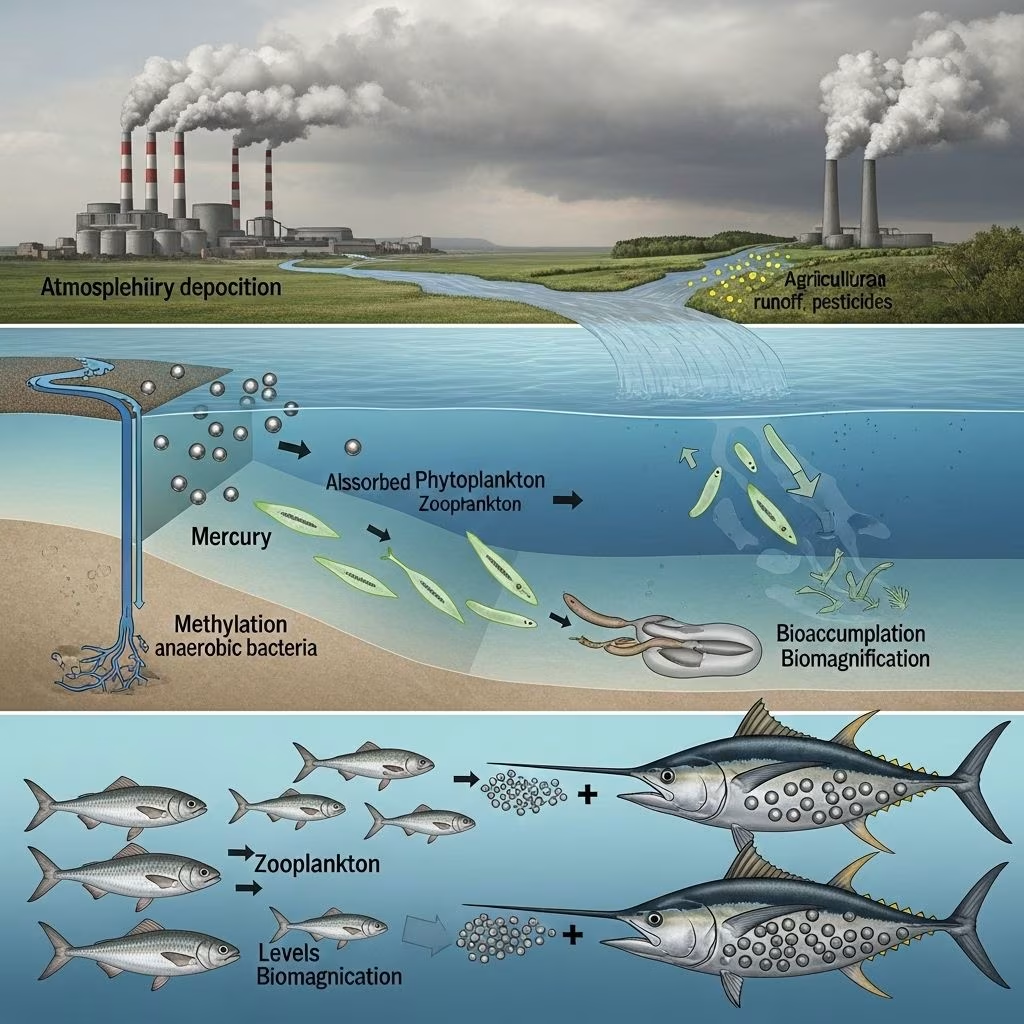
Mercury is released into the environment through both natural processes and human activities. Natural sources include volcanic eruptions and erosion of mercury-containing rocks. However, most mercury pollution today comes from industrial activities, especially the burning of fossil fuels such as coal, as well as waste incineration and certain manufacturing processes. Once released into the air, mercury can travel long distances before settling into water bodies, where it undergoes a critical transformation.
Transformation to Methylmercury
In water, microorganisms convert mercury into methylmercury, a highly toxic organic form that is readily absorbed by aquatic organisms. This conversion is a key step in the movement of mercury from the environment into the food chain. Methylmercury is particularly dangerous because it can accumulate in living tissues and is not easily excreted, leading to increasing concentrations as it moves up the food chain.
The Journey of Mercury Through the Food Chain
Mercury enters the food chain when small organisms absorb it from water and sediments. These organisms are then eaten by small fish, which in turn are consumed by larger fish. Because mercury accumulates in living tissue and is not broken down or excreted easily, predators at the top of the food chain—such as large, long-lived fish—tend to have the highest mercury levels.
Bioaccumulation and Biomagnification
The processes of bioaccumulation (the build-up of a substance in an organism over time) and biomagnification (the increase in concentration as the substance moves up the food chain) explain why large predatory fish like shark, swordfish, and tuna have much higher mercury levels than smaller, short-lived species. Fish that live longer and consume other fish accumulate more mercury over their lifetimes, making them riskier choices for regular consumption.
Which Fish Have the Highest Mercury Levels?
| Fish Type | Mercury Level |
|---|---|
| Shark | Very High |
| Swordfish | Very High |
| King Mackerel | High |
| Tuna (Bigeye/Ahi, Albacore) | High (varies by species) |
| Orange Roughy | High |
| Tilefish (Gulf of Mexico) | Very High |
| Salmon | Low |
| Shrimp, Pollock, Catfish | Low |
| Sardines, Anchovies | Very Low |
Predatory fish that are large, old, and at the top of the food chain—such as shark, swordfish, king mackerel, and tilefish—consistently show the highest mercury levels and should be avoided by vulnerable groups. Tuna, especially larger species like bigeye and albacore, also tend to have elevated mercury. In contrast, smaller fish and those lower on the food chain, such as salmon, shrimp, sardines, and anchovies, have much lower mercury levels.
Health Risks of Mercury in Fish
Methylmercury is highly toxic to the nervous system, especially in developing fetuses and young children. Exposure to high levels of mercury can impair brain development and cognitive function, leading to delayed milestones, learning disabilities, and other developmental issues.
Vulnerable Populations
- Pregnant women: Mercury can cross the placenta and harm the developing fetus, particularly affecting brain and nervous system development.
- Nursing mothers: Mercury can be passed to infants through breast milk.
- Young children: Their developing nervous systems are more susceptible to mercury’s toxic effects.
- People with certain medical conditions: Those with compromised kidney function may have a harder time excreting mercury.
For the general population, occasional consumption of high-mercury fish is unlikely to cause harm, but regular or excessive intake can lead to mercury accumulation and potential health risks.
Fish Contaminated With Other Environmental Toxins
While mercury is the main concern in fish, other contaminants can also be present, depending on the local environment.
Common Contaminants
- PCBs (polychlorinated biphenyls): Industrial chemicals that may linger in sediments and accumulate in fish.
- Dioxins: Byproducts of industrial processes and waste incineration that can accumulate in fatty tissues.
- PBDEs (polybrominated diphenyl ethers): Flame retardants found in consumer products that can enter waterways.
- Chlorinated pesticides: Legacy chemicals that persist in the environment.
Bottom-dwelling fish are especially prone to accumulating these chemicals, as many toxins settle in sediments where these fish feed.
Testing Fish for Mercury Level
Governments and health organizations regularly monitor mercury levels in commercial fish to inform consumption advisories. In the United States, the FDA and EPA publish data on mercury content in fish and shellfish, making it easier for consumers to make informed choices. Independent studies also provide data on mercury levels in various fish species, both wild and farmed, to guide consumer decisions.
How Mercury Testing Is Conducted
Mercury content in fish is typically measured using advanced laboratory techniques. Samples are collected from commercial fisheries and tested for total mercury and methylmercury. Results are compared with safety standards to determine which species are safest for regular consumption.
Government Guidelines for Fish Consumption
United States
The FDA and EPA recommend that pregnant women, nursing mothers, women who may become pregnant, and young children limit their intake of high-mercury fish and choose lower-mercury options instead. They provide a list of “best choices,” “good choices,” and “fish to avoid” based on mercury content.
International Recommendations
Other countries have similar guidelines, typically advising vulnerable groups to avoid or strictly limit high-mercury fish and encouraging the general population to eat a variety of seafood, focusing on species with lower contamination levels.
Practical Tips for Safely Enjoying Seafood
- Choose lower-mercury fish: Opt for salmon, shrimp, pollock, sardines, and anchovies.
- Limit high-mercury fish: Avoid or severely restrict shark, swordfish, king mackerel, and tilefish, especially if you are pregnant, nursing, or a young child.
- Vary your seafood: Eating a variety of fish and shellfish reduces the risk of overexposure to any single contaminant.
- Follow local advisories: Check for region-specific guidelines, especially if you consume fish caught recreationally.
- Proper preparation: While cooking does not remove mercury, trimming fat and avoiding certain organs can reduce exposure to other contaminants like PCBs and dioxins.
Myths and Misconceptions About Mercury in Fish
Can Cooking Remove Mercury?
No, mercury is tightly bound to the proteins in fish muscle and cannot be removed by cooking, cleaning, or trimming.
Are All Large Fish High in Mercury?
Most large, long-lived, predatory fish are high in mercury, but not all. For example, wild salmon can be large but are low in mercury.
Is Farmed Fish Safer?
Farmed fish may have different contaminant profiles depending on their feed and farming practices. Some studies suggest farmed fish may have lower mercury levels than certain wild counterparts, but this can vary by species and location.
Frequently Asked Questions (FAQs)
Q: Why is mercury dangerous in fish?
A: Methylmercury attacks the nervous system, especially in fetuses and young children, potentially causing developmental and cognitive issues.
Q: Can adults eat high-mercury fish?
A: Occasionally, yes, but regular or excessive consumption can lead to mercury accumulation and health risks.
Q: Are there health benefits to eating fish despite mercury risk?
A: Yes, fish are rich in high-quality protein, omega-3 fatty acids, and essential nutrients, so the key is to choose low-mercury varieties.
Q: Does eating local fish reduce mercury exposure?
A: Not necessarily. Mercury pollution is global, and local fish can still have high mercury levels depending on environmental factors.
Q: How can I find out which fish are safe in my area?
A: Consult your local health department or environmental agency for fish consumption advisories specific to your region.
Conclusion
Mercury contamination in fish is a global concern, driven by both natural processes and human activities. Understanding how mercury enters the food chain and which fish pose the greatest risk is crucial for making safe seafood choices. By following government guidelines and focusing on low-mercury options, everyone—especially vulnerable populations—can enjoy the health benefits of fish while minimizing the risks associated with mercury exposure.
Continued monitoring, public education, and stricter environmental regulations are essential to reduce mercury pollution and protect both ecosystems and public health.
References
- https://doh.wa.gov/community-and-environment/food/fish/contaminants-fish
- https://www.betterhealth.vic.gov.au/health/healthyliving/mercury-in-fish
- https://epi.dph.ncdhhs.gov/oee/mercury/in_fish.html
- https://pmc.ncbi.nlm.nih.gov/articles/PMC10457943/
- https://www.fda.gov/food/environmental-contaminants-food/mercury-levels-commercial-fish-and-shellfish-1990-2012
- https://health.ri.gov/mercury-poisoning/fish
- https://www.epa.gov/mercury/how-people-are-exposed-mercury
- https://www.health.harvard.edu/staying-healthy/what-to-do-about-mercury-in-fish


