A Breakthrough in Sustainable Battery Technology
Advances in renewable energy are transforming global infrastructure, yet battery storage remains a critical bottleneck—especially in low-income regions. Innovative research out of Sweden promises to shift this paradigm with a new battery design built from zinc and lignin, two extremely cheap and abundant materials. This article explores the science, sustainability, and potential impact of this groundbreaking battery technology.
Why Cheap, Common Batteries Matter
Affordable, durable batteries are essential for universal access to electricity, especially in remote or economically disadvantaged areas. While solar panels have become inexpensive and widespread, their effectiveness is limited by the lack of reliable nighttime power storage. Conventional batteries—especially lithium-ion—remain expensive, sometimes hazardous, and often environmentally problematic.
- Lithium-ion batteries involve costly, difficult-to-recycle materials like cobalt, which often raise ethical concerns due to mining practices.
- Lead-acid batteries, while affordable, rely on toxic lead and present serious pollution challenges.
- Ideal batteries for the future are safe, inexpensive, recyclable, and made from non-toxic materials.
The Science Behind Zinc-Lignin Batteries
Core Materials: Zinc and Lignin
The key innovation is the use of zinc and lignin:
- Zinc is widely available, low-cost, and non-toxic.
- Lignin—a carbon-rich polymer found in tree bark and pulp—is a byproduct of the paper industry, making it plentiful and inexpensive.
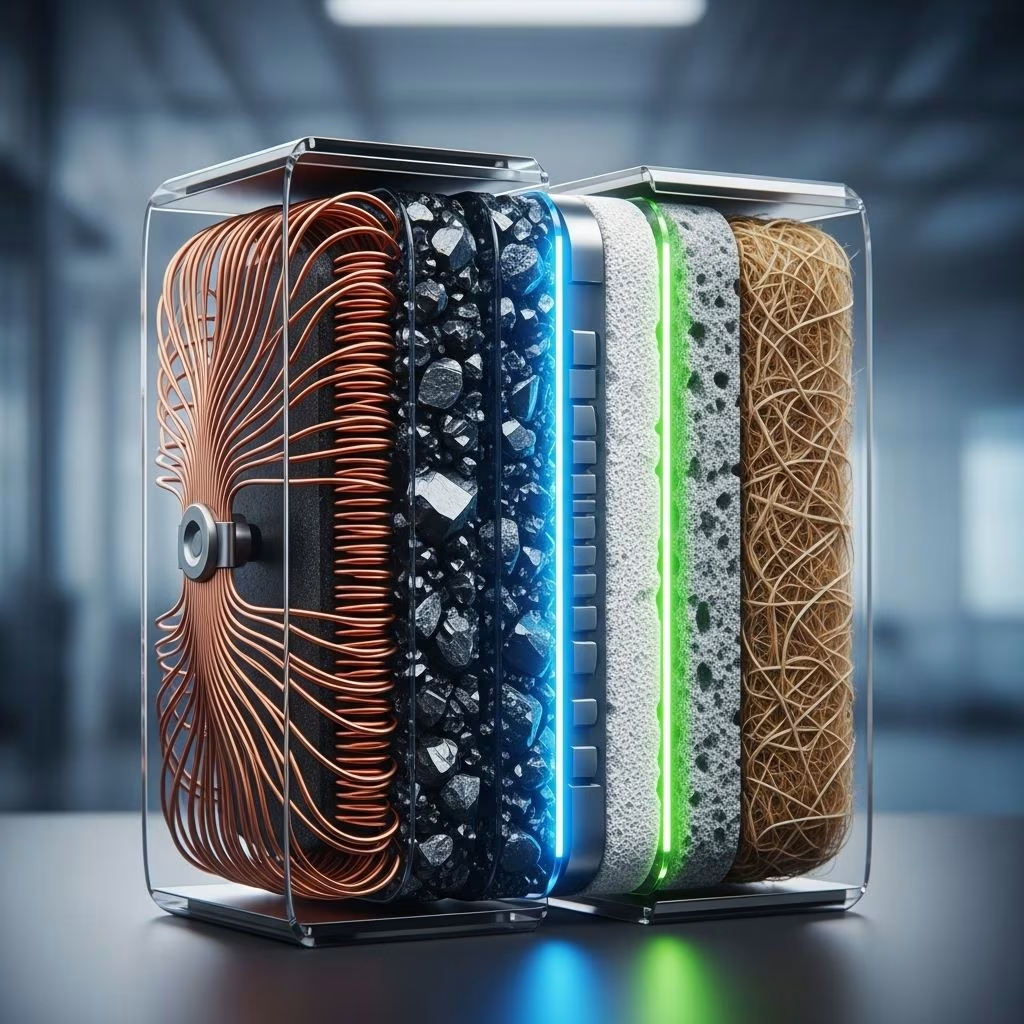
Combining these materials, researchers have achieved a battery with properties comparable to lead-acid cells but without hazardous lead, pushing forward a promising alternative pathway for energy storage.
How Does It Work?
Traditional zinc batteries suffer from poor durability at the laboratory scale. Zinc reacts with water in conventional electrolytes, generating hydrogen gas and triggering dendrite formation. These issues degrade performance and make batteries unsafe and unreliable.
- The Swedish team stabilized the zinc using a water-in-polymer salt electrolyte (WiPSE), specifically potassium polyacrylate, paired with lignin.
- WiPSE minimizes problematic reactions, yielding a battery that can endure thousands of charge/discharge cycles with minimal loss in performance.
The resulting cell can be charged over 8000 cycles while retaining roughly 80% capacity. Its charge lasts significantly longer than other zinc-based batteries, often retaining power for a week compared to mere hours for older designs.
Sustainability and Recyclability
- Both key materials—zinc and lignin—are easy to obtain and process sustainably.
- Batteries can be recycled with little environmental risk, and the absence of hazardous metals makes disposal safer.
- Extraction of these materials does not entail the environmental devastation common in cobalt or lithium mining.
Key Advantages Over Existing Technologies
| Feature | Zinc-Lignin Battery | Lithium-Ion Battery | Lead-Acid Battery |
|---|---|---|---|
| Material Abundance | High | Moderate | High |
| Toxicity | Low | Depends on composition | High (lead) |
| Cost | Low | Moderate to high | Low |
| Recyclability | High | Low to moderate | Low |
| Cycle life | Excellent (8000+) | Variable (500–2000 typical) | Poor to moderate |
| Energy Density | Comparable to lead-acid | High | Moderate |
Scalability and Global Impact
The current lab prototypes are small, but researchers are optimistic about scaling to larger battery sizes, such as electric car batteries or stationary grid storage. Because both zinc and lignin are cheap and abundant, there are few technical barriers to mass production once reliable manufacturing methods are established.
- Potential for rapid scale-up: Enough materials exist to meet global demand without major environmental impact.
- Batteries can be assembled locally in low-income countries, strengthening energy infrastructure while avoiding costly imports.
- More sustainable infrastructure prevents climate risks linked to hazardous battery technologies.
Comparing Environmental and Social Impacts
Lithium-ion batteries have drawn criticism for environmental harm and human rights abuses linked to mining. By contrast, zinc-lignin batteries use no rare or toxic elements. Their production is clean, and jobs in forest product industries could be supported, especially in regions with abundant timber resources.
- No rare earth or conflict minerals involved.
- Supports circular economy: Lignin is an industrial by-product, turning waste into high value.
- Safer end-of-life disposal and recycling reduce environmental hazards.
Limitations and Next Steps in Research
Despite impressive durability and environmental benefits, zinc-lignin batteries currently face some limitations:
- Lower energy density than top-tier lithium-ion, which restricts use in demanding applications like smartphones or electric vehicles unless further improved.
- Cycle stability and longevity are robust in controlled tests, but real-world, commercial-scale validation remains needed.
- Manufacturing scale-up: Current production is limited to laboratory settings; industrial partners are needed for mass manufacturing.
- Regulatory approvals and safety certification are prerequisites for widespread deployment.
Nevertheless, the technology is already sufficiently advanced to target stationary energy storage for households, microgrids, and off-grid installations.
Real-World Applications: Lighting Up Remote Regions
For many low-income regions, solar energy is now accessible, but reliable power storage remains out of reach. Near the equator, where the sun sets early, affordable batteries can mean the difference between prosperity and hardship.
- Zinc-lignin batteries can power homes, schools, and businesses throughout the night.
- Affordable, locally sourced materials make large-scale adoption feasible.
- Sustainable design avoids long-term environmental burdens.
Other Sustainable Battery Innovations
Parallel efforts are targeting tree-derived cellulose to create safe battery electrolytes, replacing flammable organic solvents in lithium-ion cells. Brown University and University of Maryland researchers have created cellulose-copper nanofibrils that transport ions up to 100 times faster than earlier polymers, vastly improving safety and performance.
- Cellulose-based solid-state batteries offer enhanced safety (non-flammable) and improved conductivity.
- Potential to eliminate dendrite formation—one of the main fire risks in current lithium-ion designs.
- Using nature’s own molecules reduces the impact of battery manufacturing on the environment.
Frequently Asked Questions (FAQs)
Q: What makes zinc-lignin batteries more sustainable than lithium-ion?
A: They use widely available, non-toxic, and recyclable materials. Production doesn’t rely on rare minerals or environmentally harmful mining.
Q: How long do these batteries last?
A: Lab tests demonstrate 8000+ cycles with about 80% retained capacity—far outlasting most lead-acid or non-rechargeable zinc cells.
Q: What can zinc-lignin batteries be used for?
A: Ideal for stationary energy storage—home appliances, microgrids, and backup systems in regions lacking grid access. Larger batteries could be developed for electric vehicles or grid-scale storage in the future.
Q: Are these batteries available for purchase?
A: Currently, they are lab prototypes. Mass production requires industrial scaling and commercial partners but is considered feasible given material abundance.
Q: Do these batteries completely replace lithium-ion?
A: Not yet for high-density applications like laptops or cars, but they are highly competitive for affordable, eco-friendly stationary storage.
Conclusion: Powering a Greener Future
The development of zinc-lignin batteries marks a significant step toward democratizing energy access. Utilizing cheap, abundant, and recyclable materials, this technology could accelerate the transition to clean energy while uplifting billions out of energy poverty. With ongoing research and collaboration, a sustainable and safe battery-powered future is closer than ever before.
References
- https://www.quantistry.com/blog/battery-materials-from-trees
- https://www.popularmechanics.com/science/green-tech/a38224691/trees-are-the-secret-for-solid-state-batteries/
- https://liu.se/en/news-item/miljovanligt-och-billigt-batteri-for-laginkomstlander
- https://news.ycombinator.com/item?id=44295132
- https://www.greenbuildermedia.com/blog/flashpoints-8-9-23-trees-as-air-conditioners-alternative-batteries-and-a-net-zero-success-story