


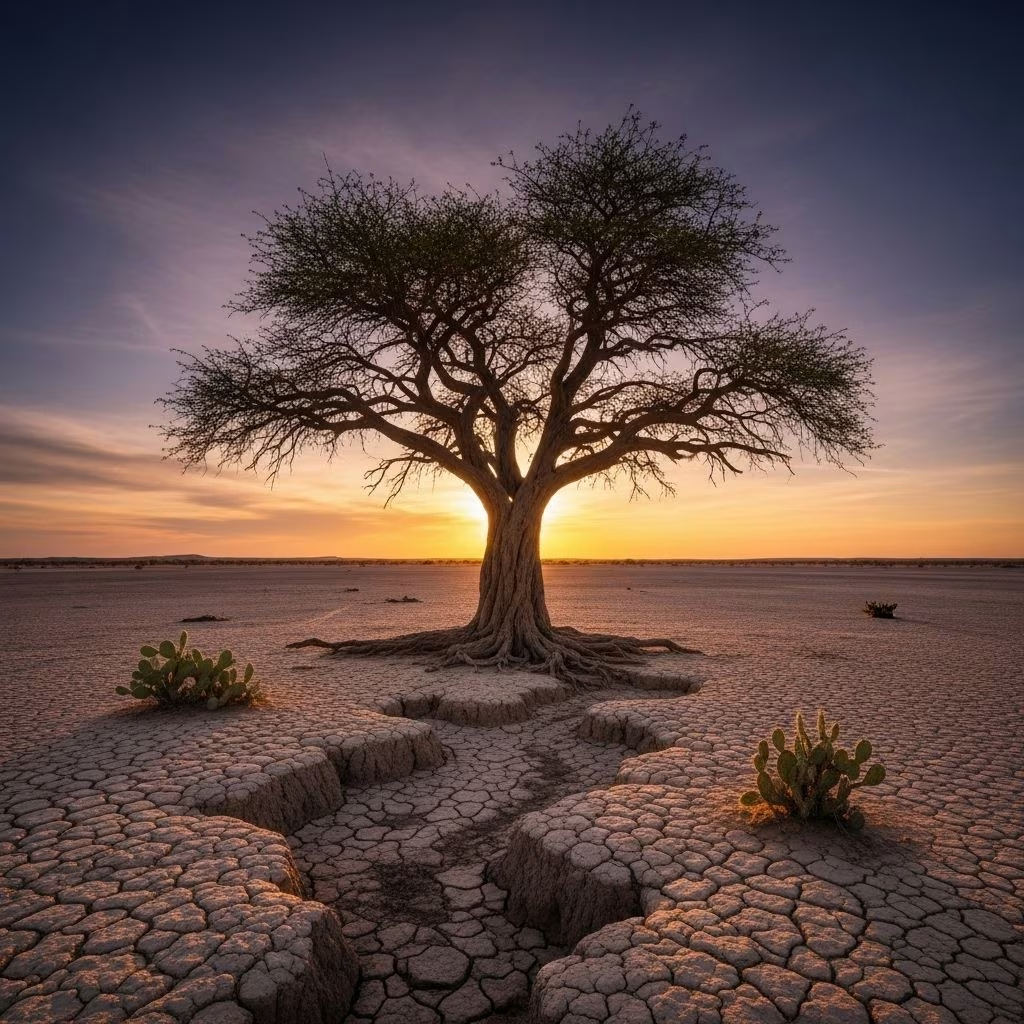
Introduction to the World’s Loneliest Tree
The world’s loneliest tree, a singular Sitka spruce, stands on the remote and windswept Campbell Island, New Zealand. This tree has earned its distinction as the most isolated tree in the world, with no other tree within hundreds of kilometers. It is a fascinating example of resilience against the harsh climate of the subantarctic island.
Background and History
The tree is believed to have been planted by Lord Ranfurly, the then Governor-General of New Zealand, around the early 20th century. Despite various reports suggesting a planting date of 1901, scientific studies indicate it was likely planted later, possibly after 1910. This Sitka spruce, native to the northern hemisphere, is a long way from its natural habitat, making its survival even more remarkable.
Significance in Climate Research
Despite being an invasive alien species, the tree has become a significant subject for climate change research. Its unique location allows scientists to study the effects of climate change on tree growth and survival in isolation. The tree’s resilience and the untouched nature of Campbell Island provide valuable insights into environmental adaptation and the impacts of human activities on ecosystems.
Location and Environment
Campbell Island is situated 700 kilometers south of New Zealand and is known for its harsh subantarctic climate. The island is uninhabited by humans but is home to a variety of wildlife, including penguins and albatrosses. The tree stands approximately 9 meters tall and is often referred to as the Ranfurly tree, named after Lord Ranfurly. The tree’s survival is partly attributed to the island’s isolation from human interference and the protective environment that has allowed it to thrive.
Comparison with Other Isolated Trees
Before the Sitka spruce gained its title, the Tree of Ténéré in Niger’s Sahara Desert was considered the world’s loneliest tree. However, it was tragically destroyed in 1973 by a truck driver. Another example of a ‘lonely’ tree is the Three Kings kaikōmako, a species endemic to the Three Kings Islands in New Zealand. This particular tree was the last wild specimen of its kind and has now been propagated to preserve the species.
Ecological and Scientific Significance
Climate Change Research
The tree’s isolation makes it an ideal subject for studying the effects of climate change. Scientists can analyze how singular trees like this one respond to environmental changes without the influence of other trees or human activities. This contributes to a broader understanding of how forests might adapt to future climate scenarios.
Conservation Efforts
While the Sitka spruce is not native to Campbell Island and could potentially pose a threat to local biodiversity if it were to spread, its current status as a singular specimen makes it more of a curiosity than a concern. Conservation efforts focus on preserving the natural habitats of Campbell Island and ensuring that introductions of non-native species do not harm the island’s ecosystem.
Visiting and Exploring Campbell Island
Campbell Island is not easily accessible due to its remote location and protected status. However, for those interested in wildlife and the natural sciences, planned expeditions or scientific research visits can provide unique insights into this untouched environment.
Frequently Asked Questions (FAQs)
Q: Where is the world’s loneliest tree located?
A: The world’s loneliest tree is located on Campbell Island, New Zealand, which is situated about 700 kilometers south of the mainland.
Q: How did the tree end up on Campbell Island?
A: The tree is believed to have been planted by Lord Ranfurly, the then Governor-General of New Zealand, around the early 20th century.
Q: What species is the world’s loneliest tree?
A: The tree is a Sitka spruce, a species native to the northern hemisphere.
Q: Is the tree significant for climate change research?
A: Yes, the tree’s unique location and isolation make it a valuable subject for studying climate change effects on tree growth and survival.
Conclusion
The story of the world’s loneliest tree on Campbell Island serves as a testament to resilience and survival in extreme conditions. It highlights the importance of preserving our natural environments and studying the impacts of climate change on remote ecosystems. As scientists continue to explore and learn from this singular tree, it remains an intriguing example of nature’s adaptability and endurance.
References
- https://www.rnz.co.nz/news/world/474181/how-the-world-s-loneliest-tree-is-helping-scientists-advance-climate-change-research
- https://guinnessworldrecords.com/world-records/66393-remotest-tree
- https://www.atlasobscura.com/places/worlds-loneliest-tree
- https://www.ventia.com/insights/case-studies/the-most-isolated-tree-on-earth
- https://en.wikipedia.org/wiki/Pennantia_baylisiana
- https://www.youtube.com/watch?v=954fZW9F3tQ


