


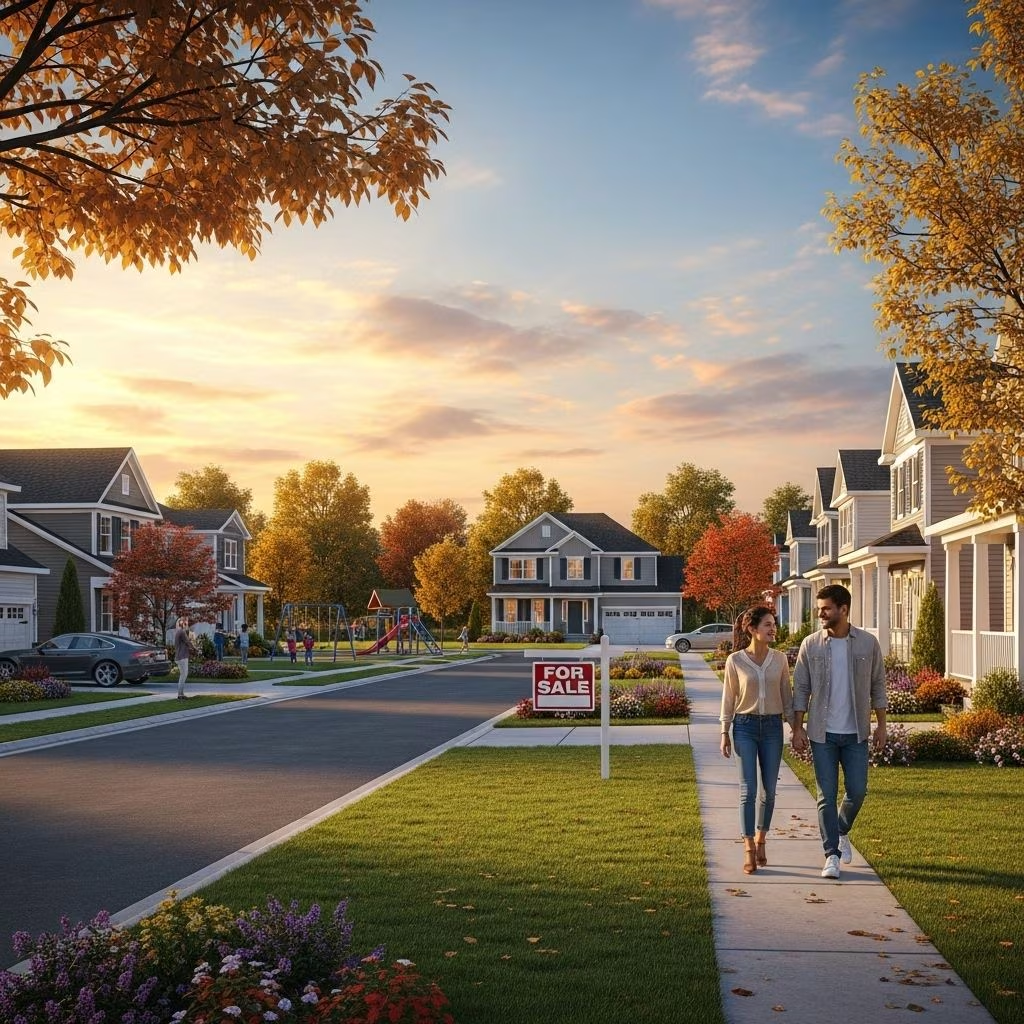
The American dream of suburban living is experiencing a remarkable renaissance. As housing preferences shift and work patterns evolve, more Americans are choosing to trade urban apartments for suburban homes with yards, quieter streets, and more living space. This migration represents not just a change in address but a fundamental reimagining of how we want to live, work, and raise families in the 21st century.
The suburban shift isn’t simply about nostalgia for a 1950s ideal. Today’s suburban migration is driven by a complex interplay of factors including remote work flexibility, housing affordability concerns, desire for outdoor space, and changing family dynamics. Understanding these trends reveals much about the future of American communities and the evolution of our built environment.
The Remote Work Revolution and Suburban Appeal
The transformation of work patterns has fundamentally altered the suburban equation. When commuting to an office five days a week becomes optional or unnecessary, the calculus that once favored urban living shifts dramatically. Remote and hybrid work arrangements have liberated millions of Americans from the geographic constraints that previously tethered them to city centers.
This newfound flexibility has enabled workers to prioritize living space, affordability, and quality of life over proximity to office buildings. The suburban lifestyle, once viewed as incompatible with ambitious careers, now offers the best of both worlds: professional opportunities without the compromises of urban living. Workers can maintain their city salaries while enjoying suburban housing costs and amenities.
The entwining of suburban living with remote work encapsulates a broader societal shift, redefining not only how and where we work but also how we experience our living spaces in this dynamic era. Home offices, dedicated workspace, and high-speed internet have become essential amenities, and suburban homes often provide these features more affordably than urban apartments.
Housing Size and Suburban Expansion
The physical dimensions of American homes tell a compelling story about suburban growth. The average size of single-family homes has undergone remarkable expansion over recent decades. In a span of decades, from 1949 to 2021, the average new single-family home has burgeoned from 909 square feet to an impressive 2,480 square feet. This nearly threefold increase reflects both changing consumer preferences and the practical realities of suburban development.
A contributing factor to this transformation is the availability of more expansive lots in suburban settings, providing the canvas for these larger, more spacious residences. Unlike urban environments where land constraints limit building footprints, suburban areas offer developers and homeowners the opportunity to spread out, creating homes with multiple bedrooms, dedicated office spaces, and generous common areas.
Interestingly, the migration to suburban areas is accompanied by a decline in the number of residents per home. Even as houses grow larger, household sizes shrink, reflecting demographic trends including delayed marriage, smaller family sizes, and more single-person households. This creates a paradox where Americans have more living space per person than ever before, yet continue to demand even larger homes.
The Single-Family Build-to-Rent Revolution
Perhaps no trend better captures the evolving suburban landscape than the explosive growth of single-family build-to-rent (BTR) communities. These developments represent a fundamental reimagining of suburban living, offering the space and amenities of traditional homeownership without the financial commitment of a mortgage.
Market Dynamics and Growth
In a year marked by challenges across asset classes, the adaptability of single-family build-to-rent communities stands as a shining example. Fueled by escalating demand, these suburban BTR projects have garnered immense appeal, offering spacious accommodations at relatively affordable rates. The $4.4 trillion single-family BTR sector remains remarkably stable, with communities of 50 or more homes seeing a record 14,581 unit deliveries in 2022.
The sector’s occupancy rates tell the story of its success: steadfast at an impressive 95.5 percent, these communities consistently attract and retain residents. This high occupancy reflects both strong demand and the appeal of the product itself—suburban living without the responsibilities and financial barriers of homeownership.
Who’s Renting in the Suburbs?
The appeal of single-family BTR extends to a diverse range of tenants. Millennial couples, transitional households, and retirees seeking downsizing options are all drawn to the concept. For millennials, many of whom carry substantial student debt and face challenges saving for down payments, BTR communities offer a path to suburban living that might otherwise remain out of reach.
The prospect of living in a single-family home without the burden of mortgages and maintenance resonates strongly. Green spaces and private garages, coupled with the growing trend of remote work, further amplify the appeal, providing a blend of privacy and amenities that traditional apartment living cannot match.
Typical BTR tenants demonstrate this appeal concretely. Consider a couple with an annual income of $88,000, $45,000 of debt, and a FICO score of 665. This profile represents millions of American households who earn solid middle-class incomes but face barriers to homeownership due to debt burdens or credit challenges. For these families, BTR communities provide suburban living quality without the upfront capital requirements of home purchase.
Regional Growth Patterns and Migration
The suburban surge isn’t happening uniformly across America. Specific regions have emerged as magnets for suburban migration, driven by employment prospects, climate preferences, and cost of living advantages.
Historic migration patterns in the Sun Belt, driven by employment prospects and lower living costs, mirror the sources of demand for single-family BTR. Notably, states like Arizona, Florida, Texas, Georgia, and South Carolina have witnessed substantial growth in new residents, leading to increased investment in the sector. These regions offer not just affordable housing but also favorable tax environments, growing job markets, and year-round outdoor recreation opportunities.
Institutions, developers, and investors have directed capital towards these regions, recognizing their growth potential and aligning with local job markets. This investment creates a virtuous cycle: infrastructure improvements and new development attract more residents, which in turn justifies additional investment.
Suburban Development and Community Design
Modern suburban development has evolved considerably from the standardized tract housing of the 1950s. Today’s suburban communities incorporate diverse housing types, mixed-use elements, and intentional community design principles.
Historical precedents provide context. In 1954, Lakewood, California incorporated with 17,000 homes that were being built at the incredible rate of 500 every day. The houses were small, standardized, and had detached garages, representing the democratization of homeownership but little architectural variety.
Contemporary suburban development shows more sophistication. Newer subdivisions incorporate free-form street plans rather than rigid grids, creating more visually interesting neighborhoods. Apartment buildings are designed with gables and dormers so they look a bit like big houses, blending multi-family housing into predominantly single-family neighborhoods. Some developments stack living space above garages, maximizing land use efficiency where property values are higher.
The Infrastructure Challenge
Despite the appeal of suburban living, significant infrastructure challenges persist. About 70% of Americans live in suburbs where it’s hard to walk and impossible to cycle. This car-dependent design has profound implications for health, social connection, and environmental sustainability.
Many suburbs lack basic pedestrian infrastructure or fail to maintain what exists. In cities like Atlanta, municipalities don’t even take responsibility for maintaining sidewalks, leaving many impassable. This creates accessibility challenges particularly for older adults, parents with strollers, and people with mobility limitations.
Traffic light timing and intersection design often prioritize vehicle throughput over pedestrian safety. Older people who need to look at the pavement when walking shouldn’t be rushed across streets, yet many suburban intersections provide insufficient crossing time. These design failures contribute to social isolation and limit the independence of non-drivers.
Economic Considerations and Affordability
The economics of suburban living present a complex picture. While suburban homes often cost less than urban properties of comparable size, the total cost of suburban living includes transportation expenses, utility costs for larger homes, and sometimes higher maintenance requirements.
The role of price in shaping average house size becomes evident: areas with higher real estate costs tend to host smaller homes. This relationship explains regional variations in housing types and helps predict where different development patterns will emerge.
For renters, suburban BTR communities offer an alternative path. Rents in single-family rental communities now average about $1,800 a month for a 3-bedroom home, which is about a third higher than mortgage payments. However, this comparison oversimplifies the calculation. Renters avoid down payment requirements (typically 10-20% of purchase price), property tax obligations, maintenance costs, and the risk of property value decline. For households with limited savings or uncertain employment futures, renting may represent the more financially prudent choice despite higher monthly costs.
Sustainability and Environmental Implications
The suburban revival raises important environmental questions. Larger homes require more energy for heating and cooling. Car-dependent suburban design increases transportation emissions. Low-density development consumes more land per capita and often encroaches on agricultural land or natural habitats.
However, modern suburban development increasingly incorporates sustainability principles. Some new communities anchor plans “in the reality that nature is the new luxury”, preserving open spaces and natural features. Energy-efficient building standards, solar panel installations, and water conservation measures can make suburban homes more sustainable than older urban housing stock.
The environmental equation also includes factors beyond carbon footprints. Suburban homes with yards can support pollinator gardens, urban agriculture, and stormwater management through rain gardens and permeable surfaces. These distributed green spaces may provide ecological benefits that dense urban cores cannot easily replicate.
The Future of Suburban America
Unlike traditional property types, single-family rentals exhibit remarkable adaptability to local trends. Adjustments to rents and property development are swift, aligning properties with evolving market demands. This agile nature enables rapid responses to market shifts, resulting in properties tailored to specific metro regions and renter preferences.
While the single-family BTR sector faces challenges such as supply chain disruptions and fluctuating interest rates, its long-term outlook remains promising. The sector’s ability to offer an appealing blend of spacious living, affordability, and flexible property development positions it well for continued success.
The stability, adaptability, and unique advantages of single-family BTR communities position them as a compelling option for both tenants and investors alike. As housing preferences continue evolving and work patterns remain flexible, suburban living appears poised for sustained growth.
Challenges and Opportunities
The suburban renaissance presents both opportunities and challenges for American communities. On the positive side, suburban growth can relieve pressure on overheated urban housing markets, provide families with more living space, and create new economic opportunities in previously underdeveloped areas.
However, challenges remain significant. Suburban sprawl can strain infrastructure, increase environmental impacts, and perpetuate social segregation. Car dependency limits mobility for non-drivers and contributes to sedentary lifestyles. The lack of walkability and pedestrian infrastructure in many suburbs creates health and safety concerns, particularly for aging populations.
Construction practices also require improvement. During street repairs, workers sometimes block sidewalks entirely, forcing seniors and others to navigate dangerous detours through traffic. This lack of consideration for pedestrian needs during construction and maintenance reflects broader attitudes that prioritize vehicular convenience over pedestrian safety.
Designing Age-Friendly Suburbs
As suburban populations age, design considerations become increasingly important. There’s an obsession about designing houses without stairs just in case people need a wheelchair, but this approach may be counterproductive. Physical activity, including stair climbing, is critical for maintaining health and mobility as we age.
Better approaches include designing houses to be adaptable, making provisions for future chair lifts by building straight and wider stairs, or elevators by stacking closets. This allows homes to accommodate changing mobility needs without sacrificing the health benefits of multi-story living for those who can still navigate stairs.
The goal should be creating suburbs that support active aging rather than promoting “senior sprawl.” This requires walkable neighborhoods, well-maintained sidewalks, accessible public spaces, and community design that encourages social interaction and physical activity.
Frequently Asked Questions
Q: Why are more Americans choosing to live in suburbs?
A: The suburban migration is driven by multiple factors including remote work flexibility that eliminates daily commuting, more affordable housing compared to urban areas, desire for larger living spaces and outdoor areas, and family-friendly environments with good schools and lower crime rates. The average new single-family home has grown from 909 square feet in 1949 to 2,480 square feet in 2021, offering significantly more space than typical urban apartments.
Q: What are single-family build-to-rent communities?
A: Single-family build-to-rent (BTR) communities are suburban developments where homes are specifically built to be rented rather than sold. These communities offer the space and amenities of traditional single-family homes—including private yards and garages—without requiring a mortgage or down payment. The BTR sector is now worth $4.4 trillion and maintains occupancy rates of 95.5 percent, appealing to millennial couples, transitional households, and retirees who want suburban living without homeownership responsibilities.
Q: Is renting in the suburbs more expensive than buying?
A: Monthly rent payments in suburban single-family homes typically run about one-third higher than mortgage payments for comparable properties. However, this comparison doesn’t account for the 10-20% down payment required for purchase, property taxes, maintenance costs, insurance, and the financial risk of property value changes. For households with limited savings, significant debt, or uncertain employment situations, renting may be more financially accessible despite higher monthly costs.
Q: Which regions are experiencing the most suburban growth?
A: Sun Belt states including Arizona, Florida, Texas, Georgia, and South Carolina have witnessed substantial growth in new suburban residents. These regions offer lower living costs, favorable tax environments, growing job markets, and year-round outdoor recreation opportunities. Investment capital has flowed heavily into these areas, creating improved infrastructure and new developments that attract even more residents.
Q: What are the main drawbacks of suburban living?
A: Suburban living challenges include car dependency with about 70% of Americans living in suburbs where walking is difficult and cycling nearly impossible, lack of well-maintained pedestrian infrastructure with many sidewalks becoming impassable, higher transportation costs due to increased driving, larger homes requiring more energy for heating and cooling, and potential social isolation due to lower density and car-oriented design. Many suburbs also lack the cultural amenities, diverse dining options, and walkable entertainment districts found in urban areas.
Q: How has remote work changed suburban living?
A: Remote work has fundamentally transformed the suburban equation by eliminating or reducing commuting requirements. Workers can now maintain city-level salaries while enjoying suburban housing costs and amenities. This has made features like home offices, dedicated workspace, and high-speed internet essential amenities. The entwining of suburban living with remote work represents a broader societal shift, redefining not only where we work but how we experience our living spaces.
Q: Are modern suburbs more sustainable than older developments?
A: Modern suburban developments increasingly incorporate sustainability principles including energy-efficient building standards, solar panel installations, water conservation measures, preserved open spaces and natural features, and opportunities for pollinator gardens and urban agriculture. However, challenges remain including larger homes requiring more energy, car-dependent design increasing transportation emissions, and low-density development consuming more land per capita. The environmental equation depends heavily on specific design choices and individual resident behaviors.
References
- https://www.tenantcloud.com/blog/2023-real-estate-trends-urban-suburban-shifts-and-the-rise-of-single-family-living
- https://worldgeographyonline.com/wp-content/uploads/2023/05/8.-American-Cities-2023.pdf
- https://lloydalter.substack.com/p/from-the-archives-falls-may-soon
- https://knowledge.uli.org/-/media/files/emerging-trends/2023/emergingtrendsunitedstatesandcanada2023.pdf
- https://greenamerica.org/all-media-mentions-report?field_relevant_lens_target_id=&page=1&order=nid&sort=desc
- https://www.shutterstock.com/search/american-suburbs?page=2


