Massive Attack and the Low-Carbon Live Music Revolution
Live music, long beloved for its cultural power, faces a stark reckoning in the age of climate crisis. In partnership with the Tyndall Centre for Climate Change Research, iconic band Massive Attack has developed an action plan that could redefine how tours and festivals operate, aiming to drastically slash the sector’s carbon footprint. Their public release of the “Roadmap to Super Low Carbon Live Music” marks one of the most comprehensive efforts to unite music and sustainability, offering a model that transcends individual acts and targets industry-wide transformation.
The Growing Climate Challenge of Live Music
Music events and tours have been identified as significant contributors to greenhouse gas emissions. From audience travel and production logistics to energy-hungry performances and food services, the total impact is large and often underestimated. Importantly, emissions from fans traveling to events can account for up to 80% of total event emissions, while energy, transport, and catering further add to the sector’s environmental burden.
- Audience travel – often the largest share of emissions
- Production logistics – includes transport of equipment and crew
- Energy consumption – lighting, sound, and on-site generators
- Catering and hospitality – food production and waste
With urgent deadlines looming in the global effort to limit warming below 1.5°C, influential actors in every part of society are seeking new pathways to reduce their carbon output. Amid this pressure, Massive Attack’s initiative signals the music industry’s willingness to lead change – but also the scale of the challenge ahead.
The Origins of the Roadmap: Massive Attack and the Tyndall Centre
In 2021, driven by a desire to align their own practice with the Paris Agreement, Massive Attack commissioned the Tyndall Centre for Climate Change Research to produce a detailed, independent roadmap for deep emissions cuts in live music. The Tyndall Centre, renowned for integrating climate science with policy and industry partnerships, brought together specialists in engineering, economics, and social research to devise effective, actionable strategies.
Robert del Naja (‘3D’) of Massive Attack explained:
“We’re grateful to Tyndall Centre analysts for providing our industry with a comprehensive, independent, scientifically produced formula to facilitate industry compatibility with the Paris/1.5 degrees climate targets.”
Crucially, the goals were not confined to the band’s own tours. By releasing the roadmap as an open resource, Massive Attack and their collaborators invited the entire sector – from global promoters to grassroots venues – to take part in a collective transition.
What Is the ‘Super Low Carbon Live Music’ Roadmap?
This ambitious document sets out:
- Measurable emissions reduction targets for all facets of live music production
- Modular strategies tailored to different event formats, from large festivals to venue gigs
- Best practices based on real-world trials and scientific modeling
- Recommendations for venues, promoters, artists, and policymakers to support system-wide adoption
Delivering on the Blueprint: The Act 1.5 Gig and Its Outcomes
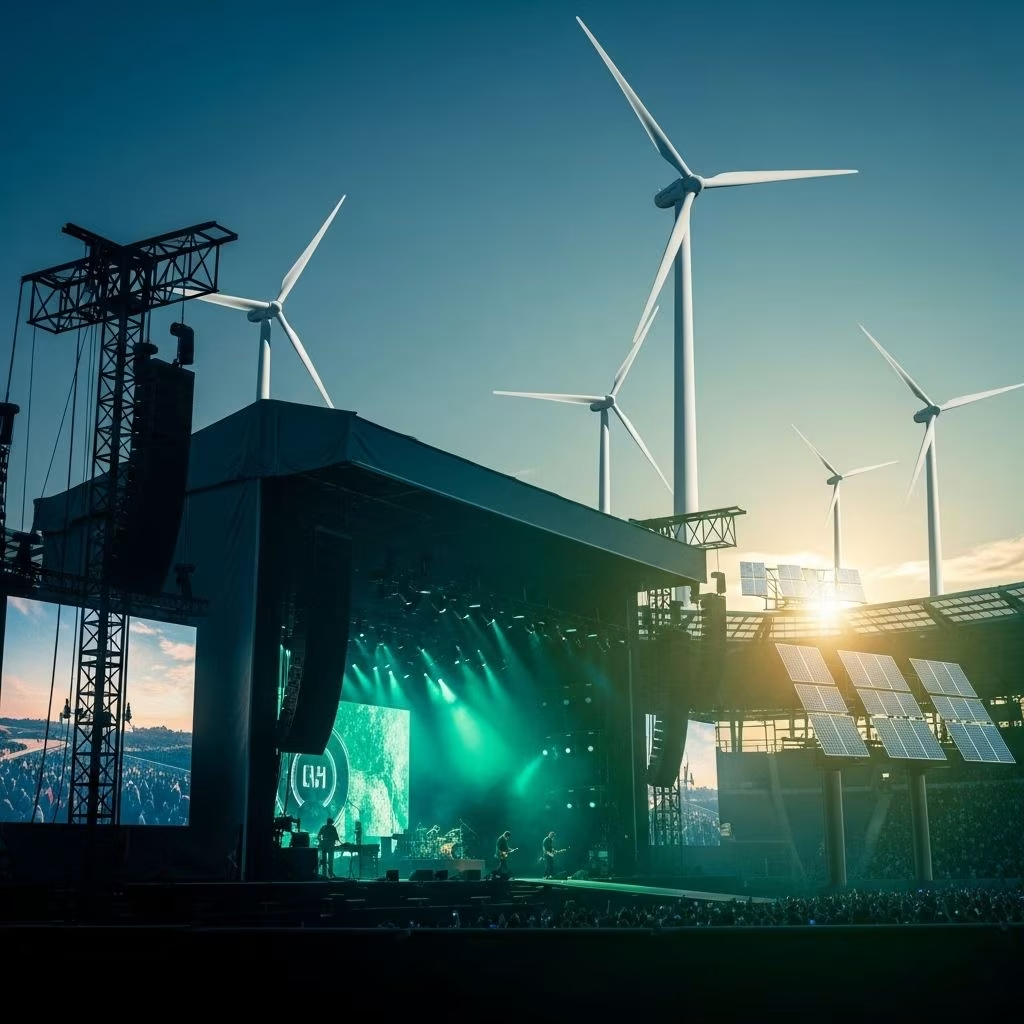
The first major test of the roadmap was Act 1.5 – a large-scale music event held in Bristol during August 2024, billed as the lowest-carbon show of its size ever staged. The event’s design and execution demonstrated that, with the right approach, dramatic carbon savings can be achieved without sacrificing quality or accessibility.
Key Sustainability Achievements at Act 1.5
- Over 32,000 attendees, with local fans given ticket priority to cut long-distance travel
- Audience transport options included extra late-night trains and fleets of electric shuttles
- Power sources: Event was powered entirely by batteries recharged with renewable electricity
- Catering: Switched to 100% plant-based food for all staff and guests
- Production: Electric trucks used for haulage, reducing dependency on fossil fuels
Analysis by the Tyndall Centre revealed the following emissions reductions, compared to a comparable standard outdoor music event:
| Category | Emissions Reduction (%) |
|---|---|
| Power | 81–98% |
| Food/Catering | 89% |
| Equipment Haulage | 70% |
| Artist Travel | 73% |
This multi-faceted approach established new precedents in staging and logistics, with notably high rates of renewable energy use, waste minimization, and carbon-aware logistics, setting a practical benchmark for future events.
Modules for Change: Breaking Down the Roadmap’s Recommendations
The roadmap identifies six emission reduction modules for phased adoption. These modules provide discrete, actionable focus areas that stakeholders can prioritize based on their own operational realities.
- Audience Transportation: Incentivize sustainable travel, prioritize local audiences, coordinate public/electric transport.
- Artist Travel: Utilize rail over air travel, shift to low-emission vehicles for crew and equipment.
- Production & Freight: Adopt electric or biogas haulage, source equipment locally when possible, minimize logistics miles.
- Venue Energy: Transition to on-site renewables, switch to battery storage, ensure grid power is 100% green.
- Catering & Hospitality: Serve plant-based menus, minimize food waste, prioritize local and organic sourcing.
- Governance & Equity: Ensure that smaller venues receive support for costly transitions, avoid placing financial burden solely on independent operators.
Key recommendations include thorough emissions tracking at every stage of event planning, embracing the creative input of artists, designers, and managers in sustainability strategies, and demanding sector-wide action from major promoters and government, not just prominent individual acts.
Implementing Practical Solutions
- Bespoke venue-energy partnerships to boost renewable grid capacity
- Staff training programs to embed sustainability into operational routines
- Equitable transitions ensuring fairness, especially for small event organizers
These efforts underline the need for both industry collaboration and policy support.
Challenges Ahead: Policy, Equity, and Moving ‘Beyond the Band’
Despite these successes, the roadmap’s authors and Massive Attack stress that long-term impact hinges on systemic change rather than isolated initiatives. The UK’s live music sector, like many other industries, has often operated with little regulatory direction on climate action, leaving much of the innovation to individual acts or independent promoters.
Robert del Naja has argued that
“the major promoters simply must do more – it can’t be left to artists to continually make these public appeals. Our sector is operating in a government void.”
Key obstacles that remain include:
- Lack of unified government strategy for live events’ decarbonization
- Financial vulnerability of smaller venues, especially post-COVID-19
- Necessity of widespread knowledge and resource sharing
- Challenges in balancing rapid action with fair, just economic transitions
To address these, Massive Attack advocates for targeted support for small venues and festivals, as well as greater accountability from the nation’s event sector leaders.
The Sector’s Response and the Way Forward
Industry observers and academics have widely praised the roadmap, not only for its scientific rigor but also for its relevance to groups at all levels of the live music ecosystem. Professor Carly McLachlan of the Tyndall Centre noted the importance of embedding sustainability from the very first stages of tour planning, harnessing the creativity of all event professionals to reimagine touring and event delivery.
Other influential figures, such as Dale Vince of Ecotricity (a renewable energy pioneer), have partnered with Massive Attack to scale up these ideas, working on:
- Supplying green energy packages to venues and arenas
- Offering on-the-ground training for event staff
- Promoting vegan and sustainable hospitality practices
Meanwhile, other major artists and festivals have begun adopting aspects of the roadmap, signaling its wider influence on the sector’s future direction.
Replication and Adaptation: Can This Model Spread?
The openness of the “Super Low Carbon Live Music” roadmap means:
- Any promoter, artist, or venue can adopt or adapt its strategies
- Resources are freely available for industry-wide benefit
- Sparks a culture of knowledge sharing and continuous improvement
By establishing proven carbon reduction strategies at a high-profile gig and documenting the results, Massive Attack has made it harder for others to claim inaction is inevitable or viable. As audience demands for climate action grow, the pressure on promoters and policymakers is likely to increase.
Frequently Asked Questions (FAQs)
Q: Why is audience travel such a major source of music event emissions?
A: Audience travel often accounts for the single largest segment of emissions—up to 80%—because thousands of individual journeys, particularly by car or air, quickly add up to far more than on-site consumption or artist logistics.
Q: Can these sustainability templates work for smaller venues and local events?
A: Yes, many recommendations—such as plant-based catering, public transit coordination, and electricity sourcing—are scalable. However, the roadmap emphasizes that smaller operators need financial and technical support to make the transition equitably.
Q: How can fans support low-carbon live music?
A: Fans can prioritize public transit, carpooling, or cycling to events, choose plant-based options at venues, and demand sustainable practices from event organizers.
Q: What role should governments play?
A: Governments are urged to set binding decarbonization targets for the sector, offer incentives for sustainable event practices, and support smaller organizers during the transition period.
Q: Are other bands and festivals adopting similar approaches?
A: Yes, the trend is growing. Artists including Coldplay and Billie Eilish have integrated various elements of the low-carbon event model, such as renewable energy and emissions tracking, into their tours.
Key Takeaways for the Music Industry
- Roadmaps work: Clear, science-based targets can guide real reductions and inspire action beyond individual artists.
- Collaboration is essential: Meaningful change requires the engagement of venues, promoters, governments, and fans.
- Major emissions sources must be addressed: Especially audience travel, energy, logistics, and food services.
- Equity cannot be overlooked: Smaller, independent venues need help to avoid being priced out of a green transition.
- Transparency and sharing drive success: Open publication of methods, data, and outcomes builds industry-wide momentum.
Conclusion: A Blueprint for Cultural and Climate Transformation
The collaboration between Massive Attack and the Tyndall Centre represents a landmark in efforts to green the global live music sector. Their roadmap and high-profile test case underscore that it’s possible to deliver world-class musical experiences while aligning with the world’s most ambitious climate targets. The path ahead will demand not just technical solutions, but sustained creative and political will from all parts of the industry—and from its millions of fans worldwide.
References
- https://www.manchester.ac.uk/about/news/tyndall-centre-roadmap-helps-deliver-lowest-carbon-live-music-event-of-its-kind/
- https://tyndall.ac.uk/news/massive-attack-publish-tyndall-centre-climate-change-live-music-roadmap/
- https://thebristolcable.org/2024/02/we-can-seriously-move-the-dial-for-major-live-music-events-massive-attack/
- https://documents.manchester.ac.uk/display.aspx?DocID=56701
- https://visionsustainableevents.org/reports-guides/roadmap-to-super-low-carbon-live-music-massive-attack-x-the-tyndall-centre/
- https://www.zmescience.com/science/news-science/massive-attack-just-showed-that-concerts-and-tours-can-also-be-eco-friendly/
- https://www.renewablematter.eu/en/Rock-and-sustainability-Coldplay-how-music-reduces-its-impact-emissions