


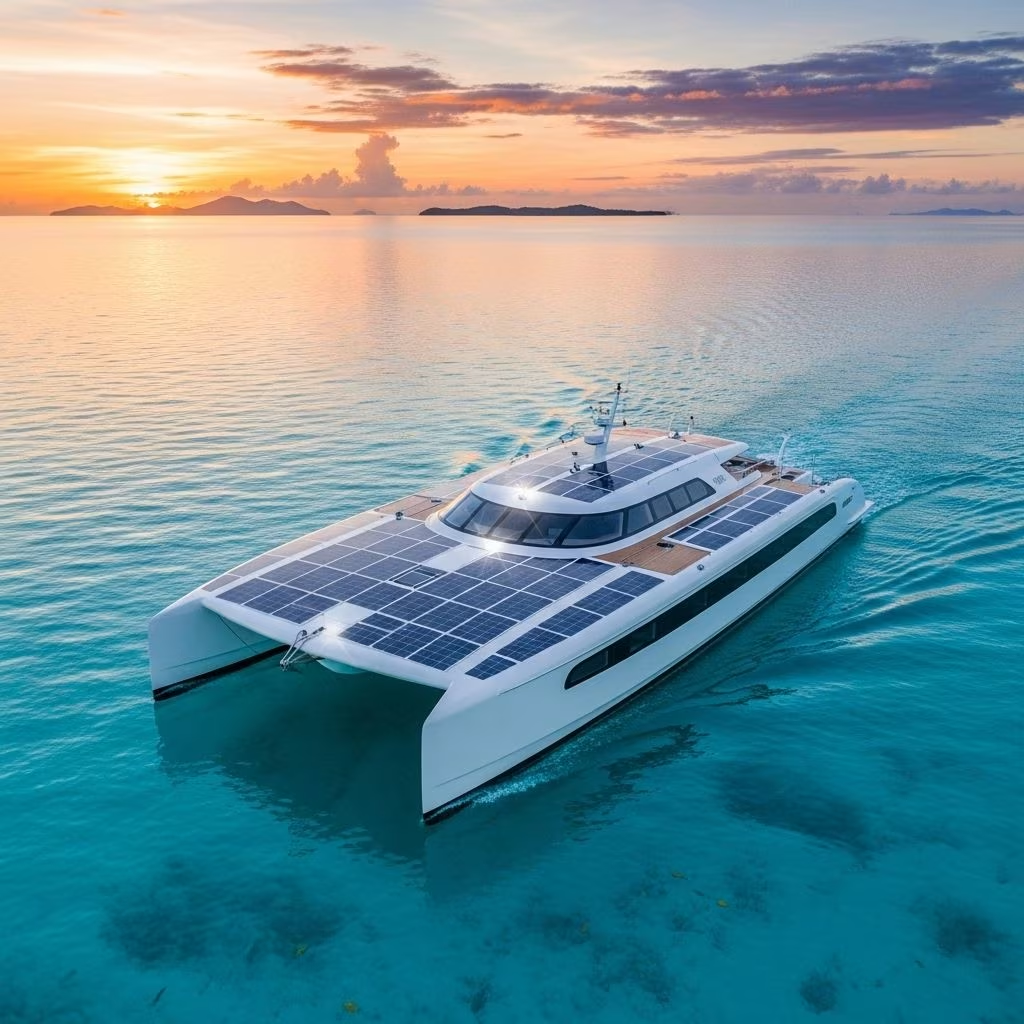
10 Awesome Solar Boats That Are Revolutionizing Clean Water Travel
As the world seeks alternatives to fossil-fueled locomotion, solar-powered boats have emerged as a shining example of innovation, challenging our assumptions about sustainability on the water. From luxury yachts to compact river ferries, these vessels harness sunlight to propel journeys that are clean, quiet, and increasingly practical. In this article, we explore ten of the world’s most inspiring solar boats, delving into their unique features, achievements, and how they are paving the way for a more sustainable maritime future.
Why Solar Boats Matter: Clean Energy for a Changing World
Solar boats are not just a technological novelty; they offer an important solution to environmental challenges facing our waterways. With global shipping responsible for significant pollution, solar-powered boats:
- Reduce greenhouse gas emissions by operating without fossil fuels
- Eliminate water and air pollution near sensitive ecosystems
- Operate more quietly, reducing noise disturbance for marine life
- Showcase the potential of clean marine energy for transport and leisure
The increased energy density and efficiency of modern solar panels and batteries, paired with innovative hull designs, have enabled a surge in solar boat innovation for a range of uses: recreation, transportation, research, and even circumnavigation.
The Pioneers: Milestones in Solar-Powered Marine Travel
Before we explore today’s most exciting solar boats, it is worth acknowledging some milestones in the industry:
- The first solar-powered boat crossed the English Channel as early as 1997.
- Since then, vessels like the PlanetSolar and SolarImpulse have completed global expeditions, proving that solar alone can power vast journeys on open water.
These early adventures inspired a new generation of innovators, who have since created some of the most exciting solar boats—and even homes—on the water.
1. Fàng Sōng 放松: The Tesla of the Water
Imagine a tiny house combined with a state-of-the-art electric boat. That’s what the Fàng Sōng 放松 delivers—a 49-by-13 ft (15-by-4 meter) motorboat converted into a comfortable, fully solar-powered dwelling designed by Crossboundaries. Its name, drawn from the Chinese word for “Relax”, reflects its mission to offer a tranquil, mobile retreat for its owner, Marianne Fries, after decades spent away from the water.
- Design highlights: Spacious living area, bathroom, kitchen, foldable beds and tables, pop-up workspace
- Solar capability: Solar panels on the roof and sides provide enough energy to run the boat from March through November, and on sunny winter days. On cloudy days, shore power can supplement the needs.
- Sustainability features: App-controlled pellet stove, plans for water purification and biological sewage treatment
- Range of about 50 kilometers (approx. 30 miles) per day at 7 km/h (4 mph), ideal for rivers and lakes
This innovative boat exemplifies the merging of sustainable living and mobility, opening possibilities for tiny homes on water that are entirely powered by the sun.
2. Manta5 Hydrofoiler XE-1: The Solar Hydrofoil Bike
For thrill-seekers and eco-enthusiasts alike, the Manta5 Hydrofoiler XE-1 is not your typical solar boat. This watercraft merges the concept of an electric bicycle and a hydrofoil, enabling riders to pedal-glide above the water’s surface. Its lightweight design, efficient electric assist, and optional solar charging kit make exploring lakes and rivers a silent, emission-free adventure.
- Lightweight carbon fiber frame and hydrofoil wings
- Pedelec (pedal electric) support with the option for solar-charged rides
- Speeds up to 22 km/h (14 mph) on the water
As a new way to experience eco-friendly recreation, the Manta5 hints at the possibilities of personal watercraft powered by renewable energy.
3. SolarImpact Yacht: The Solar Electric Luxury Vessel
SolarImpact’s stunning 78-foot yacht shows that clean energy and luxury can, indeed, go hand-in-hand. The vessel’s streamlined, futuristic design is covered with 300 square meters (3,230 sq ft) of solar panels and features a sleek wave-piercing hull for smooth cruising.
- Solar Input: Up to 320 kWh per day, enabling extended solar-powered cruising
- Range of up to ten hours on solar alone, with backup from a diesel generator for cloudy days and extended journeys
- Pioneering stability thanks to an innovative hull design that reduces roll, even in rough seas
- Luxe amenities: multiple sun decks, panoramic windows, and plush interiors
This yacht delivers the ultimate in comfort, design, and sustainability, making it a beacon in the world of eco-conscious marine travel.
4. SoelCat 12: The Solar-Powered Catamaran
The SoelCat 12 is a fully solar-powered catamaran designed for silence and zero emissions, offering scenic tours in remote and sensitive ecosystems. Purpose-built for coastal waters and protected islands, this 39-foot (12-meter) vessel combines cutting-edge marine engineering with versatile eco-cruising capabilities.
- 36 high-efficiency solar panels with a peak power output of 8.6 kWp
- 100% solar-powered propulsion under normal conditions
- Electric drive system keeps the catamaran quiet, ideal for wildlife observation
Whether operating as a passenger shuttle, tour boat, or research platform, the SoelCat 12 demonstrates the broad utility of solar technology on the water.
5. SolarWaterWorld Solarboot: Berlin’s Solar Water Taxi
Public transportation goes green with SolarWaterWorld’s fleet of solar-powered water taxis and tour boats, gliding down Berlin’s Spree River and canals. These electric vessels operate entirely on solar power, producing zero emissions and offering a serene city cruising experience.
- Range accommodates day-long tours on a single charge
- Silent operation enriches on-board sightseeing and reduces noise for riverside communities
- SolarWaterWorld is paving the way to sustainable urban water transportation across Europe
6. Silent-Yachts: The Solar Catamaran Pioneers
Silent-Yachts is a leader in the production of luxury solar-powered catamarans. With models like the Silent 60 and Silent 80, these vessels promise days—if not weeks—of travel on limitless sunshine.
- Silent 60: Features a 17kW solar array, offering cruising speeds of 6–8 knots and top speeds up to 20 knots, depending on the motor configuration
- Battery capacity up to 286 kWh, supporting overnight and cloudy-day operation
- Diesel generator onboard as backup but rarely required
- Virtually maintenance-free compared to conventional yachts, with radically reduced operational costs
These catamarans blend quiet luxury with green engineering, illustrating the direction premium boat building is headed.
7. Tûranor PlanetSolar: The Solar Circumnavigator
Once the world’s largest solar-powered boat, the Tûranor PlanetSolar achieved a solar milestone by circumnavigating the globe in 2012, after leaving Monaco in 2010. Spanning 100 feet in length, this vessel demonstrated the long-range viability of solar energy on open seas.
- 538 square meters of solar panels generate up to 93.5 kW
- Traveled over 60,000 km (37,000 miles) solely on solar power
- Now repurposed as a floating laboratory for environmental research and marine education
8. Solar Dream: China’s Solar Ship Masterpiece
China’s Solar Dream is a sprawling passenger vessel built to demonstrate the feasibility and appeal of solar-powered water transit. Fitted with a wide expanse of solar panels, this ferry operates tours without a drop of fossil fuel.
- Uninterrupted solar propulsion during sunlit hours
- Spacious, futuristic design capable of hosting large tour groups
- Showcases scalable solar transit for busy tourist destinations
9. Solar Ferry: The Future of Urban Transport
Solar ferries are rapidly gaining popularity in cities looking to clean up public transit. Projects such as the Solar Ferry in Australia and similar initiatives worldwide illustrate the changing attitude toward mass transport:
- Electric ferries recharge from solar panels placed on the vessel and sometimes at docking stations
- Greatly reduced fuel and maintenance costs
- Set to play a major role in the sustainable future of metropolitan water travel
10. Solar Voyager: Solar Robotics At Sea
Innovation in solar-powered maritime technology goes beyond passenger boats. The Solar Voyager is a robotic solar boat designed to make long autonomous journeys at sea, gathering environmental and scientific data along the way.
- Compact but robust, capable of weeks-long solar-charged navigation
- Used for oceanography, climate monitoring, and pollution tracking
- Proves that solar boats can underpin not just travel, but vital research missions
Comparing Solar Boats: Performance and Features
| Boat | Type | Length (ft) | Solar Array | Max Speed | Typical Use |
|---|---|---|---|---|---|
| Fàng Sōng 放松 | Houseboat | 49 | Roof & sides | 4 mph (7 km/h) | Tiny home, leisure |
| SolarImpact Yacht | Luxury Yacht | 78 | 300 m2 | 20 knots | Luxury cruising |
| SoelCat 12 | Catamaran | 39 | 8.6 kWp | About 8 knots | Tours, shuttles |
| Silent 60 | Catamaran | 60 | 17 kWp | 20 knots | Luxury cruising |
| PlanetSolar | Expedition | 100 | 538 m2 | 13 knots | Global voyage |
Advantages and Challenges of Solar Boat Technology
The progress of solar-powered boats brings both opportunities and hurdles:
- Advantages:
- Zero emissions during operation
- Significantly reduced maintenance and fuel costs
- Silent engines for minimal disruption to wildlife
- Long-term energy independence
- Challenges:
- Battery range is still below that of conventional diesel/gasoline boats (petrol has ~100x the energy density of lithium-ion batteries)
- Slow top speeds compared to traditional motorboats
- Upfront costs are higher, especially for state-of-the-art vessels
- Performance depends on weather and sunlight availability
Despite these hurdles, continual advances in battery and solar technology are rapidly expanding the possibilities and efficiency of solar marine transportation.
Expert Insights: The Future of Solar Boats
Solar boats stand as a testament to ongoing environmental innovation, and experts predict widespread adoption as costs fall and public demand grows. City water taxis, ferries, private yachts, and even floating homes will increasingly turn to the sun for propulsion, transforming how we explore, commute, and relax on the water. Governments, shipbuilders, and tech pioneers are watching solar boats closely—viewing them not just as enviable green gadgets, but critical steps on the path to net-zero marine transit.
Frequently Asked Questions (FAQs)
Q: How far can a solar-powered boat travel without stopping?
A: Range depends on the size of the solar array, battery storage, and vessel efficiency. Modern solar boats like luxury catamarans may sail up to 100 nautical miles per day on solar alone, while smaller ferries and houseboats are designed for daily trips of 20–50 km.
Q: Do solar boats need backup power?
A: Most solar boats have batteries to store excess energy for cloudy periods and night operation. Some large vessels also have diesel or gas generators for emergencies or extended range.
Q: Are solar boats commercially available?
A: Yes, several shipyards and startups offer commercial models, ranging from personal pontoons and ferries to luxury yachts. As innovation increases, more affordable versions will enter the mainstream market.
Q: What maintenance do solar boats require?
A: Solar and electric systems require far less maintenance than combustion engines—no oil changes, fewer moving parts, and lower overall costs over the first decade of use.
Q: Can solar boats operate in all climates?
A: While best suited to sunny regions, backup battery systems, grid charging, and hybrid options mean many solar boats perform well even in temperate and cloudy climates.


