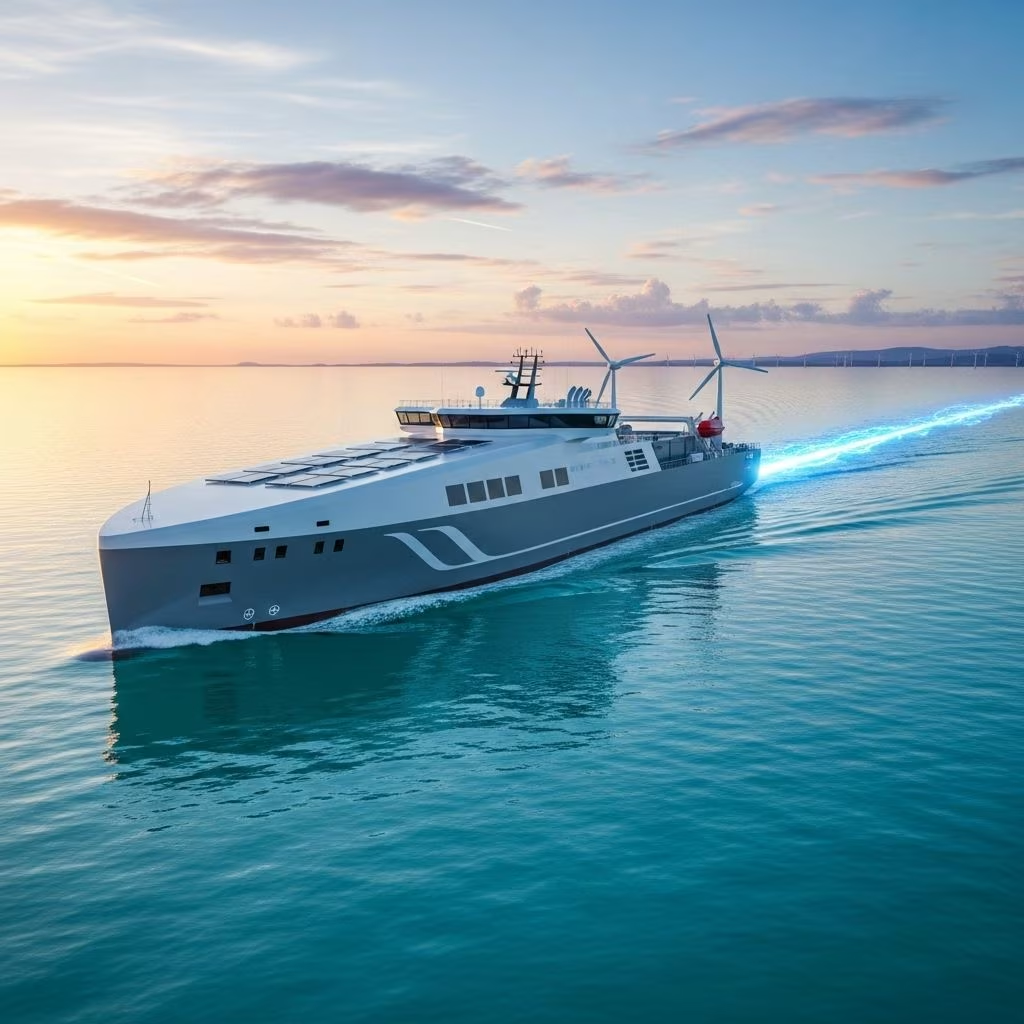
Electric Vessels: Powering Shipping’s Low-Carbon Revolution
As the world races to combat climate change, the maritime shipping industry is undergoing a pivotal transformation. At the heart of this evolution is the rise of electric vessels: ships powered by advanced batteries and electric drives, dramatically reducing greenhouse gas emissions from global shipping. This article explores the latest developments, challenges, and opportunities as electric propulsion reshapes the shipping landscape.
Why Shipping Emissions Matter
Maritime shipping underpins the global economy, carrying around 80% of world trade by volume. But this vast fleet is also responsible for almost 3% of global greenhouse gas (GHG) emissions—more than the entire aviation sector. Traditional ships mostly use heavy fuel oil or marine diesel, producing large volumes of carbon dioxide (CO2), sulfur oxides, nitrogen oxides, and particulate pollution. Reducing the environmental footprint of maritime transport is essential for meeting international climate goals and improving air quality in port communities.
- Maritime shipping accounts for approximately 3% of global GHG emissions.
- Current emissions reduction targets are set by the International Maritime Organization (IMO) and various national governments.
- Shipping is one of the hardest-to-abate sectors due to long vessel lifespans and challenging operational profiles.
Electric Ships: The Zero-Emission Solution
Electric vessels eliminate tailpipe emissions by replacing internal combustion engines (ICEs) with battery storage and electric motors. These ships draw power from lithium-ion or alternative batteries, which can be recharged from shore—ideally with renewable resources.
- Battery electric ships are emerging for short-sea shipping, ferries, and harbor craft worldwide.
- Compared to alternative fuels (ammonia, hydrogen, biofuels), battery-electric drive trains offer zero emissions at the point of use, quieter operation, and lower maintenance needs.
- The climate benefit of electric ships depends on the carbon intensity of the grid used for charging.
Leading industry players are now producing fully electric ships for coastal and short-haul applications where frequent charging is possible and voyage lengths match current battery capabilities.
Retrofit Revolution: Electrifying the Fleet
Retrofitting existing vessels to electric propulsion is a rapid way to cut emissions without waiting for new ship construction. Retrofitting involves removing the traditional engine and fuel tank, installing battery systems, and integrating electric drives.
- A recent major study identified over 6,300 U.S. ships under 1,000 gross tons suitable for battery-electric retrofits.
- Retrofitting these ships could cut U.S. domestic shipping emissions by up to 73% by 2035, if charged using a deeply decarbonized grid.
- Types of vessels suitable for retrofitting include ferries, tugs, harbor craft, and short-haul cargo carriers.
Cost and Feasibility
While electrifying ships involves high upfront investment—mainly for batteries and ship conversions—multiple analyses show growing cost competency:
- Battery prices have fallen dramatically, improving the economic case for retrofit projects.
- By 2035, up to 85% of candidate vessels are expected to be cost-competitive with ICE ships if the grid is highly decarbonized and vessels cover most routine trips.
- Electrification is particularly attractive for ships with predictable routes and regular stopovers, allowing for regular charging.
Table 1: Comparison of Traditional ICE Ships and Battery Electric Ships
| Aspect | Traditional ICE Ship | Battery Electric Ship |
|---|---|---|
| GHG Emissions | High (combustion of marine fuels) | Zero at point of use (dependent on grid) |
| Air Pollution | High | None on vessel |
| Noise | Loud (engine and exhaust) | Quieter operation |
| Operating Costs | High (fuel, maintenance) | Lower (less maintenance, lower energy costs) |
| Upfront Investment | Lower for conversion; higher for newbuild | Higher initially (battery cost) |
| Range | Unlimited (refueled en route) | Limited by battery capacity |
The Battery Challenge: Technology and Environmental Footprint
Most modern electric ships use lithium-ion batteries due to their high energy density and long life compared to older chemistries like lead-acid or nickel-metal hydride. But producing and recycling batteries comes with its own environmental impacts, from mining to disposal.
- Lifecycle analysis shows that lithium-ion batteries offer the lowest emissions over their lifespan for ship applications.
- Batteries must be appropriately sized for expected routes and energy needs, balancing ship safety and cargo capacity.
- Rapid advances in battery technology and falling costs are expanding the range and application of electric vessels.
Ports and Infrastructure: Building the Electric Backbone
Key to electric shipping’s success is a robust charging infrastructure at major ports and terminals. Centralizing charging hubs at busy ports can efficiently support large-scale adoption while maximizing the use of decarbonized electricity.
- Studies show that concentrated charging infrastructure at just 20 out of 150 major U.S. ports could meet the needs of most retrofitted ships.
- Investment in port-side charging, grid upgrades, and renewable energy capacity is essential.
- Shore power connections—a system allowing ships to plug into the grid while docked—are being widely adopted to further reduce emissions during loading and unloading.
Well-planned port electrification brings multiple co-benefits, including improved local air quality and economic development opportunities around maritime innovation.
International Case Study: Lessons from Norway
Norway is at the forefront of maritime electrification, leading the world with its rapidly growing fleet of electric and hybrid ships. Driven by government mandates and funding, Norwegian operators have launched dozens of electric ferries and coastal craft.
- Short sea shipping electrification projects have shown the feasibility and significant emission reductions possible with battery electric vessels.
- Close collaboration between government, industry, and utilities is crucial for swift infrastructure build-out.
- Norway’s experience is influencing international regulatory standards and inspiring similar programs elsewhere.
The Future: Scalability, Opportunities, and Limitations
The transition to battery-electric shipping is accelerating, but challenges remain, especially for ocean-crossing vessels requiring high energy storage and extended range.
- Battery-electric is most feasible today for vessels on short to medium routes, including ferries, tugs, and some cargo ships operating in coastal zones.
- Breakthroughs in battery technology—such as solid-state designs or alternative chemistries—could, in time, extend electric ship range and lower costs further.
- Full decarbonization of the sector will require a combination of solutions, including alternative fuels, operational efficiency, and vessel optimization.
Nonetheless, battery retrofitting and newbuild electric vessels are already providing rapid, tangible emission reductions, especially in areas with high port density and renewables-rich grids.
Adoption Barriers and Considerations
Despite rapid progress, several obstacles can slow large-scale adoption:
- High initial retrofit and battery costs, though declining over time.
- Limited onboard space for batteries on some older or smaller vessels.
- Need for coordinated policy support and financing to de-risk early projects.
- Grid capacity at ports must scale up to meet increased electricity demand.
- Lifecycle environmental impacts of batteries must be managed, emphasizing responsible sourcing and recycling.
Addressing these barriers requires collaboration across regulators, shipowners, ports, technology developers, and utilities.
Key Benefits of Electric Shipping
- Significant Emissions Reduction: Battery-powered ships can cut GHG emissions by 34–73% by 2035, depending on power source.
- Improved Air Quality: Eliminates local pollution in port cities and coastal communities.
- Lower Noise and Vibration: Enhances working conditions for crews and reduces disturbance to marine life.
- Lower Operating Costs: Electric drives require less maintenance and, over time, offer fuel savings, especially as battery prices fall.
- Regulatory Compliance: Future-proofs vessels against stricter environmental standards.
Frequently Asked Questions (FAQs)
Q: Can all types of ships be made electric?
A: Not yet. Battery-electric technology is best suited for ferries, harbor craft, and short-sea shipping with predictable routes and regular charging. Large ocean-going vessels will likely require alternative fuels or hybrid systems until battery technology advances further.
Q: How do batteries for ships differ from those in cars?
A: Marine batteries are often much larger and engineered for heavy-duty cycles, robust safety features, and integration with shipboard systems. Advancements are resulting in higher energy density and longer service life.
Q: What role do ports play in shipping electrification?
A: Ports are crucial as charging hubs and innovators in grid integration. Investment in port-side infrastructure, shore power, and grid upgrades is pivotal to the success of electric shipping.
Q: Will electric ships cost more to operate?
A: While initial investment is higher, total operating costs are often lower due to cheaper electricity and reduced maintenance. As battery prices drop and policies support decarbonization, these advantages will grow.
Q: Is battery recycling addressed in current projects?
A: Responsible battery recycling and reuse are increasingly a focus, with new standards developing to manage end-of-life environmental impacts.
Conclusion: Charting a Clean Course for Shipping
Electric vessels and battery retrofits are rapidly transitioning from demonstration projects to mainstream solutions for maritime decarbonization. While not a “silver bullet” for all shipping applications, their ability to deliver immediate, local, and substantial emission reductions—particularly for short-sea and port-connected fleets—marks a major milestone for the global shipping industry. Success will depend on continued innovation, smart policies, infrastructure expansion, and global collaboration to create a cleaner, more resilient maritime sector for decades to come.
References
- https://www.nature.com/articles/s41560-024-01655-y
- https://www.maritime.dot.gov/sites/marad.dot.gov/files/2024-03/Battery%20Electrification%20of%20U.S.%20Domestic%20Shipping%20(LBNL)%20Final%20Report_0.pdf
- https://www.wartsila.com/marine/products/ship-electrification-solutions
- https://newscenter.lbl.gov/2024/10/30/exploring-the-cost-and-feasibility-of-battery-electric-ships/
- https://the-innovation.org/article/doi/10.59717/j.xinn-geo.2024.100116
- https://news.ucsb.edu/2025/021895/cheap-and-easy-potential-solution-lowering-carbon-emissions-maritime-shipping
- https://www.weforum.org/stories/2024/08/electric-ferry-decarbonize-shipping-industry/
- https://www.transportation.gov/sites/dot.gov/files/2024-12/Maritime%20Plan.pdf
- https://bellona.org/news/arctic/2025-05-short-sea-shipping-must-be-electrified-insights-from-norway