


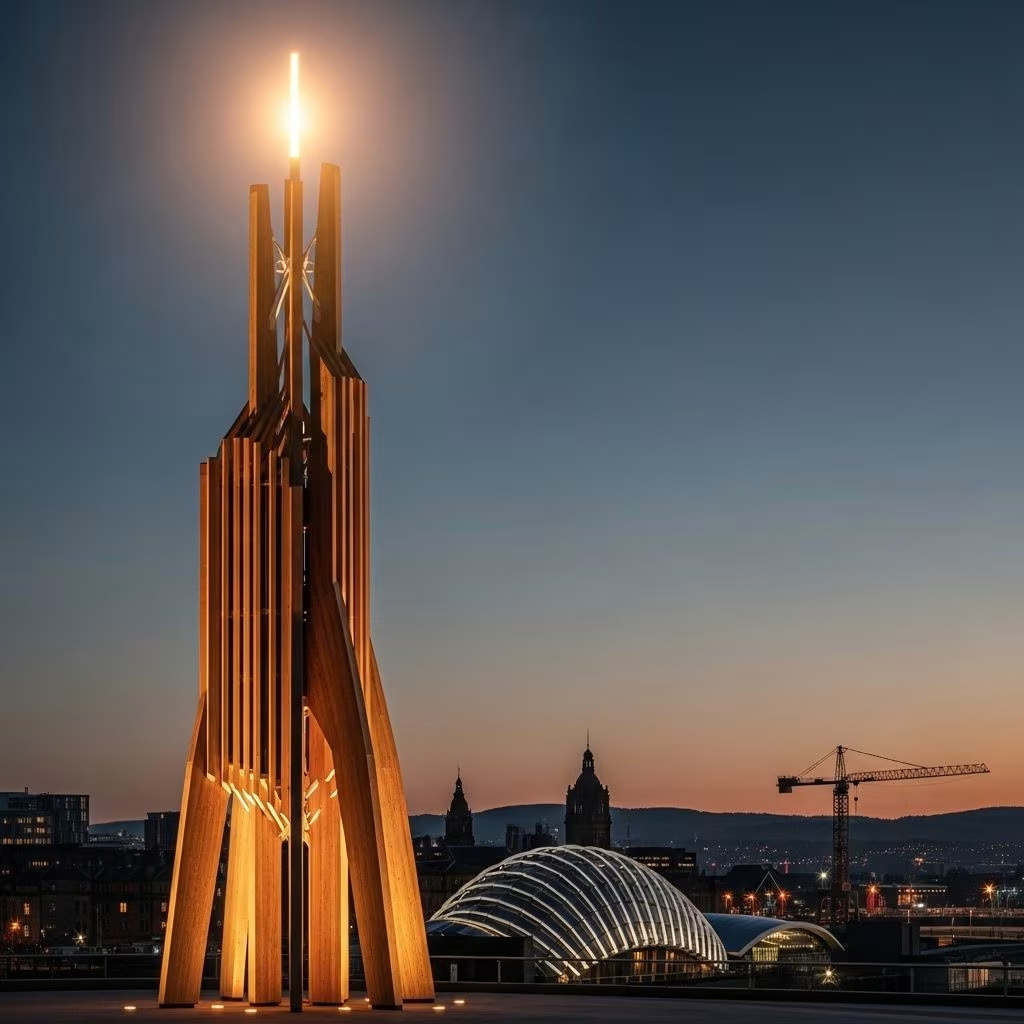
Beacon of Hope: Glasgow’s Mass Timber Monuments at COP26
As the world’s attention converged on Glasgow for the COP26 UN Climate Change Conference, a series of compelling art installations and timber monuments took center stage. These structures were more than striking visual statements: they embodied urgent calls for climate action, showcased sustainable material innovation, and ignited public conversation about our shared environmental future.
Why Monuments? The Power of Symbol in the Climate Conversation
Monuments and public art have long played a role in communicating shared values and aspirations. At COP26, three distinct monuments—each drawing from Scotland’s material heritage and creative energy—became rallying points and educational prompts. They acted as both beacons of hope and urgent calls to action, making visible the possibilities of sustainable construction and community legacy.
- Beacon of Hope: A mass timber installation at Glasgow Central Station.
- The Hope Sculpture: A monumental, low-carbon concrete artwork at Cuningar Loop Park.
- Rottenrow Gardens Figures: Colorful steel and concrete sculptures on the University of Strathclyde’s campus.
The Beacon of Hope: Central Station’s Timber Landmark
Foremost among the COP26 installations, the Beacon of Hope stood in Glasgow Central Station, encountered by over 15 million annual passengers. Conceived and built by a collaboration led by BE-ST, Steuart Padwick, Natalie Alexopoulos, and Ramboll, this project unified the efforts of more than 50 companies committed to sustainability and climate communication. Its design and materials made a statement on resource stewardship and innovation for a net-zero future.
Design Features and Inspiration
- Materiality: Contoured layers of FSC-certified, Scottish-grown Sitka Spruce—the product of Scottish forestry innovation and the Transforming Timber project.
- Form and Message: The monument’s form evoked natural growth and renewal, serving as a literal and figurative beacon of sustainable hope and technological progress in timber construction.
- Public Engagement: Intriguing displays and digital content encouraged visitors to engage physically and intellectually, connecting the tactile qualities of wood to the story of climate action.
This installation demonstrated over 70% reduction in embodied carbon compared to conventional structures by using reclaimed, recycled, or low-carbon materials, almost all sourced locally.
The Mass Timber Movement: Why Timber Matters
The Beacon of Hope was not an isolated symbol but the centerpiece of a larger campaign to spotlight timber’s role in sustainable construction. Timber, when responsibly sourced and engineered, offers unique advantages in the fight against climate change:
- Carbon Sequestration: Trees naturally absorb and store atmospheric carbon, and wood products maintain locked-in carbon throughout their lifespan.
- Low Embodied Carbon: Engineered mass timber components require less energy to produce than steel or concrete, dramatically lowering their carbon footprint.
- Renewability: Unlike finite materials, timber can be regrown and sustainably managed, creating an ongoing cycle of climate benefit.
COP26 brought together architects, engineers, environmentalists, and policymakers to champion the broader adoption of timber for large-scale construction. The conference’s “Wood for Good” events and interactive city map allowed visitors to explore not only new monuments but also exemplary timber buildings throughout Glasgow.
Collaborative Innovation
Among many collaborative initiatives was the Timber Beacon proposal by dRMM architects, which explored timber’s carbon, strength, and beauty as a construction material. More than 25 innovators from across Europe contributed, including major timber trade federations. The project reimagined timber’s potential as a solution for decarbonizing construction and renovation, advocating for globally scalable, nature-based building systems.
The Hope Sculpture: Legacy and Craft in Cuningar Loop Park
The Hope Sculpture offered a stark visual reminder of the city’s industrial history and its transition towards sustainability. Rising 20 meters above Clyde Gateway’s Cuningar Loop, it evoked the brick chimney stacks that once dominated Glasgow’s landscape—but with a critical difference: it was built from revolutionary, low-carbon materials.
- Innovative Concrete: Constructed from a 100% cement-free concrete blend, utilizing locally sourced aggregates and recycled crushed glass. This cutting-edge formulation reduced the carbon impact by more than 70% compared to standard concrete.
- Sculptural Details: The top features a child figure—neutral in gender, age, and race—extending a hand toward a more hopeful, sustainable tomorrow, crafted from the same eco-friendly concrete and glass.
- Hidden Sustainability: Structural supports included reclaimed steel gas pipes and recycled rebar, further minimizing embodied carbon and maximizing the re-use of local industrial resources.
The Hope Sculpture was installed as both a gift to Glasgow and a physical legacy of COP26—a permanent space for community reflection and pride.
The University of Strathclyde’s Colorful Figures: Unity and Reclamation
The third monument in this triad stood at the University of Strathclyde’s Rottenrow Gardens. This installation comprised three vivid, expressive figures, representing the power and necessity of coming together to meet global challenges. Sustainability was again central:
- Materials Used: Reclaimed sheet steel for the figures and low-carbon, cement-free concrete for the foundations.
- Symbolism: The figures’ openness and embrace signified inclusivity and hope, underscoring the collaborative spirit required to achieve a net-zero future.
Timber’s Role at COP26: From Symbolism to Systems Change
Timber was theme woven throughout COP26, permeating installations, conferences, and exhibits:
- The Wood for Good conference highlighted innovations in timber construction, featuring experts like Andrew Waugh (Waugh Thistleton), and panels on growing zero-carbon communities, engineering timber, and managing sustainable forests.
- The Build Better Now virtual exhibition, sponsored by Wood for Good and the UK Green Building Council, showcased cutting-edge sustainable building projects, including mass timber developments around the world.
- An interactive map guided COP26 visitors to key timber structures across Glasgow, from the new installations to reimagined landmarks like the Theatre Royal and community timber housing estates.
Together, these efforts sought to mainstream timber as a viable, desirable alternative to carbon-intensive materials in both new construction and renovation projects—demonstrating practical, scalable pathways toward decarbonized cities.
dRMM’s Timber Beacon Pavilion: A Traveling Manifesto
Notably, dRMM architects’ “Timber Beacon” was envisioned as a demountable, reusable pavilion—symbolically bringing hope from COP26 in Glasgow to other European cities, including a stop at the EU Parliament to influence policy. Its three core elements each extolled a virtue of modern timber engineering:
- The tower demonstrated the feasibility of building tall with wood.
- The canopy showcased timber’s impressive structural capacity.
- The exhibition room highlighted adaptability and hosted interactive educational displays.
Visitors were encouraged to touch, explore, and learn—making tangible the potential for wood and forests to “avert catastrophic climate change,” as dRMM’s Alex de Rijke noted.
Material Innovation: A Table of Monument Features
| Monument | Location | Primary Materials | Key Sustainability Feature |
|---|---|---|---|
| Beacon of Hope | Glasgow Central Station | Scottish Sitka Spruce Timber (FSC-certified) | Contoured engineered timber, >70% less embodied carbon |
| Hope Sculpture | Cuningar Loop Park | 100% cement-free concrete, recycled glass, reclaimed steel | 75% lower carbon footprint vs. standard concrete |
| Rottenrow Gardens Figures | University of Strathclyde | Reclaimed steel, low-carbon cement-free concrete | Emphasized reuse and visual unity |
Blueprint for a Legacy: Glasgow’s Sustainable Future
These monuments were conceived as more than temporary showcases—they were built to leave a lasting imprint on Glasgow and inspire cities worldwide. Their legacies unfold in several key ways:
- Education and Inspiration: By making sustainability visible, tactile, and relatable, the installations foster new conversations about construction’s climate impacts and the choices facing citizens, communities, and legislators.
- Promoting Homegrown Materials: Scotland’s forestry sector and construction innovation, exemplified in both timber and cement-free concrete, gain a public platform to drive further investment and adoption.
- Lasting Community Spaces: The Hope Sculpture and its companions provide accessible locations for reflection, learning, and civic pride—ensuring that COP26’s climate ambitions will remain visible long after the summit closed.
- Driving Policy and Industry Change: Showcasing technical and artistic advancements at European and UK levels, these monuments backed arguments for updated building standards, policy support, and expanded timber supply chains.
The Construction Industry’s Path Forward
With the construction sector accounting for a significant share of global carbon emissions, the COP26 installations forcefully illustrated alternative pathways. Industry leaders and conference speakers emphasized:
- The need to mainstream low-carbon materials, including mass timber and advanced concretes.
- Importance of circular design—demountable, reusable structures that extend material lifecycles and reduce waste.
- Value of collaborative networks across manufacturing, research, design, and policy to meet climate targets.
Key projects such as Scotland’s first homegrown mass timber home—featured at the Wood for Good conference and built for COP26—demonstrated not only scalable technology, but also the social and economic benefit of local supply chains and skill development.
Frequently Asked Questions (FAQs)
Q: Why highlight timber in climate discussions?
A: Timber offers a renewable, carbon-sequestering alternative to high-emission construction materials, and its use supports sustainable forestry and advances net-zero targets.
Q: How do the COP26 monuments reduce embodied carbon?
A: Through the use of locally sourced, certified, and reclaimed materials—including mass timber, recycled glass, and cement-free concrete—each installation dramatically cut embodied carbon compared to traditional structures.
Q: Are these monuments permanent features in Glasgow?
A: The Hope Sculpture and the Rottenrow Gardens figures were intended as legacy projects, providing ongoing value as public art and educational spaces, while some modular elements, like the proposed Timber Beacon, were designed for relocation and reuse.
Q: How can other cities replicate Glasgow’s example?
A: By fostering partnerships across art, industry, and civic life; prioritizing responsible material choices; and creating inclusive public installations, cities can similarly raise awareness and set examples for climate-positive action.
Q: What role do community and policy play in such projects?
A: Sustained impact requires both broad-based community engagement and supportive public policy—ensuring that innovative practices in low-carbon construction become the norm rather than the exception.
Key Takeaways from Glasgow’s Beacon of Hope
- Vision: The monuments crafted for COP26 made sustainability visible, urgent, and inspiring for millions.
- Innovation: Advanced materials and circular design principles demonstrated scalable, low-carbon construction solutions.
- Legacy: Glasgow’s installations provide both lasting community spaces and catalytic models for international climate response in the built environment.
References
- https://www.arch2o.com/drmms-symbolic-reusable-timber-beacon-for-cop26/
- https://projectscot.com/2021/10/timbers-role-in-sustainable-construction-to-be-showcased-during-glasgow-cop26-summit/
- https://www.be-st.build/case-studies/beacon-of-hope-in-glasgow-central-station
- https://urbanunionltd.co.uk/the-hope-sculpture-a-gift-to-glasgow-and-cop26-legacy/
- https://www.be-st.build/mass-timber-centre-of-excellence
- https://www.structuraltimber.co.uk/news/timber-beacon-shortlisted-for-cop26/
- https://www.youtube.com/watch?v=FyqwkFd0xVM


