


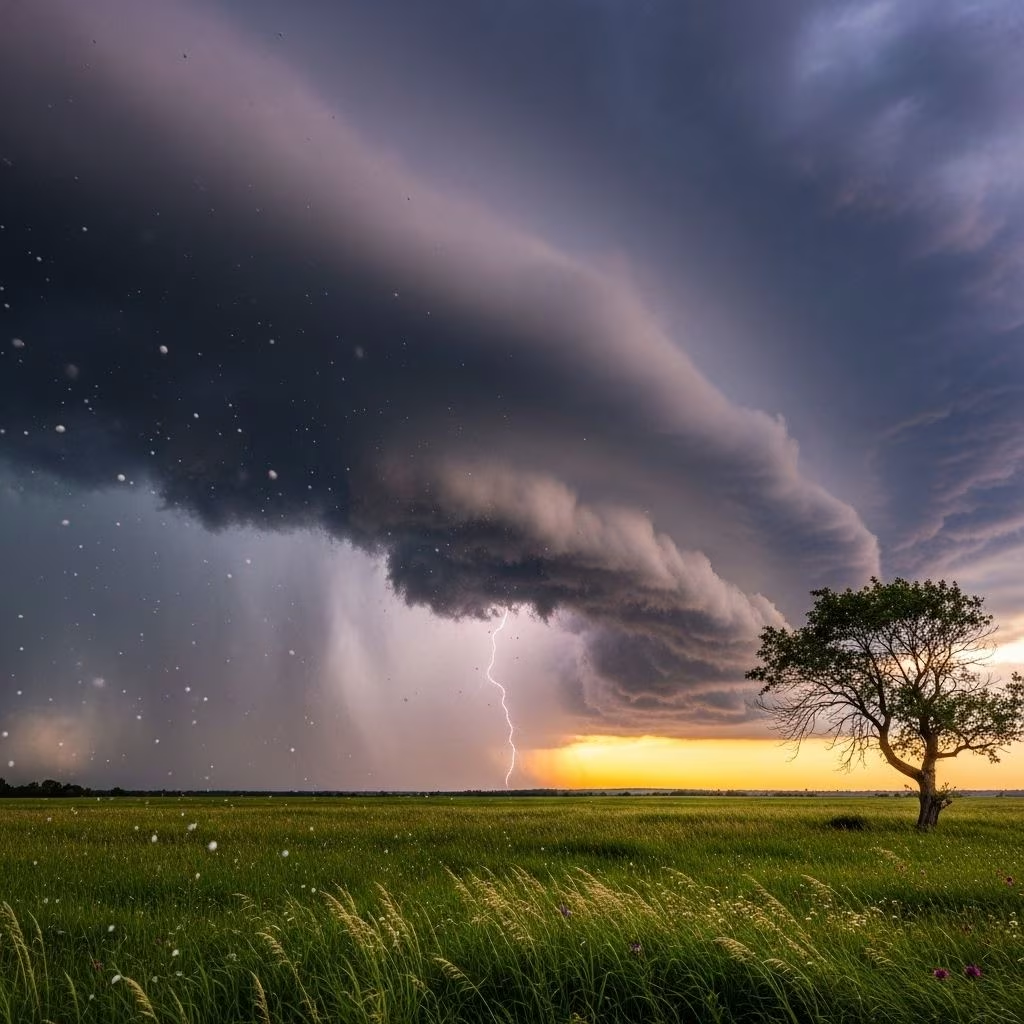
What Causes Hail in the Summer?
Hail, with its destructive force and sometimes strange timing, is often considered a curiosity of the summer months. While it might seem counterintuitive for ice to fall from the sky during hot weather, summer provides the ideal conditions for hail formation. This article delves into the atmospheric science behind hail, its impacts on people and the environment, and how our changing climate could affect hailstorm frequency and severity.
Understanding Hail: The Basics
Hail is a form of precipitation consisting of solid ice balls or lumps, known as hailstones. Unlike sleet or freezing rain, which form in winter, hail is associated with powerful thunderstorms, most commonly in the spring and summer. These storms possess the dynamic updrafts and ice-forming conditions needed to generate hail.
- Hailstones can vary in size from pea-sized pellets to baseballs or larger.
- Severe hail can cause costly damage to property, crops, trees, and even pose a risk to people and animals.
- Despite its cool origins, hail is much more likely to occur during warm weather.
How Common Is Hail?
Hail storms are most prevalent in certain regions, particularly those where strong thunderstorms are frequent. For example, the central United States, sometimes called “Hail Alley,” experiences more hail events than anywhere else in North America. The annual cost of hail damage reaches billions of dollars, with the majority of insured property losses from severe storms due to hail rather than tornadoes or hurricanes .
The Science of Hail Formation
To understand hail, it’s essential to analyze the unique atmospheric conditions required for its formation. Unlike rain or snow, hail results from a multi-step process inside thunderstorm clouds (cumulonimbus clouds).
Key Ingredients for Hail
- Strong Updrafts: Thunderstorms with intense upward-moving air currents (updrafts) are critical. These updrafts lift water droplets high into the storm where temperatures are well below freezing .
- Supercooled Water: Water droplets that remain liquid even below the freezing point are known as supercooled droplets. These freeze instantly upon contact with ice particles or dust in the sky .
- Thunderstorm Structure: Well-organized thunderstorms, such as supercells, are most likely to produce large hailstones due to their persistent and powerful updrafts.
The Hailstone’s Journey
Here’s how a hailstone forms and grows:
- Small ice embryos are swept upwards by the thunderstorm’s powerful updrafts into extremely cold regions of the cloud.
- Supercooled water droplets collide and freeze onto these ice nuclei, causing the hailstone to grow.
- Each time a hailstone falls within the storm, gets caught in another updraft, and is lifted again, it acquires new layers of ice—sometimes clear (when water freezes slowly) and sometimes opaque (when freezing is rapid and air bubbles are trapped) .
- This cycle repeats until the hailstone becomes too heavy for the updrafts to support, at which point it falls to the ground as hail.
Why Is Hail More Common in Summer?
Summer brings:
- Warm, Moist Air: This provides the fuel for vigorous thunderstorms and intense updrafts.
- Greater Atmospheric Instability: The difference between hot surface air and cold air aloft generates strong vertical movement—crucial for hail formation .
- Higher Frequency of Powerful Storms: Longer days and more sunlight lead to stronger convection, again increasing the chances of hail.
Although summer hail is common, hail itself forms high in the storm—well above freezing levels. It’s the ability of the storm to keep ice aloft and then unleash it suddenly that causes the surprising appearance of hail in warm weather .
Characteristics of Hailstones
Hailstones vary greatly in size, texture, and transparency. Their structure can reveal clues about their history:
- Layering: Hailstones grow by accreting layers. Slow freezing produces clear ice, while rapid freezing produces opaque, bubbly ice.
- Shape: Most hailstones are round, but irregular or spiked hailstones can also occur if colliding and fusing in the cloud .
- Size: Most hailstones are small, but updrafts exceeding 100 mph can create stones larger than golf balls—and in rare cases, even as big as grapefruits or softballs.
- Weight: Larger hailstones fall faster, sometimes reaching terminal velocities of 100 km/h (about 60 mph) or more .
Table: Hailstone Sizes and Potential Impact
| Hailstone Diameter | Common Comparison | Typical Damage Level |
|---|---|---|
| < 1 cm | Pea | Minor, seldom causes damage |
| 2-2.5 cm | Marble/Grape | Possible damage to plants, cars, roofs |
| 4-5 cm | Golf Ball | Significant property and crop damage |
| 7-9 cm | Baseball/Grapefruit | Severe roof, window, and car damage; injury risk |
The Aftermath: Hail’s Impact on People, Property, and Nature
Hailstorms are responsible for some of the most costly weather damage in North America, far outpacing tornadoes and hurricanes in property damage . The effects of a severe hailstorm can linger long after the ice has melted.
- Property Damage: Roofs, windows, skylights, vehicles, and outdoor structures are especially vulnerable. Even sturdy materials may crack under the relentless pounding of large hailstones .
- Crop and Landscape Losses: Hail can devastate crops in minutes, destroying leaves, fruit, and stems. Landscapes, gardens, and trees may be stripped of foliage or severely bruised .
- Impact on Trees: Hail injures the thin tissue beneath tree bark (the vascular cambium). While healthy trees can often recover, severe damage or repeated events can lead to long-term decline or increased disease risk, especially in spring .
- Wildlife and Pets: Animals caught outside during hailstorms may suffer injury or trauma. Pets and livestock should be given shelter whenever hail is forecast .
Real-Life Accounts: A Snapshot of Hail’s Fury
Eyewitness reports reinforce hail’s destructive power. In one memorable storm, residents watched as hail pelted down, cracking tiles, smashing skylights, denting metal, and shredding entire gardens within minutes . Trees were stripped nearly bare, shrubs battered, and even durable outdoor equipment left riddled with holes and dents.
Hail and the Environment: Hidden Effects
Beyond the obvious structural impacts, hail can trigger subtle but significant ecological effects:
- Tree Recovery: Damaged branches and leaves may resprout, but extensive injury can increase vulnerability to pests and disease over time .
- Plant Resilience: Deciduous trees, which naturally shed leaves each fall, are more equipped to recover than evergreens or slow-growing species .
- Soil and Water Runoff: Intense hailstorms strip ground cover, increasing erosion potential and altering water flow in local ecoystems.
Hail, Climate Change, and the Future
The relationship between hail and climate change is complex and an active area of research. While some hail-prone regions have seen a decline in hail frequency, others—like parts of the central U.S. and the mid-Atlantic—have experienced more frequent and severe hailstorms .
- Warmer Atmosphere: Rising temperatures can increase the height of the freezing level in the atmosphere, potentially reducing hail at the surface—but also making updrafts stronger, which could enlarge hailstones when they do form .
- Urban Expansion: More towns and cities mean a larger “target” for hail. Even if the number of storms falls, the risk and property losses may grow due to expansion into hail-prone regions .
- Knowledge Gaps: Scientists continue to study hail’s evolving patterns, but data is limited compared to other types of severe weather.
Safety Tips: Preparing for Hail Storms
- Always move vehicles into garages or carports if hail is forecast.
- Secure outdoor furniture and equipment to minimize damage.
- Take shelter indoors, away from windows and skylights, as hail can break glass and cause injury.
- After a hailstorm, inspect roofs and trees for damage and seek prompt repair or pruning to prevent further decline.
- Stay alert during severe weather season; hail can develop quickly in the right conditions.
Frequently Asked Questions (FAQs)
Q: Why does hail occur in summer instead of winter?
A: Hail forms high in powerful thunderstorm clouds, where temperatures are below freezing, regardless of surface weather. Summer brings stronger storms and updrafts, making hail formation more likely.
Q: Can hail happen in warm climates?
A: Yes. As long as the thunderstorm’s upper regions are cold enough and updrafts strong enough, hail can occur—even in tropical or humid environments.
Q: How big can hailstones get?
A: Most hailstones are small (pea- or marble-sized), but severe storms can create hail larger than baseballs, capable of significant destruction.
Q: What can I do to protect my home or car from hail?
A: When hail is forecast, park vehicles inside, move valuables indoors, and seek shelter in a safe part of your home, away from windows or skylights.
Q: Does climate change make hailstorms more common?
A: The relationship is complicated. Some areas are seeing more hail, others less. Climate change influences both the conditions that create hail and the locations where it falls.
Conclusion
Far from being a freak accident, hailstorms are a natural—if dramatic—part of summer in many regions. Understanding the science behind hail formation, recognizing its risks, and learning how to protect yourself, your property, and your environment can help minimize hail’s impact and prepare you for future storms. With climate still in flux, staying informed and prepared is more important than ever.
References
- https://eos.org/articles/hail-causes-the-most-storm-damage-costs-across-north-america
- https://nfs.unl.edu/news/trees-and-hail-damage/
- https://naturebackin.com/2020/11/19/patterns-in-nature-hailstones-and-their-aftermath/
- https://agupubs.onlinelibrary.wiley.com/doi/full/10.1029/2019RG000665
- https://www.britannica.com/science/hail-meteorology


